
Strong bones are important at every stage of life. They provide structure, protect important organs, support movement, and work together with muscles to help you stay active. As people get older, maintaining bone strength becomes even more important because bone mass and density can gradually change with age. A balanced diet can play an important role in supporting this process.
When it comes to foods for bone health, calcium and vitamin D often receive the most attention, but healthy bones need more than just these two nutrients. Protein, magnesium, phosphorus, vitamin K, potassium, and other nutrients can also contribute to a balanced eating pattern.
The good news is that you do not need complicated meals to support your bones. Everyday foods such as yogurt, leafy greens, beans, fish, eggs, nuts, seeds, and fruits can provide many of the nutrients your body needs.
In this article, we will look at 15 nutritious foods for bone health, explain what makes them useful, and share simple ways to include them in your everyday diet.
Why Bone Health Matters
Bone is living tissue that is continuously remodeled. Your body breaks down old bone and replaces it with new bone. When bone breakdown becomes greater than bone formation over time, bone density can decrease and bones may become weaker.
Good nutrition is one part of maintaining healthy bones. Regular physical activity, adequate protein, healthy body weight, avoiding smoking, limiting excessive alcohol intake, and preventing falls are also important lifestyle factors.
Calcium is particularly important because much of the body’s calcium is stored in the bones. Vitamin D helps the body absorb calcium from food. This is why a diet that provides both nutrients is often recommended for maintaining bone health.
For more nutrition tips and healthy eating ideas, explore our guide to [Protein-Rich Foods]
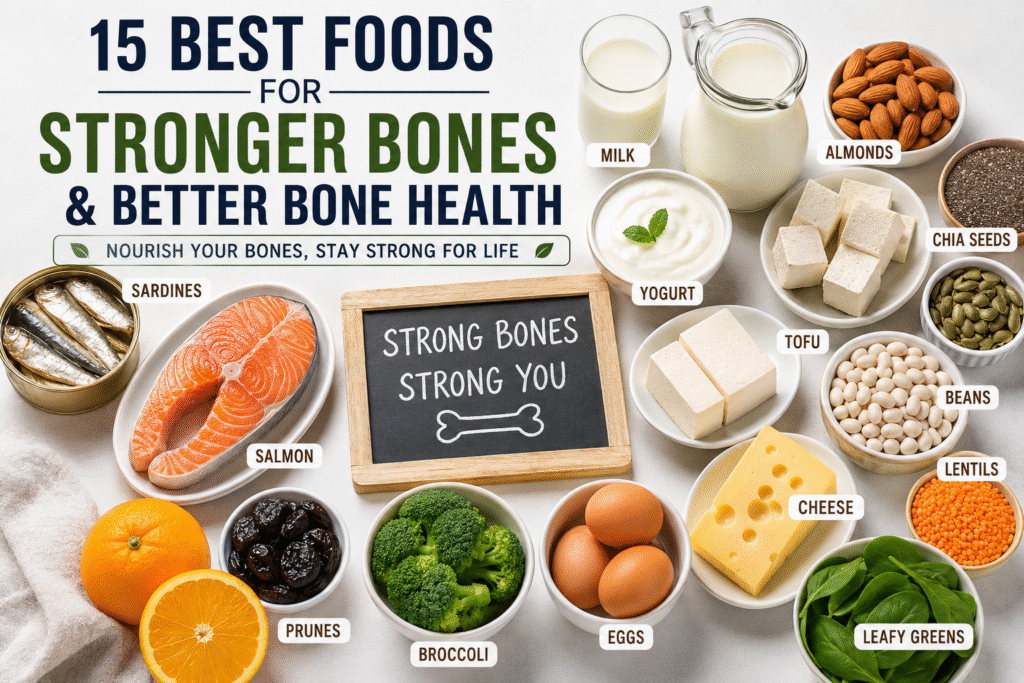
15 Best Foods for Stronger Bones
Below are some of the best foods for bone health that can fit into a balanced diet.
1. Milk
Milk is one of the most familiar calcium rich foods for bones. It provides calcium and protein, and many types of milk are also fortified with vitamin D.
A glass of milk can be an easy addition to breakfast or a snack. If you do not consume dairy, calcium-fortified plant-based milk can be another option. Always check the nutrition label because the amount of calcium and vitamin D varies between products.
Easy idea: Add milk to oatmeal, smoothies, or whole-grain cereal.
2. Yogurt
Yogurt is another convenient food that provides calcium and protein. Depending on the variety, yogurt may also contain vitamin D if it has been fortified.
Plain or unsweetened yogurt can be a practical choice when you want to limit added sugar.
Easy idea: Combine yogurt with berries, fruit, oats, or a small handful of nuts.
3. Cheese
Cheese can contribute calcium and protein to the diet. Different varieties contain different amounts of calcium, so nutrition labels can help you compare options.
Because some cheeses can be high in sodium and saturated fat, portion size matters. Enjoying moderate amounts as part of an otherwise balanced diet is a sensible approach.
Easy idea: Add a small amount of cheese to whole-grain toast, salads, or vegetable dishes.
4. Sardines With Edible Bones
Sardines are among the foods that support bone health because the small edible bones provide calcium. They also provide protein and beneficial fats.
Canned sardines can be convenient because they require little preparation. If you buy canned varieties, compare labels for sodium if that is a concern for your diet.
Easy idea: Add sardines to a salad, whole-grain toast, or a vegetable-based meal.
5. Salmon
Salmon is well known for its protein and healthy fats. It can also provide vitamin D, which is important because vitamin D helps the body absorb calcium.
Including fish such as salmon in a balanced eating pattern can therefore contribute several nutrients that are useful for overall health.
Easy idea: Bake salmon with vegetables and whole grains for a simple dinner.
6. Leafy Green Vegetables
Leafy greens such as kale, bok choy, collard greens, and turnip greens can provide calcium and other nutrients.
Greens are also rich in fiber and plant compounds, making them a valuable part of an overall healthy diet.
Easy idea: Add chopped greens to soups, curries, salads, omelets, or stir-fries.
7. Broccoli
Broccoli is a versatile vegetable that provides calcium along with vitamin C, vitamin K, fiber, and other nutrients.
While broccoli alone cannot provide everything your bones need, regularly eating a variety of vegetables can help create a more nutrient-dense diet.
Easy idea: Steam or roast broccoli and serve it with beans, fish, eggs, or whole grains.
8. Tofu
Calcium-set tofu can be an excellent plant-based option. The calcium content depends on how the tofu is prepared, so check the package label when choosing it.
Tofu also provides plant-based protein, making it especially useful for people who eat little or no meat.
Easy idea: Add tofu to stir-fries, curries, soups, salads, or grain bowls.
9. Beans and Lentils
Beans and lentils are affordable sources of plant-based protein and provide several minerals that contribute to a balanced diet.
Examples include chickpeas, kidney beans, black beans, soybeans, and lentils. They are also rich in fiber, which supports digestive health.
Easy idea: Add lentils to dal, beans to salads, or chickpeas to vegetable bowls.
10. Almonds
Almonds provide protein, healthy fats, magnesium, and other nutrients. Magnesium is one of the minerals involved in maintaining normal bone structure and function.
A small serving can be an easy way to add nutrients without requiring much preparation.
Easy idea: Sprinkle chopped almonds over yogurt, oatmeal, fruit, or salads.
11. Chia Seeds
Chia seeds are small but nutrient-dense. They provide minerals, fiber, plant-based omega-3 fats, and some calcium.
They can be especially convenient for people who prefer plant-based foods.
Easy idea: Mix chia seeds into yogurt, oatmeal, smoothies, or homemade chia pudding.
12. Eggs
Eggs are a useful source of protein and contain small amounts of vitamin D. Protein is important because bones are supported by the surrounding muscles, and maintaining muscle strength is an important part of staying active and reducing fall risk.
Eggs can fit into breakfast, lunch, or dinner and are easy to combine with vegetables and whole grains.
Easy idea: Make a vegetable omelet or serve boiled eggs with whole-grain toast.
13. Fortified Plant-Based Milk
For people who avoid dairy, fortified soy or other plant-based milk can help provide calcium. Some products may also contain vitamin D.
However, not every plant-based milk is fortified in the same way. Check the nutrition label for calcium and vitamin D before purchasing.
Easy idea: Use fortified plant-based milk in smoothies, oatmeal, coffee, or cereal.
14. Oranges
Oranges are not a major calcium source unless fortified juice is used, but they can still contribute to a healthy eating pattern through vitamin C, hydration, and other nutrients.
Some fortified orange juices contain added calcium and vitamin D, but the nutritional content varies by brand.
Easy idea: Enjoy a whole orange with breakfast or choose a fortified juice occasionally while checking the nutrition label.
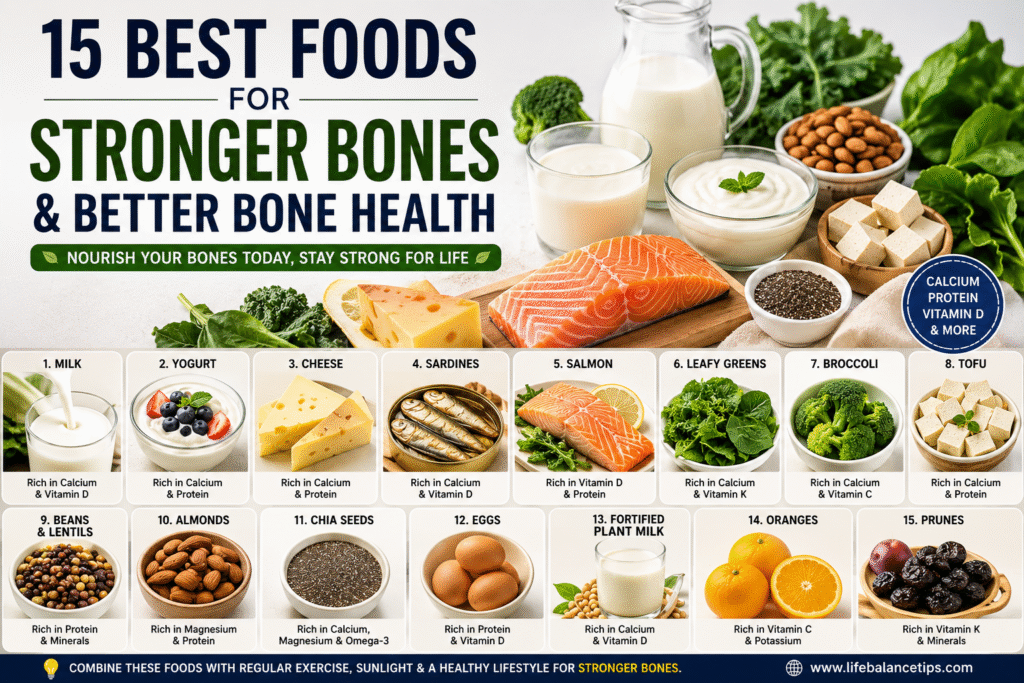
15. Prunes
Prunes are dried plums and can provide fiber, potassium, vitamin K, and other nutrients. They can be included as part of a varied diet that emphasizes fruits, vegetables, whole grains, legumes, nuts, and other nutritious foods.
Because dried fruit is concentrated, a small portion is usually enough.
Easy idea: Add chopped prunes to oatmeal, yogurt, salads, or homemade energy bites.
Quick Comparison of Bone-Friendly Foods
| Food | Key Nutrients | Simple Way to Eat It |
|---|---|---|
| Milk | Calcium, protein, vitamin D if fortified | Oatmeal or cereal |
| Yogurt | Calcium, protein | With berries |
| Cheese | Calcium, protein | Whole-grain toast |
| Sardines | Calcium, protein, vitamin D | Salad or toast |
| Salmon | Protein, vitamin D | Baked with vegetables |
| Leafy greens | Calcium, vitamin K | Salads or cooked dishes |
| Broccoli | Calcium, vitamin C, vitamin K | Steamed or roasted |
| Tofu | Calcium if calcium-set, protein | Stir-fry |
| Beans | Protein, minerals, fiber | Curries or salads |
| Almonds | Magnesium, protein, healthy fats | Snack or topping |
| Chia seeds | Calcium, magnesium, fiber | Yogurt or oatmeal |
| Eggs | Protein, vitamin D | Omelet or boiled |
| Fortified plant milk | Calcium, vitamin D if fortified | Smoothies |
| Oranges | Vitamin C and other nutrients | Whole fruit |
| Prunes | Potassium, vitamin K, fiber | Oatmeal or yogurt |
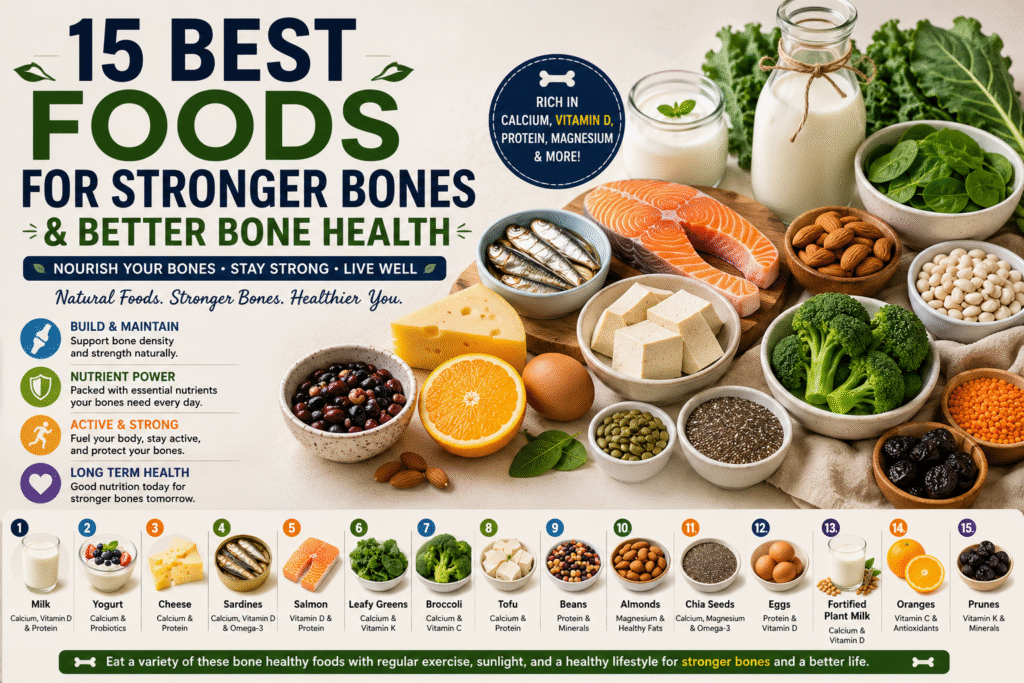
What Nutrients Do Bones Need?
A healthy skeleton depends on a variety of nutrients rather than one single food.
Calcium
Calcium is a major mineral found in bones. Adults generally need around 1,000 to 1,200 mg of calcium per day depending on age and sex, according to NIH guidance. Individual needs can differ.
Good food sources include dairy products, calcium-set tofu, certain leafy greens, and fish with edible bones.
Vitamin D
Vitamin D helps the body absorb calcium. Food sources include fatty fish and fortified foods, while the body can also produce vitamin D through sunlight exposure.
Vitamin D needs vary by age and individual circumstances, so people with concerns about vitamin D status should discuss them with a qualified healthcare professional.
Protein
Protein provides the building blocks needed for muscles and other tissues. Strong muscles also help support movement, balance, and physical activity, which are important parts of maintaining bone health.
Good sources include eggs, fish, dairy, tofu, beans, lentils, nuts, and seeds.
Magnesium
Magnesium is another mineral involved in normal bone function. Nuts, seeds, legumes, whole grains, and leafy greens can contribute magnesium to the diet.
Vitamin K
Vitamin K is found in many green vegetables and contributes to normal bone-related processes in the body. Eating a variety of vegetables is a simple way to obtain it naturally.
Simple Daily Eating Pattern for Bone Health
You do not have to eat all 15 foods every day. Instead, try to build meals around a variety of nutrient-rich foods.
Breakfast
- Yogurt with berries and chia seeds
- Or eggs with whole-grain toast and vegetables
- Milk or fortified plant-based milk if desired
Lunch
- Lentil or bean curry
- Leafy green vegetables
- Whole grains
- Yogurt or another calcium-containing food
Snack
- A small serving of almonds
- One fruit
- Yogurt or fortified milk
Dinner
- Salmon or tofu
- Broccoli or leafy greens
- Beans or another protein source
- Whole grains
The goal is variety rather than perfection. Combining different foods for bone health throughout the day can make meals more nutritious and satisfying.
For evidence-based information about bone health and osteoporosis, visit the National Institute of Arthritis and Musculoskeletal and Skin Diseases (NIAMS)
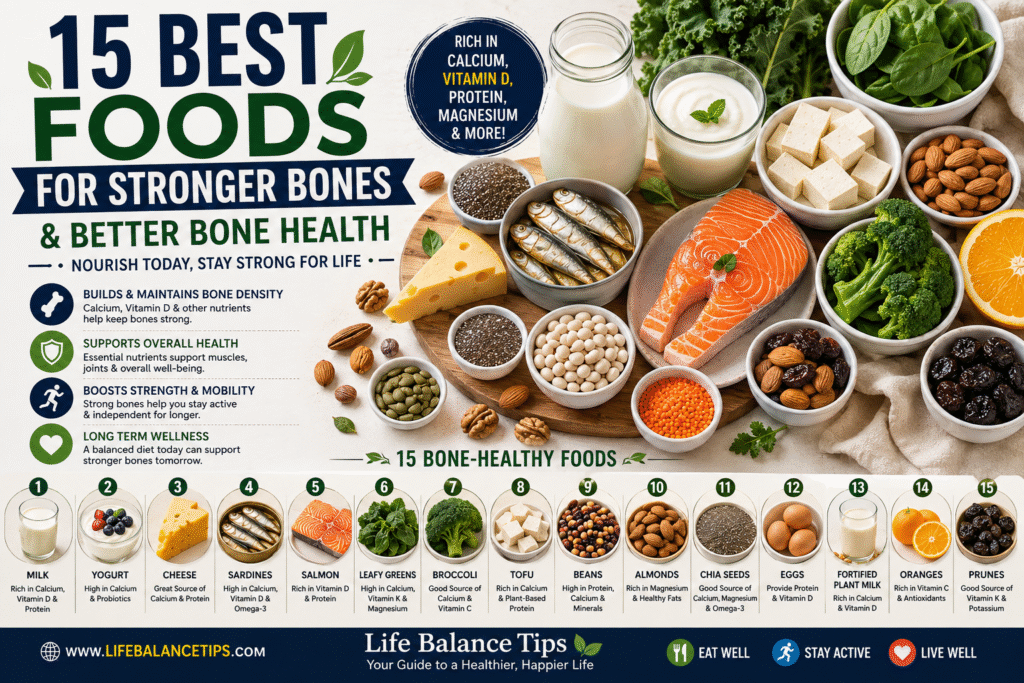
Practical Tips to Support Strong Bones
Eating foods for bone health is only one part of the bigger picture. Consider these everyday habits:
- Eat a varied diet instead of relying on one “superfood.”
- Include calcium-containing foods regularly.
- Choose foods that provide protein at meals.
- Include vegetables and fruits every day.
- Stay physically active.
- Include weight-bearing activities such as walking when appropriate.
- Add resistance or strength exercises according to your fitness level.
- Maintain a healthy body weight.
- Avoid smoking.
- Limit excessive alcohol intake.
- Take care to reduce fall hazards at home.
- Drink enough fluids throughout the day.
Weight-bearing and strength activities are particularly useful because bones respond to the stresses placed on them through movement and exercise.
Common Mistakes to Avoid
Even when eating foods for bone health, some habits may make it harder to maintain a balanced diet.
Relying on One Food
No single food can provide every nutrient your bones need. A varied diet is generally more useful than focusing heavily on one ingredient.
Ignoring Protein
Bone is not simply made of minerals. Protein is also an important part of the body’s tissues, and maintaining muscle supports mobility and balance.
Avoiding All Dairy Without Replacing the Nutrients
People who avoid dairy can still build a nutritious diet, but they should pay attention to other calcium-containing foods such as calcium-set tofu, fortified plant-based milk, leafy greens, and certain fish.
Eating Too Many Highly Processed Foods
Highly processed foods can sometimes crowd out nutrient-rich foods. Try to make whole or minimally processed foods the foundation of most meals.
Forgetting Physical Activity
Diet and movement work together. Regular activity, especially weight-bearing and strength exercises, can support bone and muscle health.
Frequently Asked Questions
1. What are the best foods for bone health?
Some of the best foods for bone health include milk, yogurt, cheese, sardines, salmon, leafy green vegetables, broccoli, calcium-set tofu, beans, almonds, chia seeds, eggs, and fortified plant-based milk. A varied diet is more useful than relying on a single food.
2. Which foods are high in calcium for bones?
Some of the most useful calcium rich foods for bones include dairy products, calcium-set tofu, sardines with edible bones, certain leafy greens, and calcium-fortified foods. Calcium content can vary, so checking food labels can be helpful.
3. Can foods make bones stronger?
A nutritious diet can provide the nutrients needed to maintain normal bone structure and function. However, no single food can guarantee stronger bones. Bone health depends on nutrition, physical activity, age, genetics, hormones, and other lifestyle and health factors.
4. Are plant-based foods good for bone health?
Yes. Plant-based foods can contribute to a bone-friendly diet. Tofu, beans, leafy greens, nuts, seeds, and fortified plant-based milk can provide important nutrients. When choosing plant-based milk or tofu, check the label for calcium fortification.
5. Is milk necessary for strong bones?
No. Milk is a convenient source of calcium and protein, but it is not the only option. People who do not consume dairy can obtain nutrients from fortified plant-based beverages, calcium-set tofu, leafy greens, beans, seeds, and certain fish.
6. Does vitamin D help bones?
Yes. Vitamin D helps the body absorb calcium and plays an important role in bone health. Fatty fish and fortified foods can provide vitamin D, and the body can also make vitamin D after exposure to sunlight.
7. What are good foods for stronger bones after 50?
After 50, maintaining a varied diet containing adequate calcium, vitamin D, protein, fruits, vegetables, whole grains, nuts, and seeds can be helpful. Physical activity, including appropriate weight-bearing and strength exercises, is also important. Individual nutritional needs can vary with age and health status.
8. Can diet alone prevent osteoporosis?
Diet is an important part of bone health, but it is not the only factor. Physical activity, avoiding smoking, limiting excessive alcohol, maintaining appropriate nutrition, and preventing falls also matter. People with risk factors or concerns about osteoporosis should speak with a qualified healthcare professional.
Health Disclaimer
This article is provided for general educational and informational purposes only. It is not intended to diagnose, treat, cure, or prevent any disease or medical condition. Individual nutritional needs vary based on age, health status, medications, allergies, dietary patterns, and other factors. If you have osteoporosis, a history of fractures, persistent bone pain, a diagnosed nutrient deficiency, or concerns about your bone health, consult a qualified healthcare professional for personalized advice.
Conclusion
Building and maintaining strong bones is a long-term process, and your everyday food choices can make an important contribution. Including a variety of foods for bone health can help provide calcium, vitamin D, protein, magnesium, vitamin K, and other nutrients that support overall bone and body health.
Milk, yogurt, leafy greens, sardines, salmon, tofu, beans, almonds, chia seeds, eggs, and fortified foods are practical choices to include in a balanced diet. You do not need to eat every food on this list every day. Instead, focus on variety, moderation, and consistent healthy habits.
Along with nutritious foods for bone health, staying active, performing appropriate weight-bearing and strength exercises, avoiding smoking, limiting excessive alcohol, and taking steps to prevent falls can help support healthy bones throughout life.
The best approach is simple: build meals around nutritious foods, stay physically active, and make bone-friendly habits part of your normal routine.
By Life Balance Tips Team