
Introduction
Healthy Eating Habits In a world filled with fad diets, quick fixes, and confusing nutrition advice, one truth remains simple: healthy eating habits are the foundation of good health. Eating well doesn’t mean strict diets or giving up all your favorite foods — it means understanding how food fuels your body and making choices that support your long-term well-being. Healthy eating is about making consistent, informed food choices that support long-term well-being.
This article explores what healthy eating really means, why it matters, and how you can adopt habits that are easy, sustainable, and satisfying. By the end, you’ll have clear steps to improve your relationship with food and transform your health — without overwhelm. At Healthy Tips, we believe that small and consistent food choices can create a big impact on your overall health.
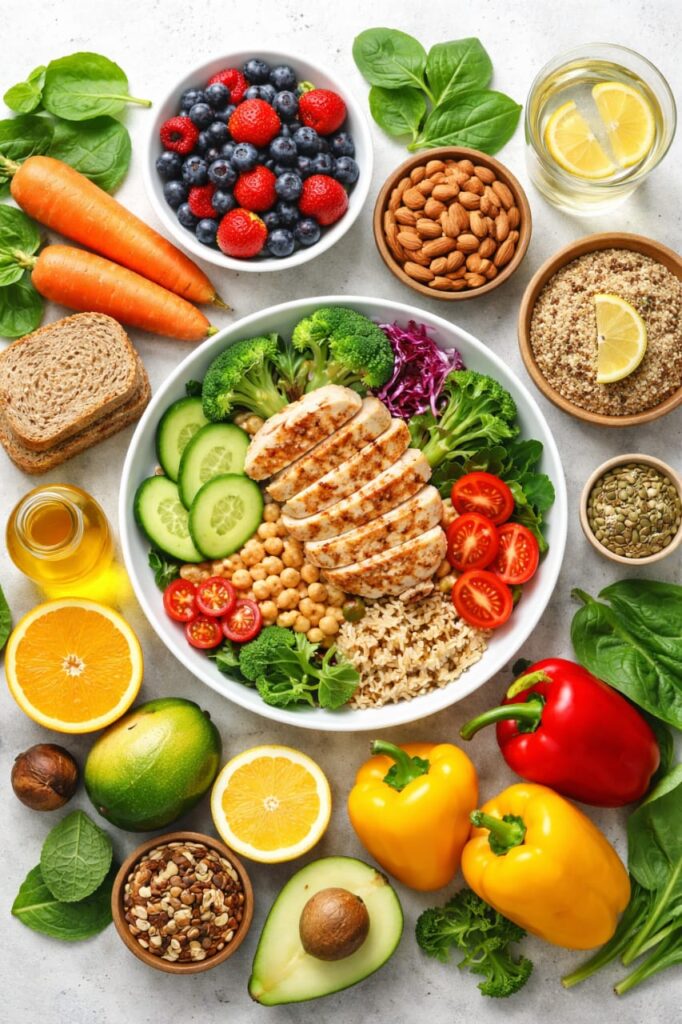
What Are Healthy Eating Habits?
Healthy eating habits are patterns and choices that help your body get the nutrients it needs to function well. These include:
Balanced meals with the right mix of proteins, carbohydrates, and fats
Adequate intake of vitamins and minerals
Regular eating patterns to support energy and metabolism
Mindful food choices that respect your body’s hunger and fullness cues
Healthy eating isn’t about perfection. It’s about balance, variety, and consistency. It’s choosing foods that help you feel strong, focused, and energized — most of the time.
Why Healthy Eating Habits Matter
Food affects every part of your body — from your brain and muscles to your immune system and mood. Here’s how good nutrition impacts your health: and read more
1. Energy Levels: Eating balanced meals helps maintain steady blood sugar, preventing fatigue and energy crashes.
2. Weight Management: Nutritious foods support a healthy weight and reduce the risk of obesity-related conditions.
3. Disease Prevention: A diet rich in fruits, vegetables, whole grains, and lean proteins lowers the risk of heart disease, type 2 diabetes, and certain cancers.
4. Mental Well-Being: Nutrients like omega-3s, B vitamins, and antioxidants support brain health and mood regulation.
In simple terms: Food is fuel — and the quality of that fuel affects how well your body runs.
Foundations of Healthy Eating Habits
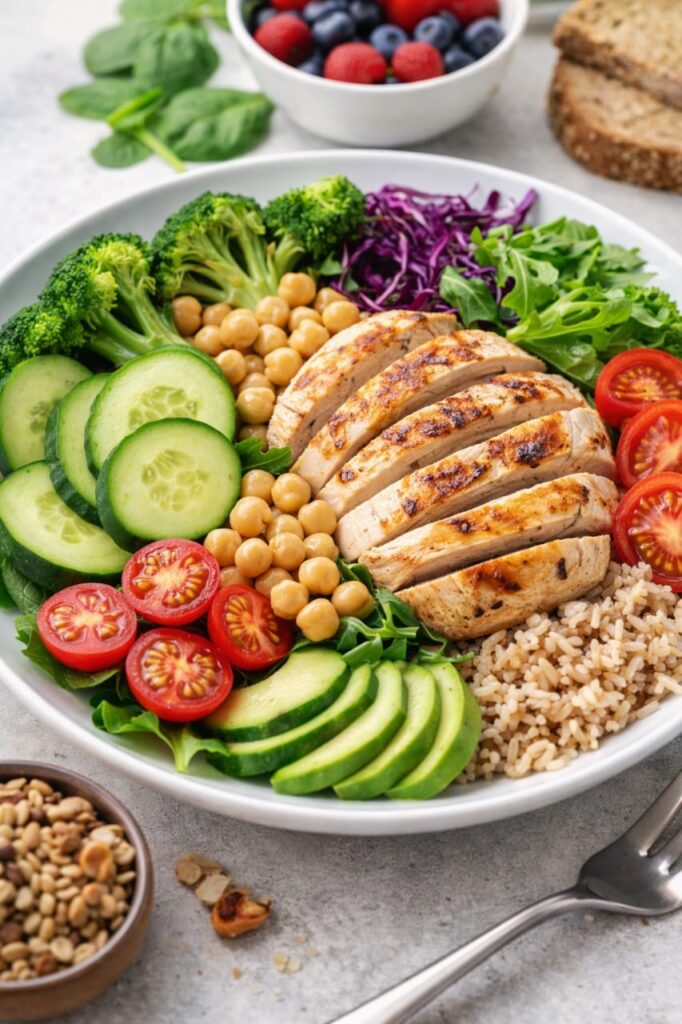
1. Eat a Variety of Foods
No single food has all the nutrients your body needs. That’s why variety matters.
Fruits & Vegetables: Aim for different colors — each color provides unique vitamins, minerals, and antioxidants.
Whole Grains: Choose brown rice, oats, whole wheat bread, and quinoa instead of refined grains.
Proteins: Include lean sources like beans, lentils, eggs, fish, poultry, tofu, and nuts.
Healthy Fats: Avocado, olive oil, seeds, and nuts support heart and brain health.
Tip: Try to “eat the rainbow” — pick fruits and vegetables of different colors throughout the week.
2. Balance Your Plate
A simple rule for balanced meals is:
½ plate of fruits and vegetables
¼ plate lean protein
¼ plate whole grains
Add a small portion of healthy fats
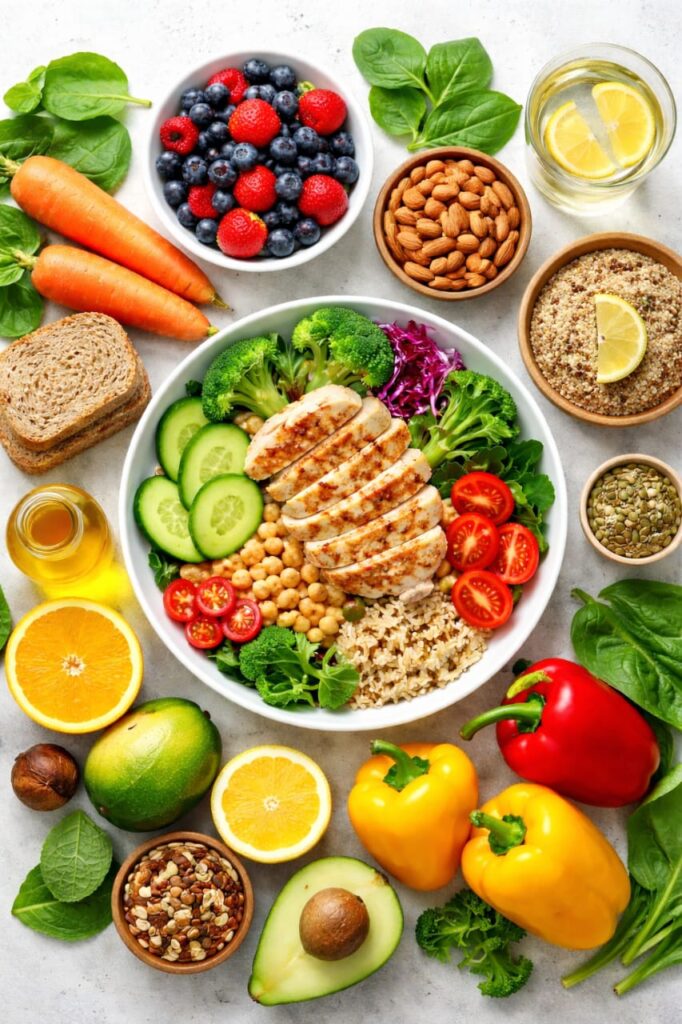
This structure helps you get a mix of carbohydrates, fats, and proteins — all essential for energy, growth, and repair.
3. Practice Portion Awareness
Even healthy foods can contribute to weight gain if eaten in excess. Portion awareness isn’t about strict measuring — it’s about being mindful.
Practical ideas:
Use smaller plates to naturally reduce portions.
Pause midway through eating to check if you’re full.
Learn basic portion sizes (e.g., a serving of protein ≈ the size of your palm).
4. Listen to Your Body
We often eat based on emotions, boredom, or stress — not hunger. Mindful eating helps you recognize real hunger cues and avoid overeating.
Ask yourself before eating:
“Am I truly hungry?”
“Will this food help me feel good afterward?”
“Am I eating for fuel or emotion?”
Mindful eating cultivates a healthier relationship with food.
Common Barriers to Healthy Eating and How to Overcome Them
Busy Lifestyle
Barrier: No time to prepare nutritious meals.
Solution: Meal prep once or twice a week. Chop vegetables, cook proteins, and store ready-to-eat foods.
Cravings for Unhealthy Foods
Barrier: Sugary, salty snacks are tempting.
Solution: Keep healthy snacks like fruits, nuts, yogurt, or carrot sticks within reach.
Confusing Nutrition Information
Barrier: Mixed messages about diets everywhere.
Solution: Focus on whole foods and balance rather than strict rules.
Simple Healthy Eating Habits You Can Start Today
✔ Drink water first thing in the morning
✔ Include vegetables in every meal
✔ Replace sugary drinks with water or herbal tea
✔ Swap refined grains for whole grains
✔ Eat lean proteins regularly
✔ Limit processed snacks and fast food
✔ Practice mindful eating
These small habits add up over time and make a big difference.
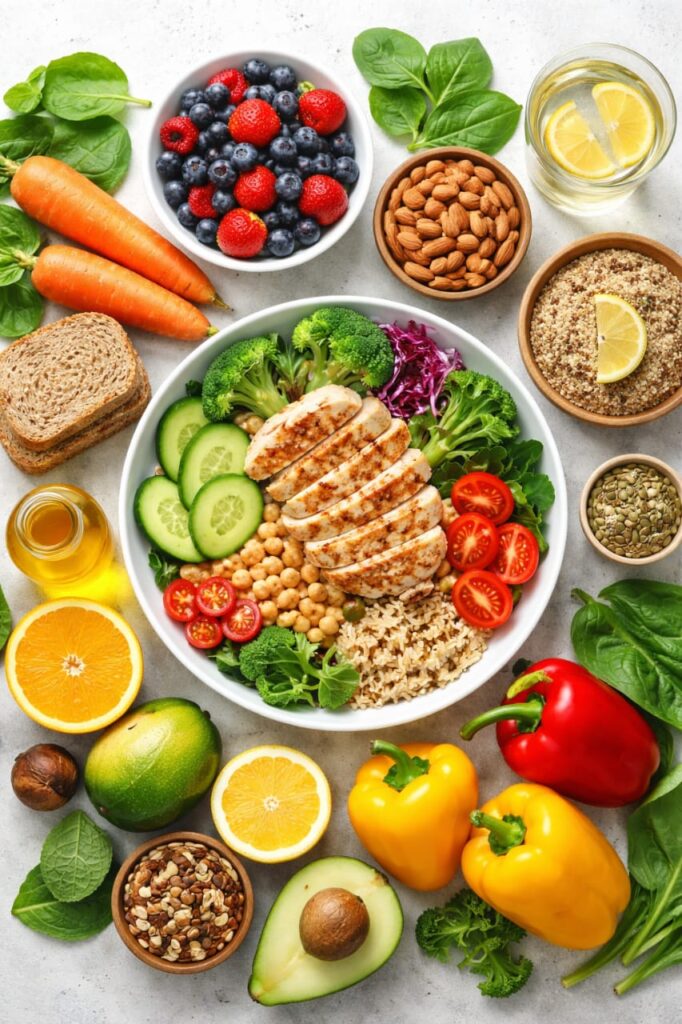
Real-Life Example: A Healthy Day of Eating
Meal What to Eat
Breakfast Oatmeal with berries, chia seeds, and Greek yogurt
Snack: Apple slices with peanut butter
Lunch: Grilled chicken salad with quinoa and mixed veggies
Snack: Handful of almonds + green tea
Dinner: Baked fish with brown rice and steamed broccoli
Optional Treak Dark chocolate square
This kind of meal plan supports energy, nutrients, balance, and satisfaction.
Frequently Asked Questions (FAQs)
- What are healthy eating habits?
Healthy eating habits mean choosing a balanced diet that includes fruits, vegetables, whole grains, lean proteins, and healthy fats. It also involves eating at regular times, controlling portion sizes, and avoiding excessive junk or processed foods. - How can I start healthy eating habits daily?
You can start by making small changes like drinking more water, eating more home-cooked meals, adding fruits and vegetables to your plate, and reducing sugary snacks. Consistency matters more than perfection. - Is it necessary to give up favorite foods to eat healthily?
No, healthy eating does not mean giving up your favorite foods completely. The key is moderation. You can enjoy your favorite foods occasionally while focusing on nutritious choices most of the time. - How do healthy eating habits improve overall health?
Healthy eating habits help improve digestion, boost energy levels, support weight management, strengthen immunity, and reduce the risk of lifestyle diseases such as diabetes and heart problems. - Can healthy eating habits be followed on a budget?
Yes, healthy eating can be budget-friendly. Buying seasonal fruits and vegetables, cooking at home, and avoiding packaged foods can help you eat healthy without spending too much money.
Conclusion
On my Healthy Tips blog, I always believe in simple and practical health advice. Healthy eating isn’t about strict rules or deprivation. It’s about awareness, balance, and consistency. By choosing nutrient-rich foods, listening to your body, and building simple habits, you create a foundation for lifelong wellness.
Start small. Celebrate progress. And remember: every healthy choice — no matter how tiny — moves you closer to your best self.
If you want meal plans, weekly shopping lists, or recipes next, just let me know! If you found this article helpful, share it with your friends and family and start your healthy eating journey today.
Disclaimer:
This article is for informational and educational purposes only and does not replace professional medical or nutritional advice. Individual health needs may vary. Always consult a qualified healthcare provider or registered dietitian before making significant changes to your diet or eating habits.
By Life Balance Tips Team