
Introduction
Simple Stretching Exercises for Beginners In today’s fast-paced lifestyle, simple stretching exercises for beginners, our bodies often become stiff due to long working hours, mobile usage, lack of physical activity, poor posture, stress, and sitting for long periods. Stretching is one of the simplest ways to release tension, improve flexibility, and maintain joint health—yet most beginners don’t know where to start.
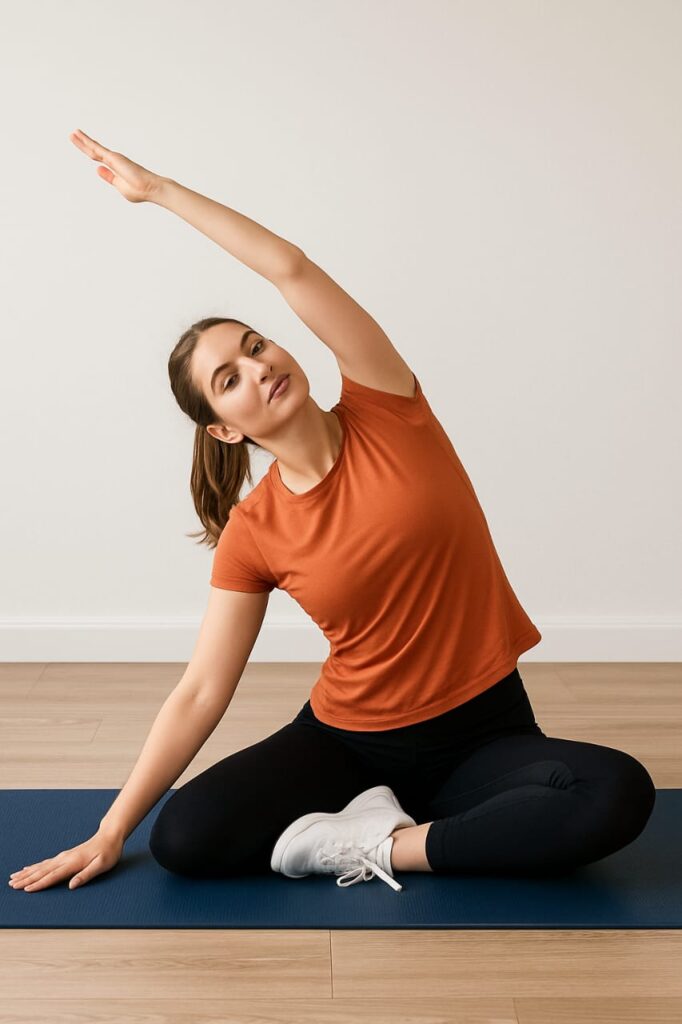
Simple Stretching Exercises for Beginners
Table of Contents
Sr No Stretch Name Target Area Ideal Duration Difficulty
| 1. Neck Stretch | Neck muscles | 15–20 seconds | Easy |
| 2. Shoulder Stretch | 6. Quad Stretch | shoulders & upper back | Easy |
| 3. chest Opener Stretches | Chest & arms | 20 seconds | Easy |
| 4. Side Stretch | Obliques & rib muscles | 20–25 seconds | Easy |
| 5. Hamstring Stretch | Back & legs | 20–25 seconds | Medium |
| 6.Quad Stretch | Thigh muscles | 20–30 seconds | Medium |
| 7. Cat-Cow Stretch | Spine & core | 10–12 repetitions | Easy |
| 8. Child’s Pose | Back & hips | 30–40 seconds | Easy |
| 9. Butterfly Stretch | Inner thighs & hips | 20–30 seconds | Easy |
| 10. Calf Stretch | Lower leg | 20–25 seconds | Easy |
1. What Are Simple Stretching Exercises for Beginners?
Simple stretching exercises for beginners are easy, low-impact movements designed to loosen tight muscles, improve circulation, increase flexibility, and reduce the risk of injury. These exercises do not require any equipment, gym membership, or athletic background, which makes them perfect for everyone.
Whether you’re a teen, adult, or senior citizen, performing simple stretching exercises for beginners can enhance your posture, reduce stress, and relieve stiffness—especially if you sit for long hours.
2. Benefits of Simple Stretching Exercises for Beginners
Stretching offers dozens of health benefits, especially for beginners. Here are the most important ones:
✔ 1. Improved Flexibility
Stretching gradually lengthens your muscles, making daily activities easier.
✔ 2. Reduced Muscle Stiffness
If your neck, back, or legs feel tight, stretching gives quick relief.
✔ 3. Better Posture
It corrects rounded shoulders, forward neck posture, and slouching.
✔ 4. Increased Blood Circulation
More oxygen reaches your muscles, improving strength and recovery.
✔ 5. Stress Relief
Stretching relaxes the body and calms the mind.
✔ 6. Lower Risk of Injuries
It prepares your body for physical activity and prevents muscle strain.
✔ 7. Pain Relief
Excellent for people suffering from back pain, shoulder pain, or knee stiffness.
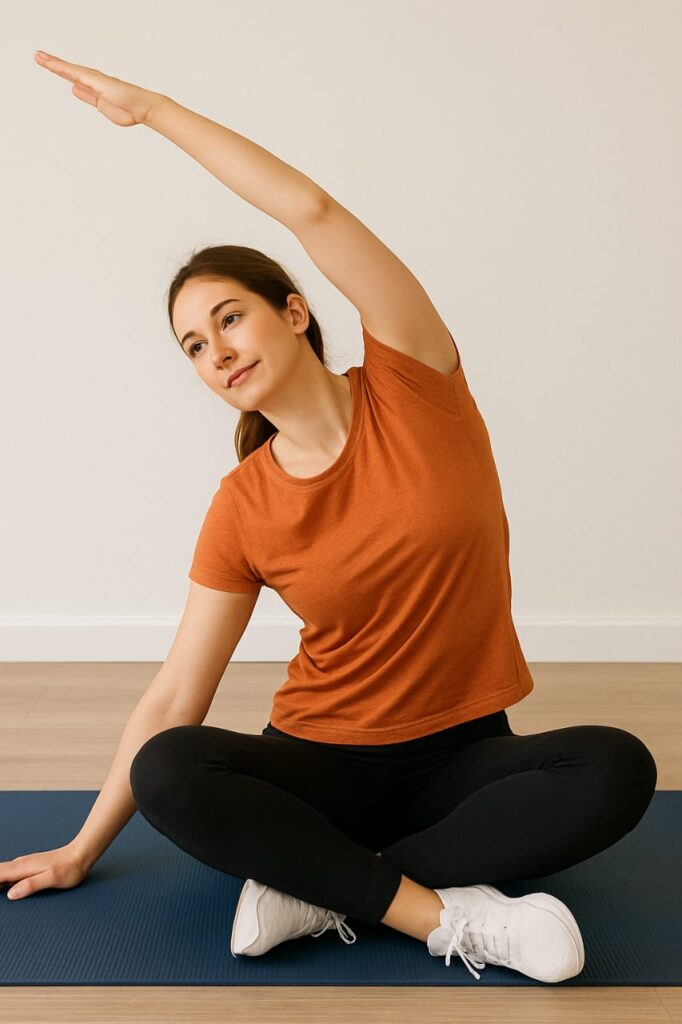
3. 12 Simple Stretching Exercises for Beginners (Step-by-Step)
Simple stretching exercises for beginners
- Begin with a light warm-up stretch.
- Move into shoulder rotation exercises.
- Perform basic hamstring stretches.
- Add a gentle back stretch.
- Finish with deep breathing and a cooldown.
This is the main section of the article and includes detailed instructions.
1. Neck Stretch
How to Do It
1. Sit or stand straight.
2. Slowly tilt your head to the right.
3. Use your right hand to gently pull your head down.
4. Hold for 20 seconds.
5. Repeat on the left side.
Benefits
Relieves neck stiffness
Reduces headaches caused by tension
Precautions
Avoid pulling too hard if you have cervical pain
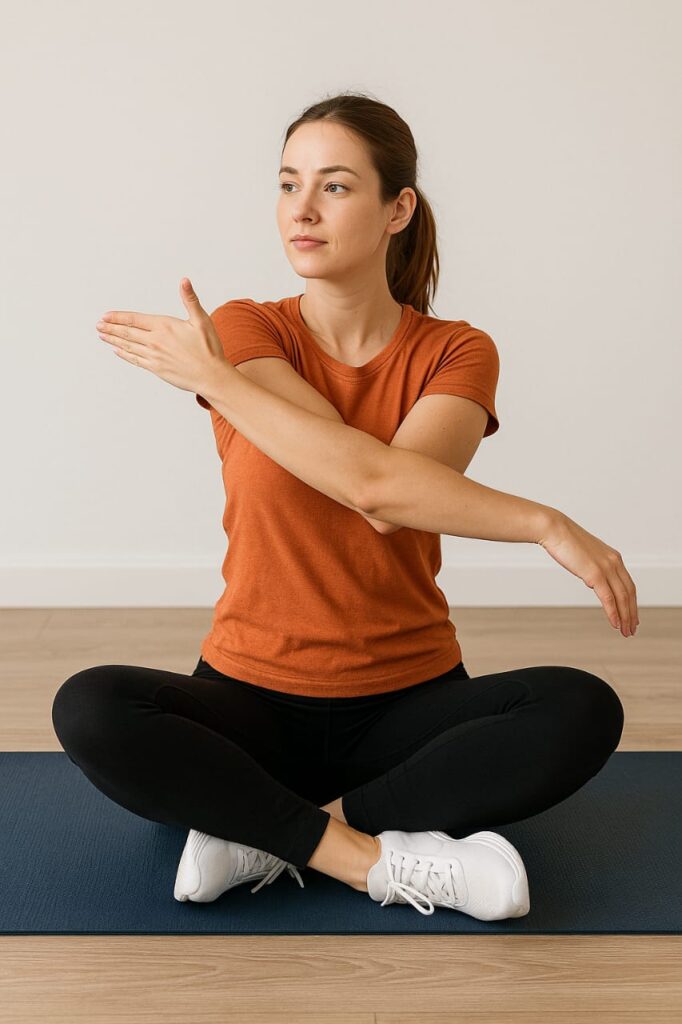
2. Shoulder Stretch
How to Do It
1. Stand straight.
2. Bring your right arm across your chest.
3. Use your left arm to push it inward.
4. Hold for 20–30 seconds.
5. Switch arms.
Benefits
Loosens tight shoulders
Great for students & office workers
3. Chest Opener Stretch
How to Do It
1. Stand straight.
2. Interlock your fingers behind your back.
3. Lift your hands gently and pull your shoulders back.
4. Hold for 20 seconds.
Benefits
Corrects posture
Opens tight chest muscles
Improves breathing capacity
4. Side Stretch
How to Do It
1. Stand with your feet shoulder-width apart.
2. Raise your right arm overhead.
3. Bend towards the left side.
4. Hold for 25 seconds.
5. Repeat on the other side.
Benefits
Loosens waist & rib muscles
Great for posture & flexibility
5. Hamstring Stretch
How to Do It
1. Sit on the floor with legs extended.
2. Bend forward and try to touch your toes.
3. Hold for 30 seconds.
Benefits
Improves leg flexibility
Reduces lower back pain
6. Quad Stretch
How to Do It
1. Stand on one leg.
2. Bend your right knee and pull the ankle toward your hips.
3. Hold for 20–30 seconds.
4. Switch legs.
Benefits
Strengthens thigh muscles
Improves balance
7. Cat-Cow Stretch
How to Do It
1. Come into tabletop position.
2. arch your BACK upwards (Cat).
3. Drop your belly down (Cow).
4. Repeat 10–12 times.
Benefits
Improves spine mobility
Excellent for back pain
8. Child’s Pose
How to Do It
1. Kneel on the floor.
2. Sit back on your heels.
3. Stretch your arms forward.
4. Hold for 30–40 seconds.
Benefits
Full-body relaxation
Relieves stress & anxiety
9. Butterfly Stretch
How to Do It
1. Sit with your feet together.
2. Hold your feet with both hands.
3. Gently push knees down.
4. Hold for 20–30 seconds.
Benefits
Opens hips
Strengthens groin muscles
10. Calf Stretch
How to Do It
1. Stand facing a wall.
2. Put one leg behind and press the heel down.
3. Lean forward.
4. Hold for 25 seconds.
Benefits
Loosens calf muscles
Improves walking & running ability
Simple stretching exercises for beginners
4. 10-Minute Daily Stretching Routine for Beginners
Time Stretch
0:00–1:00 Neck + Shoulder Stretch
1:00–2:00 Chest Opener
2:00–3:00 Side Stretch
3:00–5:00 Hamstring + Quad Stretch
5:00–6:00 Cat-Cow
6:00–7:00 Butterfly
7:00–10:00 Child’s Pose + Calf Stretch
This routine effectively covers the entire body.
Frequently Asked Questions (FAQs)
- Are stretching exercises safe for beginners?
Yes, simple stretching exercises are safe for beginners when done slowly and without forcing the body. Always stretch within a comfortable range. - How long should beginners hold each stretch?
Beginners should hold each stretch for 15–30 seconds and repeat 2–3 times while breathing normally. - How often should beginners do stretching exercises?
Stretching can be done daily or at least 4–5 times a week to improve flexibility and reduce muscle stiffness. - What is the best time to do stretching exercises?
Stretching can be done in the morning, after workouts, or before bedtime to relax muscles and reduce stress. - Can stretching help reduce stress and anxiety?
Yes, stretching helps relax muscles, improve blood circulation, and calm the nervous system, which can reduce stress and anxiety. - Do I need any equipment for stretching exercises?
No, most beginner stretching exercises can be done without any equipment at home. - Can stretching help with back and neck pain?
Yes, gentle stretching can help reduce back and neck pain caused by poor posture, long sitting hours, or muscle tightness. - Should I stretch if my muscles feel sore?
Light stretching can help relieve soreness, but avoid stretching if you feel sharp pain or discomfort.
6. Conclusion
Stretching is one of the easiest and most powerful ways to improve your physical and mental health. These simple stretching exercises for beginners strengthen your muscles, improve flexibility, reduce pain, and improve overall well-being. You don’t need equipment, a trainer, or a gym—just 10 minutes daily can make a big difference.
Start with the exercises in this guide, stay consistent, and you will notice amazing results with
Written by Ahsan Ali – Health & Wellness Content Writer