
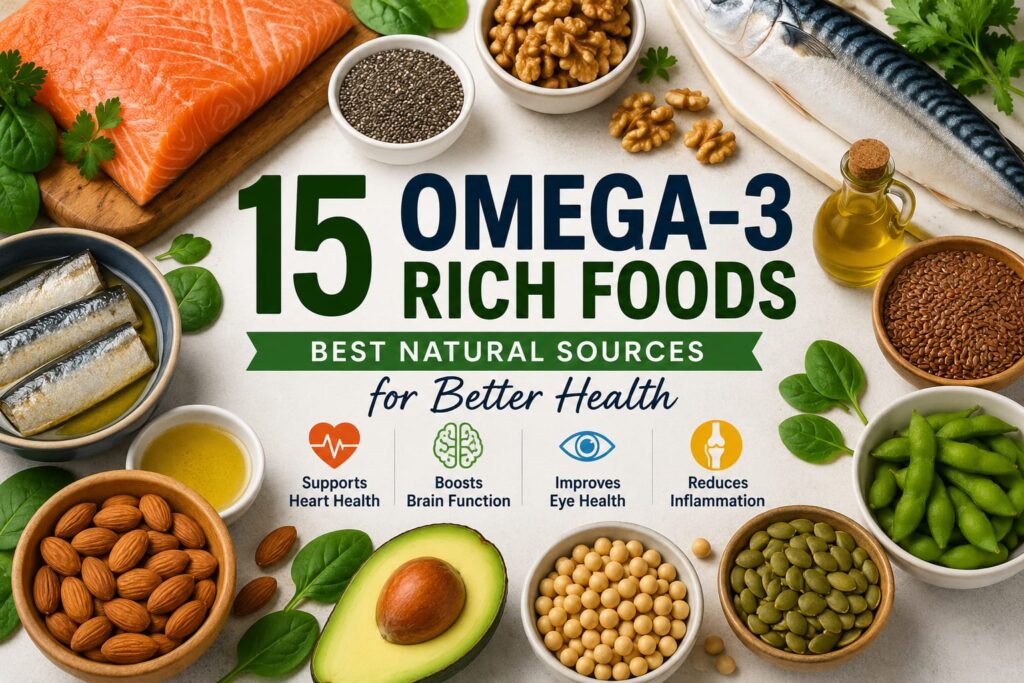
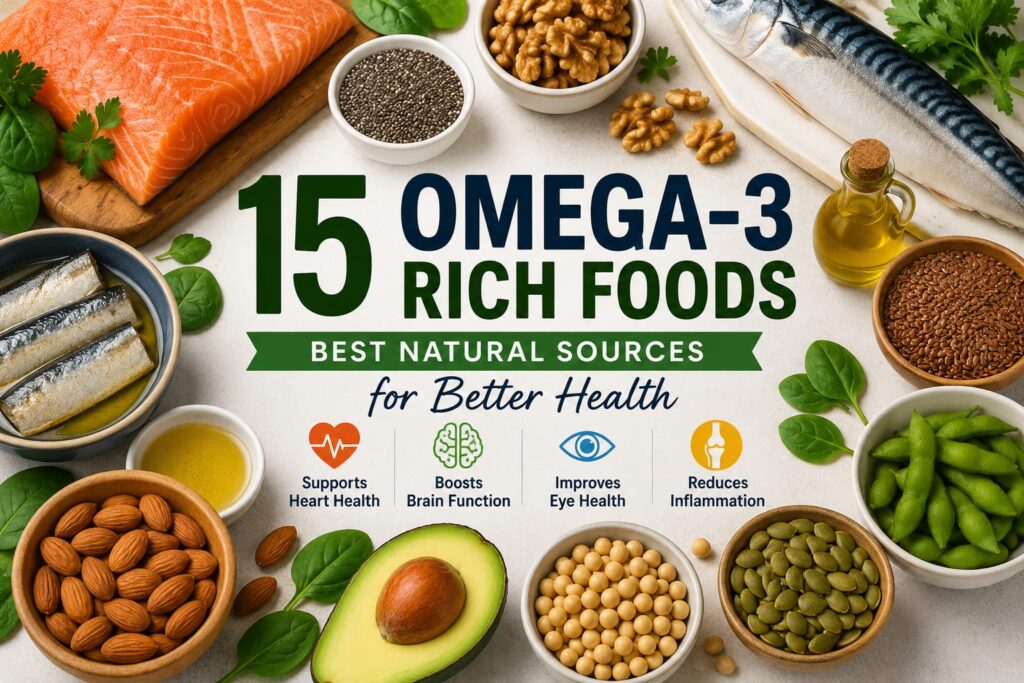
Omega-3 fatty acids are among the most important nutrients your body needs for overall wellness. They play a key role in supporting heart health, brain function, eye health, and reducing inflammation. Since the human body cannot produce enough omega-3 fatty acids on its own, getting them from your daily diet is essential.
Choosing the right Omega-3 Rich Foods can be one of the easiest ways to improve your overall nutrition naturally. Whether you eat fish or follow a vegetarian diet, there are many delicious foods that can help you meet your daily omega-3 needs.
In this guide, you’ll discover the 15 best Omega-3 Rich Foods, their nutritional benefits, and simple ways to include them in your daily meals for a healthier lifestyle.
Why Are Omega-3 Fatty Acids Important?
Omega-3 fatty acids are healthy polyunsaturated fats that support many essential functions in the body. They are generally considered an important part of a balanced diet.
The three main types include:
- ALA (Alpha-Linolenic Acid): Found mainly in plant-based foods.
- EPA (Eicosapentaenoic Acid): Mostly found in fatty fish.
- DHA (Docosahexaenoic Acid): Important for brain and eye health and commonly found in seafood.
Eating Omega-3 Rich Foods regularly may help support:
- Heart health
- Brain function
- Healthy cholesterol levels
- Joint comfort
- Eye health
- Healthy skin
- Normal inflammatory response
- Overall wellness
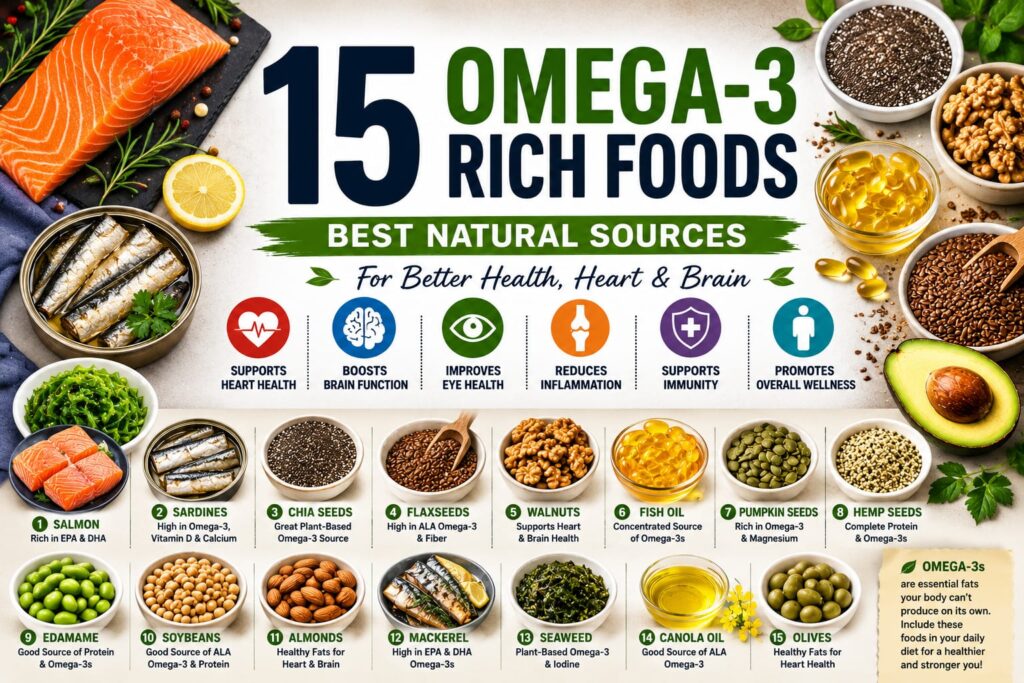
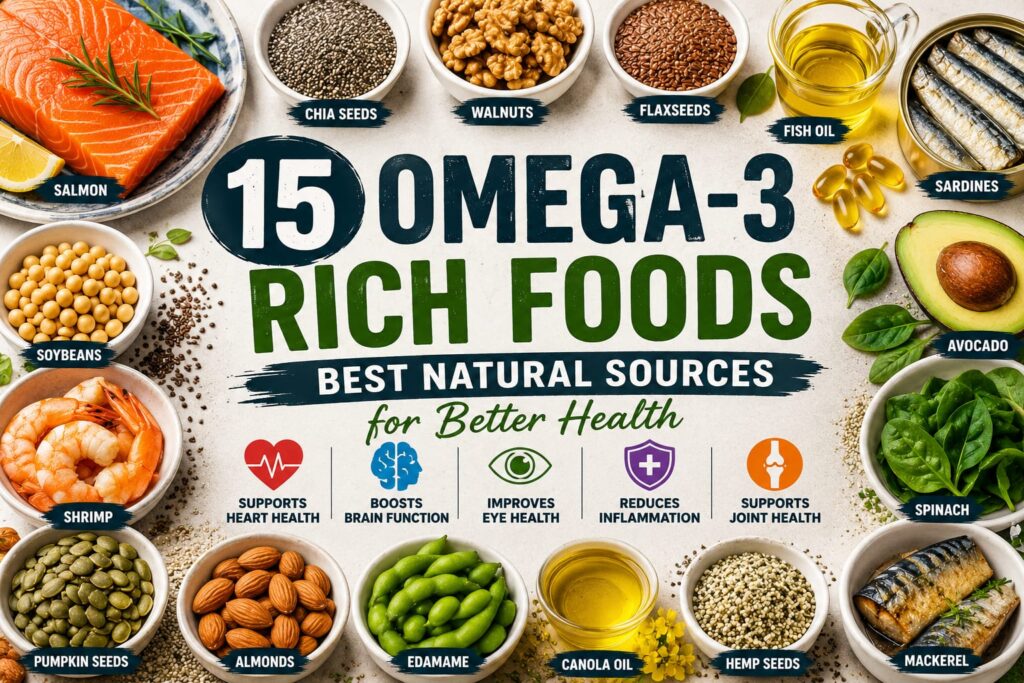
Top 15 Omega-3 Rich Foods
1. Salmon
Salmon is widely regarded as one of the Best Omega-3 Foods available.
Benefits
- Rich in EPA and DHA
- Supports heart health
- May help maintain healthy brain function
- High-quality protein source
- Rich in vitamin D and selenium
Easy Ways to Eat
- Grilled salmon
- Baked salmon
- Salmon salad
- Salmon sandwiches
2. Sardines
Sardines are small oily fish packed with nutrients and healthy fats.
Benefits
- Excellent source of omega-3 fatty acids
- High in calcium
- Rich in vitamin B12
- Supports bone and heart health
They are among the best Foods High in Omega-3 for people looking for affordable seafood options.
3. Mackerel
Mackerel is another fatty fish known for its impressive nutritional profile.
Benefits
- Rich in EPA and DHA
- High-quality protein
- Good source of vitamin D
- Supports cardiovascular health
Grilled or baked mackerel makes a nutritious lunch or dinner.
4. Herring
Herring is popular in many countries and is considered one of the excellent Natural Sources of Omega-3.
Benefits
- Supports heart health
- Provides vitamin B12
- Rich in selenium
- Contains healthy fats
5. Tuna
Fresh tuna contains beneficial omega-3 fats while providing lean protein.
Benefits
- Supports muscle health
- Good protein source
- Contains essential minerals
- May support healthy heart function
Choose grilled or baked tuna instead of fried options whenever possible.
6. Chia Seeds
Chia seeds are among the best Omega-3 Rich Vegetarian Foods.
Benefits
- Rich in ALA omega-3
- High in dietary fiber
- Contains antioxidants
- Supports digestive health
Ways to Enjoy
- Smoothies
- Yogurt
- Oatmeal
- Overnight oats
- Chia pudding
7. Flaxseeds
Flaxseeds are one of the richest plant-based sources of omega-3.
Benefits
- High in ALA
- Rich in fiber
- Contains lignans
- Supports digestive wellness
Ground flaxseeds are easier for the body to digest than whole seeds.
8. Walnuts
Walnuts are among the healthiest nuts and excellent Foods Rich in Healthy Fats.
Benefits
- Plant-based omega-3
- Rich in antioxidants
- Supports brain health
- Healthy snack option
Enjoy a small handful as a daily snack or add them to salads.
9. Hemp Seeds
Hemp seeds are becoming increasingly popular for their balanced nutrition.
Benefits
- Rich in healthy fats
- Good plant protein source
- Contains magnesium
- Supports overall wellness
They can easily be sprinkled over cereals or salads.
10. Soybeans
Soybeans provide protein along with plant-based omega-3 fats.
Benefits
- Good vegetarian protein
- Supports muscle health
- Rich in minerals
- May support heart health
Boiled soybeans make a healthy snack.
11. Edamame
Edamame are young soybeans that are both delicious and nutritious.
Benefits
- Plant protein
- Rich in fiber
- Contains omega-3
- Supports healthy digestion
Steam them lightly with a pinch of sea salt.
12. Brussels Sprouts
Although they contain smaller amounts of omega-3, Brussels sprouts are nutrient-rich vegetables.
Benefits
- Rich in vitamin C
- High fiber
- Supports digestive health
- Contains antioxidants
Roasting enhances their flavor.
13. Kidney Beans
Kidney beans provide a modest amount of ALA omega-3 while also offering fiber and protein.
Benefits
- Supports digestive health
- Helps increase plant protein intake
- Rich in iron
- Budget-friendly food
Include them in soups, salads, or curries.
14. Seaweed
Seaweed is one of the few plant foods containing small amounts of DHA.
Benefits
- Rich in minerals
- Supports thyroid health
- Contains antioxidants
- Nutritious addition to meals
Use dried seaweed in soups or salads.
15. Canola Oil
Canola oil contains more omega-3 than many common cooking oils.
Benefits
- Healthy cooking option
- Contains ALA
- Suitable for everyday cooking
- Supports a balanced diet
Use it in moderation as part of healthy meal preparation.
Omega-3 Content in Common Foods
| Food | Type of Omega-3 | Main Benefits |
| Salmon | EPA & DHA | Heart and brain health |
| Sardines | EPA & DHA | Heart support |
| Mackerel | EPA & DHA | Healthy fats and protein |
| Tuna | EPA & DHA | Lean protein |
| Herring | EPA & DHA | Cardiovascular support |
| Chia Seeds | ALA | Fiber and healthy fats |
| Flaxseeds | ALA | Digestive support |
| Walnuts | ALA | Brain-supporting nutrients |
| Hemp Seeds | ALA | Protein and minerals |
| Soybeans | ALA | Plant protein |
| Edamame | ALA | Fiber and protein |
| Brussels Sprouts | Small amount of ALA | Vitamins and antioxidants |
| Kidney Beans | Small amount of ALA | Fiber and minerals |
| Seaweed | Small DHA | Minerals and antioxidants |
| Canola Oil | ALA | Healthy cooking fat |
Related: Learn about Foods to Improve Blood Circulation Naturally for better heart and vascular health.
How to Add More Omega-3 Rich Foods to Your Diet
Making small dietary changes can help increase your intake of Omega-3 Rich Foods.
Try these simple ideas:
- Eat fatty fish two times per week.
- Add chia or flaxseeds to breakfast.
- Snack on walnuts.
- Include soybeans or edamame in salads.
- Use canola oil for cooking.
- Add seaweed to soups.
- Mix hemp seeds into smoothies.
- Choose whole foods instead of processed snacks.
Tips to Get the Most Benefits
To enjoy the benefits of Omega-3 Foods for Heart Health, consider these healthy habits:
- Eat a variety of plant and seafood sources.
- Pair healthy fats with fruits and vegetables.
- Limit highly processed foods.
- Stay physically active.
- Drink enough water.
- Maintain a balanced diet throughout the week.
Consistency matters more than eating large amounts occasionally.
Source: Learn more about omega-3 fats from the National Institutes of Health (NIH).
Who May Benefit from Omega-3 Rich Foods?
Many people can benefit from including Omega-3 Rich Foods as part of a healthy eating pattern.
These foods are often recommended for:
- Adults focused on heart health
- Students supporting brain function
- Older adults maintaining overall wellness
- Vegetarians choosing plant-based omega-3 options
- People aiming to improve their overall diet quality
Also Read: Discover the Best Foods to Lower Cholesterol Naturally to support your heart health and overall wellness.
Frequently Asked Questions (FAQs)
1. Which food has the highest amount of omega-3?
Fatty fish such as salmon, sardines, and mackerel are generally considered among the richest natural sources of EPA and DHA omega-3 fatty acids.
2. Are vegetarian omega-3 foods effective?
Yes. Chia seeds, flaxseeds, walnuts, hemp seeds, soybeans, and edamame provide ALA, a plant-based omega-3 that contributes to a healthy diet.
3. How often should I eat omega-3-rich foods?
Many healthy eating guidelines encourage including omega-3-rich foods several times each week as part of a balanced diet.
4. Can omega-3 foods support heart health?
Research suggests that diets including Omega-3 Foods for Heart Health may help support normal heart function when combined with an overall healthy lifestyle.
5. Which fish contains the most omega-3?
Salmon, sardines, herring, and mackerel are among the richest fish sources of omega-3 fatty acids.
6. Can children eat omega-3-rich foods?
Yes. Many omega-3-rich foods such as fish, walnuts, and seeds can be included in age-appropriate, balanced diets. Parents should prepare foods safely and consider any allergies.
7. Are cooking methods important?
Yes. Baking, grilling, steaming, or lightly roasting foods can help preserve their nutritional quality better than deep frying.
8. Can I get enough omega-3 from food alone?
Many people can meet their omega-3 needs by eating a balanced diet that regularly includes fish, seeds, nuts, legumes, and other natural food sources.
Including a variety of Omega-3 Rich Foods in your weekly diet is a simple way to support long-term health.
What are the best Omega-3 Rich Foods for vegetarians?
Eating Omega-3 Rich Foods regularly can help support heart, brain, and eye health as part of a balanced diet.
Disclaimer
This article is intended for educational and informational purposes only. It does not replace professional medical advice, diagnosis, or treatment. Individual nutritional needs may vary depending on age, health conditions, and lifestyle. If you have a medical condition, food allergy, or specific dietary concern, consult a qualified healthcare professional or registered dietitian before making significant dietary changes.
Conclusion
Adding Omega-3 Rich Foods to your daily meals is one of the simplest ways to support long-term health naturally. From fatty fish like salmon and sardines to plant-based options such as chia seeds, flaxseeds, walnuts, and soybeans, there are plenty of delicious choices for every eating style.
Rather than relying on a single food, aim for a varied and balanced diet filled with Natural Sources of Omega-3, colorful fruits and vegetables, whole grains, lean proteins, and other Foods Rich in Healthy Fats. Combined with regular physical activity, good sleep, and healthy lifestyle habits, these nutrient-rich foods may help support heart health, brain function, and overall well-being for years to come.
By Life Balance Tips Team