
Why do I feel tired after eating? If you often feel sleepy, sluggish, or low on energy after a meal, several factors may be responsible. Learn seven possible reasons, simple habits that may help, and when to seek medical advice.
Why do I feel tired after eating? If you often feel sleepy or low on energy after meals, several factors may be responsible. Learn about the possible causes and simple habits that may help.
Feeling a little tired after a meal is common. However, if it happens frequently, affects your work, or comes with other symptoms, it is worth understanding what might be causing it.
The medical term for sleepiness after eating is postprandial somnolence, often called a food coma. Several factors may contribute, including meal size, your body’s natural daily rhythm, sleep quality, and certain health conditions.
In this article, we explain seven possible reasons you feel tired after eating, practical habits that may help, and signs that mean you should speak with a healthcare professional.
Why Do You Feel Tired After Eating?
After a meal, your body begins processing nutrients and responding to signals from your digestive system. At the same time, your natural body clock may affect your alertness, especially in the afternoon.
Researchers believe that several biological processes contribute to post-meal sleepiness. It is not simply because blood leaves your brain and moves to your stomach.
Occasional mild sleepiness may be harmless. Frequent, severe, or unexplained fatigue deserves more attention.
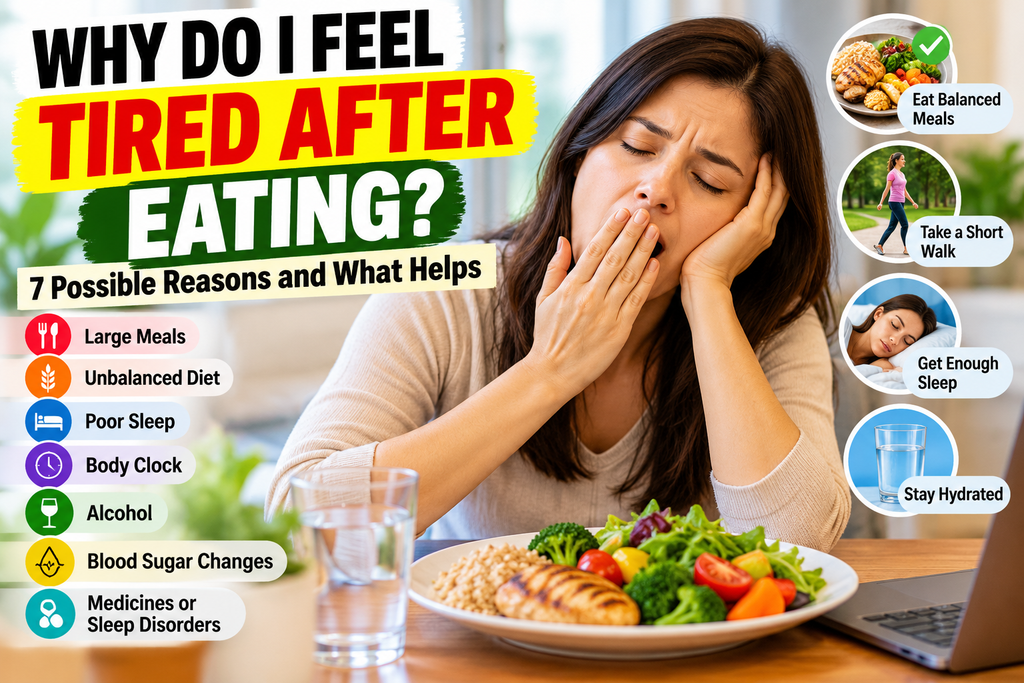
1. You May Be Eating Large Meals
One possible reason for feeling tired after eating is the size of your meal.
Large meals often provide more energy and may be associated with stronger feelings of sleepiness than smaller meals. You may notice this after a large lunch or a heavy dinner.
For example, eating a very large portion when you are extremely hungry may leave you feeling uncomfortably full and less alert afterward.
What may help:
- Try eating portions that leave you comfortably satisfied rather than overly full.
- Eat slowly and give yourself time to notice when you feel satisfied.
- If large meals consistently make you uncomfortable, consider whether smaller, balanced meals work better for you.
- Avoid skipping meals and then eating an unusually large amount at once.
You do not need to eat tiny meals or restrict your food unnecessarily. The goal is to find a comfortable, balanced eating pattern that meets your nutritional needs.
2. Your Meal May Be Low in Fiber and Unbalanced
The overall composition of your meal may influence how you feel afterward.
A meal made mostly of refined carbohydrates or sugary foods may provide less fiber and fewer essential nutrients than a balanced meal. However, carbohydrates are not inherently unhealthy, and eating them does not automatically cause fatigue.
Instead of focusing on eliminating one food group, consider the balance of your meal.
Try building a balanced plate with:
- Vegetables and fruit: Sources of fiber, vitamins, and minerals.
- Whole grains: Foods such as oats, brown rice, and whole-grain bread.
- Protein: Options such as beans, lentils, eggs, fish, tofu, or yogurt.
- Healthy fats: Foods such as nuts, seeds, and olive oil.
For example, a meal containing lentils, vegetables, and whole-grain roti may offer a useful combination of protein, fiber, and carbohydrates.
Your ideal meal will depend on your nutritional needs, preferences, culture, and health conditions.
3. You May Not Be Getting Enough Quality Sleep
Sometimes, the real reason you feel tired after eating is not the food itself. You may already be sleep-deprived before you sit down for a meal.
A meal can make existing sleepiness more noticeable, particularly during the afternoon when many people experience a natural dip in alertness.
Adults generally need around seven to nine hours of sleep per night, although individual needs vary.
To support better sleep:
- Keep a reasonably consistent bedtime and wake-up time.
- Create a quiet, comfortable sleeping environment.
- Reduce bright-screen exposure before bed if it interferes with your sleep.
- Avoid consuming caffeine late in the day if it affects your ability to sleep.
- Discuss persistent snoring or interrupted breathing during sleep with a healthcare professional.
If you regularly feel exhausted despite getting enough sleep, consider seeking medical advice rather than assuming your diet is the only cause.
If you frequently wonder, “Why do I feel tired after eating?” consider your meal size, food choices, sleep quality, and daily habits.
4. Your Body Clock May Be Affecting Your Energy
Have you ever felt sleepy after lunch even when you slept well and ate a normal meal?
Your circadian rhythm is your body’s internal 24-hour timing system. It influences sleep, alertness, and other biological processes.
Many people experience a natural reduction in alertness during the early afternoon. Eating a meal around this time may make the feeling more noticeable.
What may help:
- Get some natural daylight during the day when practical.
- Take a short walk if you feel comfortable doing so.
- Change activities briefly instead of sitting in the same position for hours.
- Maintain a consistent sleep schedule.
A short walk may help you feel more alert, but it is not a guaranteed cure for post-meal sleepiness. You can also try a brief rest if your schedule allows.
5. You May Be Drinking Alcohol With Your Meal
Alcohol can contribute to drowsiness and may interfere with the quality of your sleep.
If you feel unusually sleepy after meals that include alcohol, it may be one contributing factor.
The safest option is to avoid alcohol, particularly if it makes you drowsy or if you take medicines that interact with it.
Never drive, operate machinery, or perform another safety-sensitive activity when you feel sleepy or impaired.
6. Blood Sugar Changes or a Medical Condition May Be Involved
Occasional sleepiness after eating does not automatically mean you have diabetes or a blood sugar problem.
However, repeated fatigue after meals may sometimes occur alongside an underlying medical condition.
For example, reactive hypoglycemia involves blood sugar falling after a meal, typically within several hours. Symptoms may include shakiness, sweating, hunger, dizziness, weakness, or confusion.
Diabetes, anemia, sleep disorders, medication effects, and other health problems can also contribute to fatigue, although tiredness alone cannot identify the cause.
Pay attention to patterns such as:
- Feeling shaky, sweaty, or dizzy a few hours after eating.
- Becoming unusually thirsty or urinating more frequently than usual.
- Experiencing persistent tiredness that affects everyday activities.
- Feeling sleepy during the day despite regularly getting enough sleep.
If these symptoms occur repeatedly, arrange an appointment with a healthcare professional. They can assess your symptoms and determine whether tests, such as blood glucose testing or blood counts, are appropriate.
Do not start supplements, change prescribed medicines, or dramatically restrict carbohydrates based only on post-meal sleepiness.
7. Your Medicines or Sleep Disorders May Be Contributing
Some medicines can cause drowsiness. Examples may include certain antihistamines, sedatives, and some medicines used for mental health or other medical conditions.
Sleep disorders can also cause excessive daytime sleepiness. Obstructive sleep apnea, for example, may interrupt breathing during sleep and leave a person tired during the day.
Consider speaking with a healthcare professional if you:
- Feel sleepy most days, even after adequate sleep.
- Snore loudly or have pauses in breathing during sleep.
- Have recently started a medicine and noticed increased drowsiness.
- Experience fatigue that is unexplained or persistent.
Do not stop taking prescribed medication on your own. A healthcare professional or pharmacist can review possible side effects and discuss safe alternatives when appropriate.
5 Practical Habits That May Help You Feel Better After Meals
If you experience mild, occasional sleepiness after eating, these habits may help you identify contributing factors.
1. Choose balanced meals
Include a combination of vegetables, fiber-rich carbohydrates, protein, and healthy fats. You do not need to avoid carbohydrates completely.
2. Pay attention to portion size
Notice whether unusually large meals leave you feeling more sluggish. Adjust portions gradually without undereating.
3. Keep a simple food and symptom diary
For several days, record what you ate, when you felt tired, how long the feeling lasted, and how well you slept.
This may help you notice patterns to discuss with a healthcare professional. It cannot diagnose a medical condition.
4. Move gently after eating
If you feel well enough, try a short, comfortable walk after a meal. Walking may support general health and help some people feel more alert.
Avoid strenuous activity if you feel dizzy, weak, or unwell.
5. Prioritize consistent sleep
Maintain a regular sleep routine and pay attention to signs of poor sleep quality. Improving sleep may help if sleep deprivation is contributing to daytime tiredness.
When Should You See a Doctor?
Occasional mild sleepiness after a meal is common. However, seek medical advice if the tiredness is frequent, severe, unexplained, or interferes with your daily life.
Arrange an appointment if you also experience persistent fatigue, excessive thirst, frequent urination, unexplained weight changes, or repeated episodes of shakiness and sweating after meals.
Seek urgent medical care for fainting, severe confusion, or other sudden or severe symptoms. If you have diabetes and suspect dangerously low blood sugar, follow your clinician-provided treatment plan and seek emergency help when indicated.
Do not assume that recurring fatigue is simply a normal response to eating. Identifying the underlying cause is more useful than trying multiple dietary changes without guidance.
Frequently Asked Questions
Is it normal to feel tired after eating?
Mild, temporary sleepiness after a meal is common. If it is severe, happens frequently, or affects your daily activities, speak with a healthcare professional.
Does feeling sleepy after eating mean I have diabetes?
No. Sleepiness after eating alone does not diagnose diabetes. If you also have symptoms such as unusual thirst, frequent urination, or unexplained weight loss, discuss appropriate testing with a healthcare professional.
Which foods may help prevent tiredness after meals?
Balanced meals containing vegetables, whole grains, protein, and healthy fats may help support steady energy and overall nutrition. No particular food can guarantee that you will not feel sleepy.
Should I stop eating carbohydrates if I feel tired after meals?
Not necessarily. Carbohydrates are an important source of energy. Consider the overall balance and size of your meals rather than eliminating an entire food group without medical advice.
Does walking after eating help with sleepiness?
A short, gentle walk may help some people feel more alert and can be part of a healthy routine. It does not work for everyone and should not replace medical evaluation when symptoms are persistent.
When does tiredness after eating become concerning?
It deserves medical attention when it is persistent, unusually severe, interferes with daily life, or occurs with symptoms such as dizziness, shakiness, sweating, excessive thirst, or frequent urination.
A short walk after eating may help support healthy blood sugar responses and add gentle movement to your daily routine. Learn more about the benefits of walking after eating.
Final Thoughts
Feeling tired after eating can have several explanations, from a large meal or poor sleep to your body’s natural daily rhythm. In some cases, medication effects or an underlying medical condition may contribute.
Start by observing your symptoms, choosing balanced meals, maintaining healthy sleep habits, and moving gently when comfortable. If the problem keeps happening or comes with other symptoms, speak with a healthcare professional.
Understanding the pattern is the first step toward finding a solution that fits your needs.
Medical disclaimer: This article is for educational purposes only. It does not replace professional medical advice, diagnosis, or treatment.
References
- Cleveland Clinic — Tired After Eating? Here’s Why
- Cleveland Clinic — What Is a Food Coma?
- NHS — Tiredness and Fatigue
- Mayo Clinic — Reactive Hypoglycemia: What Can I Do?