
Joint health plays an important role in everyday movement, whether you are walking, climbing stairs, exercising, working, or simply getting through your daily routine. Your joints need a combination of nutrients, regular movement, healthy body weight, and good lifestyle habits to function properly.
The good news is that a balanced diet can provide many nutrients involved in maintaining bones, muscles, connective tissues, and normal joint function. Choosing foods for joint health does not mean relying on one “superfood.” Instead, it means regularly eating a variety of nutrient-rich foods that support overall health.
In this guide, we’ll look at 15 foods for joint health that can easily fit into a balanced diet, along with practical tips for building a joint-friendly eating pattern.
Important: Food cannot guarantee prevention or treatment of arthritis, joint damage, or other medical conditions. Persistent joint pain, swelling, stiffness, or difficulty moving should be evaluated by a qualified healthcare professional.
For more healthy eating and nutrition tips, explore our other helpful guides on Life Balance Tips.
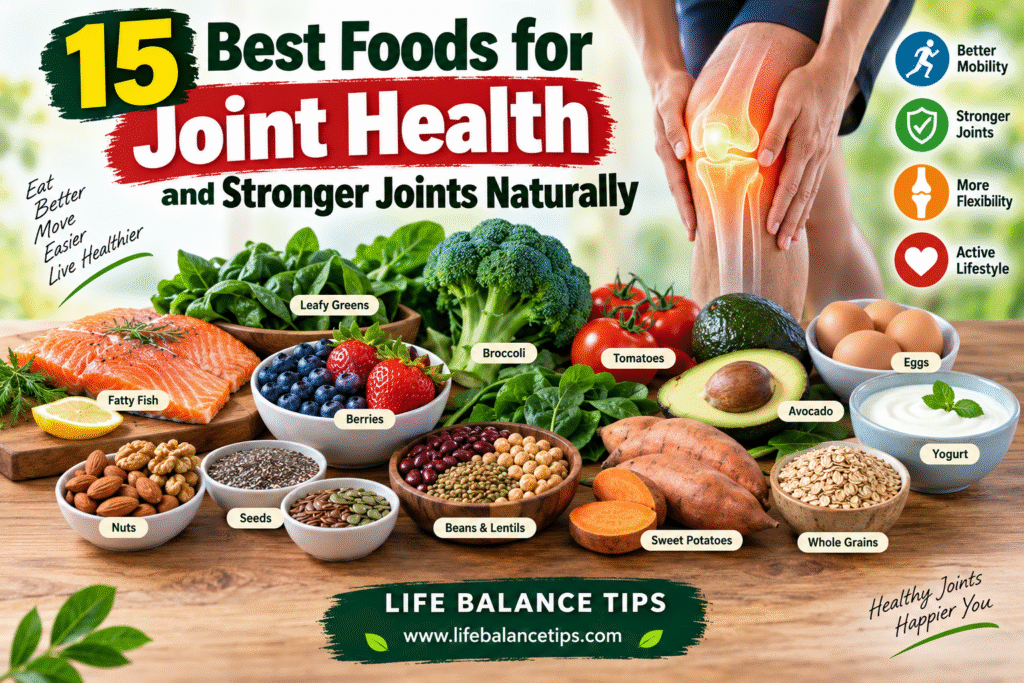
What Makes a Food Good for Joint Health?
The best foods for joint health generally provide nutrients associated with healthy bones, connective tissues, muscles, and normal inflammatory processes.
Some nutrients worth getting regularly from a varied diet include:
- Omega-3 fatty acids
- Protein
- Vitamin C
- Vitamin K
- Calcium
- Vitamin D
- Magnesium
- Zinc
- Antioxidants
- Fiber
A healthy eating pattern is usually more important than focusing on a single food. Combining vegetables, fruits, whole grains, legumes, nuts, seeds, dairy or fortified alternatives, and other minimally processed foods can provide a broad range of nutrients.
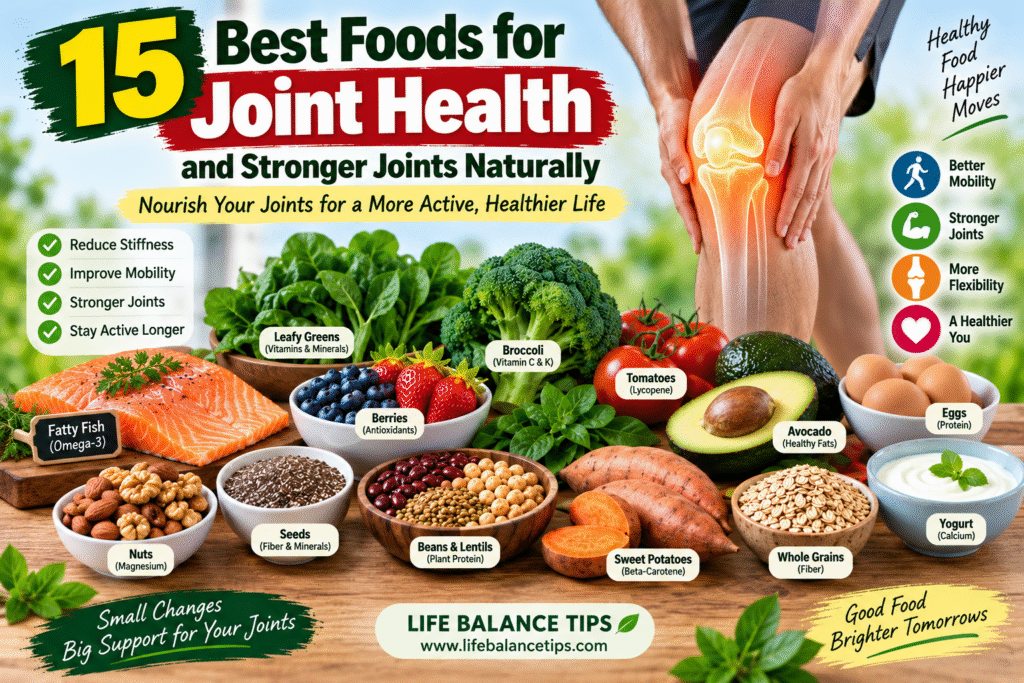
15 Best Foods for Joint Health and Stronger Joints
Here are some nutritious options to include in your regular meals.
1. Fatty Fish
Fatty fish such as salmon, sardines, mackerel, and trout are among the most useful foods for healthy joints because they provide omega-3 fatty acids.
Omega-3 fats are important components of a healthy diet and are involved in normal inflammatory processes in the body. Fatty fish also provides high-quality protein and several vitamins and minerals.
Try adding grilled salmon to lunch, sardines to a whole-grain sandwich, or baked fish with vegetables for dinner.
2. Berries
Blueberries, strawberries, raspberries, and blackberries are rich in colorful plant compounds and vitamin C.
Vitamin C is particularly important because the body needs it to produce collagen, a structural protein found in connective tissues. Berries can also add natural sweetness and fiber to meals.
Add berries to oatmeal, yogurt, smoothies, or eat them as a simple snack.
3. Oranges and Other Citrus Fruits
Oranges, lemons, grapefruit, and other citrus fruits are excellent sources of vitamin C.
Because vitamin C contributes to normal collagen formation, including citrus fruit as part of a balanced diet can help provide an important nutrient for connective tissue.
A whole orange is generally a better everyday choice than relying on sugary fruit drinks.
4. Leafy Green Vegetables
Spinach, kale, mustard greens, collard greens, and other leafy vegetables provide vitamin K, folate, magnesium, fiber, and various plant compounds.
These vegetables are among the most practical joint healthy foods because they can be included in many different meals.
You can add spinach to dal, use leafy greens in vegetable dishes, or prepare a salad with kale and other colorful vegetables.
5. Broccoli
Broccoli is a nutrient-dense vegetable containing vitamin C, vitamin K, fiber, and other beneficial plant compounds.
Its combination of nutrients makes it a useful addition to a balanced diet focused on foods that support joint health.
For the best texture and flavor, try lightly steaming or roasting broccoli instead of heavily frying it.
6. Nuts
Almonds, walnuts, pistachios, and other unsalted nuts provide healthy fats, protein, magnesium, and other nutrients.
Walnuts are particularly notable because they contain plant-based omega-3 fatty acids called alpha-linolenic acid (ALA).
A small handful of unsalted nuts can make a convenient snack. You can also add chopped nuts to oatmeal, salads, or homemade yogurt bowls.
7. Seeds
Chia seeds, flaxseeds, pumpkin seeds, and sunflower seeds can provide healthy fats, fiber, protein, magnesium, and other minerals.
Ground flaxseed and chia seeds can be mixed into oatmeal or yogurt. Pumpkin seeds can be added to salads or eaten as a snack.
Remember that seeds are nutrient-dense, so moderate portions are usually sufficient.
8. Eggs
Eggs are a convenient source of high-quality protein and provide several vitamins and minerals.
Adequate protein is important for maintaining muscles, and strong muscles help support movement and physical function around the joints.
Boiled eggs can be added to breakfast or salads, while scrambled eggs with vegetables make an easy meal.
9. Yogurt
Yogurt can provide protein and calcium, two nutrients important for maintaining healthy bones and muscles.
Strong bones and adequate muscle function are important parts of overall musculoskeletal health.
Choose plain or lightly sweetened yogurt when possible, and combine it with berries, nuts, or seeds for a nutritious snack.
People who do not consume dairy can consider calcium-fortified alternatives as part of a balanced eating pattern.
10. Beans and Lentils
Beans, chickpeas, peas, and lentils are affordable sources of plant protein, fiber, magnesium, and other nutrients.
They are especially useful foods for stronger joints when included as part of an overall nutritious diet because they support protein intake and provide a variety of micronutrients.
In Indian diets, dal, rajma, chana, and other legumes can be easy ways to include these foods regularly.
11. Avocado
Avocado provides unsaturated fats, fiber, potassium, and several other nutrients.
Healthy fats can be part of an overall balanced eating pattern, particularly when they replace foods high in saturated fats.
Try adding avocado to whole-grain toast, salads, wraps, or homemade sandwiches.
12. Extra-Virgin Olive Oil
Extra-virgin olive oil is rich in monounsaturated fat and contains naturally occurring plant compounds.
It can be used as part of a Mediterranean-style eating pattern that emphasizes vegetables, fruits, legumes, whole grains, fish, nuts, and healthy fats.
Use olive oil in salad dressings or for light cooking rather than relying heavily on deep-fried foods.
13. Whole Grains
Oats, brown rice, quinoa, barley, and whole-wheat foods provide fiber, complex carbohydrates, vitamins, minerals, and other nutrients.
Whole grains can help create balanced meals when paired with vegetables and a protein source.
For example, try oatmeal with berries and nuts for breakfast or brown rice with dal and vegetables for lunch.
14. Tomatoes
Tomatoes contain vitamin C, potassium, and carotenoids such as lycopene.
Fresh tomatoes can be added to salads, sandwiches, soups, and vegetable dishes. Cooking tomatoes can also increase the availability of certain compounds such as lycopene.
Including tomatoes alongside a variety of colorful vegetables can make your overall diet more nutrient-rich.
15. Sweet Potatoes
Sweet potatoes provide beta-carotene, vitamin C, potassium, fiber, and carbohydrates.
They can be a nutritious alternative to highly processed snack foods and can work well as part of a balanced meal.
Try baked or roasted sweet potatoes with beans, vegetables, or a protein source.
Helpful Table: Foods and Nutrients for Joint Support
| Food | Key Nutrients | Simple Way to Eat It |
| Salmon | Omega-3, protein | Grilled or baked |
| Berries | Vitamin C, antioxidants, fiber | With yogurt or oats |
| Oranges | Vitamin C | Whole fruit |
| Leafy greens | Vitamin K, magnesium, folate | Salads or cooked dishes |
| Broccoli | Vitamin C, vitamin K, fiber | Steamed or roasted |
| Nuts | Healthy fats, magnesium, protein | Small handful |
| Seeds | Healthy fats, fiber, minerals | Oatmeal or yogurt |
| Eggs | Protein, vitamins, minerals | Boiled or scrambled |
| Yogurt | Calcium, protein | With fruit and seeds |
| Lentils | Protein, fiber, magnesium | Dal or soups |
| Avocado | Unsaturated fats, fiber | Salads or toast |
| Olive oil | Monounsaturated fat | Salad dressing |
| Whole grains | Fiber, minerals | Oats, brown rice, whole wheat |
| Tomatoes | Lycopene, vitamin C | Salads or cooked meals |
| Sweet potatoes | Beta-carotene, potassium, fiber | Baked or roasted |
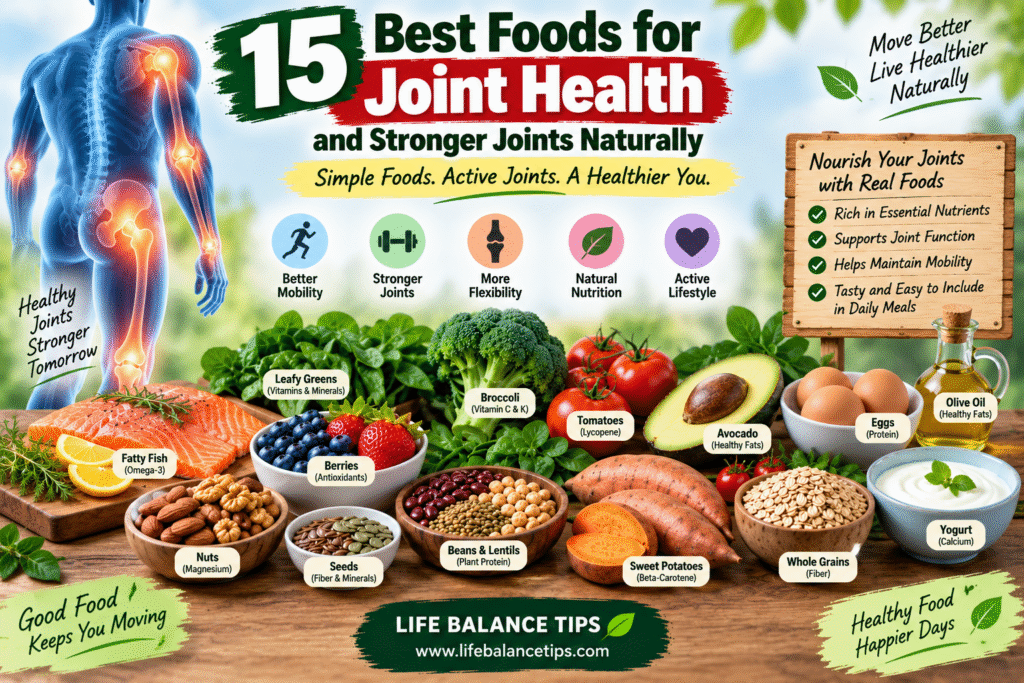
How to Build a Joint-Friendly Diet
Eating individual foods for joint health is useful, but your overall dietary pattern matters more.
A simple plate can include:
- Half the plate: vegetables and/or fruit
- One-quarter: protein such as fish, eggs, beans, lentils, or yogurt
- One-quarter: whole grains or other nutritious carbohydrates
- Small amounts: nuts, seeds, or healthy oils
This approach helps provide a variety of nutrients without making your diet unnecessarily complicated.
Other Lifestyle Habits That Support Healthy Joints
Nutrition is only one part of joint care. Several everyday habits can complement a balanced diet.
Stay Physically Active
Regular physical activity helps maintain muscle strength, flexibility, balance, and overall physical function.
Walking, cycling, swimming, strength exercises, stretching, and other appropriate activities can be incorporated according to your fitness level and individual needs.
If you already have significant joint pain or an injury, speak with a healthcare professional before starting a new exercise program.
Maintain a Healthy Body Weight
Carrying excess body weight can increase the physical load placed on weight-bearing joints.
If weight loss is appropriate for you, gradual changes in eating habits and physical activity are generally more sustainable than extreme diets.
Drink Enough Water
Water is essential for normal body function. Rather than waiting until you feel extremely thirsty, drink water regularly throughout the day.
Your individual fluid needs can vary depending on weather, activity, diet, age, and other factors.
Limit Highly Processed Foods
Highly processed foods can sometimes be high in added sugar, sodium, refined carbohydrates, or unhealthy fats.
They do not have to be eliminated, but making nutrient-rich whole or minimally processed foods the foundation of your diet can make it easier to maintain good overall nutrition.
Get Enough Sleep
Sleep supports overall physical and mental well-being. Adults generally benefit from a consistent sleep routine and a comfortable sleeping environment.
Good sleep, regular movement, and balanced nutrition work together as part of a healthy lifestyle.
Foods to Limit for Better Overall Joint-Friendly Nutrition
There is no single food that automatically damages your joints, but some eating habits may make it harder to maintain a balanced diet.
Try to limit excessive amounts of:
- Sugary drinks
- Deep-fried foods
- Highly processed snacks
- Refined sweets
- Foods high in added salt
- Excessive alcohol
- Large portions of processed meats
Instead, focus on variety and moderation. You do not need a perfect diet to support your overall health.

Easy Meal Ideas Using Foods for Joint Health
Here are a few simple combinations you can try.
Breakfast
Oatmeal + berries + chia seeds + plain yogurt
This combination provides fiber, protein, calcium, vitamin C, and healthy fats.
Lunch
Dal + brown rice or whole-wheat roti + spinach + tomato salad
This meal combines plant protein, fiber, vegetables, and whole grains.
Evening Snack
An orange + a small handful of unsalted almonds
This is a simple combination of fruit, vitamin C, healthy fats, protein, and minerals.
Dinner
Grilled fish + roasted broccoli + sweet potato
This meal provides protein, vegetables, complex carbohydrates, and several important micronutrients.
Can Diet Alone Make Joints Stronger?
A healthy diet can provide nutrients needed for normal bone, muscle, connective tissue, and overall body function, but food alone cannot guarantee stronger joints or prevent joint conditions.
That is why nutrition for joint health should be viewed as one part of a broader lifestyle that includes appropriate physical activity, healthy weight management, adequate sleep, and regular medical care when needed.
If you experience persistent pain, swelling, warmth, severe stiffness, weakness, or difficulty using a joint, it is important to seek professional medical advice rather than attempting to manage the problem through food alone.
For reliable information about joint health and arthritis, visit the Arthritis Foundation for trusted health guidance.
Frequently Asked Questions
1. What are the best foods for joint health?
Some of the best foods for joint health include fatty fish, berries, citrus fruits, leafy greens, broccoli, nuts, seeds, eggs, yogurt, beans, lentils, avocado, whole grains, tomatoes, and sweet potatoes. The goal is to eat a varied diet rather than depend on one particular food.
2. Can fatty fish support joint health?
Fatty fish such as salmon, sardines, mackerel, and trout provide omega-3 fatty acids and protein. Omega-3 fats are part of a healthy diet and are involved in normal inflammatory processes.
3. Are fruits good foods for healthy joints?
Yes. Fruits such as berries and oranges provide vitamin C, fiber, and various plant compounds. Vitamin C is required for normal collagen formation, making fruit a useful part of a balanced diet.
4. Are nuts good for stronger joints?
Nuts provide healthy fats, protein, magnesium, and other nutrients. Walnuts also provide plant-based omega-3 fatty acids. Choose mostly unsalted nuts and keep portions moderate.
5. Is yogurt good for joint and bone health?
Yogurt can provide protein and calcium, which are important for normal bone and muscle function. Plain yogurt paired with fruit and seeds can be a nutritious snack.
6. What should I eat if I want foods that support joint health?
Build meals around vegetables, fruits, whole grains, legumes, fish or other protein sources, nuts, seeds, and healthy fats. This varied approach is generally more useful than focusing on a single “joint health” food.
7. Can exercise be combined with nutrition for joint health?
Yes. A balanced diet and regular appropriate physical activity can work together to support muscle strength, mobility, physical function, and overall health. Exercise should be adapted to your fitness level and any existing medical concerns.
8. When should I see a doctor about joint problems?
Seek professional medical advice if joint pain or swelling is persistent, severe, worsening, associated with an injury, or interfering with normal activities. Sudden severe symptoms should receive prompt medical attention.
Simple Daily Checklist for Joint-Friendly Nutrition
You can use this checklist to make healthy choices easier:
- Eat at least a variety of colorful vegetables and fruits.
- Include a good protein source with meals.
- Choose whole grains more often.
- Add nuts or seeds in moderate portions.
- Include fish when suitable for your diet.
- Choose calcium-rich foods such as yogurt or fortified alternatives.
- Drink water regularly.
- Limit highly processed foods and sugary drinks.
- Stay physically active.
- Maintain a healthy body weight.
- Prioritize consistent, good-quality sleep.
Health Disclaimer
This article is intended for general educational and informational purposes only. It does not provide medical advice, diagnosis, treatment, or a substitute for consultation with a qualified healthcare professional. Individual nutritional needs vary based on age, health status, allergies, medications, activity level, and other factors. If you have persistent joint pain, swelling, an injury, or a diagnosed medical condition, consult a qualified healthcare professional before making significant dietary or lifestyle changes.
Conclusion
A balanced diet can play a valuable role in supporting overall musculoskeletal health. The most useful foods for joint health are not limited to one particular category. Fatty fish, berries, leafy greens, broccoli, nuts, seeds, eggs, yogurt, legumes, whole grains, and colorful vegetables can all contribute important nutrients to a varied eating pattern.
Rather than searching for a single food that promises stronger joints, focus on consistent healthy habits. Combine nutrient-rich meals with regular movement, adequate sleep, healthy weight management, and appropriate professional care when symptoms occur.
With simple, sustainable choices, you can make foods for joint health a natural part of your everyday eating routine and support your overall health for the long term.
By Life Balance Tips Team