
Strong muscles are important for everyday life. They help you walk, climb stairs, carry groceries, maintain balance, exercise, and perform many routine activities. Building and maintaining muscle is not only about exercise. Your body also needs enough protein, energy, vitamins, minerals, and other nutrients from a balanced diet.
Choosing the right foods for muscle health can help provide the nutrients your body needs to maintain normal muscle function and support an active lifestyle. However, no single food can build muscle by itself. A combination of nutritious eating, regular physical activity, adequate recovery, and good sleep is generally the best approach.
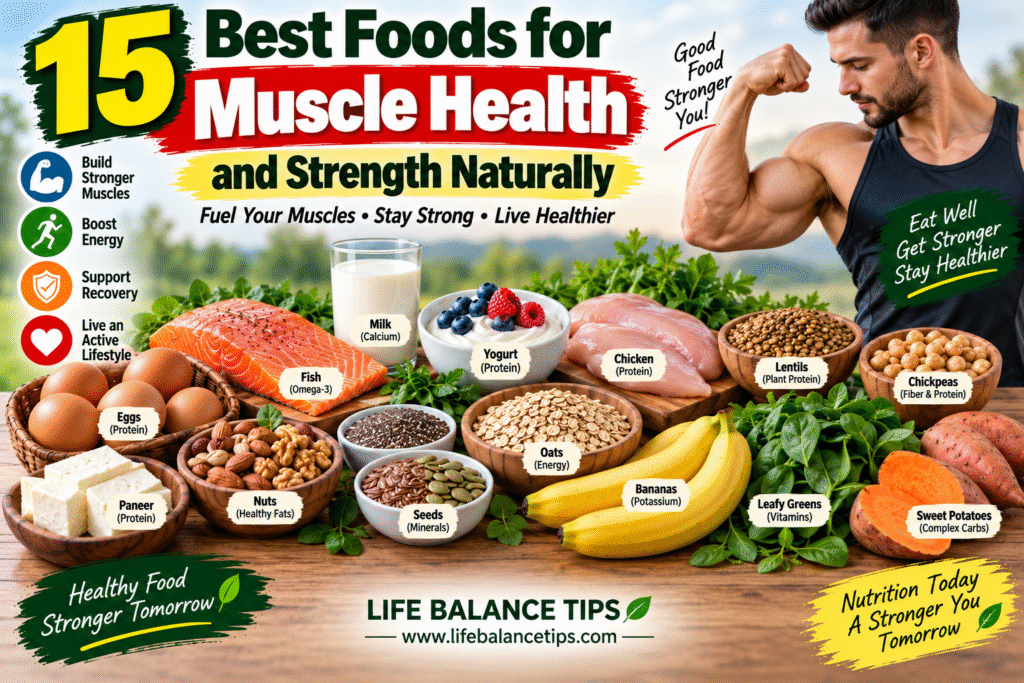
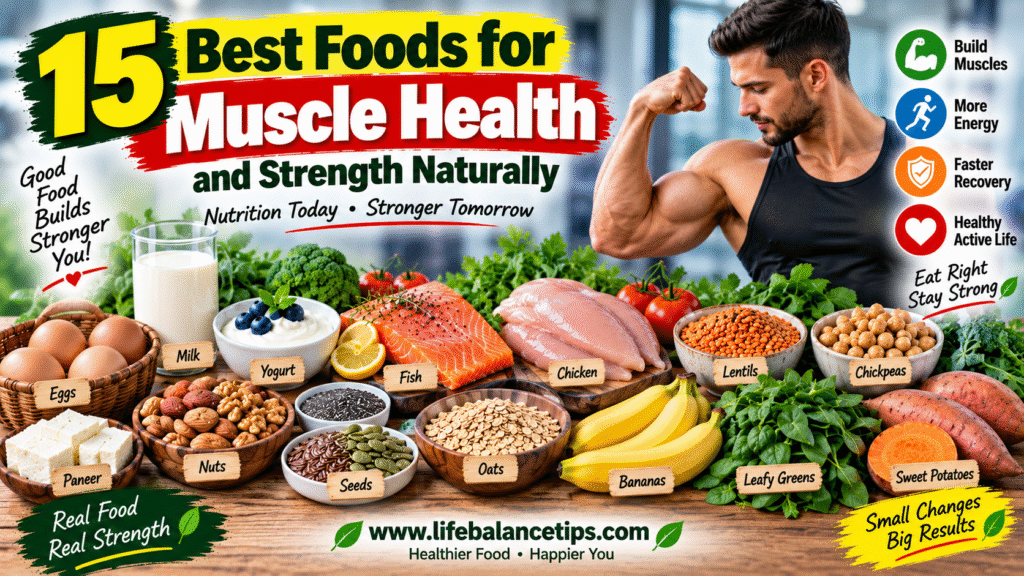
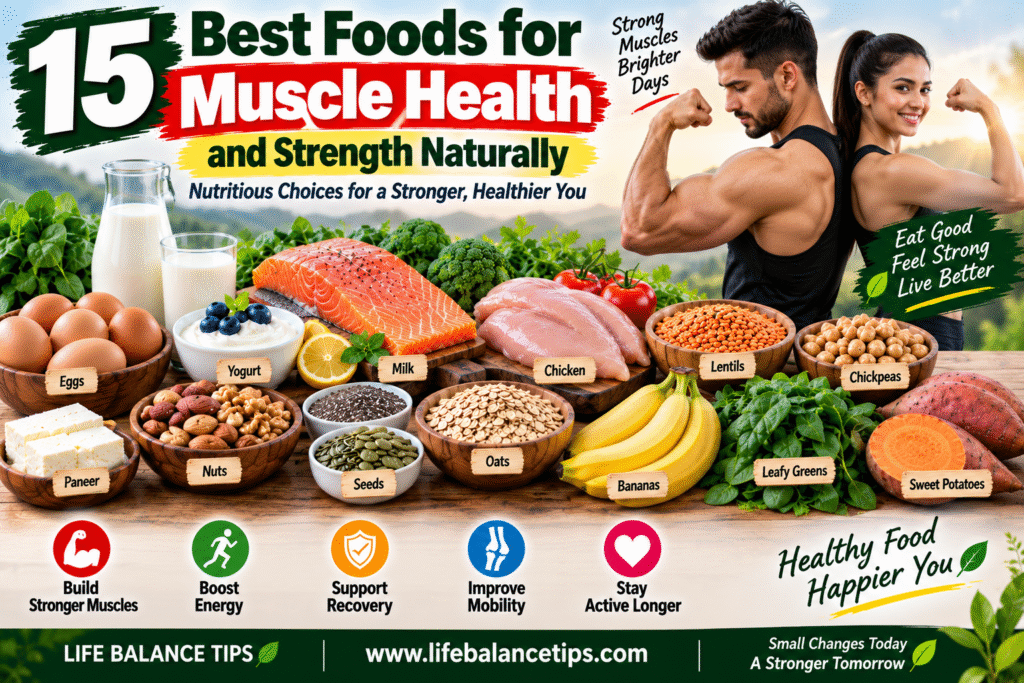
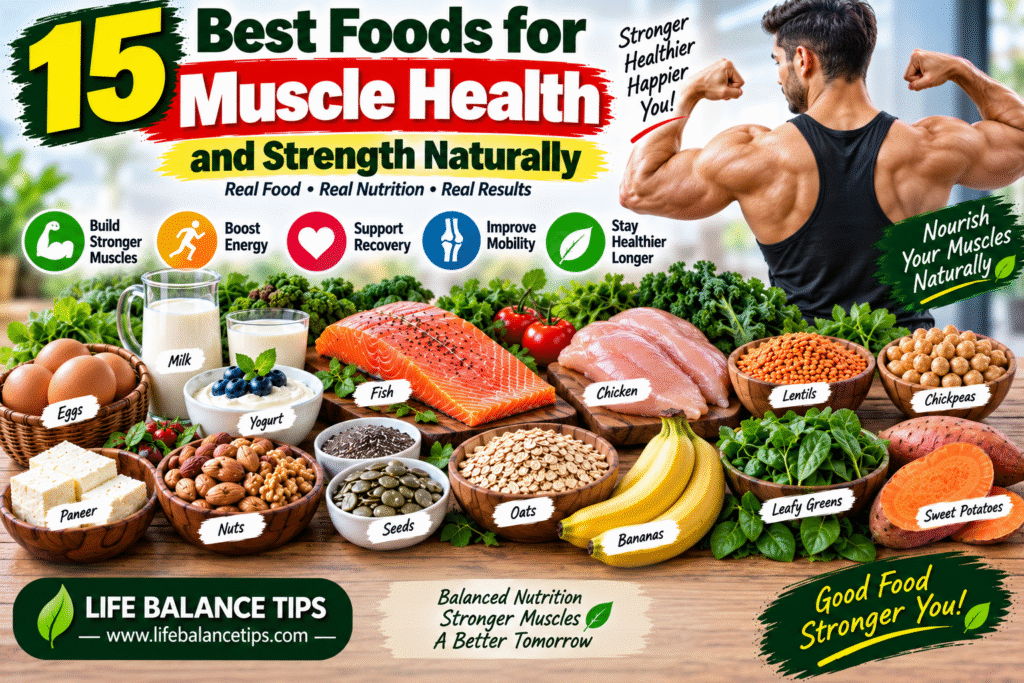
In this guide, we’ll explore 15 nutritious foods for muscle health that can fit easily into an everyday diet, including options suitable for Indian and global diets.
Important: Food alone cannot guarantee muscle growth, strength, or prevention of muscle loss. Individual nutritional needs vary. If you have a medical condition or specific dietary requirements, speak with a qualified healthcare professional or registered dietitian.
For more healthy eating and nutrition tips, explore our other helpful guides on Life Balance Tips.
What Nutrients Do Muscles Need?
The best foods for muscle health provide a combination of nutrients rather than just protein.
Some important nutrients include:
- Protein for maintaining and repairing body tissues
- Carbohydrates for energy during physical activity
- Healthy fats for overall nutrition
- Calcium for normal muscle function
- Magnesium for normal muscle and nerve function
- Potassium for normal muscle function
- Iron for oxygen transport
- Vitamin D for bone and muscle health
- Vitamin B vitamins for normal energy metabolism
- Antioxidant-rich plant foods for overall wellness
A varied diet makes it easier to obtain these nutrients without depending on one particular food.
15 Best Foods for Muscle Health and Strength
1. Eggs
Eggs are one of the most convenient foods for stronger muscles because they provide high-quality protein along with several vitamins and minerals.
Protein contains amino acids that the body uses to build and maintain tissues, including muscle tissue. Eggs are also easy to prepare and can be included in breakfast, lunch, or dinner.
Easy ways to eat eggs
- Boiled eggs with whole-grain toast
- Vegetable omelet
- Scrambled eggs with spinach
- Egg salad with vegetables
If you enjoy eggs, they can be a practical part of a balanced muscle-supporting diet.
2. Fatty Fish
Salmon, sardines, mackerel, and trout provide protein along with omega-3 fatty acids.
Protein supports muscle maintenance, while omega-3 fats are an important part of a balanced eating pattern. Fatty fish also provides nutrients such as vitamin B12 and selenium.
Try baked or grilled fish with vegetables and whole grains for a balanced meal.
For people who do not eat fish, other protein-rich foods can provide alternatives.
3. Greek Yogurt
Greek yogurt is rich in protein and can also provide calcium.
Adequate protein intake is important for maintaining muscle, while calcium plays an important role in normal muscle function and bone health.
Plain Greek yogurt can be combined with berries, bananas, oats, nuts, or seeds for a nutritious breakfast or snack.
Choose unsweetened or lightly sweetened varieties when possible to keep added sugar lower.
4. Milk
Milk provides protein and calcium, making it one of the simplest foods that support muscle health.
It can be consumed with breakfast, added to oatmeal, or used in homemade smoothies.
For people who avoid dairy, calcium- and protein-fortified alternatives can also be considered, depending on individual nutritional needs.
Milk should be viewed as one part of an overall balanced diet rather than a special muscle-building drink.
5. Chicken
Chicken is a convenient source of high-quality protein and can be included in many different meals.
Protein helps provide amino acids needed for normal tissue maintenance and repair. Chicken can therefore be useful for people who want to increase their protein intake while following a balanced diet.
Choose grilled, baked, roasted, or lightly cooked chicken more often than heavily fried versions.
Pair chicken with vegetables and whole grains for a more balanced meal.
6. Lentils and Dal
Lentils are especially valuable for Indian diets because dal is already a common everyday food.
Lentils provide plant protein, fiber, iron, folate, magnesium, and other nutrients.
They are affordable, versatile, and easy to combine with rice, roti, vegetables, or salads.
Examples include:
- Masoor dal
- Moong dal
- Chana dal
- Toor dal
- Urad dal
Including different legumes throughout the week can add variety to your protein sources.
7. Chickpeas
Chickpeas, also called chana, provide plant protein, carbohydrates, fiber, iron, magnesium, and other nutrients.
They can be particularly useful for vegetarians and people who want more plant-based foods for muscle health.
Try chickpeas in:
- Chana salad
- Chole
- Hummus
- Roasted chickpea snacks
- Vegetable bowls
Combining legumes with whole grains can create a satisfying and nutritious meal.
8. Soy Foods
Soybeans and foods made from soy, such as tofu and tempeh, can provide substantial amounts of plant protein.
They can be useful alternatives for people who prefer vegetarian or plant-based meals.
Tofu can be added to vegetable stir-fries, curries, salads, and soups. Soybeans can also be incorporated into balanced meals in different forms.
When choosing packaged soy foods, check the ingredient list and choose options that fit your overall dietary preferences.
9. Cottage Cheese or Paneer
Paneer provides protein and calcium and is commonly used in Indian cuisine.
It can be included in meals with vegetables, whole grains, or legumes. Cottage cheese can also be used in salads or simple snacks.
Because some varieties of paneer can be relatively high in saturated fat and calories, portion size and preparation method matter.
Choose a balanced meal rather than relying on large portions of paneer alone.
10. Nuts
Almonds, walnuts, peanuts, pistachios, and other nuts provide protein, healthy fats, magnesium, and other nutrients.
Magnesium is involved in normal muscle and nerve function, while nuts can also contribute to overall energy and nutrient intake.
A small handful of unsalted nuts makes an easy snack.
You can also add them to:
- Oatmeal
- Yogurt
- Salads
- Smoothies
- Homemade energy-friendly snack mixes
Because nuts are energy-dense, moderate portions are generally sufficient.
11. Seeds
Chia seeds, flaxseeds, pumpkin seeds, sunflower seeds, and sesame seeds provide a mixture of healthy fats, protein, fiber, and minerals.
Pumpkin seeds and other seeds can contribute magnesium and other nutrients that are useful as part of a balanced diet.
Add seeds to yogurt, oatmeal, salads, or homemade meals.
Using several types of seeds throughout the week can provide dietary variety.
12. Oats
Oats are a nutritious whole grain that provides carbohydrates, fiber, magnesium, and other nutrients.
Carbohydrates are an important energy source, especially for people who exercise regularly. Eating enough energy overall can help support an active lifestyle.
Oatmeal can become a balanced breakfast when combined with protein and healthy fats.
For example:
Oats + milk or yogurt + banana + nuts + seeds
This combination provides carbohydrates, protein, fiber, and several micronutrients.
13. Bananas
Bananas provide carbohydrates and potassium, along with other nutrients.
Carbohydrates can provide energy for physical activity, while potassium contributes to normal muscle function.
A banana can be an easy snack before or after physical activity, particularly when combined with another nutritious food such as yogurt, milk, or nuts.
However, there is no need to consider bananas a special muscle-building food. They are simply a convenient fruit that can contribute to a balanced diet.
14. Spinach and Other Leafy Greens
Spinach, kale, mustard greens, and other leafy vegetables provide magnesium, folate, vitamin K, vitamin C, and various plant compounds.
These vegetables are useful joint-healthy foods as well as nutritious choices for overall musculoskeletal wellness.
You can add spinach to:
- Dal
- Omelets
- Soups
- Vegetable curries
- Salads
- Smoothies
Eating different colorful vegetables is generally more beneficial than focusing on one particular vegetable.
15. Sweet Potatoes
Sweet potatoes provide carbohydrates, fiber, potassium, and beta-carotene.
Their carbohydrates can provide energy for daily activities and exercise, while potassium is involved in normal muscle function.
Try baked or roasted sweet potatoes with eggs, beans, chicken, fish, or another protein source.
This creates a more complete meal than eating sweet potatoes alone.
Helpful Table: Foods for Muscle Health and Their Nutrients
| Food | Important Nutrients | Simple Serving Idea |
| Eggs | Protein, B vitamins | Omelet with vegetables |
| Fatty fish | Protein, omega-3 fats | Grilled with vegetables |
| Greek yogurt | Protein, calcium | With berries and seeds |
| Milk | Protein, calcium | With breakfast |
| Chicken | Protein, B vitamins | Grilled with salad |
| Lentils | Protein, fiber, iron | Dal with vegetables |
| Chickpeas | Protein, fiber, minerals | Chana salad |
| Soy foods | Plant protein, minerals | Tofu vegetable curry |
| Paneer | Protein, calcium | Paneer with vegetables |
| Nuts | Healthy fats, protein, magnesium | Small handful |
| Seeds | Healthy fats, protein, minerals | Add to oats |
| Oats | Carbohydrates, fiber, magnesium | Oatmeal |
| Bananas | Carbohydrates, potassium | Snack with yogurt |
| Leafy greens | Magnesium, folate, vitamin K | Cooked or in salads |
| Sweet potatoes | Carbohydrates, potassium, beta-carotene | Baked or roasted |
How Much Protein Do Muscles Need?
Protein is important for maintaining and building muscle, but more is not always better.
Your protein requirements can vary depending on factors such as:
- Age
- Body size
- Physical activity
- Overall diet
- Health status
- Fitness goals
Instead of concentrating all your protein into one meal, many people find it practical to include a protein source with breakfast, lunch, dinner, and appropriate snacks.
Good choices include eggs, fish, chicken, dairy foods, lentils, beans, chickpeas, tofu, nuts, and seeds.
If you exercise regularly, your overall calorie and protein intake should match your activity level and goals.
A Simple Muscle-Friendly Indian Meal Plan
You don’t need expensive foods to create a nutritious diet.
Breakfast
Vegetable omelet + whole-wheat roti + fruit
Or:
Oats + milk/yogurt + banana + nuts
Lunch
Dal + brown rice or whole-wheat roti + mixed vegetables + yogurt
Evening Snack
Roasted chana + fruit
Or:
Yogurt + berries/seeds
Dinner
Paneer/tofu or chicken/fish + vegetables + whole grains
The exact portions should depend on your individual energy and nutritional needs.
Practical Tips for Better Muscle Nutrition
Include Protein Throughout the Day
Instead of depending on one large protein-heavy meal, include moderate protein sources throughout your daily eating pattern.
For example:
- Eggs at breakfast
- Dal at lunch
- Yogurt as a snack
- Fish, chicken, tofu, or paneer at dinner
This makes your diet more balanced and varied.
Don’t Ignore Carbohydrates
Some people avoid carbohydrates when trying to improve body composition. However, carbohydrates can provide energy for physical activity.
Whole grains, fruits, vegetables, beans, and potatoes can all contribute useful carbohydrates and nutrients.
Choose Mostly Minimally Processed Foods
A diet based primarily on vegetables, fruits, legumes, whole grains, nuts, seeds, and quality protein sources can make it easier to obtain a broad range of nutrients.
Highly processed foods can still fit into a balanced lifestyle occasionally, but they shouldn’t replace nutrient-rich foods regularly.
Stay Hydrated
Water is essential for normal body functions, including physical activity.
Drink fluids regularly throughout the day. Your needs can increase with hot weather, sweating, and exercise.
Get Enough Sleep
Muscle health isn’t only about what you eat.
Sleep is an important part of recovery and overall health. Maintaining a consistent sleep schedule can support your ability to stay physically active and maintain healthy habits.
Exercise Regularly
Nutrition works best alongside appropriate physical activity.
Resistance exercises such as bodyweight movements, resistance bands, and weight training can help maintain or improve muscle strength when performed safely and consistently.
Older adults may particularly benefit from activities that support strength and balance, provided the exercises are appropriate for their abilities.
Foods to Limit for Better Overall Muscle Nutrition
No food needs to be completely forbidden for most healthy adults. However, regularly consuming large amounts of highly processed foods may make it harder to maintain a nutrient-rich diet.
Consider limiting excessive amounts of:
- Sugary drinks
- Deep-fried foods
- Highly processed snacks
- Foods with large amounts of added sugar
- Excessive alcohol
- Highly refined snack foods
Instead, make whole or minimally processed foods the foundation of most meals.
Can Food Alone Build Muscle?
Food provides the nutrients and energy needed for normal muscle maintenance, but diet alone does not guarantee increased muscle size or strength.
Resistance training provides the physical stimulus needed for muscle adaptation. Adequate nutrition and recovery then help support that process.
For this reason, nutrition for joint health and nutrition for muscle health should both be considered within a broader approach to musculoskeletal wellness.
A balanced routine can include:
- Protein-rich foods
- Regular strength exercises
- Cardiovascular activity
- Adequate sleep
- Hydration
- Healthy body weight
- Rest and recovery
Are Plant-Based Foods Enough for Muscle Health?
Yes, a well-planned plant-based diet can include plenty of protein and nutrients.
Useful plant-based choices include:
- Lentils
- Chickpeas
- Beans
- Soybeans
- Tofu
- Tempeh
- Peas
- Nuts
- Seeds
- Whole grains
Eating a variety of plant foods is important because different foods provide different amino acids and nutrients.
People following restrictive diets should pay particular attention to overall nutritional adequacy and may benefit from advice from a qualified dietitian.
For reliable information about muscle health and physical activity, visit the National Institute on Aging for trusted health guidance.
Frequently Asked Questions
1. What are the best foods for muscle health?
Some of the best foods for muscle health include eggs, fish, yogurt, milk, chicken, lentils, chickpeas, soy foods, paneer, nuts, seeds, oats, bananas, leafy greens, and sweet potatoes. The most important factor is maintaining a varied, balanced diet.
2. Are eggs good foods for muscle health?
Yes. Eggs provide high-quality protein and several vitamins and minerals. They can be a convenient addition to a balanced diet, especially for people who eat animal products.
3. Which vegetarian foods support muscle strength?
Lentils, chickpeas, beans, tofu, soybeans, paneer, yogurt, milk, nuts, seeds, and whole grains can all contribute protein and other nutrients to a vegetarian diet.
4. Can dal help support muscle health?
Yes. Dal provides plant protein, fiber, iron, folate, magnesium, and other nutrients. Including different types of lentils and legumes can add variety to a balanced diet.
5. Is protein the only nutrient muscles need?
No. Protein is important, but muscles also need adequate energy and a variety of vitamins and minerals. Carbohydrates, healthy fats, calcium, magnesium, potassium, iron, and other nutrients can contribute to overall health and normal physical function.
6. Can bananas make muscles stronger?
Bananas provide carbohydrates and potassium, which can contribute to energy intake and normal muscle function. However, bananas alone cannot guarantee stronger muscles. Overall nutrition and appropriate exercise are more important.
7. What should I eat after exercise?
A balanced meal or snack containing protein and carbohydrates can be a practical choice after exercise. Examples include yogurt with fruit, eggs with whole-grain toast, dal with rice, or chicken with vegetables and whole grains.
8. Can older adults benefit from muscle-supporting foods?
Yes. Maintaining adequate nutrition and staying physically active become particularly important with age. Protein-rich foods combined with appropriate strength and balance exercises can support overall physical function. Older adults with medical conditions should discuss individual dietary and exercise needs with a healthcare professional.
Simple Daily Checklist
Use this checklist to make your eating habits more supportive of muscle health:
- Include a protein source with your meals.
- Eat a variety of vegetables and fruits.
- Choose whole grains more often.
- Include beans, lentils, or other plant proteins.
- Add nuts and seeds in moderate portions.
- Drink enough water.
- Limit excessive sugary and highly processed foods.
- Stay physically active.
- Include appropriate strength exercises.
- Get consistent sleep.
- Give your body enough time to recover.
Health Disclaimer
This article is provided for general educational and informational purposes only. It is not intended to provide medical advice, diagnosis, treatment, or individualized nutritional recommendations. Nutritional requirements vary from person to person depending on age, body size, activity level, health conditions, allergies, dietary preferences, and other factors. If you have a medical condition, unexplained muscle weakness, persistent pain, difficulty moving, or other concerning symptoms, consult a qualified healthcare professional. Do not make major dietary or exercise changes based solely on this article.
Conclusion
Maintaining healthy muscles requires more than simply eating more protein. A varied diet can provide the protein, carbohydrates, healthy fats, vitamins, and minerals your body needs for normal muscle function and overall physical health.
Eggs, fatty fish, yogurt, milk, chicken, lentils, chickpeas, soy foods, paneer, nuts, seeds, oats, bananas, leafy greens, and sweet potatoes are all nutritious foods for muscle health that can fit into different eating patterns.
For the best results, combine nutrient-rich meals with regular physical activity, appropriate strength training, good hydration, adequate sleep, and healthy lifestyle habits. Rather than looking for one miracle food, focus on consistent choices and variety.
Making these simple changes can help you build a more balanced approach to foods for muscle health and support an active, healthy lifestyle over the long term.
By Life Balance Tips Team