
Exercise is an important part of a healthy lifestyle, but what you eat afterward also matters. After physical activity, your body needs nutrients and enough energy to support normal recovery and prepare for your next workout. A balanced meal or snack can provide protein, carbohydrates, fluids, vitamins, and minerals that contribute to overall physical health.
Choosing the right foods for muscle recovery can be especially useful after strength training, walking, running, cycling, sports, or other physical activities. However, no single food can guarantee faster recovery or prevent muscle soreness. Recovery depends on many factors, including the type and intensity of exercise, sleep, hydration, overall diet, and individual health.
In this guide, we’ll look at 15 nutritious foods for muscle recovery that are easy to include in an everyday diet. Many of these options are affordable and suitable for Indian and global readers.
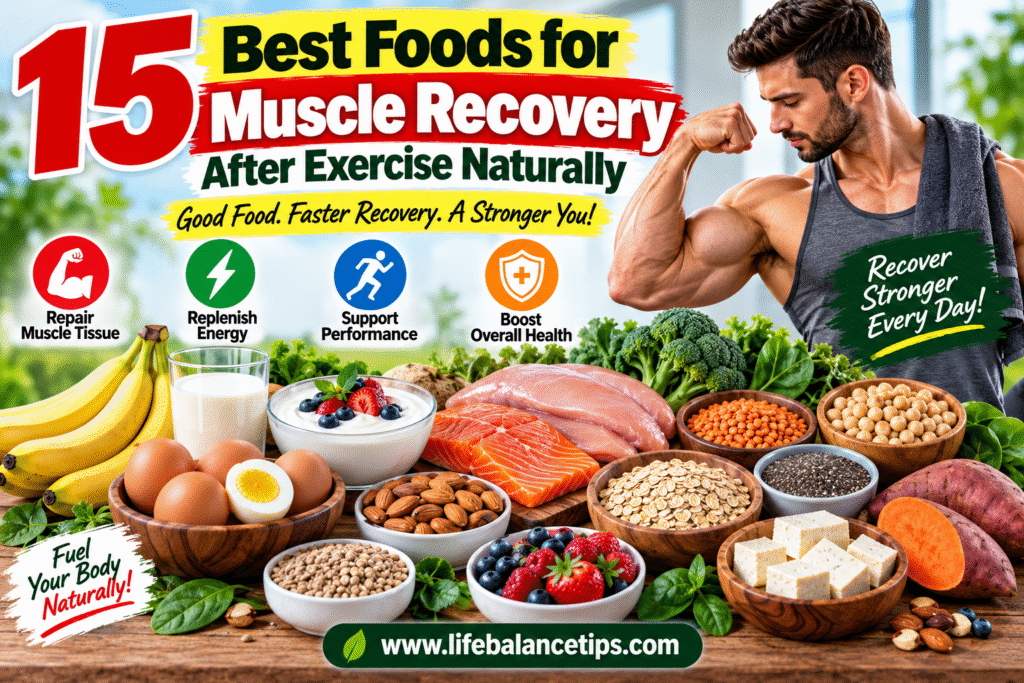
What Does Muscle Recovery Mean?
Muscle recovery refers to the body’s normal process of returning to a rested state after physical activity. Exercise places stress on muscles, and your body responds by repairing and adapting to that stress.
Nutrition can support this process by providing:
- Protein and amino acids
- Carbohydrates for replenishing energy stores
- Healthy fats
- Fluids and electrolytes
- Vitamins and minerals
- Overall calories needed by the body
The goal is not to find one “perfect” recovery food. Instead, a varied diet containing nutritious foods for muscle recovery can help you meet your body’s nutritional needs.
15 Best Foods for Muscle Recovery
1. Eggs
Eggs are one of the easiest foods for muscle recovery to add to a meal. They provide high-quality protein along with nutrients such as vitamin B12, selenium, and other vitamins and minerals.
Protein provides amino acids that the body uses to maintain and repair tissues. Eating eggs after exercise can therefore be part of a balanced recovery meal.
Simple ideas
- Boiled eggs with whole-grain toast
- Vegetable omelet
- Scrambled eggs with spinach
- Eggs with roti and vegetables
Adding vegetables and a carbohydrate source can make the meal more complete.
2. Greek Yogurt
Greek yogurt provides protein and calcium and can make a convenient post-workout snack.
Protein is important for maintaining muscle tissue, while calcium contributes to normal muscle function and bone health.
For a simple recovery-friendly snack, combine plain Greek yogurt with:
- Banana
- Berries
- Oats
- Chia seeds
- Walnuts
Choose plain or low-added-sugar varieties when possible.
3. Milk
Milk contains protein and carbohydrates and also provides calcium, making it a convenient option after physical activity.
A glass of milk can be paired with fruit, oats, whole-grain cereal, or a balanced meal.
For people who don’t consume dairy, fortified plant-based alternatives may also provide useful nutrients. Check the nutrition label because protein and calcium levels differ between products.
Milk isn’t a special muscle-building drink, but it can be a practical part of an overall nutritious diet.
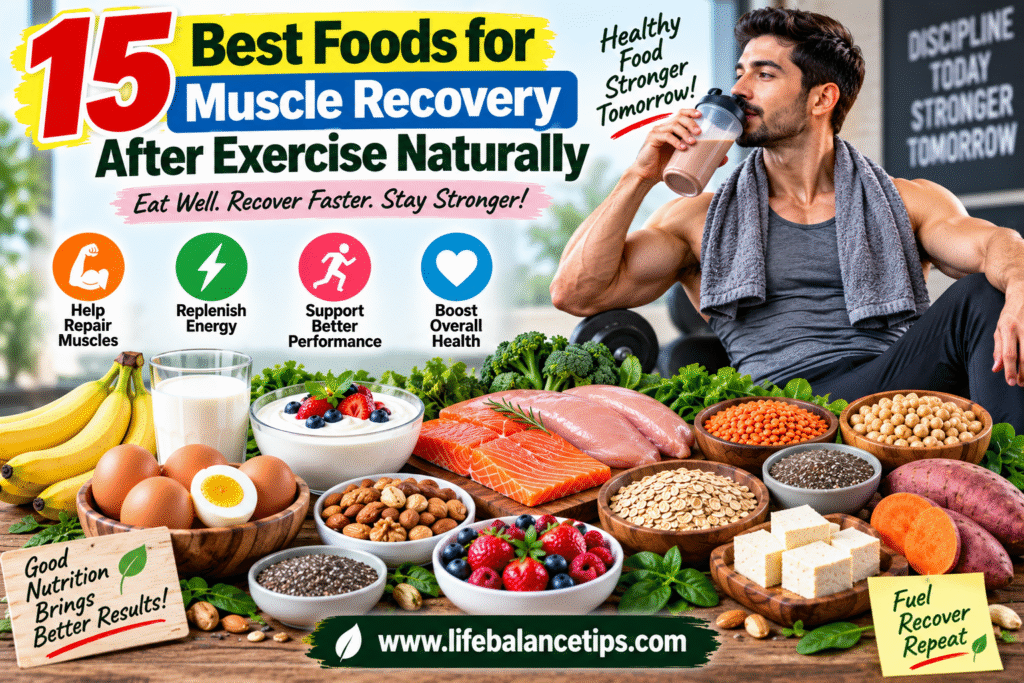
4. Salmon and Other Fatty Fish
Salmon, sardines, trout, and mackerel provide protein and omega-3 fatty acids.
Protein supports normal muscle maintenance, while omega-3 fats are an important part of a balanced eating pattern.
Fish can be particularly useful after exercise when combined with carbohydrate-rich foods such as:
- Brown rice
- Potatoes
- Quinoa
- Whole-grain roti
- Vegetables
Grilled, baked, or steamed fish is generally a better everyday choice than heavily fried fish.
5. Chicken
Chicken is a versatile source of protein and can easily become part of a balanced post-exercise meal.
Protein provides amino acids that contribute to the maintenance and repair of body tissues.
Try grilled or baked chicken with vegetables and whole grains rather than relying on highly fried preparations.
A simple meal could be:
Grilled chicken + brown rice + mixed vegetables
This combination provides protein, carbohydrates, fiber, and several micronutrients.
6. Lentils and Dal
For vegetarians, lentils are among the most practical foods for muscle recovery.
Different varieties of dal provide plant protein along with fiber, iron, folate, magnesium, and other nutrients.
Popular Indian options include:
- Moong dal
- Masoor dal
- Toor dal
- Chana dal
- Urad dal
Dal can be paired with rice or roti and vegetables to create a balanced meal.
Rather than focusing on one type of dal, rotating different legumes throughout the week can increase dietary variety.
7. Chickpeas
Chickpeas provide plant protein, carbohydrates, fiber, iron, and several minerals.
They can be especially useful for people following vegetarian or mostly plant-based diets.
Some simple choices include:
- Chana salad
- Chole with roti
- Hummus with whole-grain bread
- Roasted chickpeas
- Chickpea and vegetable bowls
Combining chickpeas with whole grains can create a filling meal with a useful combination of protein and carbohydrates.
8. Paneer
Paneer is a familiar protein-containing food in Indian diets and also provides calcium.
It can be included in a post-exercise meal with vegetables, whole grains, or legumes.
Some easy options include:
- Paneer and vegetable curry
- Paneer with roti
- Paneer salad
- Grilled paneer with vegetables
Because some paneer preparations can be high in calories and saturated fat, portion size and cooking method are worth considering.
9. Tofu
Tofu is another useful vegetarian option. It provides plant protein and can be used in many different cuisines.
Tofu works well in:
- Vegetable stir-fries
- Curries
- Salads
- Rice bowls
- Soups
For people who don’t eat meat, tofu can add variety to their protein sources.
A tofu and vegetable meal served with rice or another whole grain can provide protein and carbohydrates together.
10. Oats
Oats are an excellent source of carbohydrates and also provide fiber, magnesium, and other nutrients.
Carbohydrates are important because they provide energy for physical activity. After exercise, including carbohydrate-rich foods can help restore energy stores as part of an adequate overall diet.
Try:
Oats + milk or yogurt + banana + nuts
This simple combination provides carbohydrates, protein, healthy fats, and several micronutrients.
Oats can therefore be one of the most convenient foods for muscle recovery for breakfast or a snack.
11. Bananas
Bananas provide carbohydrates and potassium and are easy to carry and eat.
Carbohydrates provide energy, while potassium contributes to normal muscle function.
A banana by itself is a simple snack, but combining it with a protein source can make it more nutritionally complete.
For example:
- Banana + Greek yogurt
- Banana + milk
- Banana + peanut butter
- Banana + oats and yogurt
This makes bananas particularly convenient around exercise.
12. Potatoes and Sweet Potatoes
Potatoes and sweet potatoes provide carbohydrates and other nutrients.
After exercise, carbohydrate-rich foods can be included as part of a balanced meal to help meet the body’s energy needs.
Sweet potatoes also provide fiber and beta-carotene, while potatoes provide potassium and other nutrients.
Try pairing them with:
- Eggs
- Chicken
- Fish
- Dal
- Beans
- Tofu
This creates a more balanced meal than eating potatoes alone.
13. Berries and Other Fruits
Berries, oranges, apples, kiwi, pineapple, and other fruits provide carbohydrates, fiber, vitamins, minerals, and beneficial plant compounds.
Fruits are particularly useful because they can add carbohydrates and micronutrients without requiring complicated preparation.
Examples include:
- Blueberries
- Strawberries
- Oranges
- Apples
- Kiwi
- Mango
- Pineapple
A bowl of fruit with yogurt and oats can be a simple post-exercise option.
14. Nuts and Seeds
Almonds, walnuts, peanuts, pumpkin seeds, chia seeds, and flaxseeds provide healthy fats, some protein, fiber, and minerals.
They can add nutritional value to meals and snacks.
For example, add a small portion of nuts or seeds to:
- Yogurt
- Oatmeal
- Fruit bowls
- Salads
- Whole-grain cereal
Because nuts and seeds are energy-dense, a moderate serving is usually enough.
15. Beans
Kidney beans, black beans, black-eyed peas, and other beans provide plant protein, carbohydrates, fiber, iron, magnesium, and other nutrients.
They can be an affordable way to include protein in a balanced diet.
Beans work well with:
- Rice
- Whole-wheat roti
- Vegetables
- Salads
- Soups
For vegetarians, combining beans with other protein-containing foods throughout the day can help create a varied diet.
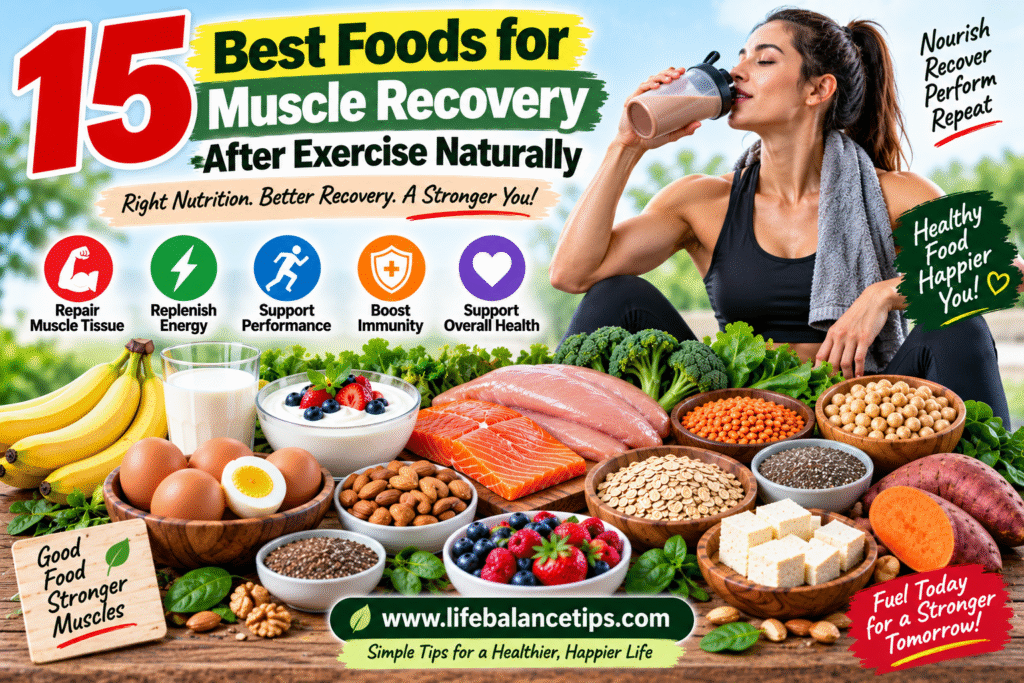
Helpful Table: Foods for Muscle Recovery
| Food | Key Nutrients | Easy Post-Exercise Idea |
| Eggs | Protein, B vitamins | Omelet with toast |
| Greek yogurt | Protein, calcium | Yogurt with fruit |
| Milk | Protein, calcium | Milk with oats |
| Salmon | Protein, omega-3 fats | Salmon with rice |
| Chicken | Protein, B vitamins | Chicken with vegetables |
| Lentils | Protein, fiber, iron | Dal with rice |
| Chickpeas | Protein, fiber | Chana salad |
| Paneer | Protein, calcium | Paneer with vegetables |
| Tofu | Plant protein | Tofu stir-fry |
| Oats | Carbohydrates, fiber | Oatmeal with banana |
| Bananas | Carbohydrates, potassium | Banana with yogurt |
| Sweet potatoes | Carbohydrates, fiber | Sweet potato with eggs |
| Berries | Carbohydrates, antioxidants | Berries with yogurt |
| Nuts & seeds | Healthy fats, minerals | Add to oatmeal |
| Beans | Protein, fiber, minerals | Beans with whole grains |
What Should You Eat After Exercise?
There isn’t one perfect post-workout meal. Your choice can depend on the type of exercise, the length of the workout, your appetite, and when you expect to eat your next meal.
A simple approach is to combine:
Protein + carbohydrates + fluids
For example:
Option 1
Eggs + whole-grain toast + fruit
Option 2
Greek yogurt + oats + banana
Option 3
Dal + rice + vegetables
Option 4
Chicken + potatoes + salad
Option 5
Tofu + brown rice + mixed vegetables
These combinations provide a mixture of nutrients instead of relying on one food.
How Much Protein Is Needed for Recovery?
Protein requirements vary from person to person. Factors such as age, body size, activity level, training volume, and overall health can influence nutritional needs.
Instead of trying to consume a very large amount of protein at one time, it can be practical to include protein-containing foods across the day.
Useful choices include:
- Eggs
- Fish
- Chicken
- Yogurt
- Milk
- Paneer
- Lentils
- Chickpeas
- Beans
- Tofu
- Nuts and seeds
People with specific health conditions or dietary restrictions should discuss their individual protein needs with a qualified healthcare professional or dietitian.
Don’t Forget Carbohydrates
Some people focus heavily on protein and forget about carbohydrates.
Carbohydrates are an important source of energy for the body, particularly during physical activity. Whole grains, potatoes, fruits, beans, oats, and other carbohydrate-containing foods can fit into a balanced diet.
This is why effective foods for muscle recovery don’t have to be exclusively high-protein foods.
A balanced meal containing protein and carbohydrates may be more useful than eating protein alone.
Hydration Is Part of Recovery
Water is essential for normal body functions. During exercise, especially in hot or humid weather, you may lose fluid through sweating.
Drink fluids regularly throughout the day and around physical activity according to your thirst, activity level, and environmental conditions.
Water is usually sufficient for many ordinary workouts. People doing prolonged or intense exercise may have different hydration needs.
Coconut water, milk, fruits, soups, and other foods and drinks can also contribute to overall fluid intake.
Foods and Habits to Limit After Exercise
You don’t need to completely avoid any particular food to support muscle health. However, frequently replacing nutritious meals with highly processed foods can make it harder to obtain the nutrients your body needs.
Try not to regularly depend on:
- Sugary soft drinks
- Deep-fried snacks
- Highly processed fast foods
- Foods very high in added sugar
- Excessively salty packaged snacks
- Large amounts of alcohol
Occasional treats can fit into an overall balanced lifestyle, but nutrient-rich foods should form the foundation of your everyday eating pattern.
Other Habits That Support Muscle Recovery
Nutrition is only one part of recovery.
Get Enough Sleep
Sleep gives your body time to rest and recover. Maintaining a consistent sleep schedule can support overall physical and mental well-being.
Schedule Rest
Training every day without adequate recovery may leave you feeling tired. Rest days or lighter activity can be useful depending on your training routine.
Exercise Consistently
Regular resistance training can help maintain and improve muscle strength. Walking, cycling, swimming, and other activities can also contribute to overall fitness.
Eat Enough Overall
Undereating can make it difficult to meet your body’s energy and nutrient needs. A balanced diet should provide enough food to support your normal activities and exercise.
Common Mistakes That May Slow Your Progress
Even with nutritious foods for muscle recovery, some everyday habits can make recovery more difficult.
Skipping Meals
Going many hours without eating after a demanding workout may make it harder to meet your overall nutritional needs.
Focusing Only on Protein
Protein matters, but carbohydrates, healthy fats, vitamins, minerals, and fluids are also important.
Not Drinking Enough Water
Dehydration can affect how you feel and perform during physical activity.
Exercising Without Rest
More exercise isn’t always better. Your body needs recovery time between demanding sessions.
Depending on One “Superfood”
No single food can provide every nutrient your body needs. Variety is more important than finding a miracle food.
Frequently Asked Questions
1. What are the best foods for muscle recovery?
Some useful foods for muscle recovery include eggs, Greek yogurt, milk, fish, chicken, lentils, chickpeas, paneer, tofu, oats, bananas, potatoes, fruits, nuts, seeds, and beans. The best choice depends on your overall diet and nutritional needs.
2. What should I eat after a workout?
A meal or snack containing protein and carbohydrates can be a practical choice. Examples include yogurt with banana and oats, eggs with toast and fruit, or dal with rice and vegetables.
3. Are bananas good after exercise?
Yes. Bananas provide carbohydrates and potassium and are convenient to eat. Combining a banana with yogurt, milk, nuts, or another protein-containing food can create a more balanced snack.
4. Are vegetarian foods enough for muscle recovery?
A well-planned vegetarian diet can provide protein and other nutrients through lentils, beans, chickpeas, tofu, paneer, yogurt, milk, nuts, seeds, and whole grains.
5. Is protein the only thing muscles need after exercise?
No. Protein is important, but carbohydrates, fluids, vitamins, minerals, and adequate overall energy also contribute to a balanced recovery diet.
6. Is milk good after a workout?
Milk provides protein, carbohydrates, and calcium, so it can be included in a balanced post-exercise meal or snack if you tolerate dairy.
7. How soon should I eat after exercise?
There isn’t a universal deadline for everyone. If you are hungry after exercising, having a balanced meal or snack within a reasonable period can be practical. Your total daily nutrition matters more than focusing on one exact minute.
8. Can food prevent muscle soreness?
No food can guarantee that you won’t experience muscle soreness after exercise. Soreness can depend on exercise intensity, unfamiliar movements, recovery, sleep, and many other factors. A nutritious diet can support overall recovery but isn’t a guaranteed solution.
Simple Post-Workout Food Combinations
If you’re unsure what to eat after exercise, try these simple combinations:
- Eggs + whole-grain toast + fruit
- Greek yogurt + oats + banana
- Dal + rice + vegetables
- Chicken + sweet potato + salad
- Paneer + roti + vegetables
- Tofu + brown rice + vegetables
- Chickpeas + whole-grain roti + salad
- Milk + oats + banana + a few nuts
These combinations are examples rather than strict meal plans. Portion sizes should match your appetite, activity level, and individual nutritional needs.
For more healthy eating and fitness nutrition tips, explore our other helpful guides on Life Balance Tips.
For reliable information about physical activity and healthy aging, visit the National Institute on Aging for trusted health guidance.
Health Disclaimer
This article is provided for general educational and informational purposes only. It is not intended to provide medical advice, diagnosis, treatment, or individualized nutritional recommendations. Nutritional requirements vary between individuals based on age, body size, activity level, health conditions, allergies, dietary preferences, and other factors. If you experience persistent muscle pain, unusual weakness, significant swelling, injury, or other concerning symptoms, consult a qualified healthcare professional. If you have a medical condition or specific dietary requirements, seek personalized advice from a healthcare professional or registered dietitian.
Conclusion
A balanced diet can play an important role in supporting your body after exercise. Instead of searching for one special recovery food, focus on a variety of nutritious options that provide protein, carbohydrates, healthy fats, vitamins, minerals, and fluids.
Eggs, yogurt, milk, fish, chicken, lentils, chickpeas, paneer, tofu, oats, bananas, potatoes, fruits, nuts, seeds, and beans are all practical foods for muscle recovery that can fit into different diets.
For better overall results, combine nutritious meals with regular physical activity, adequate hydration, sufficient sleep, rest days, and a consistent exercise routine. Remember that recovery is a process, not something that can be guaranteed by a particular food.
By making balanced choices consistently, you can create a sustainable approach to nutrition that supports normal muscle function, an active lifestyle, and overall health.
By Life Balance Tips Team