
Eating healthy does not mean following a complicated diet or giving up all your favorite foods. One of the easiest ways to improve your everyday nutrition is to learn how to build a balanced plate.
A balanced plate can help you include a variety of vegetables, fruits, protein foods, whole grains, and healthy fats in your meals. It can also make portion control easier without requiring you to count every calorie.
In this guide, we will explain how to build a balanced plate in seven simple steps, with practical examples for breakfast, lunch, dinner, and common Indian meals.
Note: A balanced plate can look different for each person depending on age, activity level, health needs, food preferences, and cultural eating habits.
What Is a Balanced Plate?
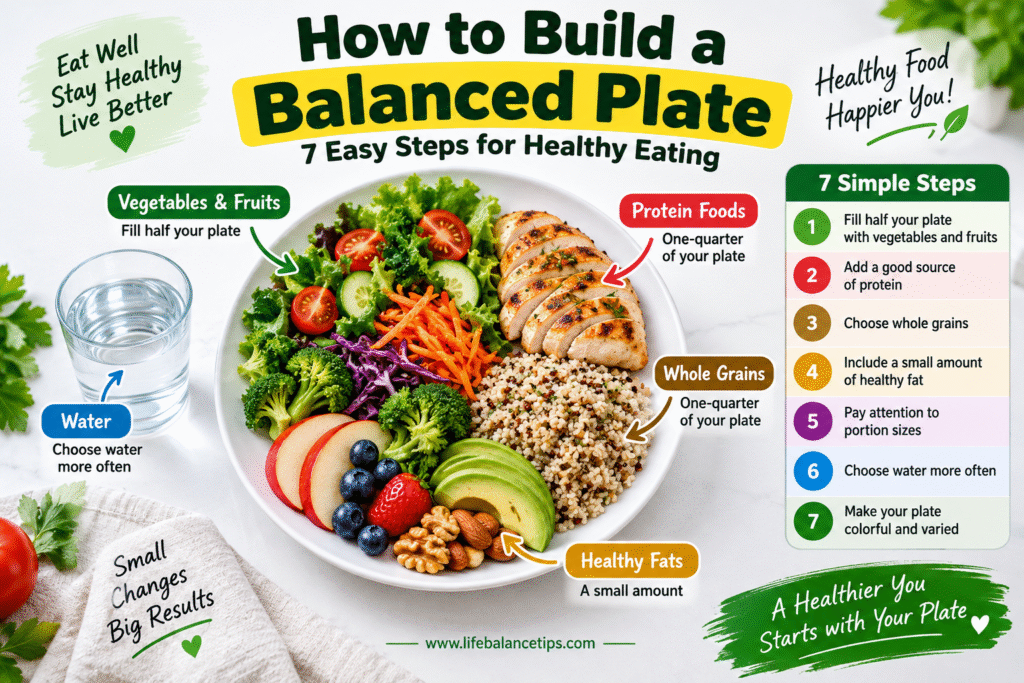
A balanced plate is a simple way to organize a meal so that it includes different food groups in appropriate amounts.
Instead of focusing on just one nutrient, a balanced meal combines foods that provide carbohydrates, protein, healthy fats, fiber, vitamins, minerals, and other nutrients.
A simple approach is:
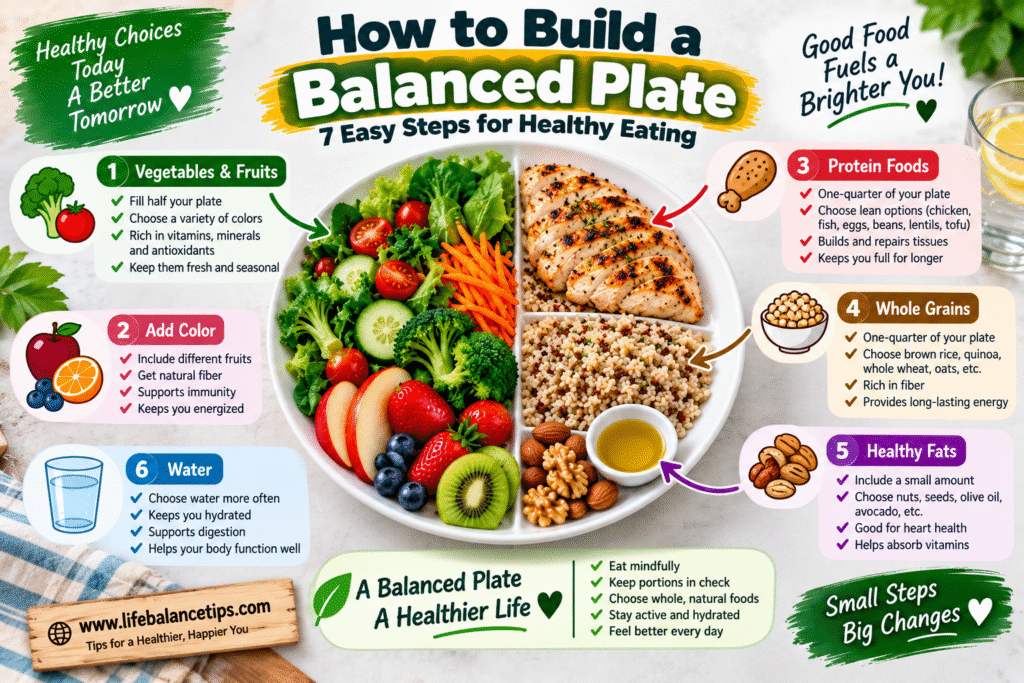
- About half the plate: vegetables and fruits
- About one-quarter: protein-rich foods
- About one-quarter: whole grains or other nutritious carbohydrate sources
- A small amount: healthy fats
- Water or another suitable low-sugar drink
These proportions do not need to be exact at every meal. The goal is to create a generally varied and nutritious eating pattern.
7 Simple Steps: How to Build a Balanced Plate
1. Fill About Half Your Plate With Vegetables and Fruits
Vegetables and fruits are important parts of a healthy eating pattern because they provide fiber, vitamins, minerals, and many naturally occurring plant compounds.
When learning how to build a balanced plate, start by adding vegetables and fruits before filling the rest of the plate.
Try including different colors throughout the week.
Good choices include:
- Spinach
- Broccoli
- Carrots
- Tomatoes
- Bell peppers
- Cauliflower
- Cucumber
- Green beans
- Pumpkin
- Apples
- Oranges
- Guava
- Berries
- Papaya
You do not need to eat every type of vegetable at every meal. Variety over the course of the day and week is more practical.
Easy idea
For lunch, you could have:
Salad + cooked vegetables + dal + roti + plain yogurt
This provides several different food groups in one meal.
2. Add a Good Source of Protein
Protein helps maintain and repair body tissues and is an important part of a balanced diet.
After adding vegetables, choose a protein source that fits your dietary preferences.
Some options include:
- Eggs
- Fish
- Chicken
- Plain yogurt
- Milk
- Paneer
- Tofu
- Lentils
- Chickpeas
- Kidney beans
- Black beans
- Peas
- Nuts and seeds
Plant-based meals can also provide plenty of protein when they include foods such as lentils, beans, chickpeas, tofu, dairy, nuts, or seeds.
Simple Indian combinations
Try:
- Dal + roti + vegetables
- Rajma + brown rice + salad
- Chana + vegetables + roti
- Paneer + mixed vegetables + whole-grain roti
- Egg + vegetable + whole-grain toast
Combining different nutritious foods makes it easier to create a satisfying meal.
3. Choose Whole Grains or Other High-Fiber Carbohydrates
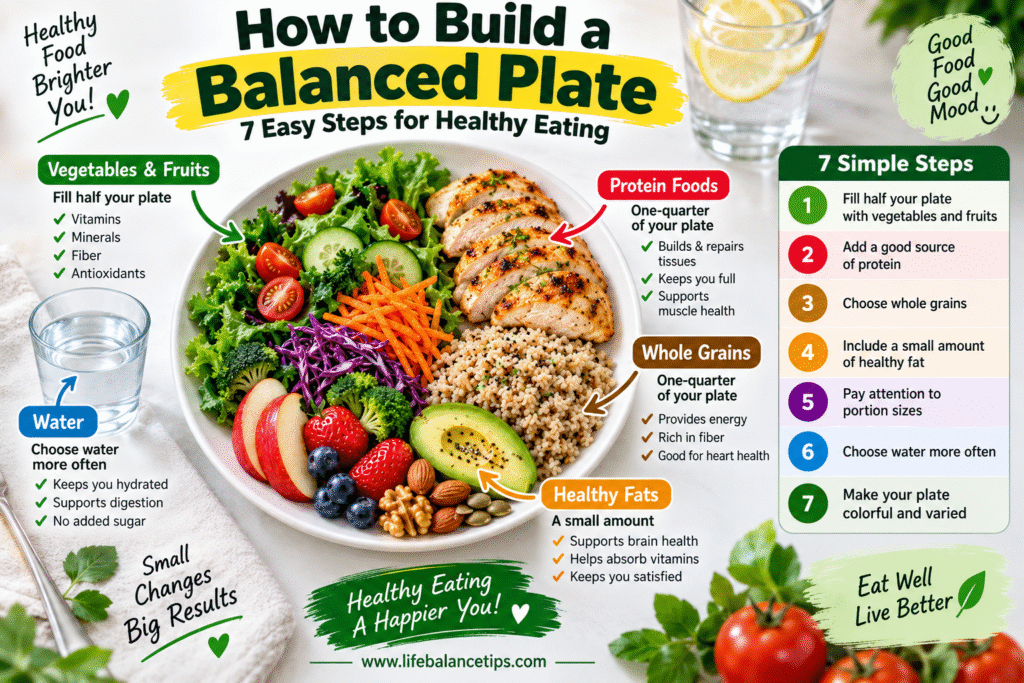
Carbohydrates are an important source of energy. The quality and amount of carbohydrate foods can vary, so choosing more nutrient-dense options can be helpful.
When possible, include whole grains and other high-fiber carbohydrate sources.
Examples include:
- Oats
- Brown rice
- Whole-wheat roti
- Whole-grain bread
- Barley
- Quinoa
- Millets
- Corn
- Sweet potatoes
You do not have to completely avoid white rice or other refined grains. Instead, consider replacing some refined grain choices with whole grains when practical.
Example plate
A balanced lunch could include:
½ plate vegetables + ¼ plate dal + ¼ plate brown rice + a small serving of yogurt
This is a simple example of how to build a balanced plate without making the meal complicated.
4. Include a Small Amount of Healthy Fat
Fat is another important part of a balanced diet. Your body needs dietary fat for several normal functions, and some foods containing unsaturated fats can be nutritious choices.
Good options include:
- Almonds
- Walnuts
- Peanuts
- Chia seeds
- Flaxseeds
- Sunflower seeds
- Sesame seeds
- Avocado
- Fatty fish
- Oils such as olive or mustard oil
The key is moderation because fats are energy-dense.
Instead of adding large amounts of oil, butter, or other high-fat ingredients, use reasonable portions and focus on the overall quality of your diet.
For example, a small handful of nuts can complement a meal or snack without making the meal complicated.
5. Pay Attention to Portion Sizes
Knowing how to build a balanced plate is not only about choosing healthy foods. Portion size also matters.
Even nutritious foods can contribute a lot of energy when eaten in very large amounts.
You do not always need a food scale. Simple visual methods can help.
For example:
| Food Group | Simple Portion Guide |
| Vegetables | About half the plate |
| Protein foods | About one-quarter of the plate |
| Whole grains | About one-quarter of the plate |
| Healthy fats | Small amount |
| Fruit | One serving or as appropriate |
| Water | Drink according to thirst and daily needs |
These are general guidelines rather than strict rules.
Your needs may be different depending on your physical activity, age, body size, and individual health considerations.
6. Choose Water More Often
A balanced meal is not only about solid food. What you drink also matters.
Water is a simple choice for everyday hydration and contains no added sugar.
Other beverages may fit into a healthy diet, but drinks containing large amounts of added sugar can add calories without providing much nutritional value.
Consider choosing:
- Water
- Plain sparkling water
- Unsweetened tea
- Unsweetened coffee
- Milk, depending on your dietary needs
If you enjoy sweetened drinks, you do not necessarily need to eliminate them immediately. Gradually reducing the amount or frequency can be a practical approach.
7. Make Your Plate Colorful and Varied
One of the easiest ways to improve your meals is to avoid eating the same few foods every day.
Different fruits, vegetables, legumes, grains, nuts, seeds, and protein foods provide different combinations of nutrients.
Try rotating your choices.
For example:
Monday: Spinach + dal + roti + cucumber
Tuesday: Broccoli + paneer + brown rice + salad
Wednesday: Mixed vegetables + chickpeas + millet
Thursday: Fish + vegetables + whole-grain roti
Friday: Rajma + brown rice + salad
This approach keeps meals interesting while helping you include a broader variety of foods.
How to Build a Balanced Plate for an Indian Meal
You do not need to completely change traditional Indian meals to eat more balanced.
Many Indian foods can easily fit into a nutritious plate.
Example 1: Roti Meal
- 1–2 whole-wheat rotis
- Mixed vegetable sabzi
- Dal
- Salad
- Plain curd
Example 2: Rice Meal
- Brown or regular rice in a moderate portion
- Rajma or chana
- Mixed vegetables
- Salad
- Plain yogurt
Example 3: Paneer Meal
- Paneer with vegetables
- Whole-wheat roti
- Cucumber and tomato salad
- Plain yogurt
Example 4: Non-Vegetarian Meal
- Grilled or lightly cooked fish or chicken
- Mixed vegetables
- Whole grains or roti
- Salad
- Water
The exact portions can be adjusted according to your hunger, activity level, and individual nutritional needs.
How to Build a Balanced Breakfast
Breakfast can also follow the same basic principle.
Option 1
Oatmeal + fruit + nuts + plain yogurt
Option 2
Eggs + whole-grain toast + vegetables + fruit
Option 3
Vegetable poha + yogurt + fruit
Option 4
Moong dal chilla + vegetables + plain curd
A balanced breakfast does not have to be large. The goal is to include nutritious foods that fit your daily needs.
How to Build a Balanced Lunch
Lunch can be simple and filling.
A useful formula is:
Vegetables + protein + whole grain + healthy fat
For example:
Mixed vegetables + dal + roti + a small portion of nuts
Or:
Salad + grilled chicken + brown rice + yogurt
This makes meal planning much easier because you can change individual foods without changing the entire structure of the meal.
How to Build a Balanced Dinner
Dinner does not need to be extremely restrictive.
A simple dinner could include:
- Cooked vegetables
- A protein source
- A moderate portion of whole grains or another carbohydrate
- Salad
- Water
For example:
Vegetable sabzi + dal + roti + salad
Or:
Grilled fish + vegetables + small portion of rice
If you prefer lighter dinners, you can adjust the portions according to your appetite.
Common Mistakes When Building a Balanced Plate
Even when people want to eat healthier, some common habits can make balanced eating difficult.
Mistake 1: Eating Too Few Vegetables
A meal based mainly on rice, roti, bread, or another grain may lack variety.
Better approach: Add at least one vegetable dish or salad.
Mistake 2: Forgetting Protein
A meal may look healthy but still contain very little protein.
Better approach: Add dal, beans, eggs, yogurt, paneer, tofu, fish, or another suitable protein source.
Mistake 3: Using Too Much Oil
Healthy oils can still provide a significant amount of energy.
Better approach: Use moderate amounts and avoid automatically adding extra oil.
Mistake 4: Drinking Too Many Sugary Beverages
Sweetened drinks can contribute significant amounts of added sugar.
Better approach: Choose water or unsweetened drinks more often.
Mistake 5: Making Every Meal Perfect
Healthy eating does not require perfection.
Better approach: Focus on your overall eating pattern rather than worrying about one meal.
A Simple Balanced Plate Formula
If you are still wondering how to build a balanced plate, remember this simple formula:
½ Vegetables & Fruits
¼ Protein
¼ Whole Grains or Nutritious Carbohydrates
+ Small Amount of Healthy Fat
+ Water
You can adjust this basic structure to match your culture, food preferences, budget, and individual needs.
Tips to Make Balanced Eating Easier
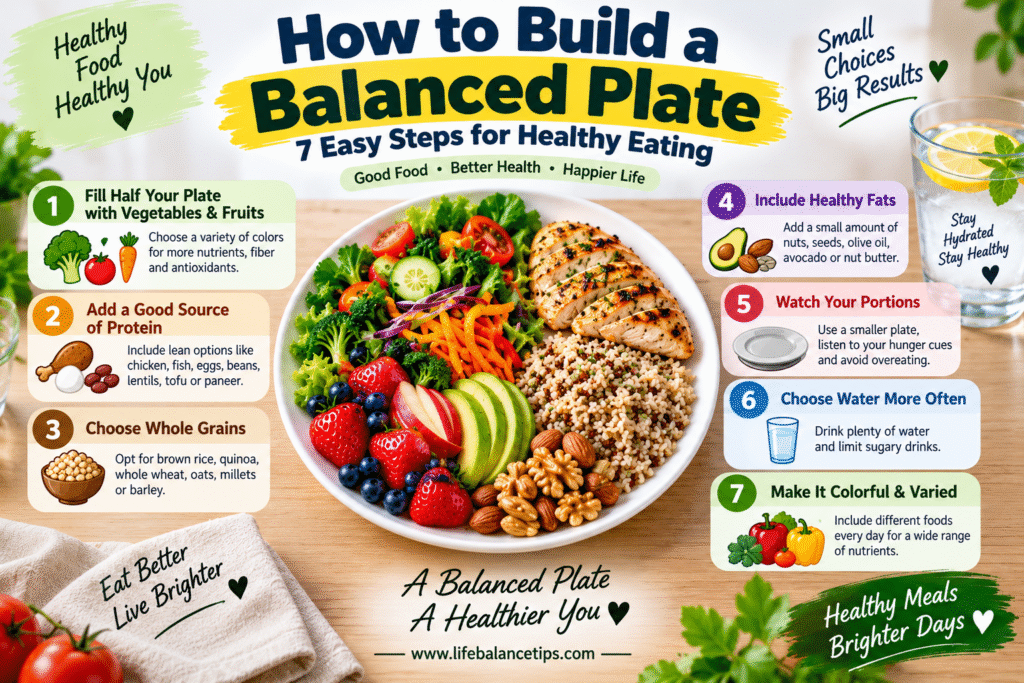
Healthy eating becomes easier when you prepare in advance.
Try these simple habits:
- Keep seasonal fruits available at home.
- Add vegetables to lunch and dinner.
- Cook beans or lentils in batches.
- Keep nuts and seeds available for convenient portions.
- Choose whole grains more often.
- Drink water regularly.
- Read nutrition labels when buying packaged foods.
- Try one new vegetable each week.
- Avoid making extreme food rules.
- Focus on consistency rather than perfection.
For packaged foods, understanding serving size, calories, added sugar, fiber, protein, sodium, and ingredients can help you make more informed choices.
Balanced Plate Example Table
| Meal | Vegetables/Fruits | Protein | Carbohydrate | Healthy Fat |
| Breakfast | Fruit | Eggs/Yogurt | Oats/Whole-grain toast | Nuts/Seeds |
| Lunch | Salad + vegetables | Dal/Chicken/Paneer | Roti/Brown rice | Nuts/Seeds |
| Snack | Fruit | Yogurt | Oats or whole-grain option | Nuts |
| Dinner | Mixed vegetables | Fish/Tofu/Dal | Roti/Rice | Small amount of healthy oil |
These are examples, not strict meal plans. Your nutritional needs may vary.
Frequently Asked Questions
1. What is the easiest way to build a balanced plate?
Start by filling about half your plate with vegetables and fruits, then add a protein source and a nutritious carbohydrate. Include a small amount of healthy fat and choose water as your main beverage.
2. Does a balanced plate help with weight management?
A balanced eating pattern can support healthy weight management when combined with appropriate portions and regular physical activity. However, individual results can vary.
3. Can I eat rice on a balanced diet?
Yes. Rice can be part of a balanced meal. Consider a moderate portion and combine it with vegetables, protein, and other nutritious foods.
4. Can Indian food be part of a balanced diet?
Absolutely. Foods such as dal, roti, vegetables, beans, yogurt, paneer, fruits, and whole grains can all fit into a balanced eating pattern.
5. How much protein should be on my plate?
A common visual approach is to use about one-quarter of the plate for a protein food. The exact amount depends on individual nutritional needs.
6. Should half my plate always be vegetables?
Using half the plate for vegetables and fruits is a useful general guideline, but meals do not have to follow an exact formula every time.
7. Are healthy fats necessary?
Dietary fat is an important part of nutrition. Foods such as nuts, seeds, fish, avocado, and some plant oils provide unsaturated fats and can fit into a balanced diet when eaten in appropriate amounts.
8. Can I eat snacks while following a balanced diet?
Yes. Nutritious snacks such as fruit, plain yogurt, nuts, seeds, or vegetables can fit into a balanced eating pattern. Portion size and your overall diet matter.
Final Thoughts
Learning how to build a balanced plate can make healthy eating much simpler. You do not need complicated meal plans or strict food rules. Start with vegetables and fruits, add a good protein source, choose nutritious carbohydrates, include healthy fats in moderate amounts, and drink water regularly.
Most importantly, focus on variety and consistency. A balanced diet is created by the overall pattern of your meals—not by making every single plate perfect.
Small, sustainable changes can make healthy eating easier to maintain over time.
For more practical healthy eating and nutrition guides, explore our latest health articles on Life Balance Tips.
For additional healthy eating guidance and balanced meal recommendations, visit the Harvard T.H. Chan School of Public Health Nutrition Source.
Health Disclaimer
This article is for general educational and informational purposes only. It is not intended to provide medical advice, diagnosis, or treatment. Individual nutrition needs can vary based on age, health conditions, medications, activity level, and other factors. If you have a specific medical or dietary concern, consult a qualified healthcare professional or registered dietitian before making major changes to your diet.
By Life Balance Tips Team