
Introduction
Peanuts and brain health are getting renewed attention after a recent clinical study found that eating unsalted, skin-roasted peanuts daily may affect insulin responsiveness in certain brain regions.
The study, published in Food & Function in late September 2026, involved 31 healthy older adults between 60 and 75 years of age. Participants consumed 60 grams of unsalted, skin-roasted peanuts every day for 16 weeks and were compared with a control period in which they did not consume peanuts. EurekAlert!
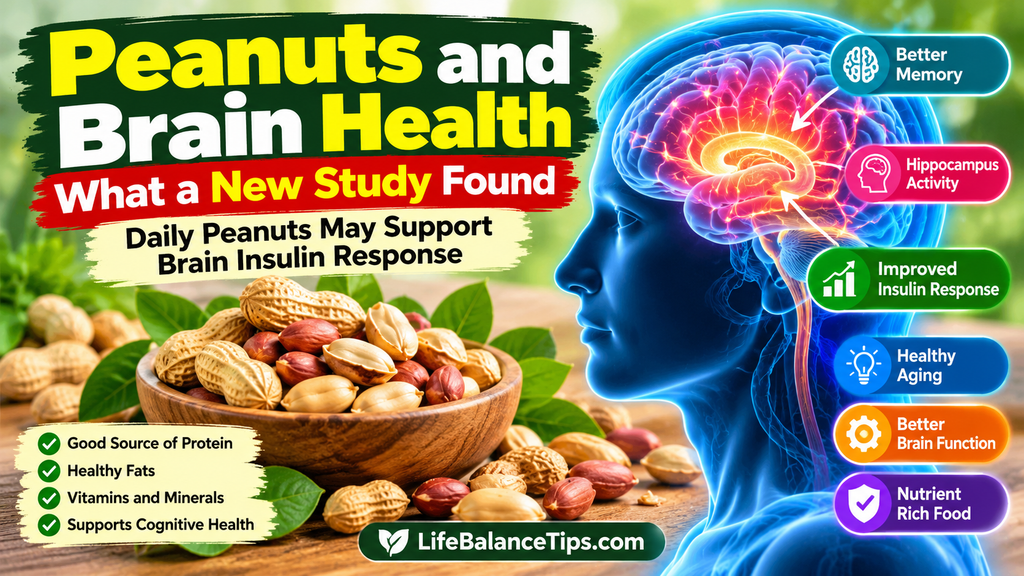
Researchers used advanced brain imaging to examine how the brain responded to insulin. They found a favorable change in insulin responsiveness in a region involving parts of the hippocampus, parahippocampal gyrus, lingual gyrus, thalamus, and posterior cingulate gyrus—areas that are involved in memory and other brain functions. EurekAlert!
The findings are interesting, but they do not prove that eating peanuts prevents Alzheimer’s disease, dementia, or memory loss.
So, what exactly did the researchers discover, and what does it mean for everyday eating?
What Was the New Peanut Study About?
The research was conducted by scientists from the Institute of Nutrition and Translational Research in Metabolism at Maastricht University Medical Center in the Netherlands.
The study included 31 healthy adults aged 60 to 75.
Participants consumed:
- 60 grams of unsalted, skin-roasted peanuts per day
- For 16 weeks
- During a controlled intervention period
They then went through a control period without peanuts.
The researchers used a randomized controlled crossover design, meaning participants experienced both conditions. This allows researchers to compare responses within the same people rather than simply comparing two unrelated groups. EurekAlert!
This makes the research more interesting than a simple observational study in which people report what they normally eat.
Still, the study was relatively small, so the results need to be confirmed in larger groups.
Why Are Researchers Interested in Brain Insulin?
Most people think of insulin as a hormone that controls blood sugar.
Insulin does much more than that.
The hormone also acts in the brain and is involved in processes related to:
- Communication between nerve cells
- Energy regulation
- Learning
- Memory
- Brain signaling
As people get older, changes in insulin responsiveness may occur in different tissues, including the brain.
Researchers are therefore interested in whether lifestyle and dietary factors can influence how the brain responds to insulin.
This is one reason the new findings are relevant to peanuts and brain health.
However, improved brain insulin responsiveness is a biological measurement. It is not the same thing as proving that someone’s memory will improve or that they will avoid dementia.
What Did Researchers Find?
After 16 weeks of daily peanut consumption, researchers observed a favorable change in insulin responsiveness in a specific region of the brain.
The affected area included parts of the:
- Hippocampus
- Parahippocampal gyrus
- Lingual gyrus
- Thalamus
- Posterior cingulate gyrus
Several of these structures are involved in memory and other cognitive processes. EurekAlert!
The finding is particularly interesting because the researchers were not simply asking participants whether they felt healthier.
Instead, they used arterial spin labeling MRI (ASL-MRI) to measure changes in regional cerebral blood flow after insulin was administered through the nose.
That allowed the researchers to investigate brain insulin responsiveness more directly.
What Is the Hippocampus?
The hippocampus is a small but important structure located deep within the brain.
It plays a major role in:
- Learning
- Memory formation
- Spatial memory
- Organizing new information
The hippocampus naturally changes with age, which is one reason researchers pay close attention to it when studying healthy aging and cognitive decline.
The new peanut study found a change in insulin responsiveness in a brain region that included part of the hippocampus.
That is interesting evidence for the research surrounding peanuts and brain health, but it should not be interpreted as proof that peanuts directly strengthen the hippocampus.
The study measured a physiological response—not a guaranteed improvement in memory or disease prevention.
How Much Peanut Did Participants Eat?
The participants consumed 60 grams of peanuts per day.
According to the study report, this was approximately two servings. Participants received pre-measured packets of unsalted, skin-roasted peanuts. EurekAlert!
They could consume their daily amount:
- All at once
- Spread throughout the day
- With meals
- In the morning
- In the afternoon
This is useful from a practical perspective because the participants did not have to follow a complicated recipe or special meal plan.
However, 60 grams is not necessarily the ideal amount for every person.
Peanuts are nutritious but also relatively energy-dense, so portion size matters, particularly for people watching their calorie intake.
Why Choose Unsalted Peanuts?
The study specifically used unsalted, skin-roasted peanuts.
That is important because adding large amounts of salt changes the nutritional profile of the food.
Unsalted peanuts provide several nutrients without contributing as much sodium as heavily salted varieties.
For everyday eating, people can consider options such as:
- Unsalted peanuts
- Dry-roasted unsalted peanuts
- Natural peanut butter without added sugar and excessive sodium
Peanut products can vary considerably, so checking the ingredient list and Nutrition Facts label is useful.
What Nutrients Do Peanuts Provide?
Peanuts contain several nutrients that make them a useful part of a balanced diet.
They provide:
Healthy Unsaturated Fats
Peanuts contain mostly unsaturated fats, including monounsaturated and polyunsaturated fats.
These fats can be part of a heart-conscious eating pattern when they replace less healthy sources of fat.
Protein
Peanuts provide plant-based protein, which can contribute to daily protein needs.
Dietary Fiber
Fiber supports digestive health and can contribute to feelings of fullness.
Vitamins and Minerals
Peanuts contain nutrients such as:
- Vitamin E
- Magnesium
- Folate
- Niacin
- Copper
- Manganese
Plant Compounds
Peanuts also contain various bioactive plant compounds and antioxidants.
Researchers believe that a combination of nutrients may contribute to some of the potential benefits being investigated in studies of peanuts and brain health.
However, the new study was not designed to determine which individual peanut nutrient caused the observed brain response.
Could Peanuts Improve Memory?
This is where we need to be careful.
The new 2026 study primarily examined brain insulin responsiveness, rather than proving a direct improvement in memory.
However, the same research group previously studied peanut consumption in healthy older adults.
In that earlier randomized crossover trial, 31 adults consumed 60 grams of unsalted, skin-roasted peanuts daily for 16 weeks. Researchers reported an increase in global cerebral blood flow of 3.6% and an improvement of 5.8% in a verbal memory measure. DOI
The earlier study also reported improvements in some blood-pressure measures.
That previous research provides useful context, but it should not be combined with the new study to claim that peanuts have been proven to improve memory.
Different outcomes were measured in the two studies.
What Is Cerebral Blood Flow?
Cerebral blood flow refers to the amount of blood moving through the brain.
Blood carries:
- Oxygen
- Glucose
- Nutrients
to brain tissue.
Healthy blood flow is important for normal brain function.
In the earlier peanut trial, researchers reported increased cerebral blood flow after 16 weeks of peanut consumption. DOI
The newer study used brain imaging to examine regional blood-flow changes in response to insulin.
Together, these studies provide an interesting research direction for peanuts and brain health, although they do not establish long-term disease prevention.
What Makes This Study Different?
A major strength of this research is that it was not simply a survey.
Participants were given a controlled dietary intervention.
Researchers also used advanced imaging technology to investigate the brain.
The study included:
- A randomized controlled crossover design
- A 16-week peanut intervention
- 31 healthy older adults
- Premeasured peanut portions
- Brain MRI
- Measurements of cerebral blood flow
- Intranasal insulin administration
- Cognitive testing
- Measurement of intrahepatic lipid content
This combination gives researchers a better opportunity to investigate possible biological mechanisms.
Did Peanuts Change Blood Sugar or Metabolic Markers?
Interestingly, the researchers reported that the peanut intervention did not produce significant changes in several metabolic blood markers or intrahepatic lipid content.
The main finding was related to regional brain insulin responsiveness. EurekAlert!
This is important because it shows that the study was not simply finding that peanuts changed every measure they tested.
The researchers observed a specific brain-related response.
That makes the result scientifically interesting, while also reminding us not to exaggerate what the study proves.
Do Peanuts Prevent Alzheimer’s Disease?
No. There is currently not enough evidence to make that claim.
The researchers discuss the importance of brain insulin signaling for memory and cognitive processes, but the study did not test whether peanuts prevent Alzheimer’s disease.
It also did not follow participants long enough to determine whether they developed dementia later in life.
Therefore, headlines such as “Peanuts prevent Alzheimer’s” would go beyond the evidence.
A more accurate statement is:
Daily peanut consumption was associated with a favorable change in brain insulin responsiveness in certain brain regions of healthy older adults in this controlled study.
That distinction is important when discussing peanuts and brain health
Could the Healthy Fats in Peanuts Be Responsible?
Possibly, but the study cannot tell us.
Peanuts contain unsaturated fats along with:
- Protein
- Fiber
- Vitamins
- Minerals
- Polyphenols
- Other bioactive compounds
Researchers suggested that the combination of these nutrients could potentially contribute to the observed effects. EurekAlert!
But the researchers did not isolate one specific nutrient and test it separately.
So we cannot say that the brain response was caused by peanut fat, protein, vitamin E, magnesium, or any other single component.
Whole foods often contain many nutrients that work together.
How Can You Add Peanuts to Your Diet?
If you enjoy peanuts and do not have a peanut allergy, adding a modest portion to meals can be simple.
Breakfast
Add a small amount of peanuts to:
- Oatmeal
- Plain yogurt
- Fruit bowls
Lunch
Sprinkle chopped peanuts over:
- Vegetable salads
- Grain bowls
- Homemade wraps
Snack
Choose a small portion of unsalted peanuts instead of highly processed snack foods.
Dinner
Peanuts can also be used in certain vegetable or noodle dishes.
The important point is not to treat peanuts as a magic food.
They work best as one part of an overall nutritious eating pattern.
How Much Should You Eat?
The study used 60 grams per day, but that does not mean everyone should automatically eat exactly 60 grams.
Peanuts are calorie-dense.
For some people, a smaller portion may be more practical.
A typical small handful can be an easy way to include peanuts without dramatically increasing total calorie intake.
People with peanut allergies should avoid peanuts completely.
Those with medical conditions requiring specific dietary restrictions should also speak with a healthcare professional or registered dietitian before making major dietary changes.
What About Peanut Butter?
Peanut butter can also provide protein, unsaturated fats, and other nutrients.
However, products vary.
When choosing peanut butter, look for options with:
- Peanuts as the main ingredient
- Little or no added sugar
- Moderate sodium
- No unnecessary added ingredients
Natural peanut butter can separate, so stirring it before use may be necessary.
Peanut butter can be spread on whole-grain toast or added to oatmeal and yogurt.
But remember that peanut butter is concentrated, so portion size matters.
7 Simple Ways Peanuts May Fit Into a Healthy Diet
1. Choose Unsalted Peanuts
This keeps unnecessary sodium lower.
2. Watch the Portion
Peanuts are nutritious but calorie-dense.
3. Pair Peanuts With Fruit
Apple slices and a small serving of peanuts can make a satisfying snack.
4. Add Them to Oatmeal
Chopped peanuts can provide crunch and protein.
5. Use Them in Salads
A small amount can add texture and healthy fats.
6. Choose Whole Peanuts More Often
Whole peanuts make portion sizes easier to see.
7. Think About the Whole Diet
Peanuts are only one part of a healthy eating pattern.
These habits provide a practical way to apply the broader research on peanuts and brain health without turning one food into a miracle solution.
Important Limitations of the Study
Every research study has limitations, and this one is no exception.
The Study Was Small
Only 31 older adults participated.
A study of this size cannot represent the entire population.
Participants Were Healthy
The participants were healthy older adults aged 60–75.
The findings may not apply to people with diabetes, dementia, obesity, cardiovascular disease, or other health conditions.
The Study Was Relatively Short
The intervention lasted 16 weeks.
Brain diseases such as Alzheimer’s develop over many years.
Therefore, a 16-week study cannot establish long-term disease prevention.
The Study Tested One Specific Peanut Preparation
Participants ate unsalted, skin-roasted peanuts.
The results cannot automatically be applied to:
- Salted peanuts
- Sugary peanut products
- Peanut-flavored snacks
- Highly processed peanut foods
The Study Was Not Designed to Prove Dementia Prevention
The researchers examined brain insulin responsiveness rather than whether participants developed dementia.
These limitations mean the findings should be considered promising early evidence, not a final answer.
What Does This Mean for Older Adults?
For older adults who enjoy peanuts and do not have an allergy, peanuts can be a convenient source of:
- Plant protein
- Unsaturated fats
- Fiber
- Vitamins
- Minerals
The new research gives scientists another possible explanation for why nut and peanut consumption may be associated with brain-related outcomes.
But diet is only one part of healthy aging.
Other important factors include:
- Regular physical activity
- Adequate sleep
- Blood-pressure management
- Blood-sugar management
- Social connection
- Mental stimulation
- Avoiding tobacco
- Limiting excessive alcohol
- Regular medical care
Healthy aging should therefore be approached as a complete lifestyle rather than a single-food strategy.
Frequently Asked Questions
Are peanuts good for brain health?
Peanuts provide several nutrients that can fit into a healthy diet, and a recent randomized study found a favorable change in brain insulin responsiveness after 16 weeks of daily peanut consumption in healthy older adults. However, more research is needed. EurekAlert!
How many peanuts did participants eat?
Participants consumed 60 grams of unsalted, skin-roasted peanuts daily for 16 weeks. EurekAlert!
Did peanuts improve memory in the new study?
The new study primarily examined brain insulin responsiveness. An earlier trial involving the same research group reported improved verbal memory and cerebral blood flow after a similar 16-week peanut intervention. DOI
Can peanuts prevent Alzheimer’s disease?
No. The available research does not prove that peanuts prevent Alzheimer’s disease or dementia.
What type of peanuts were used?
The study used unsalted, skin-roasted peanuts. EurekAlert!
Are salted peanuts healthy?
Salted peanuts can still provide nutrients, but they contain more sodium. Unsalted peanuts are generally a simpler choice when you want to limit sodium intake.
Are peanuts high in calories?
Yes. Peanuts are nutrient-dense but also calorie-dense, so portion size is important.
Can everyone eat peanuts?
No. People with peanut allergies should avoid peanuts because allergic reactions can be serious or life-threatening.
Is peanut butter good for brain health?
Natural peanut butter can be part of a balanced diet, especially when it contains mostly peanuts and little added sugar or sodium. However, the new study specifically examined whole unsalted, skin-roasted peanuts rather than peanut butter.
Key Takeaways
The new research adds an interesting piece to the growing evidence around peanuts and brain health.
Here are the most important points:
- The study involved 31 healthy adults aged 60–75.
- Participants consumed 60 grams of unsalted, skin-roasted peanuts daily.
- The intervention lasted 16 weeks.
- Researchers used advanced MRI techniques to study brain insulin responsiveness.
- A favorable change was observed in a brain region involving the hippocampus and other memory-related structures.
- The study did not prove that peanuts prevent Alzheimer’s disease or dementia.
- Peanuts provide unsaturated fats, protein, fiber, vitamins, minerals, and other plant compounds.
- Portion size still matters because peanuts are calorie-dense.
- People with peanut allergies should avoid them.
- Read the original study in Food & Function
- Larger and longer studies are needed to determine the long-term significance of the findings.
- For more nutrition and brain-health tips, explore our guide to 15 Best Foods for Brain Health and Better Memory.
Final Thoughts
The latest research gives us another reason to be interested in peanuts and brain health, especially as scientists try to understand how everyday foods may influence the aging brain.
In this small randomized controlled crossover study, 31 healthy adults aged 60 to 75 consumed 60 grams of unsalted, skin-roasted peanuts each day for 16 weeks. Researchers then observed a favorable change in insulin responsiveness in a brain region that included parts of the hippocampus and other areas involved in memory. EurekAlert!
That is an interesting finding, but it should not be turned into a bigger claim than the evidence supports.
The study did not prove that peanuts prevent Alzheimer’s disease, reverse brain aging, or guarantee better memory.
Instead, it provides evidence for a possible biological pathway that researchers can investigate further.
Peanuts are nutritious foods that contain protein, unsaturated fats, fiber, vitamins, minerals, and various plant compounds. Including a reasonable portion of unsalted peanuts in an overall balanced diet can be a practical choice for many people.
For brain health, however, it is better to think beyond one food. A varied diet rich in vegetables, fruits, whole grains, beans, nuts, fish, and other nutrient-rich foods—combined with regular exercise, good sleep, and healthy management of blood pressure and blood sugar—is a more realistic long-term approach.
Research on peanuts and brain health is promising, but larger, longer clinical studies are needed before scientists can determine whether changes in brain insulin responsiveness translate into meaningful long-term cognitive benefits.
Source
Kerkhof L, Joris PJ, et al. Daily consumption of unsalted, skin-roasted peanuts beneficially affects regional brain insulin responsiveness in older adults: Results of a longer-term randomized controlled trial. Food & Function. 2026. DOI: 10.1039/D6FO03208G. EurekAlert!
Health Disclaimer
This article is for general educational purposes only and is not medical advice. It does not diagnose, treat, or prevent Alzheimer’s disease, dementia, or any other medical condition. People with peanut allergies or specific medical conditions should consult a qualified healthcare professional before making dietary changes.