
Have you ever finished a meal because your plate was empty, even though you were already full? Or opened the refrigerator simply because you were stressed, bored, or looking for a little comfort?
These situations are common. Many people eat according to a schedule, follow strict diet rules, or feel pressure to choose foods based on calories alone. Over time, it can become difficult to recognize what the body actually needs.
This is where intuitive eating comes in. Instead of following a rigid set of food rules, this approach encourages people to pay attention to hunger, fullness, satisfaction, and their relationship with food.
The idea is not to eat without thinking about nutrition. It is to develop a more balanced relationship with food while respecting the body’s signals and making choices that support overall well-being.
A study published in the Journal of Behavioral Medicine in September 2026 examined how intuitive eating was associated with sleep, physical activity, stress, and certain chronic health conditions in US adults. The findings were interesting, although they do not prove that intuitive eating directly improves these outcomes.
In this article, we will explore seven important findings, explain how intuitive eating works, and share practical ways to apply its principles in everyday life.
What Is Intuitive Eating?
Intuitive eating is a non-diet approach to eating that encourages people to recognize and respond to internal hunger and fullness signals instead of relying entirely on external food rules.
For example, you might notice that you are genuinely hungry before lunch, enjoy a satisfying meal, and stop when you feel comfortably full. You can also enjoy foods you like without treating them as rewards or failures.
The approach does not require eating perfectly or following the same routine every day. Hunger and appetite can change because of physical activity, sleep, stress, medications, health conditions, and other circumstances.
It also does not mean ignoring nutrition. A person can listen to hunger cues while still considering food variety, nutritional needs, cultural preferences, budget, and medical advice.
The goal of intuitive eating is to develop awareness and flexibility rather than constantly judging food choices as good or bad.
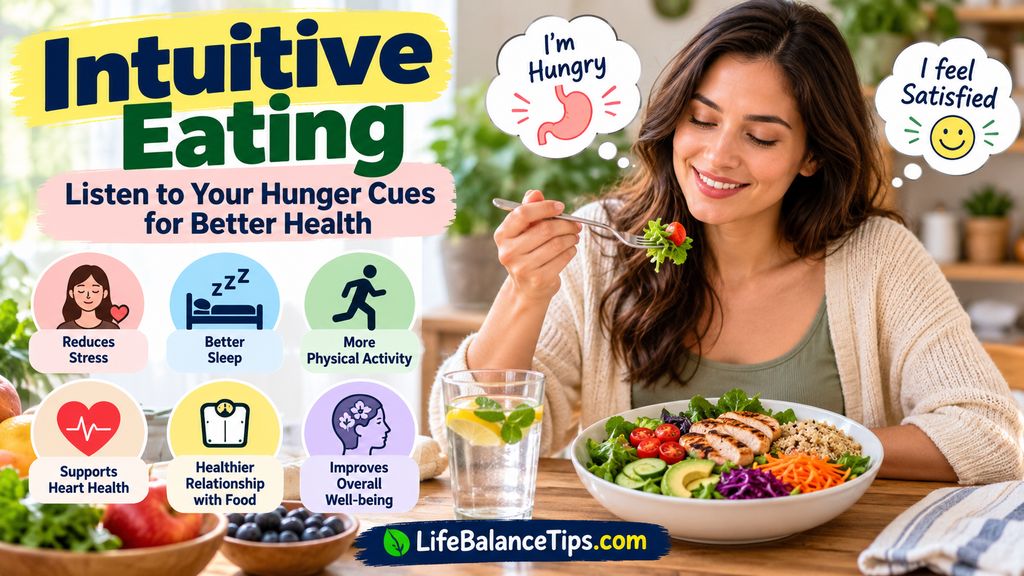
1. A New Study Examined Intuitive Eating and Health
Researchers published a study titled Associations between intuitive eating and health behaviors and physical health in U.S. adults in the Journal of Behavioral Medicine on September 23, 2026.
The study included 1,057 US adults with an average age of approximately 36 years. Participants completed an online survey covering eating behaviors, sleep, physical activity, stress, general health, and selected chronic health conditions.
The researchers examined whether higher intuitive eating scores were associated with healthier lifestyle behaviors and lower odds of reporting certain medical conditions.
The study found that higher scores were associated with more sleep, greater physical activity, lower self-reported stress, and better self-rated health. Higher scores were also associated with lower odds of reporting a history of high blood pressure, high cholesterol, and type 2 diabetes.
However, this was a cross-sectional study. The researchers collected information at one point in time, so they could not determine which factor came first.
For example, people who experience less stress may find it easier to respond to hunger cues. Alternatively, people who feel more comfortable around food may also have other habits that support their well-being.
The study does not establish that changing eating behavior alone prevents chronic disease.
Read the original research: Journal of Behavioral Medicine study.
2. Listening to Hunger and Fullness Cues Can Make Meals More Mindful
One of the central ideas behind intuitive eating is learning to recognize physical hunger and comfortable fullness.
Physical hunger may develop gradually. You might notice an empty feeling in your stomach, lower energy, difficulty concentrating, or a growing interest in food.
Fullness can also develop over time. Paying attention during a meal may help you notice when you feel satisfied rather than continuing to eat automatically.
These signals are not always easy to recognize. Busy schedules, stress, medications, illness, and a history of restrictive dieting can affect appetite and eating patterns.
You do not need to get every signal right. Simply pausing occasionally to ask how hungry or satisfied you feel can help you become more aware of your experience.
For example, before reaching for another serving, you might take a moment to notice whether you are still physically hungry, enjoying the food, or eating out of habit. There is no need to judge the answer.
Over time, this awareness may help some people make more intentional food choices. However, hunger and fullness cues should not replace medical or nutritional guidance when a health condition requires a specific eating plan.
3. Intuitive Eating Was Associated With Better Sleep
Sleep was one of the lifestyle factors examined in the 2026 study.
Researchers found that higher intuitive eating scores were associated with greater odds of reporting at least seven hours of sleep on weeknights. The association does not show that intuitive eating directly improves sleep.
Several explanations are possible. People who experience less stress may find it easier to maintain a regular bedtime routine. A less stressful relationship with food may also be part of a broader pattern of well-being.
The reverse could also be true: people who sleep adequately may find it easier to notice hunger cues and make decisions about meals.
More research is needed to understand how these behaviors influence one another.
If you want to support your sleep, consider keeping a consistent sleep schedule, creating a relaxing bedtime routine, and limiting caffeine later in the day if it affects you.
Intuitive eating is not a sleep treatment, but becoming more aware of daily routines may help you identify habits that deserve attention.
4. Researchers Found an Association With Lower Stress
Food choices are not always driven by physical hunger. Sometimes people reach for food when they feel anxious, frustrated, lonely, or overwhelmed.
Eating for emotional comfort is a common human experience and is not automatically a problem. Food can be enjoyable, comforting, and connected to culture and social life.
Difficulties may arise when eating becomes the only way someone can cope with distress or when guilt and rigid food rules create additional pressure.
In the 2026 study, higher intuitive eating scores were associated with lower self-reported stress.
The finding is interesting because intuitive eating emphasizes awareness of internal experiences rather than strict external rules. That awareness may help some people recognize when they are physically hungry and when they are looking for emotional comfort.
However, the researchers did not establish that intuitive eating caused stress to decrease. They also could not determine whether lower stress made intuitive eating easier.
If you notice that you often eat when stressed, try asking yourself what you need in that moment. You may be hungry, or you may benefit from rest, talking to someone, taking a short walk, or finding another way to relax.
These alternatives should not be used to ignore genuine hunger. Eating remains an appropriate response when your body needs nourishment.
5. Intuitive Eating Was Linked to More Physical Activity
The study also found an association between intuitive eating scores and physical activity.
This does not mean that intuitive eating automatically makes people exercise more. The researchers measured associations rather than testing an intervention designed to change activity levels.
One possible explanation is that people who pay attention to their body’s needs may approach movement in a more flexible way.
For example, someone might choose a walk because it feels enjoyable, stretch after sitting for a long time, or take a rest day when recovery is needed.
Movement does not have to be punishment for eating or a way to earn a meal. Exercise can support cardiovascular fitness, strength, mobility, mood, and everyday function.
A practical starting point is to choose activities that fit your current fitness and circumstances. Walking, dancing, cycling, gardening, and suitable strength exercises are all possibilities.
If you have a medical condition or physical limitations, ask a qualified healthcare professional which activities are appropriate for you.
6. The Study Found Associations With Several Chronic Conditions
One of the more notable findings involved self-reported medical histories.
After adjusting for age, sex, and race or ethnicity, the researchers reported that higher intuitive eating scores were associated with lower odds of having a current or previous diagnosis of:
- High blood pressure, also called hypertension.
- High cholesterol, also called hyperlipidemia.
- Type 2 diabetes.
These findings attracted attention because all three conditions are important aspects of cardiometabolic health.
However, the results must be interpreted carefully. The study did not prove that intuitive eating prevents or treats any of these conditions.
People with better health may find it easier to eat according to hunger and fullness cues. Other factors, such as access to healthcare, stress, physical activity, food availability, and socioeconomic circumstances, may also influence both eating behavior and health.
The study relied on self-reported information, which can be affected by memory and reporting errors.
People with high blood pressure, high cholesterol, or diabetes should continue following their healthcare professional’s recommendations. Intuitive eating may be a useful way to think about one’s relationship with food, but it is not a replacement for prescribed treatment, appropriate nutrition advice, or medical monitoring.
7. Intuitive Eating Does Not Guarantee a Perfect Diet
It is easy to assume that listening to hunger cues will automatically lead someone to eat more fruits and vegetables or eliminate less nutritious foods.
The 2026 study did not find a statistically significant association between intuitive eating scores and meeting the threshold for daily fruit and vegetable intake.
This is an important reminder that intuitive eating does not prescribe a particular menu or guarantee a specific nutritional outcome.
People have different preferences, budgets, cultural food traditions, medical needs, and access to groceries. Their food choices can also vary from day to day.
A balanced approach can combine awareness of hunger and fullness with practical nutrition knowledge. You can enjoy foods that satisfy you while including vegetables, fruits, whole grains, protein sources, and other foods that meet your needs.
There is no need to classify every food as either completely healthy or unhealthy. The overall pattern of eating matters more than any single meal.
People who need a specific diet for a medical condition should work with an appropriate healthcare professional or registered dietitian to combine that guidance with a flexible, supportive relationship with food.
How to Practice Intuitive Eating in Everyday Life
You do not need to change every meal overnight. Start with a few manageable steps and pay attention to what feels helpful.
1. Check In With Your Hunger
Before eating, pause briefly and notice how you feel. Are you physically hungry, looking for a snack out of habit, or experiencing a mix of feelings?
There is no correct answer. The purpose is to build awareness, not to restrict food.
2. Eat Without Rushing When Possible
Eating while distracted or in a hurry can make it harder to notice satisfaction. If your schedule allows, slow down occasionally, put your utensils down between bites, and notice the taste and texture of your meal.
You do not have to eat every meal without distractions to benefit from this practice.
3. Notice Comfortable Fullness
During a meal, ask whether you feel satisfied and whether you would like more food. Your appetite can vary, and finishing everything on your plate is not a requirement.
Equally, stopping early is not a rule you must follow. Respond to your needs rather than aiming for a perfect portion every time.
4. Avoid Strict Food Labels
Calling foods completely good or bad can create unnecessary guilt. Instead, consider what different foods offer, how they make you feel, and how they fit into your overall eating pattern.
Enjoyment and nutrition can exist together.
5. Recognize Emotional Eating Without Shame
If you notice that stress or sadness is influencing your eating, respond with curiosity rather than criticism.
You can eat when you are hungry and also explore other ways of managing emotions. These approaches do not have to compete with each other.
6. Respect Your Medical and Nutritional Needs
Some people need structured meal timing or specific food choices because of medical conditions, medications, pregnancy, recovery from illness, or other circumstances.
In those situations, hunger and fullness cues can still provide useful information, but they should be considered alongside professional advice.
7. Be Patient With Yourself
Changing long-standing habits takes time. Some days you may notice your hunger cues easily; on other days, work, stress, or your schedule may make it harder.
The aim is not perfection. It is to develop a more informed and flexible relationship with eating.
Intuitive Eating Compared With Traditional Dieting
| Feature | Intuitive eating | Rule-based dieting |
| Main focus | Hunger, fullness, satisfaction, and body awareness | Following prescribed food or calorie rules |
| Food choices | Flexible and responsive to individual needs | Often guided by a fixed plan |
| Exercise | Can be chosen for enjoyment and well-being | Sometimes used primarily for weight control |
| Food guilt | Encourages a less judgmental approach | Strict rules may create feelings of failure for some people |
| Medical needs | Can be adapted alongside professional guidance | May include structured plans for specific health goals |
This comparison is simplified. Diets differ widely, and some structured nutrition plans are medically necessary or helpful. Intuitive eating is not automatically suitable for every person or situation.
Frequently Asked Questions
1. What is intuitive eating in simple words?
Intuitive eating means paying attention to physical hunger, fullness, satisfaction, and your body’s needs instead of relying entirely on strict food rules. It can include enjoying a variety of foods while considering nutrition and medical needs.
2. Can intuitive eating help with weight loss?
Weight loss is not the primary goal of intuitive eating, and it does not guarantee weight loss. Some people may experience changes in eating patterns or weight, while others may not. The approach focuses on developing a healthier relationship with food.
3. Is intuitive eating healthy?
It can be a helpful approach for some people, particularly those who want a less rigid relationship with food. However, nutritional needs vary. People with medical conditions or a history of disordered eating may benefit from working with a qualified healthcare professional or registered dietitian.
4. What did the 2026 intuitive eating study find?
The study of 1,057 US adults found associations between higher intuitive eating scores and more sleep, greater physical activity, lower self-reported stress, better self-rated health, and lower odds of reporting certain chronic conditions. Because the study was cross-sectional, it cannot establish cause and effect.
5. Does intuitive eating mean eating anything at any time?
No. It does not mean ignoring nutrition, medical advice, or your body’s needs. It encourages awareness of hunger and fullness while allowing flexibility and enjoyment.
6. Can intuitive eating help with emotional eating?
It may help some people recognize the difference between physical hunger and emotional needs. However, it is not a guaranteed treatment for emotional eating. Persistent distress around food may warrant support from a qualified professional.
7. Can people with diabetes practice intuitive eating?
Some people with diabetes may incorporate intuitive eating principles into their routine, but they still need to manage medication, blood glucose monitoring, meal timing, and nutrition as advised by their healthcare team. They should not change prescribed treatment without medical guidance.
Building a healthier relationship with food starts with understanding everyday habits. Read our guide to healthy eating habits for practical ways to make balanced food choices part of your routine.
Conclusion
Intuitive eating offers an alternative to approaching every meal through strict food rules. By paying attention to hunger, fullness, satisfaction, and individual needs, people may develop a more flexible and less judgmental relationship with food.
A September 2026 study found that intuitive eating scores were associated with several health-related factors, including sleep, physical activity, stress, and reported chronic conditions. These findings are interesting, but they do not establish that intuitive eating directly improves health or prevents disease.
The most practical approach is to combine body awareness with balanced nutrition, enjoyable movement, adequate sleep, and appropriate medical care. Start with small changes, remain patient with yourself, and seek professional guidance when you need support.
Medical Disclaimer: This article is for educational and informational purposes only. It does not replace professional medical advice, diagnosis, or treatment. If you have a chronic health condition, a history of disordered eating, or concerns about your nutrition, consult a qualified healthcare professional or registered dietitian.
Research Source: Burnette CB, Tessier KM, Launius KN, et al. Associations between intuitive eating and health behaviors and physical health in U.S. adults. Journal of Behavioral Medicine, 2026. Read the original study.