
Published: September 25, 2026
Food preservatives are common in packaged and industrially processed foods. They help extend shelf life, protect foods from spoilage, and maintain qualities such as color and freshness.
Now, a large French study has examined whether exposure to commonly consumed preservative food additives is associated with high blood pressure and cardiovascular disease.
The study, published in the European Heart Journal, included 112,395 adults from France’s NutriNet-Santé cohort. Participants provided detailed dietary information, including commercial brands, and researchers estimated their exposure to food additives. The median follow-up was about 7.9 years.
Researchers found that higher consumption of certain preservative food additives was associated with a higher incidence of hypertension and cardiovascular disease.
However, it’s important to understand that this was an observational study, so it cannot prove that the preservatives themselves caused high blood pressure or heart disease. Other dietary and lifestyle factors may also contribute to the observed associations.
Understanding how food preservatives are used can help consumers make more informed food choices.
What Are Food Preservatives?
Food preservatives are substances added to foods to help slow spoilage or protect food from changes caused by microorganisms, oxidation, or other processes.
They can be found in many types of packaged and processed products.
Some preservatives help prevent microbial growth, while others protect foods from oxidation, which can affect flavor, color, or freshness.
The new study specifically looked at preservative food additives, rather than suggesting that all processed foods are unhealthy.
It is also important to remember that food processing and food additives are not automatically the same thing.
For example, freezing vegetables or pasteurizing milk involves processing but does not mean the food is highly processed in the same way as many packaged convenience products.
Some food preservatives are used to maintain freshness and extend the shelf life of packaged foods.
What Did the New Study Examine?
Researchers used information from the NutriNet-Santé cohort in France between 2009 and 2024.
The study included 112,395 participants, with an average age of about 42.8 years. Approximately 78.7% of participants were women.
Participants completed repeated 24-hour dietary records, in some cases up to 96 records during the study period. Researchers also used information about commercial brands and food composition databases to estimate exposure to individual additives.
The researchers identified 58 preservative food additives consumed by at least one participant.
Among the 17 individual preservatives consumed by at least 10% of participants, eight showed statistically significant associations with higher incidence of hypertension after correction for multiple testing.
8 Food Preservatives Associated With Higher Hypertension Risk
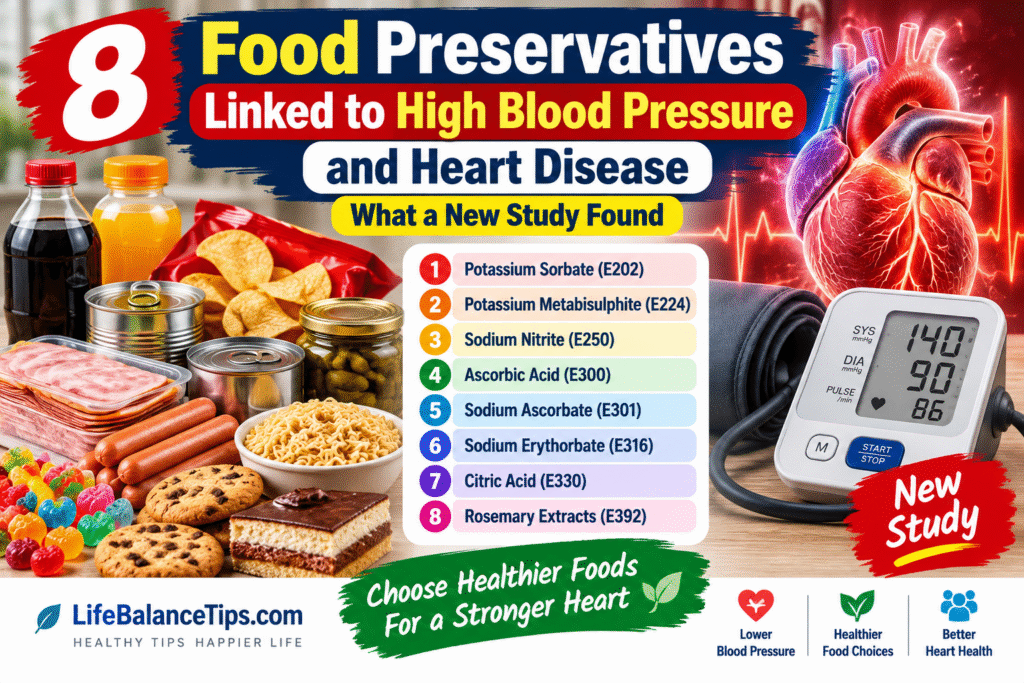
The eight individual preservatives highlighted by the study were:
- Potassium sorbate (E202)
- Potassium metabisulphite (E224)
- Sodium nitrite (E250)
- Ascorbic acid (E300)
- Sodium ascorbate (E301)
- Sodium erythorbate (E316)
- Citric acid (E330)
- Rosemary extracts (E392)
The study found statistically significant associations between these additives and hypertension incidence. Ascorbic acid (E300) was also associated with cardiovascular disease in the analysis.
These findings should not be interpreted as saying that simply consuming one of these additives will cause high blood pressure.
Reading ingredient lists can help you identify food preservatives and other additives in packaged products.
The researchers were looking at long-term dietary exposure patterns within a population.
1. Potassium Sorbate (E202)
Potassium sorbate is commonly used to help inhibit mold and yeast growth.
In the study, higher consumption of potassium sorbate was associated with a higher incidence of hypertension.
The reported hazard ratio for higher versus lower intake was 1.39, meaning the statistical association corresponded to a 39% higher incidence in the comparison used by researchers.
This does not mean potassium sorbate causes a 39% increase in blood pressure for every person who consumes it.
It is a population-level observational finding.
2. Potassium Metabisulphite (E224)
Potassium metabisulphite belongs to the sulphite group of food additives.
Researchers found an association between higher exposure to potassium metabisulphite and hypertension incidence.
The study reported a hazard ratio of 1.16 for the comparison between higher and lower intake.
Sulphite compounds are used in some foods and beverages for preservation and other purposes.
People who have known sensitivity to sulphites may have additional reasons to discuss their intake with a healthcare professional.
3. Sodium Nitrite (E250)
Sodium nitrite is an important preservative used in some processed meat products.
Researchers found that higher exposure to sodium nitrite was associated with a higher incidence of hypertension.
The reported hazard ratio was 1.16 for higher versus lower intake.
This is particularly relevant because processed meats can contain several dietary components at the same time.
Therefore, it would be incorrect to conclude from this study alone that sodium nitrite was solely responsible for the observed health outcomes.
4. Ascorbic Acid (E300)
Ascorbic acid is chemically the same compound as vitamin C.
That may sound surprising because vitamin C naturally occurs in fruits and vegetables and is an important nutrient.
However, the study was specifically examining ascorbic acid when used as a food additive, not vitamin C naturally present in fruits and vegetables.
The researchers found an association between ascorbic acid as a preservative additive and a higher incidence of hypertension. They also found an association with cardiovascular disease.
This distinction is extremely important.
The finding should not be interpreted as a recommendation to avoid fruits and vegetables containing naturally occurring vitamin C.
5. Sodium Ascorbate (E301)
Sodium ascorbate is another form of ascorbate used as a food additive.
The study found that higher exposure to sodium ascorbate was associated with a higher incidence of hypertension.
The reported hazard ratio was 1.12.
Again, the study examined exposure from food additives rather than vitamin C obtained naturally from foods.
6. Sodium Erythorbate (E316)
Sodium erythorbate is an additive related chemically to ascorbate compounds.
It can be used in food processing, including some meat products.
The researchers found that higher exposure to sodium erythorbate was associated with hypertension incidence, with a reported hazard ratio of 1.14.
More research is needed to determine whether these associations represent a direct biological effect or are partly related to the foods and dietary patterns in which these additives are found.
7. Citric Acid (E330)
Citric acid is one of the most widely consumed additives in the study.
Researchers reported that 91.3% of participants consumed citric acid during the relevant exposure assessment.
Higher intake of citric acid as a preservative additive was associated with a higher incidence of hypertension, with a reported hazard ratio of 1.25.
This finding should be interpreted carefully.
Citric acid is also naturally present in foods such as citrus fruits. The study concerns citric acid used as a food additive, not the natural citric acid found in whole fruits.
8. Rosemary Extracts (E392)
Rosemary extracts can be used for antioxidant and preservation purposes in foods.
The study found an association between higher exposure to rosemary extracts and hypertension incidence.
The reported hazard ratio was 1.10.
This was a smaller association than some of the other individual preservatives examined.
The researchers noted that the association remained statistically significant after their correction for multiple testing.
What Did the Study Find Overall?
Rather than looking only at individual additives, researchers also grouped preservatives into broader categories.
Higher intake of total non-antioxidant preservatives was associated with:
- 29% higher incidence of hypertension
- 16% higher incidence of cardiovascular disease
compared with lower intake in the study’s statistical comparison.
Higher intake of total antioxidant preservatives was also associated with a higher incidence of hypertension, with a hazard ratio of 1.22.
During the study period, researchers recorded:
- 5,544 new hypertension cases
- 2,450 cardiovascular disease cases
- 1,142 cerebrovascular events
- 1,308 coronary heart disease cases
These figures describe events observed within the study cohort; they do not mean that preservatives caused those cases.
Does This Mean Preservatives Cause High Blood Pressure?
No.
This is probably the most important part of the study to understand.
The research was a prospective observational cohort study.
Researchers observed what people consumed and then followed their health outcomes over time. Participants were not randomly assigned to eat different amounts of preservatives.
That means researchers can identify statistical associations but cannot establish causation from this study alone.
People who consume more preservatives may also consume more packaged or processed foods and may differ in other dietary and lifestyle characteristics.
Even when researchers statistically adjust for known factors, some confounding can remain.
The authors themselves said the results need to be confirmed by additional epidemiological and experimental research.
Why Is This Study Important?
One strength of this research is the unusually detailed dietary information.
Instead of simply asking participants whether they ate “processed foods,” researchers used repeated dietary records and commercial brand information to estimate exposure to individual food additives.
This allowed the researchers to investigate specific preservatives rather than treating all processed foods as one category.
The study also followed participants for a median of nearly eight years.
However, a large study can still have limitations.
What Are the Main Limitations?
There are several reasons to interpret the findings carefully.
1. It Was Observational
Participants were not randomly assigned to different preservative intake levels.
Therefore, the study cannot prove that the additives caused hypertension or cardiovascular disease.
2. Dietary Patterns Are Complicated
A person who consumes more packaged foods may have a different overall diet from someone who mainly eats fresh foods.
Researchers adjusted for many factors, but observational studies cannot eliminate every possible confounding factor.
3. The Study Was Conducted in France
The participants came from the NutriNet-Santé cohort in France.
Food products, recipes, regulations, and dietary patterns can vary between countries.
Therefore, the results should not automatically be assumed to apply identically to every population.
4. More Research Is Needed
The researchers specifically concluded that additional epidemiological and experimental research is needed to better understand the possible mechanisms behind the observed associations.
Should You Avoid All Foods With Preservatives?
Not necessarily.
The new study does not establish that every food containing a preservative is dangerous.
Food additives are used for many reasons, including food preservation and safety.
The researchers themselves noted that their findings do not overturn established dietary patterns such as recommendations emphasizing fruits, vegetables, fish, legumes, and fiber while limiting excess salt and processed meats.
A practical approach is to focus on the overall quality of your diet.
You do not need to become afraid of every ingredient listed on a food label.
How to Reduce Your Intake of Highly Processed Foods
If you want to reduce your exposure to unnecessary additives, simple food choices can help.
1. Eat More Fresh Fruits
Choose whole fruits such as:
- Apples
- Bananas
- Oranges
- Berries
- Pears
- Melons
Whole fruits also provide fiber, vitamins, minerals, and other beneficial plant compounds.
2. Add More Vegetables
Try including vegetables with lunch and dinner.
Good everyday options include:
- Broccoli
- Spinach
- Carrots
- Tomatoes
- Bell peppers
- Cauliflower
- Cabbage
- Green beans
Fresh or frozen vegetables can both be practical options.
3. Choose Beans and Lentils
Beans, lentils, and other legumes can provide protein and fiber.
They can also form the foundation of simple meals without relying heavily on packaged convenience foods.
4. Choose Whole Grains More Often
Oats, brown rice, whole-grain breads, and other whole-grain foods can be useful choices.
Check labels when purchasing packaged bread or grain products because formulations vary.
5. Eat More Home-Cooked Meals
Cooking at home gives you more control over ingredients.
Simple meals such as lentils with vegetables, grilled fish with salad, eggs with vegetables, or brown rice with beans can be nutritious options.
6. Limit Processed Meats
Processed meats may contain preservatives such as nitrites.
Instead of making processed meat a regular part of your diet, consider alternatives such as:
- Eggs
- Fish
- Beans
- Lentils
- Chicken
- Tofu
- Other minimally processed protein foods
7. Read the Ingredient List
When purchasing packaged food, look at the ingredient list.
You may see additive names or E-numbers.
Don’t assume that seeing an additive automatically means a food is unsafe. Instead, consider the entire nutritional profile and how frequently you consume the product.
8. Compare Similar Products
If two similar products are available, compare their:
- Sodium
- Added sugars
- Saturated fat
- Fiber
- Protein
- Ingredient lists
- Serving sizes
This can help you make more informed choices.
What Should You Look for on a Food Label?
If you’re trying to make healthier choices, don’t focus only on preservatives.
Look at the entire Nutrition Facts label.
Pay attention to:
Serving size:
A package may contain multiple servings.
Sodium:
High-sodium diets can contribute to higher blood pressure in some people.
Added sugars:
Regularly consuming too much added sugar can make it harder to maintain a balanced diet.
Saturated fat:
Keeping saturated fat intake in check can be part of a heart-conscious eating pattern.
Fiber:
Foods containing more fiber can help support a balanced diet.
Protein:
Adequate protein can help support muscle and overall nutrition.
Are Fresh Foods Always Better?
Fresh foods are often a convenient way to reduce exposure to certain additives, but “fresh” should not be treated as the only healthy category.
Frozen vegetables can be nutritious.
Canned beans can be convenient.
Plain frozen fish can be a practical protein source.
Some packaged foods can fit perfectly well into a balanced diet.
The goal is not perfection.
Instead, try to make nutrient-rich foods the foundation of your meals and use highly processed convenience foods less frequently when practical.
What About Vitamin C and Citric Acid?
Two findings from this study may appear surprising because ascorbic acid and citric acid are also naturally present in foods.
Ascorbic acid is vitamin C, while citric acid naturally occurs in citrus fruits and many other foods.
The study was looking specifically at these substances when used as food additives.
This does not mean that eating oranges, lemons, berries, or other fruits containing natural vitamin C or citric acid is harmful.
In fact, the researchers’ broader dietary discussion continues to support established healthy eating patterns that include fruits and vegetables.
Can Food Preservatives Affect Blood Pressure Directly?
The study cannot answer that question definitively.
Researchers found statistical associations between several preservative exposures and hypertension incidence.
The exact biological mechanisms remain uncertain.
The authors noted that experimental research is needed to better understand how these substances might potentially affect cardiovascular health.
Future laboratory and human research may help determine whether the observed associations represent direct effects, effects related to combinations of additives, effects related to the foods carrying the additives, or a mixture of these factors.
What Does This Mean for Heart Health?
The findings add another reason to pay attention to overall dietary quality.
A heart-conscious eating pattern can emphasize:
- Vegetables
- Fruits
- Whole grains
- Beans
- Lentils
- Nuts and seeds
- Fish
- Other nutrient-rich foods
It can also involve limiting excessive sodium, processed meats, added sugars, and foods high in saturated fat.
The new study does not replace these broader dietary principles.
Instead, it adds another area for researchers to investigate.
Key Takeaways
The new research provides several important points:
- The study included 112,395 adults in France.
- Participants were followed for a median of about 7.9 years.
- Researchers assessed exposure to 58 preservative food additives.
- Seventeen individual preservatives were consumed by at least 10% of participants and were examined individually.
- Eight individual preservatives were associated with higher incidence of hypertension after statistical correction.
- Ascorbic acid (E300) was also associated with cardiovascular disease.
- Higher intake of total non-antioxidant preservatives was associated with a 29% higher incidence of hypertension and 16% higher incidence of cardiovascular disease in the study’s comparison.
- The research was observational and does not prove that preservatives cause these conditions.
- More research is needed to confirm the findings.
- Choosing more fresh and minimally processed foods can be a practical way to build a nutritious eating pattern.
Frequently Asked Questions
What are food preservatives?
Food preservatives are substances added to foods to help extend shelf life and protect against spoilage, microbial growth, oxidation, or other changes.
Which preservatives were associated with high blood pressure?
The study identified potassium sorbate (E202), potassium metabisulphite (E224), sodium nitrite (E250), ascorbic acid (E300), sodium ascorbate (E301), sodium erythorbate (E316), citric acid (E330), and rosemary extracts (E392) as individual additives associated with higher hypertension incidence after correction for multiple testing.
Does this study prove preservatives cause hypertension?
No. It was an observational cohort study. The findings show associations and cannot establish that the additives directly caused high blood pressure.
How many people were studied?
The NutriNet-Santé analysis included 112,395 participants from France.
How long were participants followed?
The median follow-up was approximately 7.9 years for the overall study, although the analysis populations for hypertension and cardiovascular disease had slightly different follow-up figures.
Should I avoid all packaged foods?
No. Some packaged foods can be nutritious and convenient. Instead, consider the overall nutritional quality of your diet and choose fresh or minimally processed foods more often when practical.
Is vitamin C unhealthy because ascorbic acid was associated with risk?
No. The study examined ascorbic acid used as a food additive. This should not be interpreted as evidence that naturally occurring vitamin C in fruits and vegetables is harmful.
What is the easiest way to reduce unnecessary additives?
A practical approach is to eat more whole or minimally processed foods, cook more meals at home, include more fruits and vegetables, and compare ingredient lists when buying packaged foods.
For more practical healthy eating ideas, explore our guide to 10 Healthy Food Swaps for a Healthier Everyday Diet.
For the original research and detailed findings, visit the European Heart Journal.
The new research highlights why food preservatives deserve continued scientific study without creating unnecessary fear about individual ingredients.
Final Thoughts
A large study published in the European Heart Journal has examined the relationship between commonly consumed food preservatives and cardiovascular health.
Among 112,395 adults followed in France, higher exposure to several preservative food additives was associated with a higher incidence of hypertension, and some exposure categories were also associated with cardiovascular disease.
However, these results should be interpreted carefully.
The study was observational, so it cannot prove that the preservatives themselves caused high blood pressure or heart disease.
For everyday nutrition, there is no need to panic about individual ingredients. A more practical strategy is to build most meals around vegetables, fruits, whole grains, legumes, nuts, seeds, fish, and other nutritious foods while limiting excessive reliance on highly processed foods.
Small, consistent food choices can make a bigger difference than trying to follow a perfect diet.
Source
This article is based primarily on the peer-reviewed study:
Hasenböhler A, et al. “Preservative food additives, hypertension, and cardiovascular diseases: the NutriNet-Santé study.” European Heart Journal. 2026; DOI: 10.1093/eurheartj/ehag308.
For additional study information, the European Society of Cardiology also published a summary of the research.
Health Disclaimer
This article is for general educational and informational purposes only. It is not medical advice and does not diagnose, treat, or prevent any disease. Research findings may change as new evidence becomes available. If you have high blood pressure, cardiovascular disease, food allergies, or other health concerns, speak with a qualified healthcare professional before making major dietary changes.