Increasing good cholesterol (HDL) is an important part of maintaining a healthy heart. While many people focus only on lowering bad cholesterol (LDL), eating the right foods to increase good cholesterol can also support better cardiovascular health. A balanced diet, regular physical activity, healthy weight management, and good lifestyle habits all work together to improve cholesterol levels naturally.
High-density lipoprotein (HDL), often called “good cholesterol,” helps remove excess cholesterol from your bloodstream and carries it back to the liver, where it can be processed and removed from the body. Because of this, maintaining healthy HDL levels may reduce the risk of heart disease and stroke.
In this article, you’ll discover the 10 best foods to increase good cholesterol, understand how HDL works, and learn simple lifestyle habits that can support healthy cholesterol levels over time.
What Is Good Cholesterol (HDL)?
HDL stands for High-Density Lipoprotein, commonly known as good cholesterol. Unlike LDL (bad cholesterol), HDL helps transport excess cholesterol away from your arteries and back to your liver.
Healthy HDL levels are generally associated with better heart health because they help keep blood vessels clear and support normal circulation.
Several lifestyle factors influence HDL levels, including:
- Diet quality
- Physical activity
- Body weight
- Smoking status
- Stress management
- Sleep quality
Choosing the right foods to increase good cholesterol is one of the simplest lifestyle changes you can make.
Why Is Good Cholesterol Important?
Healthy HDL levels may help:
- Support heart health
- Remove excess cholesterol from arteries
- Promote healthy blood circulation
- Lower the risk of plaque buildup
- Support overall cardiovascular function
Although HDL is beneficial, maintaining balanced cholesterol levels through healthy eating and regular exercise is equally important.
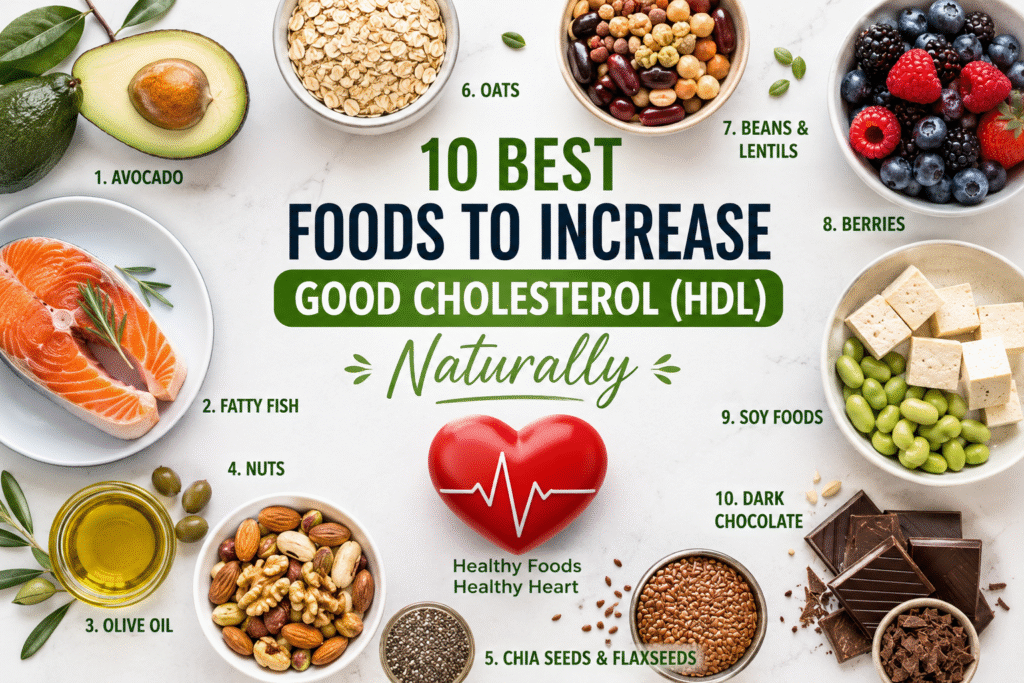
1. Avocados
Avocados are among the best foods to increase good cholesterol because they contain heart-healthy monounsaturated fats.
These healthy fats may support higher HDL cholesterol while helping maintain healthy LDL levels when eaten as part of a balanced diet.
Benefits
- Rich in healthy fats
- High in fiber
- Contains potassium
- Supports heart health
Easy Ways to Eat
- Add to salads
- Spread on whole-grain toast
- Blend into smoothies
- Make homemade guacamole
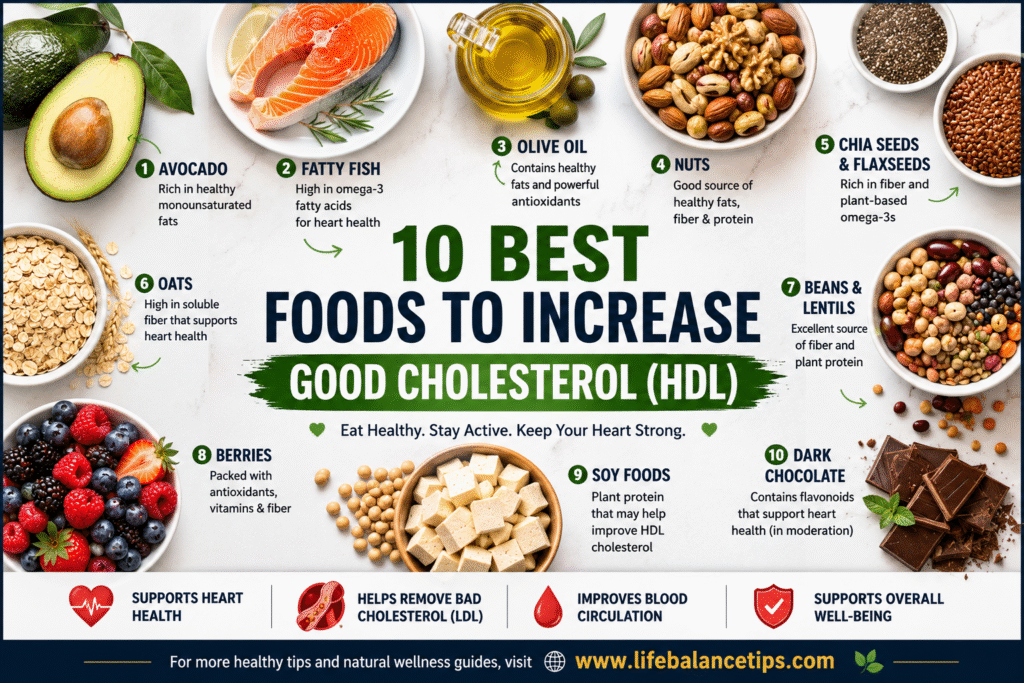
2. Fatty Fish
Fatty fish are excellent HDL cholesterol foods because they provide omega-3 fatty acids.
Omega-3 fats are widely recommended for supporting cardiovascular health and may help improve overall cholesterol balance.
Good options include:
- Salmon
- Sardines
- Mackerel
- Tuna
- Trout
Aim to include fatty fish two times each week if it fits your dietary preferences.
3. Olive Oil
Extra virgin olive oil is one of the healthiest cooking oils available.
Replacing butter or refined cooking oils with olive oil may support healthier cholesterol levels over time.
Benefits
- Rich in antioxidants
- Contains monounsaturated fats
- Supports heart-friendly eating
- Easy to use daily
Use olive oil for:
- Salad dressings
- Vegetable roasting
- Light sautéing
- Whole-grain dishes
4. Nuts
Nuts are among the most recommended good cholesterol foods because they contain healthy fats, fiber, plant protein, and antioxidants.
Healthy choices include:
- Almonds
- Walnuts
- Pistachios
- Pecans
- Hazelnuts
A small handful each day may support heart health when eaten in moderation.
5. Chia Seeds and Flaxseeds
Seeds provide healthy fats, fiber, and plant-based omega-3 fatty acids.
Adding them regularly to meals is a simple way to include more foods to increase HDL cholesterol in your diet.
Ways to Use
- Mix into yogurt
- Add to oatmeal
- Blend into smoothies
- Sprinkle over salads
These seeds also help increase daily fiber intake, which supports overall heart health.
6. Oats and Whole Grains
Oats are an excellent addition to a cholesterol-friendly eating plan. They contain soluble fiber, particularly beta-glucan, which is well known for supporting healthy cholesterol levels.
While soluble fiber is particularly useful for helping manage LDL cholesterol, including whole grains as part of an overall healthy diet can contribute to better cardiovascular health.
Other whole grains you can try include:
- Barley
- Brown rice
- Quinoa
- Whole-wheat bread
- Whole-grain pasta
Practical Tip
Start your morning with oatmeal topped with berries, walnuts, chia seeds, or ground flaxseed. This combination provides fiber, antioxidants, and healthy fats in one simple meal.
When looking for foods to increase good cholesterol, remember that improving your overall diet is more important than relying on one individual food.
7. Beans and Lentils
Beans and lentils are affordable, nutritious, and easy to include in everyday meals. They provide soluble fiber, plant protein, minerals, and other beneficial nutrients.
Regularly replacing some foods high in saturated fat with beans and lentils can help create a more heart-friendly diet.
Good choices include:
- Black beans
- Kidney beans
- Chickpeas
- Lentils
- Pinto beans
- Green peas
Indian meals also offer plenty of opportunities to eat legumes through dal, chana, rajma, and other traditional dishes.
How to Include Them
Add beans to salads, soups, wraps, curries, and grain bowls. Lentils can also be combined with vegetables and whole grains for a balanced meal.
Beans may not dramatically raise HDL by themselves, but they are valuable good cholesterol foods because they can support healthier overall cholesterol management.
8. Berries
Strawberries, blueberries, raspberries, and blackberries are packed with antioxidants, vitamins, and fiber.
Berries contain plant compounds called polyphenols that may support cardiovascular health as part of a balanced diet.
They are also naturally sweet, making them a healthier alternative to desserts containing large amounts of added sugar.
Easy Ways to Eat More Berries
Try adding berries to:
- Oatmeal
- Plain yogurt
- Smoothies
- Whole-grain cereal
- Fruit salads
Frozen berries can also be a convenient option when fresh berries are expensive or unavailable.
When building a diet around foods to increase good cholesterol, colorful fruits and vegetables should remain an important part of your daily meals.
9. Soy Foods
Soy foods provide high-quality plant protein and can be a useful alternative to certain animal foods that are high in saturated fat.
Examples include:
- Tofu
- Tempeh
- Edamame
- Soybeans
- Unsweetened soy milk
Replacing some high-saturated-fat foods with soy-based alternatives may help support healthier cholesterol levels.
For example, tofu can replace fatty meats in stir-fries, curries, salads, and grain bowls.
Soy foods are therefore useful additions when considering foods to increase good cholesterol levels while improving the overall quality of your diet.
Want to explore more heart-healthy nutrition tips? Visit our related health guides on Life Balance Tips for expert-backed advice on healthy eating and overall wellness.
10. Dark Chocolate
Dark chocolate can fit into a heart-healthy diet when consumed in small portions.
Cocoa contains flavanols, which are natural plant compounds associated with cardiovascular benefits. However, chocolate can also contain significant calories, saturated fat, and added sugar.
Choose dark chocolate with a relatively high cocoa content and keep portions modest.
Remember
Dark chocolate should be considered an occasional addition rather than a treatment for cholesterol.
A small piece alongside fruit or nuts is generally a better choice than highly processed desserts containing large amounts of added sugar.
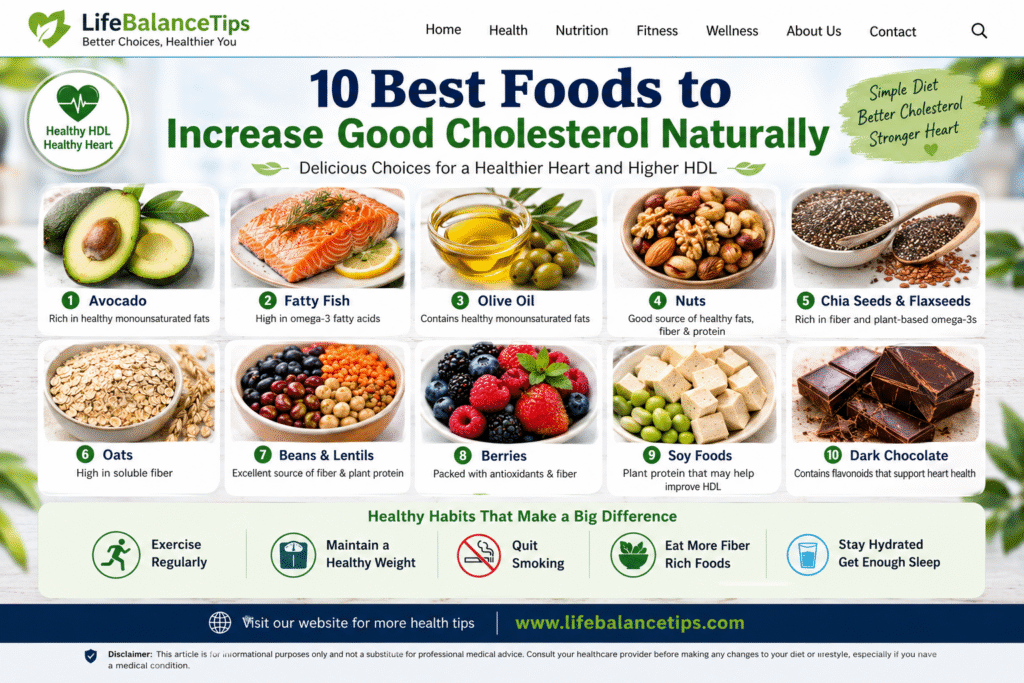
Quick Table: 10 Foods for a Heart-Healthy Diet
| Food | Key Nutrients | Simple Way to Eat It |
| Avocado | Monounsaturated fats, fiber | Add to toast or salads |
| Fatty fish | Omega-3 fatty acids, protein | Grill or bake with vegetables |
| Olive oil | Monounsaturated fats | Use in salad dressing |
| Nuts | Healthy fats, fiber, protein | Eat a small handful |
| Chia & flaxseeds | Fiber, plant omega-3s | Add to oatmeal or yogurt |
| Oats | Soluble fiber | Prepare oatmeal for breakfast |
| Beans & lentils | Fiber, plant protein | Add to soups, curries or salads |
| Berries | Fiber, antioxidants | Add to yogurt or oatmeal |
| Soy foods | Plant protein | Use tofu or edamame in meals |
| Dark chocolate | Cocoa flavanols | Enjoy a small portion occasionally |
These HDL cholesterol foods work best as part of an overall eating pattern rich in vegetables, fruits, whole grains, legumes, and healthy unsaturated fats.
How to Increase Good Cholesterol Naturally
Diet is only one part of cholesterol management. If you’re wondering how to increase good cholesterol naturally, lifestyle habits also matter.
Exercise Regularly
Regular physical activity can support HDL cholesterol and overall cardiovascular health.
Adults can generally benefit from activities such as:
- Brisk walking
- Cycling
- Swimming
- Jogging
- Dancing
- Strength training
Instead of focusing on intense workouts immediately, choose an activity you enjoy and can maintain consistently.
Replace Saturated Fats With Unsaturated Fats
The type of fat you eat matters.
Try replacing some foods high in saturated fat with sources of unsaturated fat, including:
- Olive oil
- Avocados
- Nuts
- Seeds
- Fish
This is more useful than simply adding high-fat foods to your existing diet.
Eat More Fiber-Rich Foods
Fiber-rich foods such as oats, beans, fruits, vegetables, and whole grains support heart health.
Soluble fiber is especially helpful for managing LDL cholesterol.
Combining fiber-rich foods with foods to increase good cholesterol can create a more balanced cholesterol-friendly eating pattern.
Maintain a Healthy Weight
For people who are overweight, gradual weight loss may improve several cardiovascular risk factors, including cholesterol and triglyceride levels.
Avoid crash diets. Sustainable habits such as balanced portions, regular activity, adequate sleep, and fewer highly processed foods are usually more practical over the long term.
Avoid Smoking
Smoking can negatively affect cardiovascular health, including HDL function. Quitting smoking provides significant benefits for the heart and blood vessels.
People who need help quitting should consider speaking with a qualified healthcare professional.
Limit Added Sugar and Refined Carbohydrates
Frequently consuming sugary drinks, sweets, refined baked goods, and other highly processed carbohydrates can make it harder to maintain good metabolic and cardiovascular health.
Instead, prioritize:
- Whole fruits
- Vegetables
- Whole grains
- Beans and lentils
- Nuts and seeds
- Minimally processed foods
Foods to Limit for Healthy Cholesterol
Choosing the best foods to increase good cholesterol is helpful, but what you limit can be equally important.
Try to reduce frequent consumption of foods high in saturated fat, trans fat, added sugar, or heavily refined carbohydrates.
Examples can include:
- Deep-fried fast foods
- Highly processed meats
- Packaged baked goods high in saturated fat
- Sugary drinks
- Excessive sweets and desserts
- Foods containing partially hydrogenated oils
You don’t necessarily need a completely restrictive diet. Focus on making healthier foods your everyday choices while keeping less nutritious options occasional.
Simple One-Day Heart-Healthy Meal Example
Breakfast: Oatmeal with berries, ground flaxseed, and walnuts.
Lunch: Chickpea and vegetable salad with avocado and an olive-oil-based dressing.
Snack: Fresh fruit with a small handful of unsalted almonds.
Dinner: Baked salmon with vegetables and a serving of brown rice or quinoa.
Optional treat: A small portion of dark chocolate.
This meal pattern combines several foods to increase HDL cholesterol while providing plenty of fiber, protein, healthy fats, and plant foods.
Frequently Asked Questions
1. What foods increase good cholesterol?
Foods rich in unsaturated fats are useful choices for a heart-healthy diet. Examples include olive oil, avocados, nuts, seeds, and fatty fish. These foods to increase good cholesterol should be combined with vegetables, fruits, legumes, and whole grains for overall cardiovascular health.
2. Can food alone increase HDL cholesterol?
Diet can influence cholesterol levels, but HDL is affected by many factors, including genetics, exercise, body weight, smoking, and overall health. Therefore, food should be considered part of a broader healthy lifestyle rather than a guaranteed way to raise HDL.
3. Are eggs good for HDL cholesterol?
Eggs provide protein, vitamins, minerals, and dietary cholesterol. Their effect on blood cholesterol can vary between individuals. Most healthy people can include eggs as part of a balanced diet, but people with cholesterol concerns should follow personalized advice from their healthcare provider.
4. Which nuts are best for good cholesterol?
Walnuts, almonds, pistachios, pecans, and hazelnuts provide unsaturated fats and other heart-friendly nutrients. Choose unsalted or lightly salted varieties and keep portions moderate because nuts are calorie-dense.
5. Does olive oil increase good cholesterol?
Olive oil is rich in monounsaturated fat. Replacing foods high in saturated fat with unsaturated fats such as olive oil can support a healthier cholesterol profile and overall cardiovascular health.
6. How quickly can HDL cholesterol increase?
There is no fixed timeline. Changes depend on genetics, starting cholesterol levels, diet, physical activity, weight, smoking status, and other health factors. Consistent long-term lifestyle changes are generally more important than looking for rapid results.
7. Which fruits are good for cholesterol?
Berries, apples, oranges, pears, and other whole fruits provide fiber and beneficial plant compounds. While fruit shouldn’t be viewed as a direct HDL treatment, regularly eating whole fruits can support a heart-healthy diet.
8. What is the best way to increase good cholesterol naturally?
If you’re researching how to increase good cholesterol naturally, focus on the complete picture: eat more unsaturated fats and fiber-rich foods, exercise regularly, maintain a healthy weight, avoid smoking, and limit highly processed foods. Individual cholesterol goals should be discussed with a healthcare professional.
For additional information about cholesterol and heart health, refer to trusted resources such as the American Heart Association or the Centers for Disease Control and Prevention (CDC).
Health Disclaimer
This article is provided for general educational and informational purposes only and is not a substitute for professional medical advice, diagnosis, or treatment.
Cholesterol levels and cardiovascular risk vary from person to person. If you have high cholesterol, heart disease, diabetes, or another medical condition, consult a qualified healthcare professional before making significant changes to your diet or lifestyle. Never delay or disregard professional medical advice because of information you have read online.
Conclusion
Improving cholesterol health does not depend on a single “superfood.” A consistent eating pattern and healthy lifestyle are much more important.
Avocados, fatty fish, olive oil, nuts, seeds, oats, beans, berries, soy foods, and modest amounts of dark chocolate can all contribute valuable nutrients to a heart-friendly diet. Including these foods to increase good cholesterol while reducing saturated fats, added sugars, and heavily processed foods can support better overall cardiovascular health.
Remember that HDL is only one part of your cholesterol profile. LDL cholesterol, triglycerides, blood pressure, blood sugar, physical activity, smoking status, and other factors also influence heart health.
Instead of trying to change cholesterol numbers overnight, build sustainable habits. Regular exercise, nutritious meals, adequate sleep, and an overall balanced lifestyle can support your heart for years to come.