
Introduction
High-protein foods are an important part of a balanced diet because they provide essential nutrients that support muscle health, normal body functions, and fullness after meals. Whether you want to manage your weight or maintain muscle strength, adding a variety of high-protein foods to your daily meals can help you build healthier eating habits.
High-protein foods are an important part of a balanced diet because they provide essential nutrients that support muscle health, normal body functions, and fullness after meals. Whether you want to manage your weight or maintain muscle strength, adding a variety of protein-rich foods to your daily meals can help you build healthier eating habits.
Protein is an essential nutrient used to build and repair body tissues, including muscles, skin, and other structures. It also helps the body produce enzymes and hormones. According to Harvard Health Publishing, healthy protein sources include eggs, fish, poultry, dairy products, beans, lentils, nuts, seeds, and soy foods.
The good news is that you do not need expensive protein powders or special diets to enjoy protein-rich meals. Everyday foods can help you meet your nutritional needs while providing other important nutrients.
In this guide, you will discover 15 high-protein foods, their nutritional benefits, practical serving ideas, and ways to include them in a balanced diet for weight management and muscle health.
Adding high-protein foods such as eggs, lentils, fish, yogurt, and tofu to your meals can help you meet your daily protein needs.
Including high-protein foods such as eggs, chicken, fish, lentils, beans, and tofu can help you meet your daily protein needs as part of a balanced diet.
What Are High-Protein Foods?
High-protein foods are foods that provide a substantial amount of protein in each serving. They come from both animal and plant sources.
Animal-based options include eggs, chicken, fish, milk, Greek yogurt, and cottage cheese. Plant-based choices include lentils, beans, tofu, edamame, nuts, and seeds.
Protein supports several important functions, including tissue repair, muscle maintenance, and the production of enzymes. When combined with regular physical activity and balanced meals, adequate protein intake can support healthy muscle function.
However, eating more protein does not automatically cause weight loss or build muscle. Your overall calorie intake, food choices, activity level, sleep, and consistency also matter.
Choosing high-protein foods such as eggs, lentils, fish, yogurt, and tofu can help you include a variety of protein sources in your balanced daily diet.
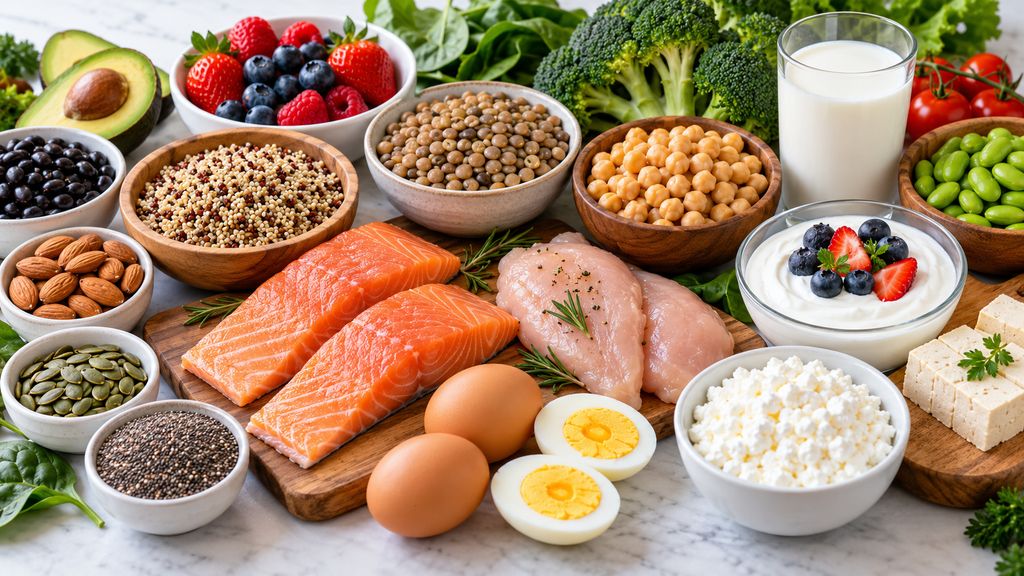
15 Best High-Protein Foods for Weight Loss and Muscle Health
1. Eggs
Eggs are a versatile source of high-quality protein and contain essential amino acids. They also provide nutrients such as vitamin B12, choline, and selenium.
Protein in eggs can help make breakfast more satisfying, especially when eggs are paired with vegetables and whole grains.
How to eat eggs:
- Boil them for a convenient snack.
- Prepare a vegetable omelet.
- Serve scrambled eggs with whole-grain toast.
- Add a boiled egg to a salad.
Choose cooking methods that use moderate amounts of oil and salt.
2. Chicken Breast
Skinless chicken breast is a lean source of protein that can fit into a balanced eating plan. It provides protein without as much saturated fat as many fatty meat options.
Chicken can be useful for people who want to maintain muscle while managing their overall calorie intake.
How to eat chicken:
- Grill or bake chicken with herbs.
- Add cooked chicken to salads.
- Prepare a chicken and vegetable bowl.
- Use shredded chicken in a whole-grain wrap.
Choose grilled, baked, or roasted chicken more often than deep-fried or heavily processed versions.
3. Greek Yogurt
Plain Greek yogurt is a convenient dairy food that generally contains more protein than regular yogurt, although the exact amount depends on the brand.
It also supplies calcium, which supports normal bone health. Yogurt containing live cultures may provide beneficial microorganisms.
How to eat Greek yogurt:
- Combine it with berries and oats.
- Add nuts and seeds.
- Use plain yogurt as a base for dips.
- Blend it into a fruit smoothie.
Choose unsweetened varieties when possible to limit added sugar.
4. Lentils
Lentils are an affordable plant-based source of protein, fiber, iron, and folate. They are especially useful for people following vegetarian or vegan eating patterns.
Their combination of protein and fiber can make meals more filling. Lentils also work well in many cuisines.
How to eat lentils:
- Prepare lentil soup.
- Add cooked lentils to salads.
- Make lentil curry with vegetables.
- Combine lentils with brown rice or whole-grain bread.
Dried lentils are economical, while canned lentils can save preparation time. If buying canned varieties, look for options with less added sodium.
5. Salmon
Salmon provides protein and omega-3 fatty acids. It also contains nutrients such as vitamin B12 and selenium.
Including fish in a varied diet can help provide nutrients that may be less abundant in some other protein sources.
How to eat salmon:
- Bake salmon with lemon and herbs.
- Serve it with vegetables and brown rice.
- Add cooked salmon to a salad.
- Grill it with a small amount of olive oil.
Choose cooking methods that do not require excessive butter, oil, or salty sauces.
6. Cottage Cheese
Cottage cheese is a protein-rich dairy food that can be used in both sweet and savory meals. Its protein content varies by product and serving size.
It also provides calcium, although sodium levels can differ considerably between brands.
How to eat cottage cheese:
- Serve it with fresh fruit.
- Add it to whole-grain toast.
- Mix it with chopped vegetables.
- Use it in selected recipes as an ingredient.
If you need to limit sodium, compare nutrition labels before choosing a product.
7. Chickpeas
Chickpeas, also known as garbanzo beans, provide plant-based protein, fiber, folate, and other nutrients.
They can help make meals more substantial and are easy to include in vegetarian and vegan diets.
How to eat chickpeas:
- Prepare homemade hummus.
- Add chickpeas to salads.
- Make chickpea curry.
- Roast them with spices for a crunchy snack.
For canned chickpeas, draining and rinsing can help reduce some of the added sodium.
8. Tofu
Tofu is made from soybeans and is a versatile plant-based protein source. It can be included in vegetarian and vegan eating plans.
Tofu also provides minerals, and some varieties contain calcium depending on how they are prepared.
How to eat tofu:
- Stir-fry tofu with vegetables.
- Add it to soups.
- Bake it with herbs and spices.
- Use crumbled tofu in a vegetable scramble.
Tofu absorbs flavors well, so it can be prepared in many different ways without relying on heavy sauces.
9. Black Beans
Black beans provide protein, fiber, folate, iron, and other nutrients. Their fiber content makes them a useful addition to meals designed to be satisfying.
They are also budget-friendly and easy to store.
How to eat black beans:
- Add them to vegetable bowls.
- Prepare black bean soup.
- Mix them into whole-grain wraps.
- Combine them with brown rice and vegetables.
Beans can be part of a heart-conscious eating pattern when prepared with moderate amounts of salt and saturated fat.
10. Edamame
Edamame are young soybeans that provide plant-based protein, fiber, and several vitamins and minerals.
They can be eaten as a snack or added to a meal. Because soybeans contain all nine essential amino acids, they are considered a complete protein source.
How to eat edamame:
- Steam and serve them as a snack.
- Add shelled edamame to salads.
- Mix them into vegetable stir-fries.
- Include them in grain bowls.
Choose lightly salted or unsalted options when possible.
11. Tuna
Tuna is a convenient protein source that can be purchased fresh or canned. It can fit into a balanced diet and is easy to add to quick lunches.
However, mercury levels vary by tuna species. People who eat tuna frequently, especially pregnant people and children, should follow current seafood guidance and choose lower-mercury options appropriately.
How to eat tuna:
- Mix it with plain yogurt for a sandwich filling.
- Add it to a salad.
- Serve it with whole-grain crackers.
- Combine it with vegetables in a grain bowl.
Compare canned products for sodium content, and avoid relying on tuna as your only fish choice.
12. Milk
Milk provides protein, calcium, and vitamin B12. Some milk products are also fortified with vitamin D.
Both dairy milk and suitable fortified alternatives can contribute to a balanced diet, although their protein content differs.
How to include milk:
- Drink a glass alongside a meal.
- Add it to oatmeal.
- Blend it with fruit.
- Use it in soups or other recipes.
If you avoid dairy, compare labels on fortified soy milk and other alternatives because not every plant-based drink provides the same amount of protein.
13. Quinoa
Quinoa is a grain-like seed that supplies plant-based protein, fiber, and minerals. It is also considered a complete protein because it provides all nine essential amino acids.
It makes a useful alternative to rice or other grains in a variety of meals.
How to eat quinoa:
- Serve it with roasted vegetables.
- Add it to salads.
- Combine it with beans.
- Use it as a base for a balanced meal bowl.
Rinse quinoa before cooking if the package instructions recommend it.
14. Almonds
Almonds provide some protein, healthy unsaturated fats, fiber, vitamin E, and magnesium. They can be a convenient snack, although they are also energy-dense.
A modest portion can add crunch and nutrients to meals without requiring complicated preparation.
How to eat almonds:
- Enjoy a small handful as a snack.
- Add chopped almonds to oatmeal.
- Sprinkle them over plain yogurt.
- Combine them with fruit.
Because nuts contain substantial calories in small portions, measure servings if you are monitoring your calorie intake.
15. Pumpkin Seeds
Pumpkin seeds provide plant-based protein, unsaturated fats, magnesium, zinc, and other nutrients.
They are easy to add to meals, but their protein contribution depends on the portion consumed.
How to eat pumpkin seeds:
- Sprinkle them over salads.
- Add them to oatmeal.
- Mix them with plain yogurt.
- Use a small portion in homemade trail mix.
Choose unsalted or lightly salted varieties if you want to reduce sodium.
High-Protein Foods Comparison Table
The following table provides approximate protein amounts for common serving sizes. Actual values vary by product, preparation, and serving weight.
| Food | Typical serving | Approximate protein |
| Egg | 1 large | 6 g |
| Chicken breast, cooked | 3 oz (85 g) | 26 g |
| Greek yogurt, plain | 6 oz (170 g) | 15–18 g |
| Lentils, cooked | 1 cup | 18 g |
| Salmon, cooked | 3 oz (85 g) | 22 g |
| Cottage cheese | 1/2 cup | 12–14 g |
| Chickpeas, cooked | 1 cup | 14–15 g |
| Firm tofu | 1/2 cup | 10–20 g |
| Black beans, cooked | 1 cup | 15 g |
| Edamame, shelled | 1 cup | 18–19 g |
| Tuna, canned and drained | 3 oz (85 g) | 20–22 g |
| Milk | 1 cup | 8 g |
| Quinoa, cooked | 1 cup | 8 g |
| Almonds | 1 oz (28 g) | 6 g |
| Pumpkin seeds | 1 oz (28 g) | 8–9 g |
These values are general estimates rather than exact measurements for every brand.
How Can High-Protein Foods Support Weight Management?
Protein can be part of a weight-management plan because it helps support fullness and preserves muscle tissue when combined with appropriate nutrition and physical activity.
However, no individual food burns belly fat or guarantees weight loss. Changes in body weight depend on overall energy intake, activity, health, and other factors.
Choosing high-protein foods alongside vegetables, fruits, and whole grains can support a balanced approach to weight management.
Here are some practical ways to use protein-rich foods in a balanced diet.
1. Include Protein in Balanced Meals
Try combining a protein source with vegetables, fruit, or whole grains. For example, eggs with whole-grain toast and vegetables can provide a more balanced breakfast than eating a protein food alone.
2. Pay Attention to Portions
Even nutritious foods contain calories. Nuts, seeds, oils, and some dairy products can contribute substantial energy in relatively small servings.
Choose portions that fit your individual needs rather than assuming that eating unlimited amounts of protein-rich food will help with weight loss.
3. Choose Less-Processed Protein Sources More Often
Beans, lentils, fish, eggs, tofu, plain yogurt, and lean poultry can all fit into a balanced eating pattern.
Limit frequent reliance on processed meats such as bacon, sausages, and deli meats, which may contain substantial sodium and saturated fat.
4. Pair Nutrition With Physical Activity
Muscle health depends on more than protein alone. Resistance exercises, regular physical activity, adequate sleep, and sufficient overall nutrition all play important roles.
If you are new to exercise, start at a comfortable level and gradually increase activity.
How Much Protein Do You Need Each Day?
Protein requirements vary with age, body size, activity level, pregnancy, health conditions, and personal goals.
For many healthy adults, the recommended dietary allowance is approximately 0.8 grams of protein per kilogram of body weight per day. This is a general reference for basic nutritional needs, not a personalized target for every person.
For example, a 70-kilogram adult would calculate approximately 56 grams per day using this general reference.
People who exercise intensively, older adults, pregnant people, and those recovering from certain illnesses may have different needs. A registered dietitian or healthcare professional can help determine an appropriate target.
People with kidney disease or certain other medical conditions should ask their healthcare professional before substantially increasing protein intake.
Sample One-Day Meal Plan With High-Protein Foods
The following is an example of how different protein sources can fit into a day. It is not a personalized diet plan.
| Meal | Example |
| Breakfast | Eggs, whole-grain toast, and fruit |
| Morning snack | Plain Greek yogurt with berries |
| Lunch | Lentil and vegetable bowl with brown rice |
| Afternoon snack | A small serving of almonds |
| Dinner | Baked salmon or tofu with vegetables and quinoa |
You can change these meals based on your preferences, budget, cultural food choices, allergies, and nutritional needs. Vegetarian options such as lentils, beans, tofu, and edamame can provide substantial protein without meat.
Common Mistakes to Avoid When Eating More Protein
Depending Only on Protein Shakes
Protein powders may be convenient for some people, but they are not essential for everyone. Whole foods can supply protein along with fiber, vitamins, minerals, and other nutrients.
Ignoring Vegetables and Fiber
A high-protein diet should not exclude fruits, vegetables, legumes, or whole grains. These foods provide fiber and nutrients that support overall health.
Eating Too Much Processed Meat
Processed meat can contain considerable sodium and saturated fat. Vary your protein sources and choose beans, nuts, fish, poultry, tofu, or other minimally processed foods regularly.
Assuming More Protein Always Means More Muscle
Muscle growth requires appropriate exercise, enough overall energy, recovery, and adequate protein. Consuming more protein than your body needs does not automatically produce additional muscle.
Forgetting About Food Allergies
Eggs, dairy, soy, fish, and nuts are common food allergens. Choose suitable alternatives if you have an allergy, and check product labels carefully.
Frequently Asked Questions
1. What are the best high-protein foods for weight loss?
Eggs, plain Greek yogurt, lentils, beans, fish, tofu, and skinless chicken can all fit into a balanced weight-management plan. Portion sizes and overall eating patterns matter more than any single food.
2. Which foods are high in protein but suitable for vegetarians?
Lentils, chickpeas, black beans, tofu, edamame, Greek yogurt, cottage cheese, eggs, quinoa, nuts, and seeds are useful options. People following vegan diets can focus on legumes, soy foods, nuts, seeds, and whole grains.
3. Can protein help maintain muscle?
Yes. Adequate protein supplies amino acids that the body uses to build and repair muscle tissue. Resistance exercise and sufficient overall nutrition are also important for maintaining or building muscle.
4. Is it necessary to eat protein at every meal?
You do not have to follow a rigid rule, but including a protein source in meals can make it easier to meet your daily needs. Distributing protein across meals may also be practical for people who prefer smaller portions.
5. Are plant-based proteins as useful as animal proteins?
Plant-based foods can provide the protein needed for good health. Soy foods and quinoa are complete protein sources, while eating a variety of plant proteins throughout the day helps provide all essential amino acids.
6. Do high-protein foods burn belly fat?
No individual food specifically burns belly fat. Weight management depends on overall energy balance, eating patterns, physical activity, sleep, and other factors. Protein may help with fullness and muscle maintenance, but it is not a fat-burning shortcut.
7. Can I eat high-protein foods every day?
Most people can include a variety of protein-rich foods in their daily diet. The appropriate amount depends on individual needs and health conditions. People with kidney disease or other relevant medical concerns should seek professional advice before increasing protein intake substantially.
If you prefer plant-based nutrition, explore our guide to high-protein vegetarian foods to discover more healthy protein sources for your daily diet.
- Harvard Health Publishing — High-Protein Foods: The Best Protein Sources to Include in a Healthy Diet
https://www.health.harvard.edu/diet-and-nutrition/high-protein-foods-the-best-protein-sources-to-include-in-a-healthy-diet - Centers for Disease Control and Prevention (CDC) — Tips for Healthy Eating for a Healthy Weight
https://www.cdc.gov/healthy-weight-growth/healthy-eating/index.html - Harvard T.H. Chan School of Public Health — Protein
https://nutritionsource.hsph.harvard.edu/what-should-you-eat/protein/
Conclusion
Adding a variety of high-protein foods to your meals is a practical way to support normal body functions, muscle maintenance, and a balanced eating pattern. Eggs, chicken, fish, Greek yogurt, lentils, beans, tofu, quinoa, nuts, and seeds all offer different nutritional benefits.
You do not need to eat the same foods every day or rely on expensive supplements. Instead, choose protein sources that fit your preferences and budget, pay attention to portions, and combine them with vegetables, fruits, whole grains, and regular physical activity.
The most useful approach is one you can maintain consistently. A varied, balanced diet is more valuable than following a restrictive diet built around a single nutrient.
Medical Disclaimer
This article is for educational purposes only and is not a substitute for personalized medical advice, diagnosis, or treatment. Individual protein needs vary. Consult a qualified healthcare professional or registered dietitian if you have a medical condition, food allergy, or specific nutritional requirements