
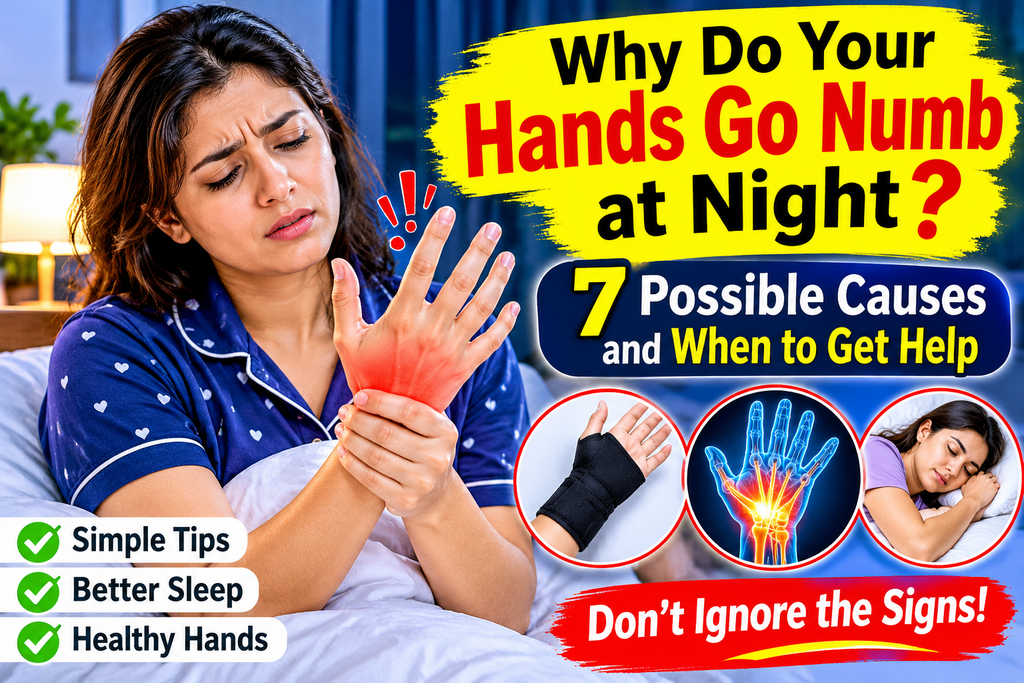
Waking up in the middle of the night with numb, tingling, or uncomfortable hands can be frustrating. You may feel pins and needles in your fingers, notice a strange burning sensation, or need to shake your hands before they feel normal again.
Sometimes, hands go numb at night simply because you have been sleeping in a position that puts pressure on a nerve. However, repeated nighttime numbness can also be related to conditions such as carpal tunnel syndrome, diabetes-related nerve damage, or problems affecting the neck.
Understanding the possible causes can help you decide what steps to take and when to seek medical advice.
In this guide, we explore seven possible reasons your hands may feel numb at night, practical ways to reduce discomfort, and important warning signs you should not ignore.
If your hands go numb at night regularly, paying attention to the pattern and other symptoms can help you understand what may be causing the problem.
Why Do Hands Go Numb at Night?
Hand numbness happens when the nerves responsible for sensation are temporarily compressed, irritated, or damaged. This can cause tingling, burning, reduced feeling, or a pins-and-needles sensation.
For example, sleeping with your arm underneath your body may put temporary pressure on a nerve. The sensation often improves after changing position.
However, if numbness happens frequently, lasts longer than usual, or comes with weakness, it deserves attention. The location of the tingling and the other symptoms you experience may help a healthcare professional identify the cause.

7 Possible Causes of Hands Going Numb at Night
1. Carpal Tunnel Syndrome
Carpal tunnel syndrome is one of the important conditions to consider when your hands repeatedly become numb during sleep.
It occurs when the median nerve is compressed as it passes through a narrow passage in the wrist called the carpal tunnel.
Common symptoms include:
- Tingling or numbness in the thumb, index, and middle fingers.
- Hand discomfort that becomes worse at night.
- Waking up and needing to shake your hand.
- Difficulty gripping objects or holding small items.
Some people experience symptoms in one hand, while others have problems in both hands.
A healthcare professional may recommend a wrist splint at night to help keep the wrist in a straight, neutral position. If symptoms continue or worsen, a medical assessment is important.
People with carpal tunnel syndrome may notice that their hands go numb at night, especially when their wrists remain bent during sleep.
2. Sleeping in an Awkward Position
Your sleeping position can sometimes explain temporary hand numbness.
For example, you may sleep with your arm underneath your pillow, bend your wrist for a long time, or place your body weight on one arm.
These positions can put pressure on nerves and temporarily affect normal sensation.
What may help:
- Avoid sleeping directly on your arms.
- Keep your wrists in a comfortable, neutral position.
- Try not to tuck your hands underneath your head.
- Change your sleeping position if you wake up with tingling.
If the numbness disappears quickly after changing position but keeps returning, consider discussing it with a healthcare professional.
If your hands go numb at night after sleeping on your arms, changing your sleeping position may help reduce temporary pressure on the nerves.
3. Diabetes-Related Nerve Damage
Diabetes can affect nerves throughout the body. This type of nerve damage is called diabetic peripheral neuropathy.
Although it commonly affects the feet and legs, it can also affect the hands.
Possible symptoms include:
- Tingling or burning sensations.
- Reduced feeling in the fingers.
- Pain or unusual sensitivity.
- Weakness in the affected area.
People with diabetes should not automatically assume that nighttime numbness is harmless. New or recurring symptoms should be discussed with a healthcare professional.
Managing blood glucose levels and following an appropriate diabetes care plan can help reduce the risk of nerve complications.
4. A Pinched Nerve in the Neck
Nerves that travel from your neck into your shoulders, arms, and hands can become irritated or compressed.
This may happen because of age-related changes in the spine, a disc problem, or other conditions affecting the neck.
Depending on which nerve is involved, symptoms may include:
- Tingling or numbness in the fingers.
- Pain that travels from the neck into the arm.
- Shoulder or arm discomfort.
- Weakness in part of the arm or hand.
If your hand numbness occurs alongside neck pain or symptoms traveling down your arm, a medical evaluation can help identify the cause.
5. Vitamin B12 Deficiency
Vitamin B12 plays an important role in maintaining healthy nerve function.
When the body does not have enough vitamin B12, nerve-related symptoms may develop. These can include numbness, tingling, balance difficulties, or weakness.
Possible reasons for low vitamin B12 include:
- Limited intake of vitamin B12-rich foods.
- Problems absorbing the vitamin.
- Certain digestive conditions.
- Some medications that affect vitamin B12 absorption.
A blood test can help determine whether you have a deficiency. Do not assume that supplements are necessary without checking with a healthcare professional.
6. Fluid Retention and Pregnancy-Related Changes
Some people experience swelling or fluid retention during pregnancy. This can increase pressure around the wrist and contribute to carpal tunnel symptoms.
Nighttime tingling, numbness, and discomfort in the fingers may occur as a result.
If you are pregnant and experiencing these symptoms, speak with your healthcare professional about safe ways to manage them. Do not start a wrist treatment or medication without checking whether it is appropriate during pregnancy.
7. Peripheral Neuropathy or Other Nerve Conditions
Peripheral neuropathy refers to damage or dysfunction affecting nerves outside the brain and spinal cord.
It has several possible causes, including diabetes, certain medications, nutritional deficiencies, and other medical conditions.
Symptoms can include:
- Numbness or tingling.
- Burning or shooting pain.
- Reduced ability to feel touch.
- Muscle weakness.
- Problems with coordination in some cases.
The symptoms and treatment depend on the underlying cause. A doctor can help determine whether further examination or testing is needed.
How to Reduce Hand Numbness at Night
The right approach depends on the cause. If your symptoms appear related to sleeping position, a few simple adjustments may help.
1. Keep Your Wrists Straight
Try to avoid sleeping with your wrists sharply bent. A neutral wrist position may reduce pressure on the nerves around the wrist.
If carpal tunnel syndrome is suspected, ask a healthcare professional whether a nighttime wrist splint may be suitable.
2. Avoid Sleeping on Your Arms
Keep your arms in a comfortable position rather than placing your body weight on them.
A pillow can help support your arms if you tend to move into uncomfortable positions while sleeping.
3. Take Breaks From Repetitive Hand Activities
Typing, gripping tools, using a phone, or repeating wrist movements may aggravate symptoms for some people.
Take regular breaks and avoid keeping your wrists bent for long periods.
4. Manage Underlying Health Conditions
If you have diabetes, thyroid problems, or another condition that may affect your nerves, follow your healthcare professional’s treatment advice.
Managing the underlying condition is often more important than simply treating the tingling sensation.
5. Avoid Self-Diagnosing
Hand numbness can have several different causes. A wrist splint may help some people with carpal tunnel syndrome, but it will not necessarily solve numbness caused by a neck problem or another nerve condition.
If symptoms keep returning, arrange a medical assessment.
Common Symptoms and Possible Causes
| Symptoms | Possible explanation |
| Tingling in the thumb, index, and middle fingers | Carpal tunnel syndrome |
| Numbness after sleeping on an arm | Temporary nerve pressure |
| Tingling in hands and feet | Possible peripheral neuropathy |
| Hand numbness with neck pain | Possible neck nerve irritation |
| Numbness with burning or reduced sensation | Possible nerve damage |
| Symptoms during pregnancy | Possible pregnancy-related carpal tunnel syndrome |
This table is for general information only. Symptoms can overlap, so it cannot diagnose the cause.
When Should You See a Doctor?
Occasional numbness that disappears quickly after changing your sleeping position may not indicate a serious problem.
However, arrange a medical appointment if:
- Your hands become numb repeatedly during the night.
- Tingling continues during the day.
- Symptoms are getting worse.
- You notice weakness or difficulty gripping objects.
- You frequently drop things.
- Numbness affects your normal daily activities.
- You have diabetes and develop new hand symptoms.
Seek emergency medical care if numbness begins suddenly, especially on one side of the body, or occurs with facial drooping, arm weakness, difficulty speaking, confusion, severe dizziness, or a sudden severe headache. These can be warning signs of a stroke.
Do not wait to see whether these symptoms disappear.
How Do Doctors Find the Cause of Hand Numbness?
A healthcare professional may ask:
- Which fingers or parts of your hand feel numb?
- Does the problem affect one hand or both?
- Does it happen only at night or during the day too?
- Do you have neck, shoulder, or wrist pain?
- Do you experience weakness or difficulty gripping?
Depending on your symptoms, the assessment may include a physical examination, blood tests, or nerve conduction studies.
These tests can help identify whether the problem is related to nerve compression, a nutritional deficiency, diabetes, or another condition.
Frequently Asked Questions
1. Why do my hands go numb when I sleep?
Your hands may become numb because of pressure on a nerve while sleeping. However, repeated nighttime numbness may also be associated with carpal tunnel syndrome or other nerve conditions.
2. Is it normal to wake up with numb hands?
Occasional temporary numbness can happen when you sleep in an awkward position. If it happens frequently, lasts longer, or comes with weakness, seek medical advice.
3. Can carpal tunnel syndrome cause numbness at night?
Yes. Carpal tunnel syndrome commonly causes tingling and numbness at night, especially in the thumb, index, and middle fingers.
4. Can diabetes cause numb hands while sleeping?
Yes. Diabetes-related nerve damage can cause numbness, tingling, or burning sensations in the hands and feet.
5. Can vitamin B12 deficiency cause hand numbness?
Yes. Vitamin B12 deficiency can affect nerve function and may cause numbness or tingling. A blood test can help check your vitamin B12 level.
6. Should I wear a wrist brace while sleeping?
A nighttime wrist splint may help some people with carpal tunnel syndrome by keeping the wrist straight. Ask a healthcare professional whether it is appropriate for your symptoms.
7. When is hand numbness an emergency?
Sudden numbness with facial drooping, weakness, speech difficulty, confusion, or severe dizziness may indicate a stroke. Seek emergency medical care immediately.
When your hands go numb at night repeatedly, a healthcare professional can help identify the underlying cause and recommend appropriate treatment.
If you have diabetes or are concerned about nerve-related symptoms, read our guide on [Early Signs of Diabetes You Should Never Ignore] to learn about important warning signs and symptoms.
Final Thoughts
Waking up with numb hands can be uncomfortable, especially when it interrupts your sleep. Sometimes, the cause is simply pressure from an awkward sleeping position. In other cases, recurring symptoms may be linked to carpal tunnel syndrome, diabetes-related nerve damage, vitamin B12 deficiency, or a problem affecting the neck.
Pay attention to how often the numbness happens, which fingers are affected, and whether you notice other symptoms.
Small changes to your sleeping position may help in some cases, but persistent or worsening numbness should be evaluated by a healthcare professional. Getting the right diagnosis is the best way to choose an appropriate treatment.
Medical Disclaimer
This article is for educational and informational purposes only. It does not replace professional medical advice, diagnosis, or treatment. Always consult a qualified healthcare professional about persistent, worsening, or unexplained symptoms. Seek emergency care for sudden numbness accompanied by possible stroke symptoms.
References
- NHS – Carpal Tunnel Syndrome: https://www.nhs.uk/conditions/carpal-tunnel-syndrome/
- National Institute of Arthritis and Musculoskeletal and Skin Diseases – Carpal Tunnel Syndrome: https://www.niams.nih.gov/health-topics/carpal-tunnel-syndrome
- NHS – Pins and Needles: https://www.nhs.uk/symptoms/pins-and-needles/
- Mayo Clinic – Numbness or Tingling in Hands: https://www.mayoclinic.org/symptom-checker/numbness-or-tingling-in-hands-in-adults-adult/related-factors/itt-20009075
- National Institute of Neurological Disorders and Stroke – Peripheral Neuropathy: https://www.ninds.nih.gov/health-information/disorders/peripheral-neuropathy