
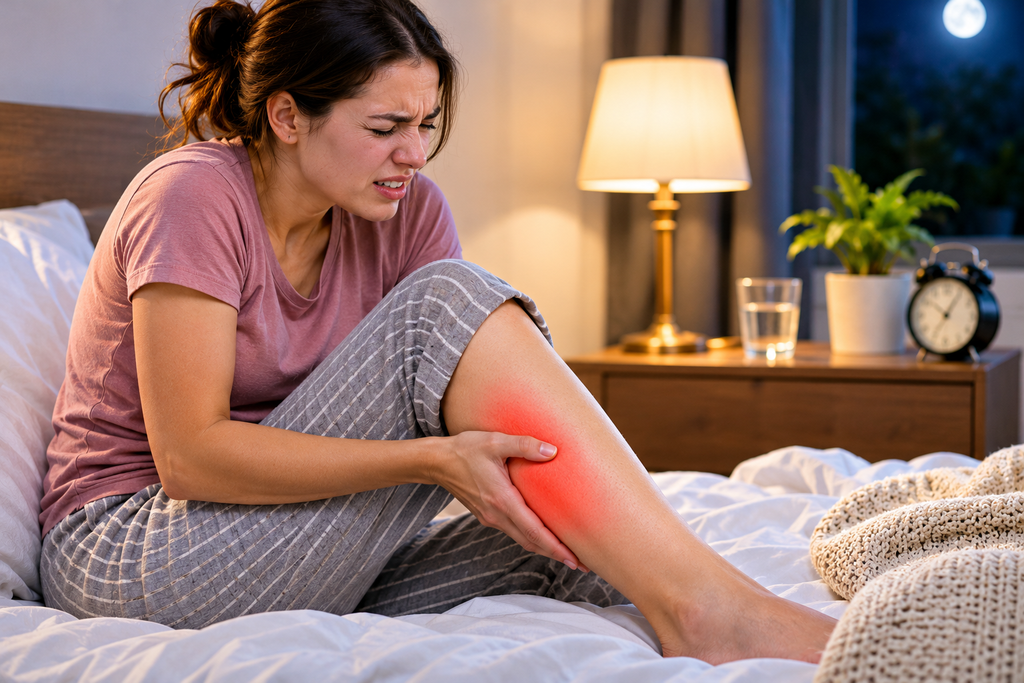
Waking up suddenly because of a painful leg cramp can be frustrating. Your calf muscle may tighten without warning, making it difficult to move your foot or get comfortable again. These episodes are commonly known as nighttime leg cramps or nocturnal leg cramps.
Nighttime leg cramps can affect adults of all ages, though they become more common as people get older. Most episodes are temporary and harmless, but frequent cramps may sometimes be linked to medications or an underlying health condition.
Understanding possible causes and knowing how to respond can help you manage the discomfort. In this guide, we explore seven possible causes of nighttime leg cramps, practical relief methods, and signs you should discuss with a healthcare professional.
What Are Leg Cramps at Night?
Nighttime leg cramps are sudden, involuntary muscle contractions that happen while you are sleeping or resting. They most commonly affect the calf muscles but can also occur in the feet or thighs.
During a cramp, the affected muscle may feel hard, tight, or knotted. The pain can last from a few seconds to several minutes. Some people experience soreness even after the muscle relaxes.
Unlike restless legs syndrome, which usually creates an uncomfortable urge to move the legs, a muscle cramp involves a painful tightening of the muscle.
7 Possible Causes of Leg Cramps at Night
1. Muscle Fatigue and Overuse
One possible reason for nighttime leg cramps is muscle fatigue. Your leg muscles work throughout the day when you walk, climb stairs, exercise, or stand for long periods.
Intense workouts or unfamiliar physical activities may place extra stress on these muscles. Sometimes, the discomfort appears later when you are resting or sleeping.
What may help:
- Increase exercise intensity gradually.
- Allow your muscles enough time to recover.
- Stretch gently after physical activity.
- Avoid suddenly increasing your walking or running distance.
2. Dehydration
Not drinking enough fluids can contribute to dehydration, particularly after sweating heavily during exercise or spending time in hot weather.
Fluid balance is important for normal muscle function. However, dehydration is not the explanation for every nighttime cramp, and many episodes have no clearly identified cause.
What may help:
- Drink fluids regularly throughout the day.
- Replace fluids after heavy sweating.
- Drink water with meals and after exercise.
- Follow medical fluid restrictions if your healthcare professional has recommended them.
3. Sitting or Standing for Long Periods
Staying in one position for an extended period may contribute to muscle stiffness and discomfort. People who work at desks, drive for long hours, or stand throughout the day may experience leg tightness.
Limited movement can also reduce opportunities to stretch and relax the muscles.
What may help:
- Take short movement breaks during the day.
- Walk gently for a few minutes.
- Avoid remaining in one position for too long.
- Try comfortable calf stretches before bedtime.
4. Pregnancy-Related Changes
Some pregnant people experience leg cramps, particularly during the later stages of pregnancy. Changes in body weight and additional demands on the muscles may contribute to discomfort.
Nighttime cramps during pregnancy can interrupt sleep, but they do not automatically mean that a vitamin or mineral deficiency is present.
What may help:
- Try gentle calf stretches before bed.
- Stay comfortably hydrated.
- Discuss frequent or painful cramps with your prenatal healthcare professional.
- Ask before taking magnesium or other supplements.
5. Certain Medications
Some prescription medicines may be associated with muscle cramps. Examples include certain diuretics, which increase urine production, and some cholesterol-lowering medicines.
However, a medicine may not necessarily be the cause of your symptoms. The timing of cramps, your medical history, and other symptoms all matter.
What may help:
- Keep a record of when the cramps happen.
- Review your medicines with a healthcare professional.
- Ask whether a medication could be contributing.
- Never stop or change a prescribed medicine without medical advice.
6. Nerve-Related Conditions
Nerves help control muscle movement and sensation. Certain nerve-related conditions may be associated with cramps, tingling, burning sensations, or muscle weakness.
For example, diabetes-related nerve damage and some spinal conditions can affect the nerves supplying the legs.
If cramps occur alongside persistent numbness, weakness, or unusual sensations, it is important to get medical advice rather than assuming they are ordinary muscle cramps.
7. Underlying Medical Conditions
Sometimes, nighttime leg cramps are associated with other health conditions, including kidney problems, circulation disorders, or liver disease.
These conditions usually involve additional symptoms or medical history that help a healthcare professional identify the possible cause. Having leg cramps alone does not mean you have one of these conditions.
If cramps are frequent, severe, or getting worse, arrange an appointment to discuss them.
What to Do When a Leg Cramp Happens at Night
A sudden cramp can be painful, but a few gentle steps may help the muscle relax.
- Straighten your leg: If the cramp is in your calf, gently straighten your knee.
- Pull your toes upward: Slowly bring your toes toward your shin until you feel a gentle stretch.
- Massage the muscle: Rub the affected area gently if it feels comfortable.
- Stand or walk carefully: If you can do so safely, standing or taking a few gentle steps may help.
- Try warmth: A warm shower or heating pad may help relax a tight muscle. Protect your skin from excessive heat.
Do not force a stretch or continue an activity that causes severe pain.
Simple Habits That May Help Prevent Nighttime Leg Cramps
You may not be able to prevent every cramp, but some everyday habits may help reduce discomfort.
| Habit | How it may help |
| Gentle calf stretching | Helps maintain muscle flexibility |
| Regular movement | Reduces long periods of inactivity |
| Comfortable footwear | Supports your feet during daily activities |
| Adequate hydration | Helps maintain normal fluid balance |
| Gradual exercise | Reduces sudden muscle overload |
| Relaxing bedtime routine | Gives you time to stretch and unwind |
Try This Simple Calf Stretch Before Bed
- Stand facing a wall.
- Place both hands against the wall.
- Move one foot backward while keeping its heel on the floor.
- Bend your front knee gently until you feel a stretch in the back calf.
- Hold for about 20–30 seconds without bouncing.
- Switch legs and repeat.
Stop if the stretch causes pain. If you have a medical condition affecting your mobility, ask a healthcare professional which stretches are suitable.
Foods and Drinks for Healthy Muscle Function
A balanced diet supports normal muscle and nerve function. Foods containing potassium, magnesium, calcium, and other nutrients can be part of a healthy eating pattern.
| Nutrient | Food sources |
| Potassium | Bananas, potatoes, beans, spinach |
| Magnesium | Nuts, seeds, whole grains, leafy greens |
| Calcium | Milk, yogurt, fortified alternatives |
| Protein | Eggs, fish, beans, chicken |
| Fluids | Water, soups, and other suitable drinks |
Eating these foods does not guarantee that nighttime cramps will stop. Supplements are not necessary for everyone and may be unsuitable for people with certain medical conditions, particularly kidney problems. Speak with a healthcare professional before starting supplements.
When Should You See a Doctor?
Occasional leg cramps are common, but recurring symptoms deserve attention.
Contact a healthcare professional if:
- Cramps repeatedly disturb your sleep.
- The pain is severe or lasts longer than usual.
- You experience persistent numbness or muscle weakness.
- Your leg has swelling, redness, or noticeable skin changes.
- Cramps begin after starting a new medication.
- Symptoms are becoming more frequent.
Seek urgent medical assessment if one leg becomes newly swollen, warm, red, or painful, especially if you also experience chest pain or shortness of breath. These symptoms can indicate a serious circulation problem and should not be treated as an ordinary muscle cramp.
Frequently Asked Questions
1. Why do leg cramps happen mostly at night?
Nighttime cramps can occur while muscles are resting. Muscle fatigue, nerve-related factors, age, pregnancy, and some medications may contribute. In many cases, the exact cause is unknown.
2. Can dehydration cause leg cramps at night?
Dehydration may contribute to muscle cramps, particularly after heavy sweating or inadequate fluid intake. However, not all nighttime cramps are caused by dehydration.
3. How can I stop a leg cramp quickly?
Gently straighten the affected leg and pull your toes toward your shin. Gentle massage, standing, or walking may also help if it is safe and comfortable.
4. Are nighttime leg cramps a sign of vitamin deficiency?
Not necessarily. Some nutrient deficiencies can affect muscle function, but most nighttime cramps cannot be diagnosed as a vitamin deficiency based on symptoms alone. A healthcare professional can decide whether testing is needed.
5. Does magnesium help with leg cramps?
Magnesium supplements do not reliably prevent ordinary nighttime leg cramps in everyone. Whether supplementation is appropriate depends on your health and nutritional needs. Ask a healthcare professional before taking it.
6. Are leg cramps at night common as you get older?
Yes. Nighttime leg cramps become more common with age. However, frequent or severe cramps should still be discussed with a healthcare professional.
7. When are nighttime leg cramps serious?
Seek medical advice if cramps are frequent, severe, or associated with weakness, numbness, or swelling. Sudden leg swelling with chest pain or shortness of breath needs urgent medical attention.
If you want to improve your overall muscle health and strength, read our guide on [15 Best Foods for Muscle Health and Strength Naturally] to discover foods that support healthy muscles and everyday movement.
Conclusion
Leg cramps at night can interrupt your sleep and leave your muscles sore the next morning. Possible contributing factors include muscle fatigue, dehydration, prolonged sitting, pregnancy, certain medications, nerve-related problems, and underlying medical conditions.
Gentle stretching, regular movement, appropriate hydration, and a balanced diet may support healthy muscle function. However, frequent or severe cramps should not be ignored.
Pay attention to your symptoms and speak with a healthcare professional if they keep returning or occur with other concerning changes.
Medical Disclaimer: This article is for educational purposes only and does not replace professional medical advice, diagnosis, or treatment. Consult a qualified healthcare professional about persistent or severe symptoms.
References
- NHS – Leg Cramps: https://www.nhs.uk/conditions/leg-cramps/
- Mayo Clinic – Night Leg Cramps: https://www.mayoclinic.org/symptoms/night-leg-cramps/basics/causes/sym-20050813
- Cleveland Clinic – Leg Cramps: https://my.clevelandclinic.org/health/diseases/14170-leg-cramps