
Introduction
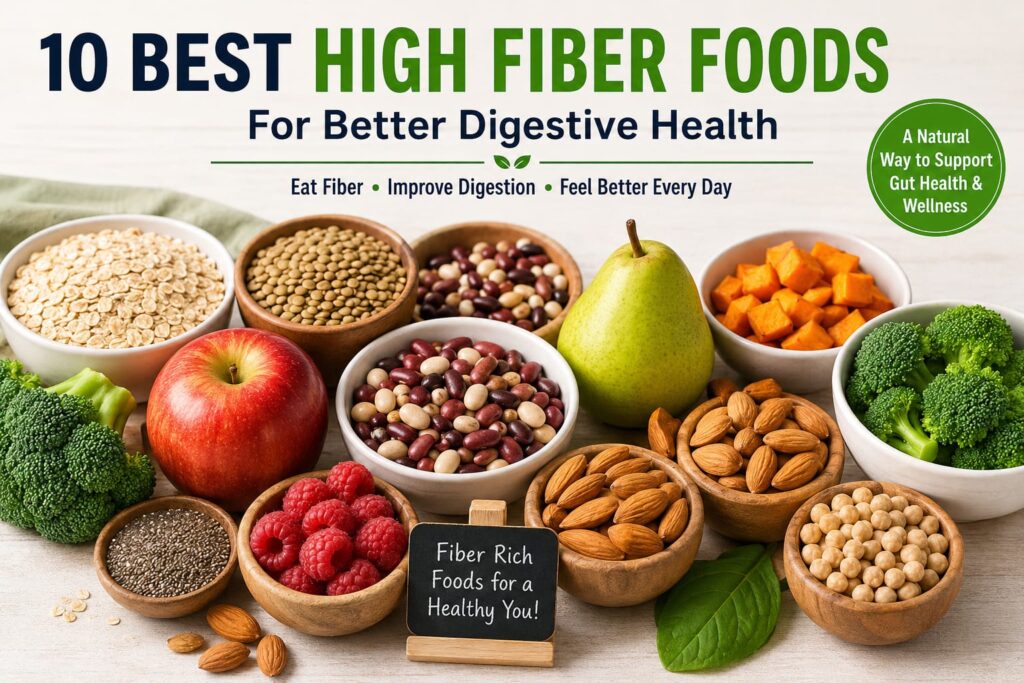
High Fiber Foods are one of the best natural ways to support healthy digestion, improve gut health, and promote regular bowel movements. Including more fiber-rich foods in your daily diet may help keep your digestive system healthy and support overall wellness. Good digestion helps your body absorb nutrients, maintain regular bowel movements, and support a balanced gut microbiome. One of the easiest ways to improve digestive health naturally is by eating more High Fiber Foods.
Fiber is a type of carbohydrate that your body cannot fully digest. Instead of being broken down like other nutrients, fiber passes through your digestive system and supports healthy bowel function. It may also help maintain healthy cholesterol levels, support blood sugar balance, and keep you feeling full for longer.
Many people do not consume enough fiber every day. According to health experts, increasing your intake of High Fiber Foods through fruits, vegetables, whole grains, legumes, nuts, and seeds can be a simple step toward better health.
In this guide, you’ll discover the 10 best High Fiber Foods, learn why fiber matters, and get practical tips for including more foods rich in fiber in your daily meals.
Read the complete guide with practical tips and healthy food recommendations here:
Why Is Fiber Important for Digestive Health?
Fiber is generally divided into two main types:
Soluble Fiber
Soluble fiber dissolves in water and forms a gel-like substance in the digestive tract. It may help:
- Support healthy digestion
- Promote beneficial gut bacteria
- Maintain healthy cholesterol levels
- Help manage blood sugar levels
Insoluble Fiber
Insoluble fiber does not dissolve in water. It adds bulk to stool and may help:
- Promote regular bowel movements
- Reduce occasional constipation
- Support overall digestive function
- Keep the digestive system moving efficiently
A balanced high fiber diet should include both types of fiber for maximum health benefits.
Recommended Daily Fiber Intake
| Age Group | Recommended Daily Fiber |
| Adult Women | 25 grams |
| Adult Men | 30–38 grams |
| Children | 19–25 grams (depending on age) |
| Older Adults | Around 21–30 grams |
Most adults consume much less than these recommended amounts, making High Fiber Foods even more important in everyday meals.
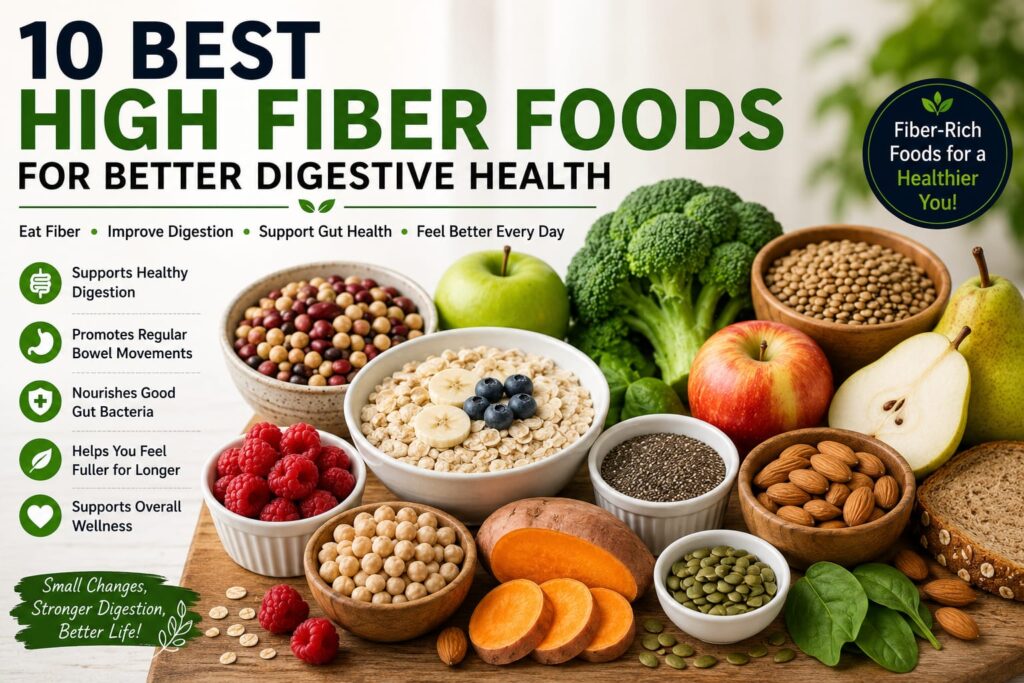
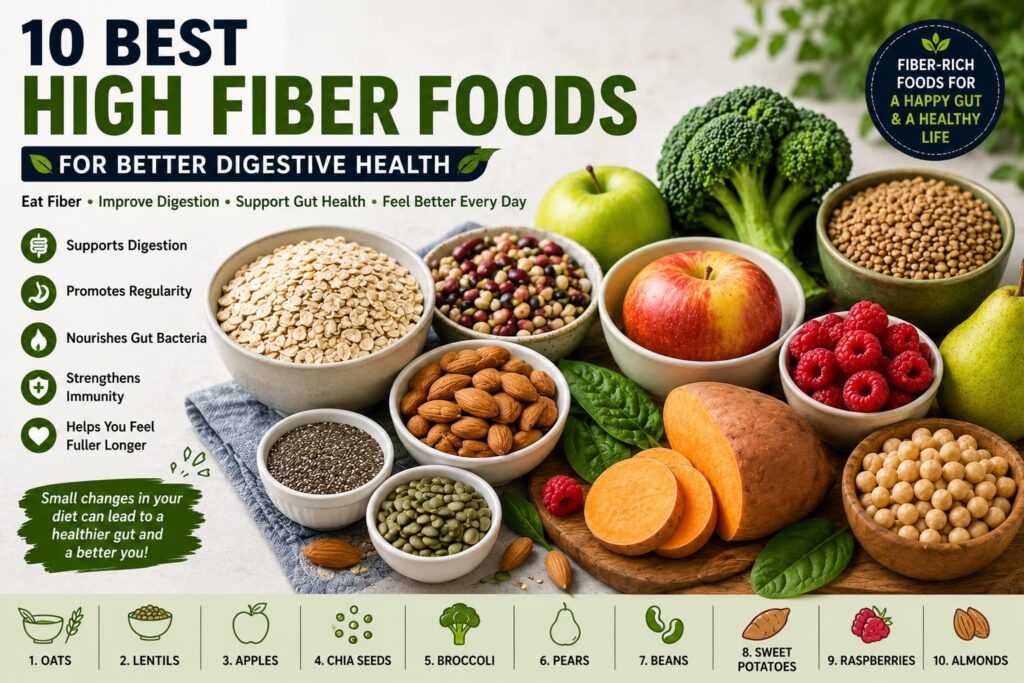
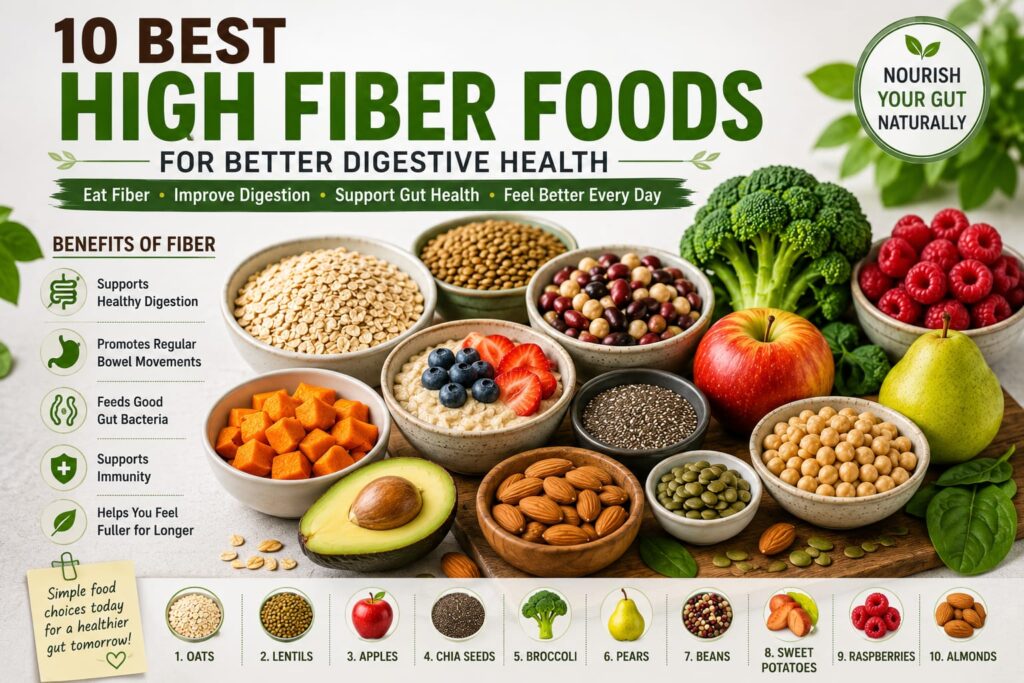
10 Best High Fiber Foods for Better Digestive Health
1. Oats
Oats are among the healthiest High Fiber Foods you can eat. They are rich in soluble fiber called beta-glucan, which supports digestion and helps nourish beneficial gut bacteria.
Benefits
- Supports healthy digestion
- Helps maintain regular bowel movements
- Keeps you full longer
- Supports heart health
Easy Ways to Eat
- Oatmeal
- Overnight oats
- Smoothies
- Homemade granola
2. Lentils
Lentils are one of the best foods rich in fiber and are also packed with plant-based protein.
Benefits
- Supports healthy gut bacteria
- Helps improve digestion
- Promotes fullness
- Provides iron and folate
Add Lentils To
- Dal
- Soups
- Salads
- Rice dishes
3. Apples
Apples contain both soluble and insoluble fiber, making them one of the best foods for digestion.
The peel contains much of the fiber, so eating apples with the skin provides greater digestive benefits.
Benefits
- Supports gut health
- Helps maintain bowel regularity
- Provides antioxidants
- Naturally refreshing snack
4. Chia Seeds
Chia seeds absorb water and form a gel, making them excellent Healthy digestive foods.
Just one serving provides a significant amount of dietary fiber.
Benefits
- Supports bowel regularity
- Helps you stay full
- Promotes hydration
- Rich in omega-3 fats
Ways to Use
- Yogurt
- Smoothies
- Pudding
- Oatmeal
5. Broccoli
Broccoli is a nutrient-rich vegetable that belongs on every Fiber rich foods list.
It contains fiber, vitamins, antioxidants, and compounds that support overall wellness.
Benefits
- Supports healthy digestion
- Encourages beneficial gut bacteria
- Rich in Vitamin C
- Low in calories
Best Cooking Methods
- Steam
- Stir fry
- Roast
- Add to soups
6. Pears
Pears are naturally sweet and one of the easiest High Fiber Foods to include in your diet.
Most of their fiber is found in the skin.
Benefits
- Supports digestive regularity
- Provides hydration
- Contains antioxidants
- Good snack option
7. Beans
Beans such as kidney beans, black beans, chickpeas, and navy beans are excellent Foods for gut health.
Benefits
- High in fiber
- Rich in protein
- Supports healthy gut bacteria
- Keeps you satisfied longer
Include Beans In
- Salads
- Curries
- Wraps
- Soups
8. Sweet Potatoes
Sweet potatoes are naturally rich in fiber, vitamins, and minerals.
Benefits
- Supports digestive comfort
- Provides Vitamin A
- Helps maintain fullness
- Easy to digest when cooked
Healthy Serving Ideas
- Baked
- Roasted
- Mashed
- Added to salads
9. Raspberries
Raspberries are among the highest-fiber fruits available.
They also provide antioxidants that support overall health.
Benefits
- Supports healthy digestion
- Rich in Vitamin C
- Low in calories
- Naturally sweet
You can add raspberries to yogurt, smoothies, or breakfast bowls.
10. Almonds
Almonds provide healthy fats, protein, and dietary fiber, making them one of the best High Fiber Foods for snacking.
Benefits
- Supports digestive health
- Helps manage hunger
- Rich in Vitamin E
- Easy portable snack
Remember to enjoy almonds in moderation because they are calorie-dense.
Quick Comparison Table
| Food | Fiber Type | Main Benefit |
| Oats | Soluble | Supports gut bacteria |
| Lentils | Both | Promotes regular digestion |
| Apples | Both | Supports bowel health |
| Chia Seeds | Soluble | Improves stool consistency |
| Broccoli | Mostly Insoluble | Supports digestive movement |
| Pears | Both | Helps bowel regularity |
| Beans | Both | Feeds healthy gut bacteria |
| Sweet Potatoes | Both | Supports digestive comfort |
| Raspberries | Mostly Insoluble | High natural fiber |
| Almonds | Mostly Insoluble | Healthy snack for digestion |
For additional evidence-based nutrition and dietary fiber information, visit this trusted health resource:
Tips to Add More High Fiber Foods to Your Diet
Making small daily changes can significantly increase your fiber intake.
Start Your Day with Fiber
Choose oatmeal, whole-grain cereal, or fruit instead of processed breakfast foods.
Eat Fruits with the Skin
Whenever safe and properly washed, eat apples and pears with the skin for extra fiber.
Add Vegetables to Every Meal
Fill at least half your plate with colorful vegetables.
Choose Whole Grains
Replace refined grains with:
- Brown rice
- Whole wheat bread
- Whole wheat pasta
- Quinoa
Snack Smart
Healthy fiber-rich snacks include:
- Almonds
- Fresh fruit
- Roasted chickpeas
- Vegetable sticks
Drink Enough Water
Fiber works best when paired with adequate hydration. Drinking enough water may help prevent digestive discomfort when increasing fiber intake.
Common Mistakes When Increasing Fiber
Many people increase fiber too quickly, which may cause temporary bloating or gas.
Avoid these common mistakes:
- Increasing fiber overnight
- Drinking too little water
- Eating mostly processed foods
- Skipping fruits and vegetables
- Ignoring whole grains
- Not chewing food properly
Increase fiber gradually to give your digestive system time to adjust.
Other Healthy Habits That Support Digestion
Along with eating High Fiber Foods, these daily habits may improve digestive health:
- Stay physically active
- Drink enough water
- Eat meals at regular times
- Manage stress
- Sleep 7–9 hours nightly
- Limit highly processed foods
- Eat slowly and chew thoroughly
A balanced lifestyle often works best for long-term digestive wellness.
Signs You May Need More Fiber
Although everyone is different, low fiber intake may be associated with:
- Occasional constipation
- Feeling hungry soon after meals
- Irregular bowel movements
- Low intake of fruits and vegetables
- Heavy reliance on processed foods
Including more High Fiber Foods can be a simple way to support better digestive function as part of a balanced diet.
Frequently Asked Questions (FAQs)
1. What are High Fiber Foods?
High Fiber Foods are foods that naturally contain large amounts of dietary fiber, including fruits, vegetables, legumes, whole grains, nuts, and seeds.
2. How much fiber should I eat every day?
Most adults should aim for about 25–38 grams of fiber daily, depending on age and sex.
3. Which fruit has the most fiber?
Raspberries, pears, apples, avocados, and guava are among the fruits highest in dietary fiber.
4. Can eating more fiber improve digestion?
A balanced high fiber diet may support regular bowel movements, nourish beneficial gut bacteria, and promote overall digestive health
5. Should I drink more water when eating fiber?
Yes. Drinking enough water helps fiber move smoothly through the digestive system and may reduce discomfort.
6. Are high-fiber foods good for weight management?
Many High Fiber Foods help you feel fuller for longer, which may support healthy eating habits and weight management when combined with a balanced lifestyle.
7. Can children eat fiber-rich foods?
Yes. Children can benefit from age-appropriate amounts of fiber through fruits, vegetables, beans, and whole grains.
8. What happens if I increase fiber too quickly?
Rapidly increasing fiber may lead to temporary bloating or gas. Gradually adding High Fiber Foods while drinking enough water is generally recommended.
Disclaimer
This article is intended for educational and informational purposes only and should not be considered medical advice. Nutritional needs vary from person to person. If you have ongoing digestive problems, food allergies, or any medical condition, consult a qualified healthcare professional or registered dietitian before making significant dietary changes.
Conclusion
Adding more High Fiber Foods to your daily meals is one of the simplest ways to support a healthier digestive system. Foods such as oats, lentils, apples, chia seeds, broccoli, pears, beans, sweet potatoes, raspberries, and almonds provide valuable fiber along with essential vitamins, minerals, and antioxidants.
Instead of making drastic dietary changes, start by adding one or two High Fiber Foods to your meals each day. Combined with proper hydration, regular physical activity, and a balanced lifestyle, these nutritious choices can support healthy digestion, improve gut health, and contribute to long-term wellness. A consistent, varied high fiber diet built around whole foods is a practical and sustainable approach to better digestive health.
By Life Balance Tips Team