
Introduction
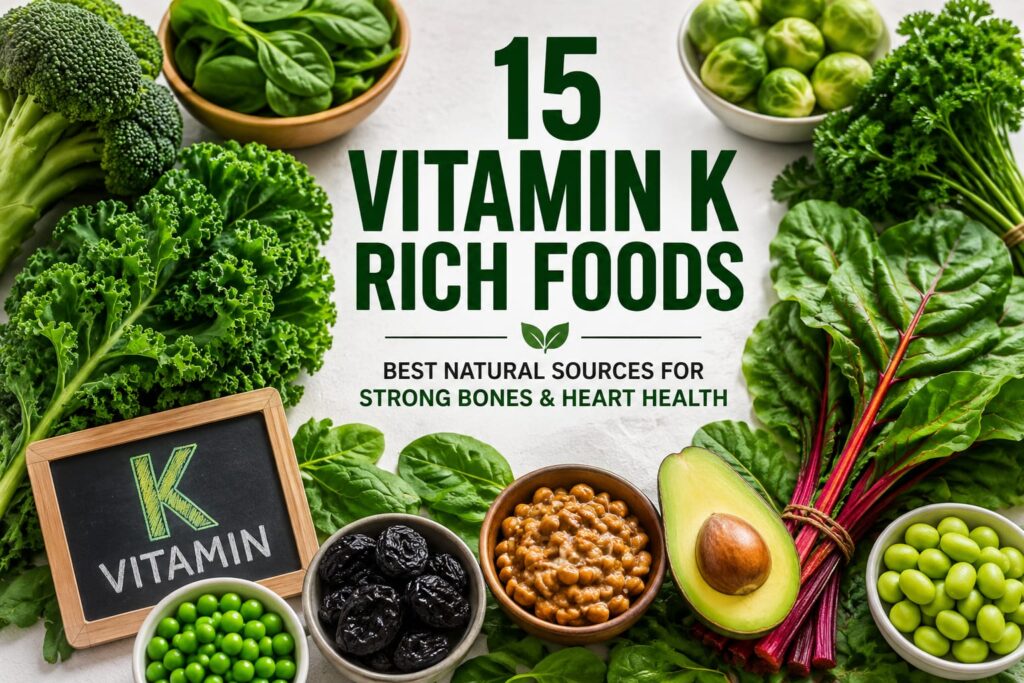
Getting the right nutrients every day is one of the best ways to support long-term health. While vitamins like Vitamin C and Vitamin D often get most of the attention, Vitamin K Rich Foods are equally important for maintaining strong bones, supporting normal blood clotting, and promoting overall wellness.
Vitamin K is a fat-soluble vitamin that helps your body use calcium effectively. It also plays a key role in bone metabolism and may support heart health by helping maintain healthy blood vessels. The good news is that many everyday vegetables, fruits, and herbs are naturally rich in this essential nutrient.
In this guide, you’ll discover the Best Vitamin K Rich Foods, learn about the Vitamin K Benefits, and find simple ways to include more Natural Sources of Vitamin K in your daily meals. Whether you’re looking for Vitamin K Rich Vegetables, Vitamin K Rich Fruits, or other healthy options, this list has you covered.
Quick Tip: Since Vitamin K is fat-soluble, eating these foods with a small amount of healthy fat such as olive oil, nuts, or avocado may help improve absorption.
NIH (Vitamin K):
Harvard T.H. Chan School of Public Health:
Why Is Vitamin K Important?
Vitamin K is an essential nutrient that supports several important functions in the body.
Vitamin K may help:
- Support normal blood clotting
- Maintain strong and healthy bones
- Help the body use calcium efficiently
- Support heart and blood vessel health
- Promote overall wellness as part of a balanced diet
Eating a variety of Foods High in Vitamin K is generally considered the best way to meet your daily nutritional needs.
Top 15 Vitamin K Rich Foods
| Food | Vitamin K Level | Best Way to Eat |
| Kale | Very High | Salads, smoothies |
| Spinach | Very High | Curry, soup, salad |
| Collard Greens | Very High | Steamed or sautéed |
| Broccoli | High | Stir-fry, steamed |
| Brussels Sprouts | High | Roasted |
| Cabbage | Moderate-High | Salad or cooked |
| Lettuce | Moderate | Fresh salads |
| Parsley | Very High | Garnish, chutney |
| Swiss Chard | High | Stir-fried |
| Mustard Greens | Very High | Indian saag |
| Green Beans | Moderate | Steamed |
| Kiwi | Moderate | Fresh fruit |
| Avocado | Moderate | Toast, salad |
| Blueberries | Small Amount | Snacks |
| Prunes | Moderate | Healthy snack |
1. Kale
Kale is often considered one of the healthiest leafy greens in the world. It ranks among the Best Vitamin K Rich Foods because even a small serving provides a significant amount of this essential nutrient.
Health Benefits
- Supports bone health
- Rich in antioxidants
- High in fiber
- Contains Vitamin C and Vitamin A
- May support heart health
How to Eat
- Fresh salads
- Green smoothies
- Soups
- Stir-fries
- Baked kale chips
2. Spinach
Spinach is one of the most popular Vitamin K Rich Vegetables. It is versatile, affordable, and packed with nutrients that support overall health.
Besides Vitamin K, spinach contains iron, folate, magnesium, and antioxidants.
Benefits
- Supports healthy bones
- Helps maintain energy levels
- Provides dietary fiber
- Supports eye health
Best Ways to Enjoy
- Palak curry
- Smoothies
- Salads
- Dal
- Sandwiches
3. Collard Greens
Collard greens are another excellent choice among Natural Sources of Vitamin K. These leafy greens are rich in fiber and several essential vitamins.
Why Include Them?
- Supports healthy digestion
- May help maintain bone strength
- Rich in antioxidants
- Low in calories
Serving Ideas
- Steamed
- Sautéed with garlic
- Added to soups
- Mixed into vegetable dishes
4. Broccoli
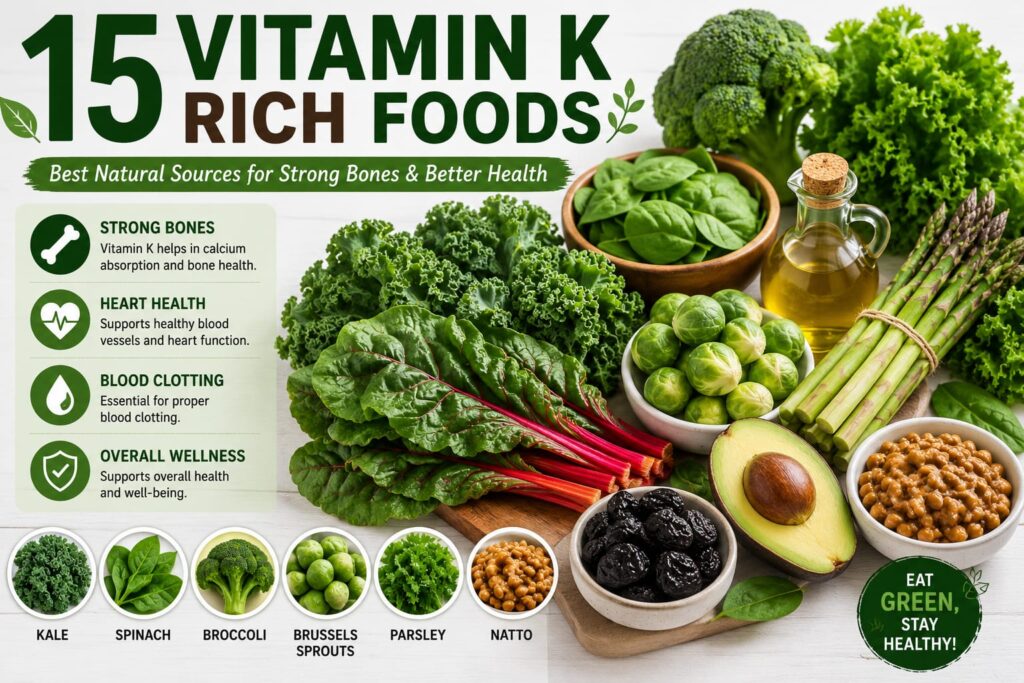
Broccoli is one of the easiest vegetables to include in a healthy diet. It is among the Foods High in Vitamin K and also provides Vitamin C, fiber, and plant compounds.
Benefits
- Supports immune function
- Helps maintain healthy bones
- Rich in antioxidants
- Low in calories
How to Eat
- Steamed
- Roasted
- Stir-fried
- Soup
- Pasta
5. Brussels Sprouts
Brussels sprouts are small but nutrient-dense vegetables packed with fiber, Vitamin C, and Vitamin K.
Health Benefits
- Supports digestive health
- Helps maintain bone health
- Contains antioxidants
- Rich in fiber
Cooking Tips
Roast them with olive oil, garlic, and black pepper for a delicious side dish.
6. Cabbage
Cabbage is widely available, budget-friendly, and one of the easiest Vitamin K Rich Vegetables to include in everyday meals.
It also provides Vitamin C, fiber, and antioxidants.
Ways to Enjoy
- Salads
- Stir-fries
- Soups
- Vegetable curry
- Coleslaw
7. Lettuce
Lettuce may not contain as much Vitamin K as kale or spinach, but it still contributes to your daily intake.
Different varieties like romaine lettuce generally contain more Vitamin K than iceberg lettuce.
Benefits
- Low in calories
- Hydrating
- Rich in fiber
- Supports balanced nutrition
Best Uses
- Salads
- Sandwiches
- Wraps
- Burgers
8. Parsley
Although parsley is often used as a garnish, it is actually one of the most concentrated Natural Sources of Vitamin K.
A small amount can add both flavor and nutrition to meals.
Benefits
- Rich in antioxidants
- Supports healthy digestion
- Adds vitamins without many calories
- Freshens recipes naturally
Add Parsley To
- Soups
- Salads
- Sandwiches
- Pasta
- Chutneys
- Smoothies
Healthy Eating Tips for Better Vitamin K Intake
Including Vitamin K Rich Foods in your daily meals doesn’t have to be difficult.
Here are a few simple ideas:
- Add leafy greens to your lunch every day.
- Include one green vegetable with dinner.
- Prepare fresh salads several times a week.
- Add herbs like parsley to soups and curries.
- Eat a variety of colorful vegetables instead of relying on just one source.
- Pair leafy greens with healthy fats like olive oil or avocado to support nutrient absorption.
9. Swiss Chard
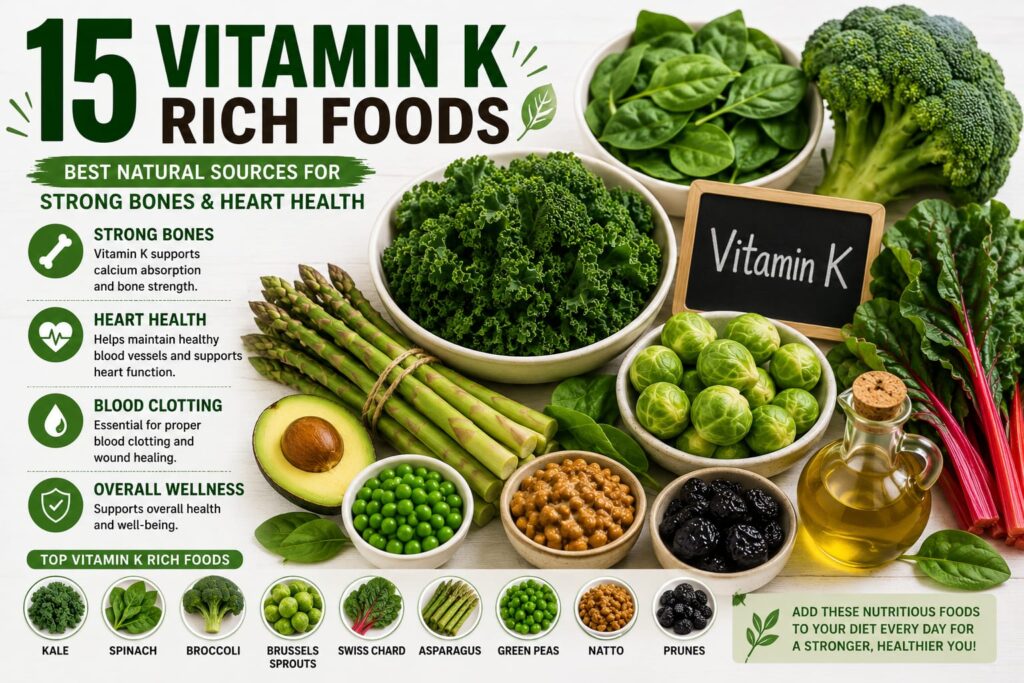
Swiss chard is a colorful leafy green that deserves a place on your plate. It is among the Best Vitamin K Rich Foods and also provides magnesium, potassium, and Vitamin A. Its slightly earthy flavor makes it a versatile ingredient for many recipes.
Health Benefits
- May support strong bones
- Rich in antioxidants
- Supports normal muscle function
- Contains fiber for digestive health
- Low in calories
Best Ways to Eat
- Sauté with garlic and olive oil
- Add to soups and stews
- Mix into pasta dishes
- Include in vegetable stir-fries
- Blend into green smoothies
10. Mustard Greens
Mustard greens are one of the most nutritious Vitamin K Rich Vegetables and are commonly used in Indian cooking, especially in dishes like sarson ka saag.
They also provide Vitamin C, folate, and beneficial plant compounds.
Benefits
- May help support bone health
- Rich in antioxidants
- Good source of dietary fiber
- Supports overall wellness
Serving Ideas
- Traditional Indian saag
- Stir-fried with spices
- Added to soups
- Mixed with other leafy greens
11. Green Beans
Green beans are a healthy addition to a balanced diet. While they contain less Vitamin K than leafy greens, they are still considered one of the useful Foods High in Vitamin K when eaten regularly.
Why Eat Green Beans?
- Provide fiber
- Support healthy digestion
- Low in calories
- Easy to cook
- Suitable for most meal plans
How to Enjoy
- Steamed
- Stir-fried
- Mixed with carrots and peas
- Added to salads
- Served as a side dish
12. Kiwi
When people think of Vitamin K Rich Fruits, kiwi is one of the first fruits that comes to mind. It is also rich in Vitamin C, potassium, and antioxidants.
Health Benefits
- Supports immune health
- May help with digestion due to its fiber content
- Contains antioxidants
- Helps increase fruit variety in your diet
Ways to Eat
- Fresh as a snack
- Fruit salad
- Smoothies
- Yogurt topping
- Breakfast bowls
13. Avocado
Avocado is known for its healthy fats, but it also contains Vitamin K. Because healthy fats may improve the absorption of fat-soluble vitamins, avocado pairs well with leafy green salads.
Benefits
- Provides heart-healthy fats
- Supports balanced nutrition
- Rich in fiber
- Contains potassium
- May help improve nutrient absorption
Best Uses
- Toast topping
- Salads
- Sandwiches
- Smoothies
- Homemade guacamole
14. Blueberries
Blueberries are famous for their antioxidant content. Although they contain smaller amounts of Vitamin K compared to leafy greens, they still contribute to your overall nutrient intake.
Why Include Blueberries?
- Rich in antioxidants
- Naturally sweet
- High in fiber
- Easy to add to breakfast or snacks
Enjoy Them With
- Oatmeal
- Yogurt
- Smoothies
- Fruit salads
- Healthy desserts
15. Prunes
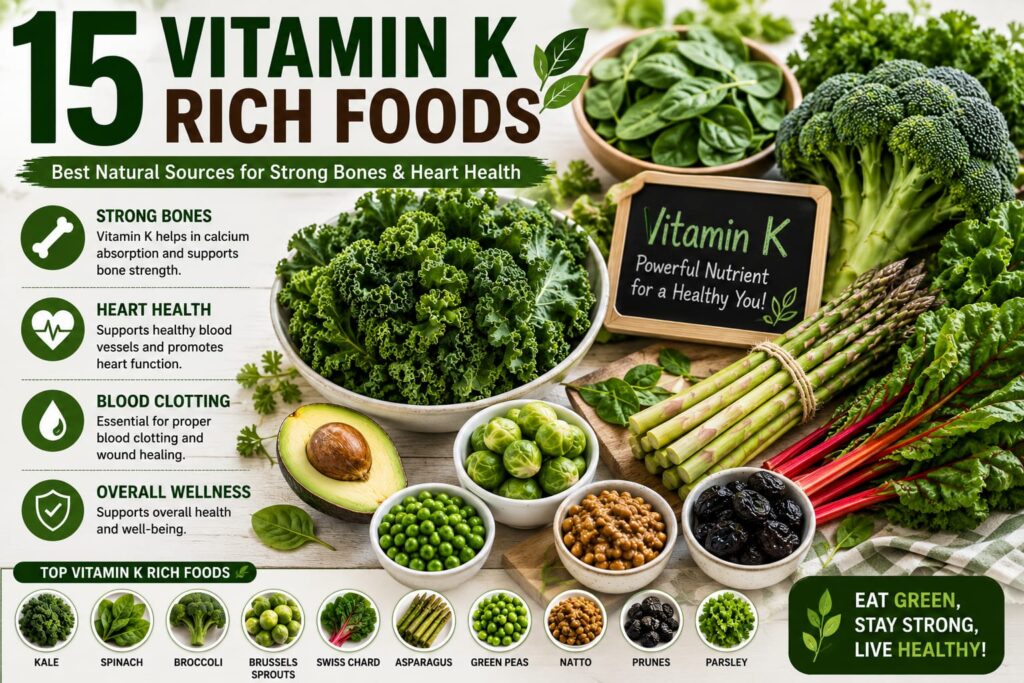
Prunes, or dried plums, are another nutritious option among Natural Sources of Vitamin K. They are also known for supporting digestive health because of their fiber content.
Benefits
- May support bone health
- Good source of fiber
- Naturally sweet
- Easy to carry as a snack
How to Eat
- As a healthy snack
- Mixed with nuts
- Added to oatmeal
- Chopped into salads
Simple Ways to Add More Vitamin K Rich Foods to Your Diet
Including Vitamin K Rich Foods every day can be simple with a little planning.
Here are a few practical ideas:
- Start your morning with a spinach smoothie.
- Add lettuce, parsley, or cabbage to sandwiches.
- Include broccoli or green beans with lunch.
- Enjoy leafy vegetable curries several times a week.
- Snack on kiwi, blueberries, or prunes.
- Add avocado to salads and wraps.
- Rotate different green vegetables instead of eating the same one every day.
- Choose fresh, seasonal produce whenever possible.
A varied diet is generally the best way to get a wide range of nutrients.
Foods That May Improve Vitamin K Absorption
Since Vitamin K is a fat-soluble vitamin, pairing it with healthy fats may help your body absorb it more efficiently.
Good options include:
- Olive oil
- Avocado
- Nuts
- Seeds
- Peanut butter
- Yogurt (in moderation)
- Cheese (occasionally, as part of a balanced diet)
For example, a spinach salad with olive oil dressing or avocado slices can be a nutritious combination.
Can You Eat Too Much Vitamin K?
Vitamin K from natural foods is generally considered safe for most healthy people when eaten as part of a balanced diet.
However, people who take blood-thinning medications such as warfarin should avoid making sudden, major changes to their Vitamin K intake without consulting their healthcare provider. Consistency is often recommended for individuals on these medications.
If you have a medical condition or special dietary needs, seek personalized advice from a qualified healthcare professional.
Frequently Asked Questions (FAQs)
1. What foods are highest in Vitamin K?
Leafy green vegetables such as kale, spinach, collard greens, mustard greens, Swiss chard, and parsley are among the foods highest in Vitamin K.
2. Why is Vitamin K important?
Vitamin K supports normal blood clotting, contributes to bone health, and helps the body use calcium effectively.
3. Which fruits contain Vitamin K?
Some Vitamin K Rich Fruits include kiwi, blueberries, grapes, avocados, blackberries, and prunes.
4. Can I get enough Vitamin K from food alone?
Most healthy people can meet their Vitamin K needs by eating a balanced diet that includes a variety of green vegetables and fruits.
5. Are cooked vegetables still good sources of Vitamin K?
Yes. Many cooked vegetables continue to provide Vitamin K, although cooking methods may slightly affect nutrient levels.
6. Which Indian foods are rich in Vitamin K?
Spinach (Palak), mustard greens (Sarson), cabbage, broccoli, coriander leaves, parsley, fenugreek leaves (Methi), and green beans are excellent choices.
7. Is avocado a good source of Vitamin K?
Yes. Avocado contains Vitamin K along with healthy fats, fiber, and several other beneficial nutrients.
8. How often should I eat Vitamin K rich foods?
Including a variety of Vitamin K Rich Foods in your daily meals is generally recommended as part of a healthy, balanced diet.
Disclaimer
This article is for educational and informational purposes only and should not be considered medical advice. Nutritional needs vary from person to person. Always consult a qualified healthcare professional before making significant dietary changes, especially if you have a medical condition, are pregnant or breastfeeding, or take blood-thinning medications. The information provided here is intended to support healthy lifestyle choices and is not a substitute for professional medical care.
Conclusion
Adding more Vitamin K Rich Foods to your daily diet is a simple and natural way to support overall health. From leafy greens like kale, spinach, and mustard greens to nutritious fruits such as kiwi and blueberries, there are many delicious options to choose from. These foods provide much more than Vitamin K—they also offer fiber, antioxidants, vitamins, and minerals that contribute to a balanced lifestyle.
Rather than relying on a single food, aim to enjoy a wide variety of Natural Sources of Vitamin K throughout the week. Small changes, such as adding a fresh salad to lunch, including green vegetables at dinner, or enjoying fruit as a snack, can make a meaningful difference over time.
When combined with regular physical activity, proper hydration, adequate sleep, and a balanced diet, Vitamin K Rich Foods can help support strong bones, overall wellness, and healthy living for years to come.
By Life Balance Tips Team