
Introduction
Do you often feel uncomfortable, heavy, or tight in your stomach after eating? You’re not alone. Bloating is one of the most common digestive complaints today, affecting people of all ages.
One of the biggest hidden reasons behind this issue is your daily diet. Many everyday items that seem harmless can actually be foods that cause bloating. The surprising part? You might be eating them regularly without realizing their effects.
In this detailed guide, we’ll explore a bloating causing foods list, understand why these foods trigger discomfort, and learn how to reduce bloating naturally through simple dietary and lifestyle changes.
Many people don’t realize that foods that cause bloating are part of their daily diet.
What Is Bloating and Why Does It Happen?
Bloating refers to a feeling of fullness, tightness, or swelling in the abdomen. It usually happens when gas builds up in the digestive system or when digestion slows down.
Common reasons include:
- Eating too quickly
- Overeating
- Poor digestion
- Food intolerances
- High salt intake
Understanding the root cause is the first step toward relief.
If you want faster relief, don’t miss this powerful morning remedy 👉 Best Morning Drink for Bloating.
Avoiding foods that cause bloating can significantly improve your digestion and reduce stomach discomfort.
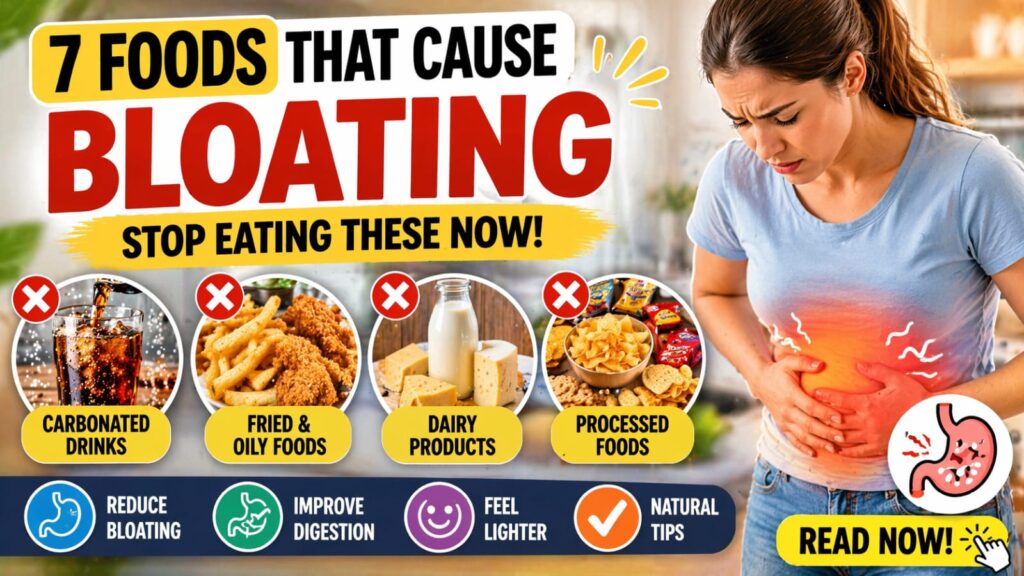
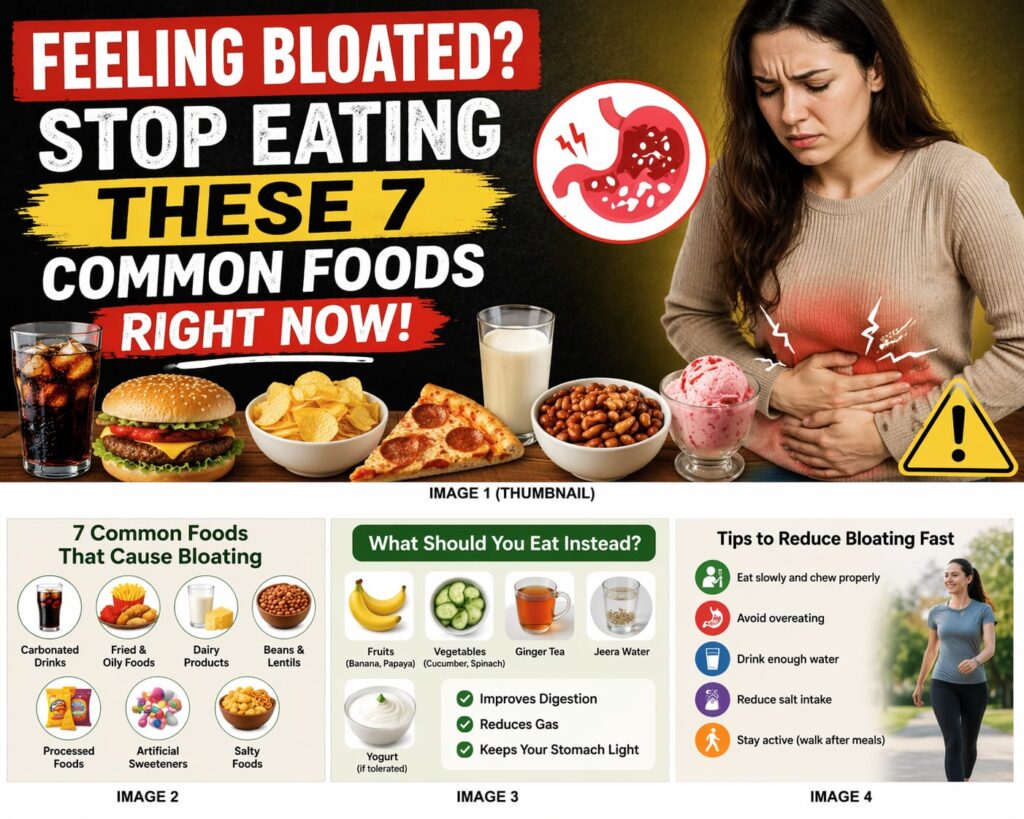
🚫 7 Common Foods That Cause Bloating
Let’s look at the most common foods that cause gas and bloating, along with better alternatives.
1. Carbonated Drinks (Soda & Fizzy Beverages)
Carbonated drinks contain dissolved carbon dioxide gas. When consumed, this gas can get trapped in your stomach.
Why they cause bloating:
- Increase gas buildup
- Cause burping and discomfort
Better choices:
- Plain water
- Lemon water
- Coconut water

2. Fried and Oily Foods
Deep-fried foods are difficult for your body to digest and can slow down the digestive process.
Common examples:
- French fries
- Pakoras
- Fast food items
Why they are among the worst foods for digestion:
- High fat content delays digestion
- Leads to heaviness and gas
Better choices:
- Steamed vegetables
- Grilled foods

3. Dairy Products (For Sensitive Individuals)
Milk and dairy products contain lactose, which some people find difficult to digest.
Symptoms may include:
- Gas
- Bloating
- Stomach cramps
Foods to watch:
- Milk
- Cheese
- Ice cream
Better choices:
- Lactose-free milk
- Almond or soy milk
4. Beans and Lentils
Beans are nutritious but can be hard to digest due to certain complex carbohydrates.
Why they cause bloating:
- Fermented by gut bacteria, producing gas
Better choices:
- Soak beans overnight
- Cook properly with spices like cumin or ginger
5. Processed and Packaged Foods
Highly processed foods are often high in sodium and artificial additives.
Examples:
- Chips
- Instant noodles
- Packaged snacks
Why they contribute to bloating:
- High salt causes water retention
- Additives may disturb digestion
Better choices:
- Fresh home-cooked meals
6. Artificial Sweeteners
Sugar-free products often contain sweeteners like sorbitol or xylitol.
Found in:
- Diet sodas
- Sugar-free gum
- Low-calorie desserts
Why they cause bloating:
- Poorly absorbed in the gut
- Lead to gas formation
Better choices:
- Natural sweeteners like honey (in moderation)
7. Salty Foods
Excess salt can cause your body to retain water, leading to a bloated feeling.
Common salty foods:
- Chips
- Pickles
- Processed snacks
Better choices:
- Reduce salt intake
- Drink enough water
You can also try these calming bedtime options 👉 Best Night Drinks for Better Sleep and Digestion.
📊 Quick Overview Table
| Food Category | Why It Causes Bloating | Better Alternative |
| Carbonated Drinks | Trapped gas | Water, herbal tea |
| Fried Foods | Slow digestion | Grilled foods |
| Dairy | Lactose intolerance | Plant-based milk |
| Beans | Gas-producing carbs | Soaked beans |
| Processed Foods | High salt & additives | Fresh meals |
| Artificial Sweeteners | Poor digestion | Natural sweeteners |
| Salty Foods | Water retention | Low-sodium diet |
⭐ Which Foods Should You Avoid First?
If you’re experiencing frequent bloating, it’s generally recommended to start by reducing:
- Carbonated drinks
- Processed foods
- Excess salt
These are often considered the biggest triggers.
🥗 Foods That May Help Reduce Bloating Naturally
Instead of focusing only on what to avoid, it’s equally important to include foods that support digestion.
Helpful options:
- Bananas
- Papaya
- Ginger
- Cucumber
- Yogurt (if tolerated)
- Fennel seeds
These foods are often recommended because they may help improve digestion and reduce gas.
💡 Practical Tips on How to Reduce Bloating Naturally
Small daily habits can make a big difference.
Follow these simple tips:
- Eat slowly and chew your food properly
- Avoid overeating
- Drink enough water throughout the day
- Stay physically active
- Avoid lying down immediately after meals
- Maintain a regular eating schedule
For more detailed information about digestive health, you can visit World Health Organization.
❓ Frequently Asked Questions (FAQs)
1. What are the main foods that cause bloating?
Carbonated drinks, fried foods, dairy (for some people), and processed foods are among the most common triggers.
2. How can I reduce bloating quickly at home?
Drinking warm water, eating light meals, and avoiding heavy or oily foods may help reduce bloating.
3. Are all healthy foods safe from bloating?
Not always. Even healthy foods like beans or dairy can cause bloating in some individuals.
4. Can drinking water reduce bloating?
Yes, staying hydrated may help improve digestion and reduce water retention.
5. Why do I feel bloated even after eating healthy?
It could be due to food intolerance, portion size, or eating habits like eating too fast.
6. Is bloating a sign of a serious problem?
Occasional bloating is common, but persistent symptoms may need professional advice.
7. Can stress cause bloating?
Yes, stress can affect digestion and may contribute to bloating.
8. How long does bloating usually last?
It varies, but mild bloating often improves within a few hours with proper care.
Identifying foods that cause bloating is the first step toward better gut health.
⚠️ Disclaimer
This article is for informational purposes only and is based on general health knowledge and lifestyle research. It is not intended to diagnose, treat, or cure any medical condition. Individual responses to foods may vary. If you experience persistent or severe symptoms, it is advisable to consult a qualified healthcare professional.
🏁 Conclusion
Bloating can be frustrating, but in many cases, it’s closely linked to what you eat every day. By identifying and reducing foods that cause bloating, you can take a big step toward better digestive health.
By cutting down on foods that cause bloating, you can feel lighter and healthier every day.
Focus on simple, natural habits and make mindful food choices. Over time, these small changes may help you feel lighter, more comfortable, and more energetic.
Start today — your digestive system will thank you.
By Life Balance Tips Team