
Introduction
Learning how to improve insulin Sensitivity Naturally is one of the best steps you can take to support your long-term health. Good insulin sensitivity allows your body to use insulin more effectively, helping glucose move from your bloodstream into your cells where it is used for energy. When your body becomes less sensitive to insulin, blood sugar levels may rise, increasing the risk of prediabetes, type 2 diabetes, heart disease, and other metabolic problems.
The good news is that daily habits can make a real difference. Eating nutritious foods, staying active, getting enough sleep, managing stress, and maintaining a healthy weight may all help improve insulin function over time.
In this guide, you’ll learn practical, science-based strategies to improve insulin Sensitivity Naturally, understand the signs of insulin resistance, discover the best foods for insulin sensitivity, and build healthy habits that support better metabolic health.

What Is Insulin Sensitivity?
Insulin is a hormone produced by the pancreas. Its main job is to help glucose enter your body’s cells so it can be used as energy.
When your body has good insulin sensitivity:
- Cells respond well to insulin.
- Blood sugar remains within a healthy range.
- Less insulin is needed to move glucose into cells.
When insulin sensitivity decreases, the body needs to produce more insulin to achieve the same effect. Over time, this can lead to insulin resistance.
Improving insulin Sensitivity Naturally may support healthier blood sugar regulation and reduce the workload on the pancreas.
What Is Insulin Resistance?
Insulin resistance happens when the body’s cells don’t respond efficiently to insulin. As a result, the pancreas produces more insulin to compensate.
If this continues for years, blood sugar may gradually increase, raising the risk of:
- Prediabetes
- Type 2 diabetes
- Fatty liver disease
- Heart disease
- Metabolic syndrome
Fortunately, lifestyle improvements may help reduce insulin resistance naturally in many people.
Signs of Insulin Resistance
Many people have insulin resistance without obvious symptoms.
Common signs of insulin resistance include:
- Increased belly fat
- Feeling tired after meals
- Frequent hunger
- Sugar cravings
- Difficulty losing weight
- Dark patches of skin around the neck or underarms (acanthosis nigricans)
- High blood pressure
- Elevated blood sugar
- High triglycerides
- Low HDL (“good”) cholesterol
If you notice several of these signs, it’s a good idea to discuss them with a healthcare professional.
Why Is Good Insulin Sensitivity Important?
Healthy insulin sensitivity supports many important body functions.
Benefits may include:
- Better blood sugar control
- More stable energy levels
- Easier weight management
- Lower risk of type 2 diabetes
- Improved heart health
- Better metabolic function
- Reduced inflammation
This is why experts often recommend improving insulin Sensitivity Naturally through sustainable lifestyle habits.
Common Causes of Reduced Insulin Sensitivity
Several everyday factors can affect insulin function.
These include:
- Physical inactivity
- Excess body weight
- High intake of sugary foods
- Highly processed foods
- Poor sleep
- Chronic stress
- Smoking
- Excess alcohol consumption
- Family history
- Aging
While some factors cannot be changed, many lifestyle habits can be improved.

Natural Ways to Improve Insulin Sensitivity
Here are evidence-based natural ways to improve insulin sensitivity.
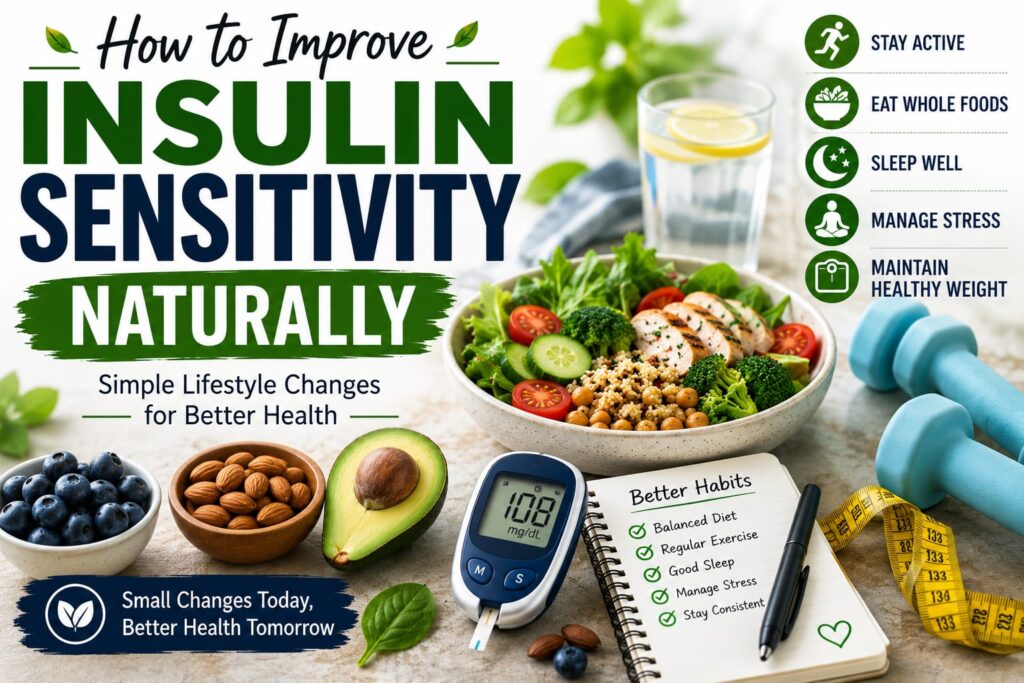
1. Stay Physically Active
Exercise is one of the most effective ways to improve insulin function.
Activities include:
- Walking
- Cycling
- Swimming
- Jogging
- Dancing
- Strength training
- Yoga
Aim for at least:
- 150 minutes of moderate exercise weekly
- Muscle-strengthening exercises twice a week
Even a 20–30 minute walk after meals may support healthy blood sugar levels.
2. Eat More High-Fiber Foods
Fiber slows digestion and helps maintain more stable blood sugar levels.
High-fiber foods include:
- Oats
- Whole wheat
- Brown rice
- Lentils
- Beans
- Chickpeas
- Apples
- Pears
- Carrots
- Broccoli
- Leafy greens
A fiber-rich eating pattern is often recommended for improving insulin Sensitivity Naturally.
3. Choose Whole Foods
Replace processed foods with natural options.
Choose:
- Fresh vegetables
- Fruits
- Whole grains
- Nuts
- Seeds
- Legumes
- Lean protein
- Healthy fats
Whole foods provide nutrients that support overall metabolic health.
Choosing whole foods every day may help improve insulin sensitivity naturally while providing essential nutrients for your body.
4. Maintain a Healthy Weight
Even modest weight loss may improve insulin sensitivity in people who are overweight.
Healthy weight management focuses on:
- Balanced eating
- Regular activity
- Portion control
- Consistency
Crash diets are generally not recommended.
5. Sleep Well
Poor sleep can affect hormone balance and insulin function.
Healthy sleep habits include:
- Sleeping 7–9 hours nightly
- Going to bed at the same time
- Reducing screen time before sleep
- Keeping your bedroom cool and quiet
Quality sleep plays an important role in improving insulin Sensitivity Naturally.
6. Manage Stress
Long-term stress increases hormones that may affect blood sugar regulation.
Healthy stress management includes:
- Meditation
- Deep breathing
- Yoga
- Prayer
- Reading
- Nature walks
- Spending time with family
Reducing stress may support better insulin response.
7. Drink Enough Water
Hydration supports many body functions, including metabolism.
Aim to drink water regularly throughout the day instead of sugary beverages.
8. Reduce Added Sugar
High sugar intake can contribute to insulin resistance over time.
Limit:
- Soft drinks
- Candy
- Cakes
- Cookies
- Sweetened juices
- Sugary cereals
Instead, satisfy sweet cravings with fresh fruit.
9. Include Healthy Protein
Protein helps increase fullness and supports muscle health.
Healthy sources include:
- Eggs
- Fish
- Chicken
- Lentils
- Beans
- Greek yogurt
- Tofu
- Paneer (in moderation)
10. Build Muscle
Muscle tissue uses glucose efficiently.
Strength training can help:
- Improve insulin sensitivity
- Increase metabolism
- Support healthy aging
Start with bodyweight exercises if you’re a beginner.
Best Foods for Insulin Sensitivity
Many nutritious foods can support healthy insulin function as part of a balanced eating plan.
Whole Grains
Examples:
- Oats
- Barley
- Brown rice
- Quinoa
Leafy Green Vegetables
Examples:
- Spinach
- Kale
- Fenugreek leaves
- Mustard greens
Beans and Lentils
Rich in:
- Fiber
- Plant protein
- Minerals
Nuts and Seeds
Choose:
- Almonds
- Walnuts
- Chia seeds
- Flaxseeds
- Pumpkin seeds
Fruits
Moderate portions of:
- Apples
- Berries
- Guava
- Pears
- Oranges
Healthy Fats
Include:
- Olive oil
- Avocados
- Nuts
- Seeds
These are excellent foods for insulin sensitivity when eaten in balanced portions.
Foods to Limit
An effective insulin resistance diet often limits foods that may cause rapid blood sugar spikes.
Reduce:
- Sugary drinks
- White bread
- White rice (large portions)
- Candy
- Pastries
- Deep-fried foods
- Fast food
- Highly processed snacks
- Excess alcohol
Instead, focus on nutrient-dense whole foods.
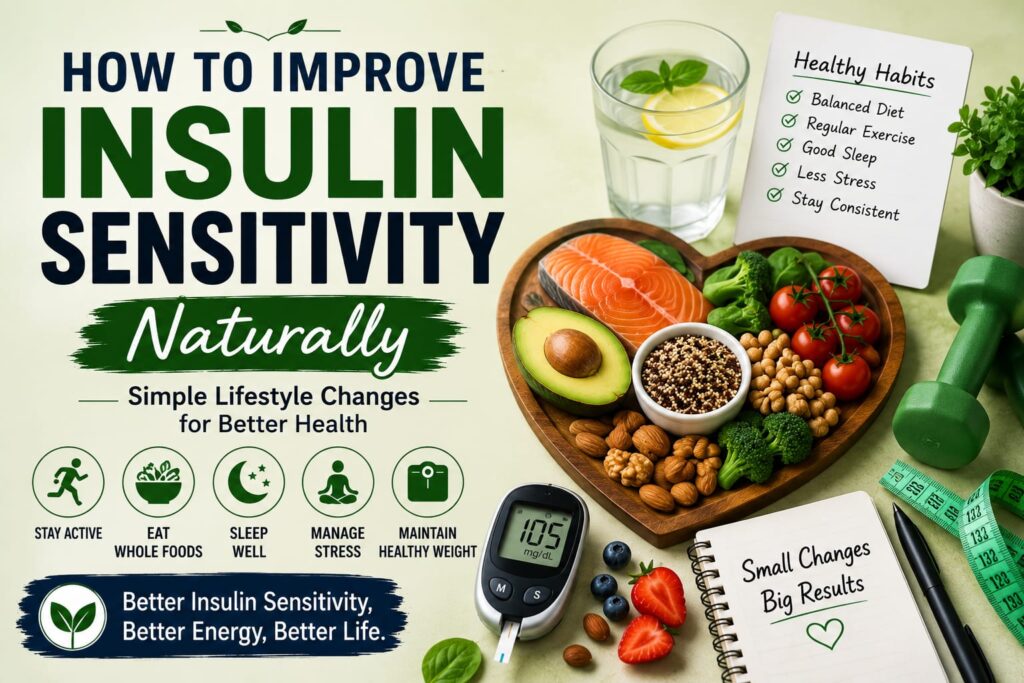
Sample One-Day Insulin Resistance Diet
| Meal | Healthy Choice |
| Breakfast | Oats with nuts, seeds, and berries |
| Mid-Morning | Apple with a handful of almonds |
| Lunch | Brown rice, dal, mixed vegetables, salad |
| Evening Snack | Roasted chickpeas and green tea |
| Dinner | Grilled fish or paneer with vegetables and whole wheat roti |
| Before Bed | Plain yogurt (if suitable) |
This balanced insulin resistance diet provides fiber, protein, and healthy fats that may support blood sugar balance.
Healthy Daily Habits That May Help
To Improve insulin sensitivity, try these simple habits every day:
- Walk after meals.
- Eat slowly.
- Include vegetables in every meal.
- Avoid skipping breakfast.
- Choose whole grains.
- Drink enough water.
- Exercise regularly.
- Sleep well.
- Manage stress.
- Avoid smoking.
Small changes practiced consistently often produce better long-term results than drastic diets.
How Long Does It Take to Improve Insulin Sensitivity Naturally?
Everyone is different.
Factors include:
- Current health
- Body weight
- Physical activity
- Diet quality
- Sleep
- Stress levels
Some people may notice improvements in energy and overall well-being within a few weeks of healthier habits, while meaningful changes in blood sugar markers may take several months. Consistency is more important than quick fixes.
When Should You See a Doctor?
Consult a healthcare professional if you have:
- Constant fatigue
- Frequent thirst
- Frequent urination
- Unexplained weight changes
- Persistently high blood sugar
- A strong family history of diabetes
- Concerns about insulin resistance
Regular health check-ups can help detect problems early.
Frequently Asked Questions (FAQ)
1. What is insulin sensitivity?
Insulin sensitivity refers to how effectively your body’s cells respond to insulin and use glucose for energy.
2. Can exercise improve insulin sensitivity?
Yes. Regular physical activity is widely recommended because it may help your muscles use glucose more efficiently.
3. Which foods are best for insulin sensitivity?
Whole grains, vegetables, beans, nuts, seeds, fruits, and lean proteins are among the best foods for insulin sensitivity.
4. Can weight loss improve insulin sensitivity?
For people who are overweight, even modest weight loss may improve insulin function.
5. Is walking after meals helpful?
A short walk after eating may help support healthy blood sugar levels and improve insulin response.
6. What are the early signs of insulin resistance?
Common signs of insulin resistance include increased belly fat, sugar cravings, fatigue, and difficulty losing weight.
7. What is the best insulin resistance diet?
A balanced insulin resistance diet emphasizes vegetables, whole grains, legumes, healthy fats, lean proteins, and limits added sugars and highly processed foods.
8. How can I reduce insulin resistance naturally?
The best approach is to combine healthy eating, regular exercise, quality sleep, stress management, hydration, and maintaining a healthy weight. These habits may help reduce insulin resistance naturally over time.
Health Disclaimer
This article is intended for educational and informational purposes only and should not be considered medical advice. Individual health needs vary, and lifestyle changes may not produce the same results for everyone. If you have diabetes, prediabetes, persistent high blood sugar, or any other medical condition, consult a qualified healthcare professional before making significant changes to your diet, exercise routine, or lifestyle.
Following these healthy habits consistently can improve insulin sensitivity naturally and support better blood sugar balance over time.
Conclusion
Improving insulin Sensitivity Naturally is a long-term commitment rather than a quick fix. A balanced diet rich in whole foods, regular physical activity, quality sleep, stress management, proper hydration, and maintaining a healthy weight can all support healthier insulin function. These simple daily habits not only help improve metabolic health but may also lower the risk of developing chronic conditions such as type 2 diabetes and heart disease.
Remember, small and consistent lifestyle changes often deliver the greatest benefits over time. By following these practical strategies and focusing on sustainable habits, you can take meaningful steps toward better health, increased energy, and improved overall well-being.
By Life Balance Tips Team