
Introduction
Protein-rich foods play an essential role in building muscles, repairing body tissues, and supporting overall health. Whether you are trying to gain muscle, lose weight, improve your fitness, or simply maintain a healthy lifestyle, eating enough protein every day is important.
Protein is made up of amino acids, which are the building blocks of the body. These nutrients help support muscle recovery, strengthen bones, improve metabolism, and keep you feeling full for longer. Including a variety of protein-rich foods in your daily meals may also help support healthy skin, hair, and immune function.
Many people think only athletes need protein, but everyone—from children and adults to older adults—needs enough protein for normal body functions. The good news is that many delicious and affordable high protein foods are easily available.
In this article, you’ll discover the 10 best protein-rich foods, their health benefits, and simple ways to include them in your daily protein diet.
Want to build a healthier diet? Read our guide on 10 Best High Fiber Foods for Better Digestive Health to support digestion and overall wellness.
Why Is Protein Important?
Protein is one of the three major nutrients your body needs every day. It supports many important functions that help keep you healthy.
Some key benefits of eating protein-rich foods include:
- Supports muscle growth and repair
- Helps maintain healthy bones
- Keeps you full for longer
- Supports healthy metabolism
- Helps repair body tissues
- Supports immune function
- Promotes healthy skin and hair
- Helps maintain a healthy weight
Eating enough protein-rich foods every day can help your body function more efficiently while supporting an active lifestyle.
How Much Protein Do You Need?
Protein needs vary depending on age, activity level, and health goals.
| Age Group | Daily Protein Requirement |
| Children | Depends on age and growth |
| Adults | Around 0.8 g per kg of body weight |
| Active people | Often need more protein |
| Older adults | May benefit from slightly higher protein intake |
If you exercise regularly or participate in strength training, your protein needs may be higher than average.
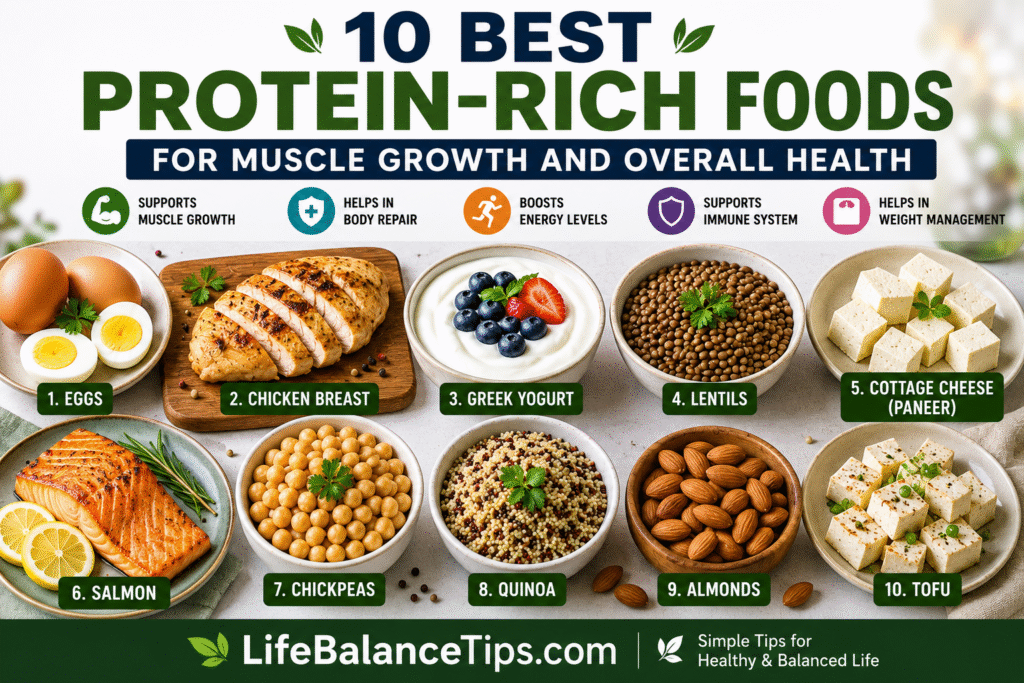
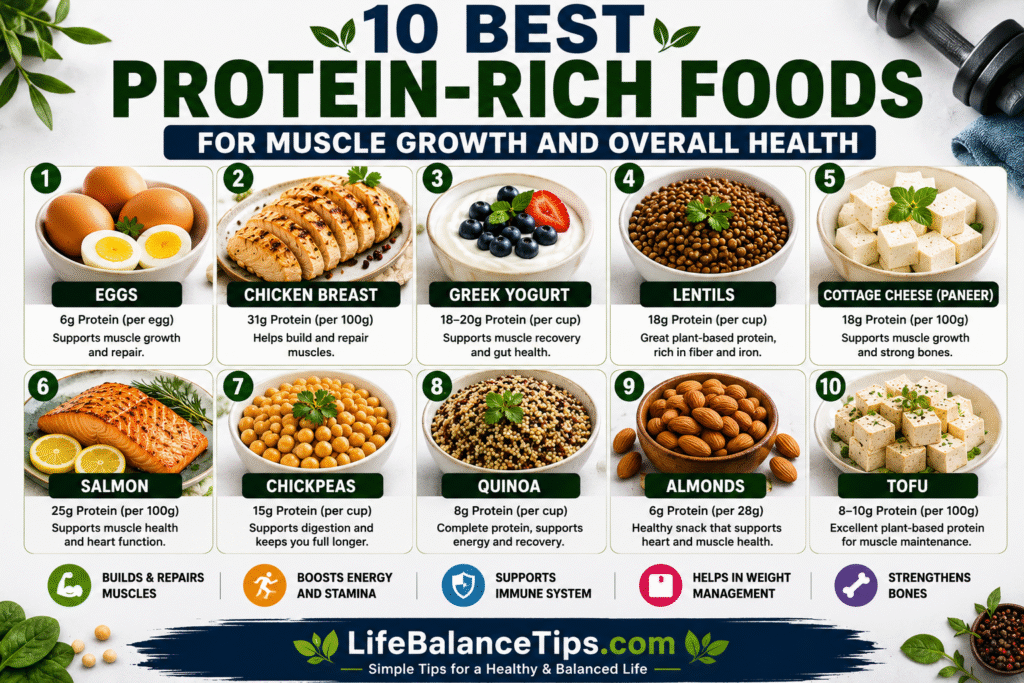
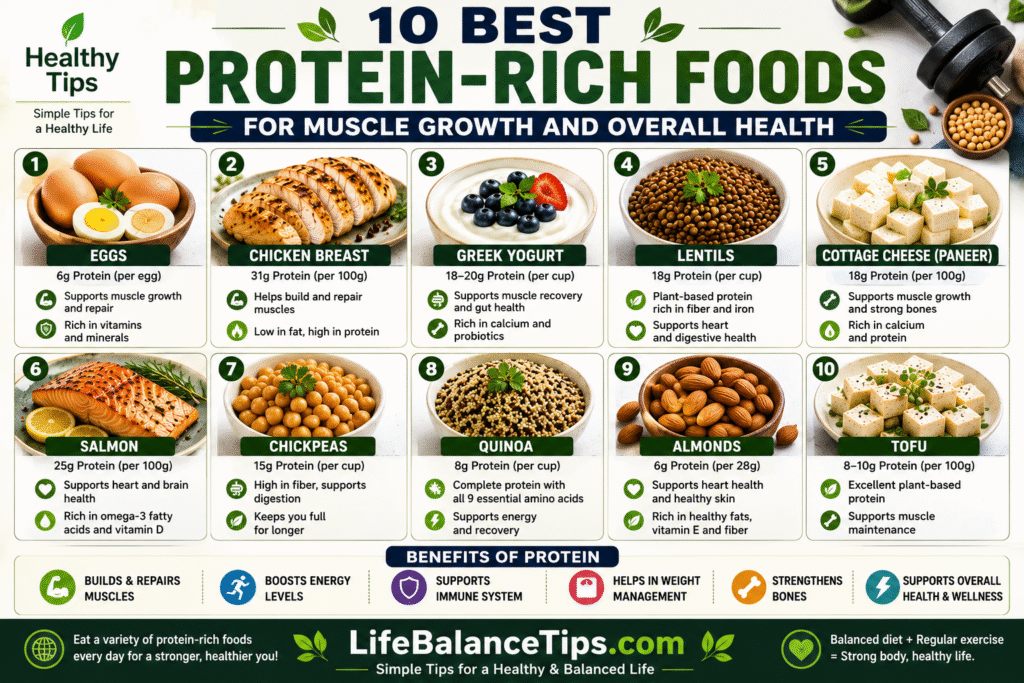
10 Best Protein-Rich Foods
1. Eggs
Eggs are among the best protein foods because they provide high-quality protein along with many important nutrients.
Benefits
- Supports foods for muscle growth
- Rich in vitamins and minerals
- Helps keep you full longer
- Easy to prepare
- Affordable and nutritious
Protein Content
One large egg provides about 6 grams of protein.
Easy Ways to Eat Eggs
- Boiled eggs
- Omelets
- Scrambled eggs
- Egg sandwiches
- Vegetable egg muffins
Eggs are one of the easiest healthy protein sources to include in a balanced diet.
2. Chicken Breast
Chicken breast is one of the most popular protein-rich foods for people looking to build muscle or maintain a healthy weight.
It is naturally low in fat while providing plenty of high-quality protein.
Benefits
- Supports lean muscle growth
- Helps muscle recovery
- Keeps you satisfied
- Easy to cook
- Versatile for many recipes
Protein Content
100 grams of cooked chicken breast contains about 31 grams of protein.
Healthy Serving Ideas
- Grilled chicken
- Chicken salad
- Chicken soup
- Stir-fried vegetables with chicken
- Whole wheat chicken wraps
Chicken is often included in many protein diet plans because of its excellent nutritional value.
3. Greek Yogurt
Greek yogurt contains more protein than regular yogurt while also providing calcium and beneficial probiotics.
It is one of the tastiest protein-rich foods for breakfast or snacks.
Benefits
- Supports digestive health
- Rich in calcium
- Helps muscle recovery
- Keeps hunger under control
- Supports bone health
Protein Content
One cup of Greek yogurt provides approximately 18–20 grams of protein.
Healthy Ways to Enjoy
- Add fresh berries
- Mix with nuts
- Blend into smoothies
- Use as a healthy dip
- Add oats for breakfast
Greek yogurt is one of the best protein foods for people who enjoy dairy.
4. Lentils
Lentils are one of the healthiest plant-based protein-rich foods available.
They are rich in protein, fiber, iron, and several essential minerals.
Benefits
- Supports heart health
- Helps improve digestion
- Keeps you full
- Budget-friendly
- Excellent vegetarian protein source
Protein Content
One cooked cup contains around 18 grams of protein.
Easy Meal Ideas
- Lentil soup
- Dal
- Lentil curry
- Lentil salad
- Rice with lentils
Lentils are an excellent choice for vegetarians looking for healthy protein sources.
5. Cottage Cheese (Paneer)
Paneer is a favorite food in many households and is packed with protein and calcium.
It works well in both vegetarian meals and high-protein diets.
Benefits
- Supports muscle repair
- Rich in calcium
- Helps maintain strong bones
- Keeps you satisfied
- Easy to cook in different recipes
Protein Content
100 grams of paneer provides around 18 grams of protein.
Healthy Ways to Eat Paneer
- Grilled paneer
- Paneer salad
- Paneer curry
- Paneer wraps
- Stir-fried vegetables with paneer
Paneer is one of the most popular protein-rich foods for vegetarians and is often included in a balanced protein diet.
6. Salmon
Salmon is one of the healthiest protein-rich foods because it provides high-quality protein along with heart-friendly omega-3 fatty acids.
Benefits
- Supports muscle recovery
- May help support heart health
- Rich in vitamin D and vitamin B12
- Supports brain function
- Helps maintain healthy skin
Protein Content
A 100-gram serving of cooked salmon provides about 25 grams of protein.
Healthy Ways to Enjoy Salmon
- Grilled salmon
- Baked salmon with vegetables
- Salmon salad
- Whole-grain salmon sandwich
Salmon is one of the best protein foods for people who enjoy seafood.
7. Chickpeas
Chickpeas are one of the most nutritious plant-based protein-rich foods. They are also rich in fiber, making them a filling and healthy option.
Benefits
- Supports digestive health
- Helps you stay full longer
- Provides plant-based protein
- Rich in vitamins and minerals
- Easy to include in everyday meals
Protein Content
One cooked cup contains around 15 grams of protein.
Healthy Ways to Eat Chickpeas
- Chickpea salad
- Hummus
- Chickpea curry
- Roasted chickpeas
- Mixed vegetable bowls
Chickpeas are among the most popular healthy protein sources for vegetarians and vegans.
8. Quinoa
Quinoa is a nutrient-dense whole grain that contains all nine essential amino acids, making it a complete protein source.
Benefits
- Supports muscle repair
- Naturally gluten-free
- Rich in fiber
- Provides magnesium and iron
- Helps maintain steady energy levels
Protein Content
One cooked cup provides about 8 grams of protein.
Healthy Serving Ideas
- Quinoa salad
- Quinoa with vegetables
- Breakfast quinoa bowl
- Quinoa soup
Quinoa is an excellent addition to any balanced protein diet.
9. Almonds
Almonds are one of the easiestFor more information about daily protein needs and healthy eating, visit the World Health Organization (WHO) healthy diet recommendations. to enjoy as a snack. They also provide healthy fats, fiber, and vitamin E.
Benefits
- Supports heart health
- Helps control hunger
- Rich in antioxidants
- Supports healthy skin
- Convenient and portable
Protein Content
About 28 grams (one handful) contains around 6 grams of protein.
Easy Ways to Enjoy Almonds
- Eat as a snack
- Add to oatmeal
- Sprinkle on yogurt
- Blend into smoothies
- Add to salads
Although almonds are calorie-dense, moderate portions can be part of a healthy eating plan.
10. Tofu
Tofu is made from soybeans and is one of the most versatile protein-rich foods for vegetarians and vegans.
Benefits
- Complete plant protein
- Supports muscle maintenance
- Low in saturated fat
- Easy to cook
- Suitable for many recipes
Protein Content
100 grams of tofu contains approximately 8–10 grams of protein.
Healthy Ways to Eat Tofu
- Stir-fried tofu
- Tofu curry
- Grilled tofu
- Tofu salad
- Vegetable tofu bowls
Tofu is one of the best healthy protein sources for plant-based diets.
Tips to Add More Protein to Your Daily Diet
Including more protein-rich foods in your meals doesn’t have to be difficult.
Here are some simple ideas:
- Start your day with eggs or Greek yogurt.
- Include beans or lentils in lunch.
- Choose grilled chicken or fish for dinner.
- Snack on almonds instead of processed foods.
- Add paneer or tofu to vegetable dishes.
- Include quinoa instead of refined grains occasionally.
- Eat a variety of high protein foods throughout the day.
Eating different protein-rich foods helps provide a wider range of nutrients.
Common Mistakes to Avoid
Many people make simple mistakes when trying to increase protein intake.
Avoid these habits:
- Depending on only one protein source.
- Eating too many processed protein products.
- Ignoring vegetables and whole grains.
- Skipping breakfast.
- Eating very little protein throughout the day.
- Forgetting to drink enough water while increasing protein intake.
- Choosing fried protein foods too often.
A balanced protein diet should include fruits, vegetables, whole grains, and healthy fats along with protein.
For more information about daily protein needs and healthy eating, visit the World Health Organization (WHO) healthy diet recommendations.
Frequently Asked Questions (FAQs)
1. What are the best protein-rich foods?
Some of the best protein foods include eggs, chicken breast, Greek yogurt, lentils, paneer, salmon, chickpeas, quinoa, almonds, and tofu.
2. How much protein should I eat daily?
Most healthy adults generally need about 0.8 grams of protein per kilogram of body weight, though individual needs may vary based on age, activity level, and health goals.
3. Are plant-based protein foods healthy?
Yes. Lentils, chickpeas, quinoa, tofu, beans, and nuts are excellent healthy protein sources.
4. Can protein-rich foods help with muscle growth?
Yes. Combined with regular strength training, protein-rich foods can support muscle growth and recovery.
5. Which protein-rich food is best for vegetarians?
Paneer, lentils, chickpeas, Greek yogurt, tofu, quinoa, and almonds are all excellent choices.
6. Can eating more protein help with weight management?
Protein may help increase fullness, which can support healthy eating habits as part of a balanced lifestyle.
7. Is it okay to eat eggs every day?
For many healthy people, eggs can be part of a balanced diet. Individual dietary needs may vary, so consult a healthcare professional if you have specific concerns.
8. What is the healthiest way to cook protein foods?
Grilling, steaming, baking, roasting, and boiling are generally healthier cooking methods than deep frying.
Disclaimer
This article is intended for educational and informational purposes only. It is not a substitute for professional medical advice, diagnosis, or treatment. Nutritional needs vary from person to person. If you have a medical condition, food allergy, or special dietary requirements, consult a qualified healthcare professional or registered dietitian before making significant changes to your diet.
Conclusion
Including a variety of protein-rich foods in your daily meals is one of the simplest ways to support muscle growth, maintain energy levels, and promote overall health. Whether you prefer animal-based or plant-based options, there are plenty of nutritious choices to meet your needs.
Eggs, chicken breast, Greek yogurt, lentils, paneer, salmon, chickpeas, quinoa, almonds, and tofu are among the best protein foods you can include in a balanced protein diet. Combining these high protein foods with regular physical activity, adequate hydration, and plenty of fruits and vegetables can help you build healthy eating habits that support long-term wellness.
Focus on variety, portion balance, and consistency rather than relying on a single food. Small, sustainable dietary changes can make a meaningful difference in supporting your overall health and fitness goals.
By Life Balance Tips Team