
Creating a healthy grocery list can make everyday eating much easier. When nutritious foods are already available at home, you are more likely to prepare balanced meals and less likely to depend on highly processed convenience foods.
A good grocery list does not need to be expensive or complicated. You can build one around vegetables, fruits, protein-rich foods, whole grains, healthy fats, and simple pantry staples.
Whether your goal is to eat better, support healthy weight management, save money, or make weekly meal planning easier, learning how to create a healthy grocery list is a practical first step.
In this guide, we will share 10 simple tips, budget-friendly ideas, a one-week sample grocery list, and common shopping mistakes to avoid.
Note: Food needs vary from person to person. Your ideal grocery list may depend on your age, activity level, dietary preferences, budget, and individual health needs.
What Is a Healthy Grocery List?
A healthy grocery list is a planned collection of foods that can help you prepare nutritious and balanced meals throughout the week.
Instead of buying random foods when you are hungry, a planned list helps you think about what you actually need.
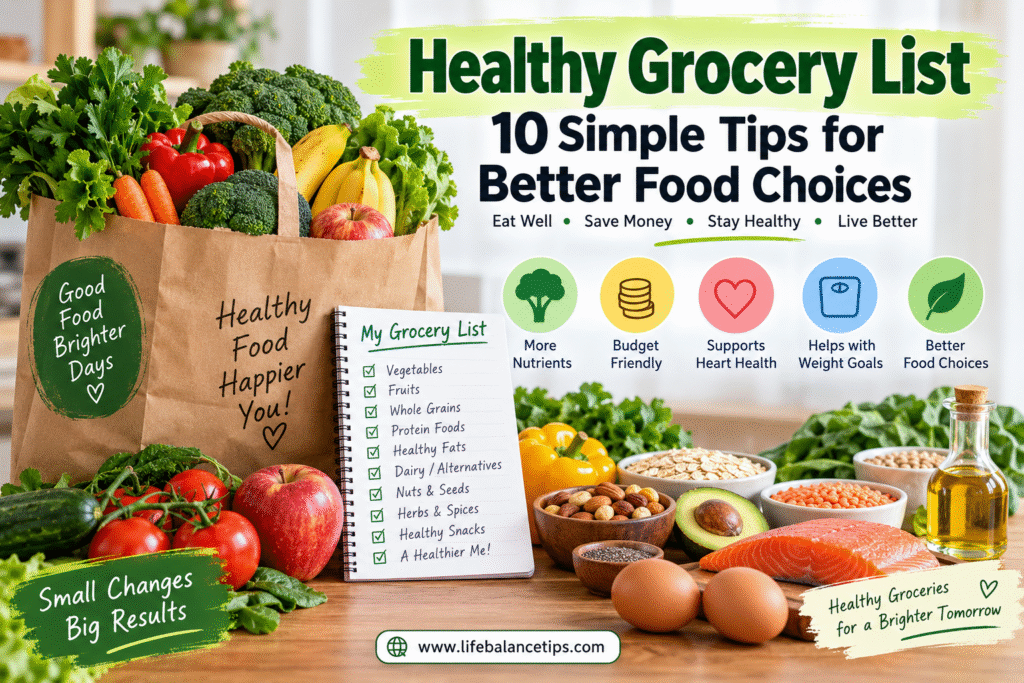
A basic healthy grocery list can include:
- Fresh or frozen vegetables
- Fresh or frozen fruits
- Beans and lentils
- Eggs
- Fish or lean meats
- Yogurt and other nutritious dairy foods
- Whole grains
- Nuts and seeds
- Healthy cooking oils
- Herbs and spices
- Water and other suitable beverages
The goal is not to make every item “perfect.” The goal is to create a practical selection of foods that supports a varied eating pattern.
10 Simple Tips for Creating a Healthy Grocery List
1. Check Your Kitchen Before Shopping
Before creating your healthy grocery list, take a few minutes to check your refrigerator, freezer, and pantry.
You may already have foods that can be used for meals.
Look for:
- Rice
- Oats
- Whole-wheat flour
- Lentils
- Beans
- Nuts
- Seeds
- Cooking oils
- Spices
- Frozen vegetables
- Frozen fruits
This simple habit can prevent unnecessary purchases and reduce food waste.
For example, if you already have lentils and rice at home, you may only need to buy vegetables, yogurt, and fruit to complete several meals.
2. Plan Your Meals Before Making the List
Meal planning makes grocery shopping much easier.
You do not need to plan every meal in detail. Even deciding on a few main meals for the week can help.
For example:
Monday: Dal, roti, mixed vegetables
Tuesday: Chicken, rice, salad
Wednesday: Rajma, brown rice, vegetables
Thursday: Paneer, roti, salad
Friday: Fish, vegetables, rice
Then add breakfast and snack options.
Once you know what you plan to cook, you can write down the ingredients you need.
This approach can also make a healthy grocery list on a budget easier because you are less likely to buy foods that you will not use.
3. Add Plenty of Vegetables and Fruits
Vegetables and fruits should have an important place on your grocery list.
They provide fiber and a variety of vitamins, minerals, and other naturally occurring plant compounds.
You do not need to buy expensive produce. Choose seasonal and locally available options when they fit your budget.
Vegetables to consider
- Spinach
- Carrots
- Tomatoes
- Cucumber
- Cauliflower
- Broccoli
- Cabbage
- Green beans
- Pumpkin
- Bell peppers
- Okra
- Peas
Fruits to consider
- Apples
- Bananas
- Oranges
- Guava
- Papaya
- Watermelon
- Melons
- Berries
- Pomegranate
- Seasonal local fruits
Fresh, frozen, and canned options can all have a place in a healthy eating pattern. When buying canned fruits or vegetables, check the product label for added sugars or excessive sodium where relevant.
4. Include Protein-Rich Foods
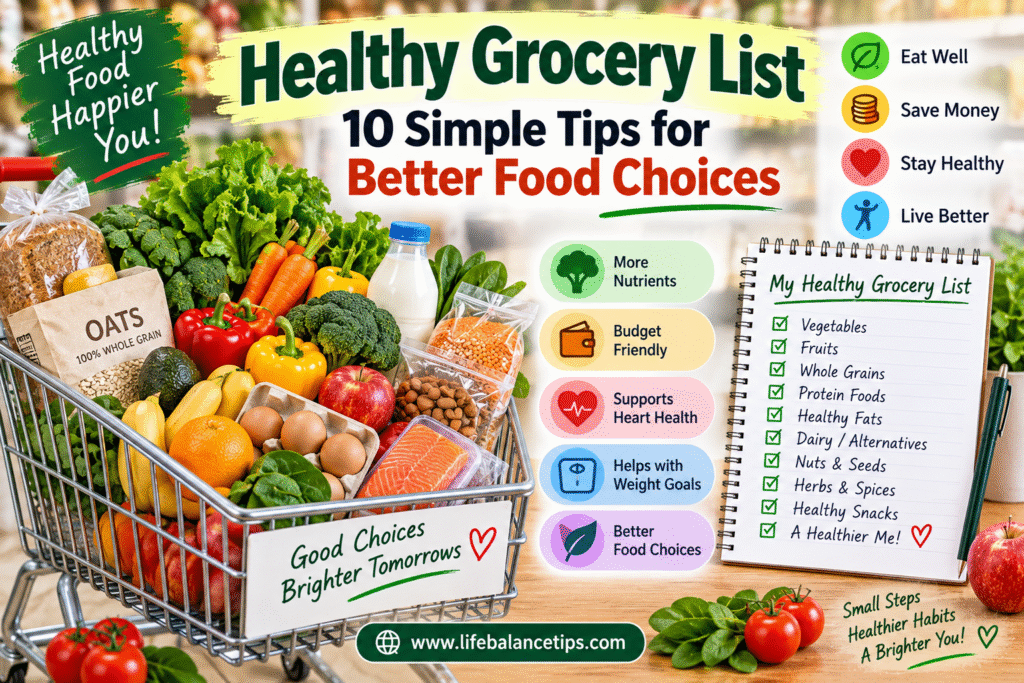
Protein is an important part of a balanced diet and can come from both animal and plant foods.
When creating your healthy grocery list, choose several protein sources that you enjoy.
Animal-based options
- Eggs
- Fish
- Chicken
- Plain yogurt
- Milk
- Paneer
Plant-based options
- Lentils
- Chickpeas
- Kidney beans
- Black beans
- Green peas
- Tofu
- Soy foods
- Nuts
- Seeds
You do not have to buy every protein source each week.
For example, one week you could buy eggs, dal, chickpeas, yogurt, and fish. The following week, you could replace some of these with paneer, tofu, beans, or chicken.
Variety can make healthy eating more enjoyable.
5. Choose Whole Grains More Often
Whole grains can provide carbohydrates along with fiber and other nutrients.
Consider adding some of these foods to your grocery list:
- Oats
- Whole-wheat flour
- Whole-grain bread
- Brown rice
- Barley
- Millets
- Quinoa
- Whole-grain pasta
You do not need to eliminate refined grains.
For many people, a practical approach is simply to include whole grains more often while keeping overall portions appropriate.
For an Indian healthy grocery list, whole-wheat atta, oats, brown rice, barley, and millets can be useful choices depending on personal preferences.
6. Add Healthy Fats in Moderate Amounts
Healthy fats can be included as part of a balanced diet.
Good grocery options include:
- Almonds
- Walnuts
- Peanuts
- Chia seeds
- Flaxseeds
- Pumpkin seeds
- Sesame seeds
- Avocado
- Olive oil
- Mustard oil
Because fats are energy-dense, portion size still matters.
You do not need to add large quantities of oil, nuts, or seeds to make a meal healthier. Small amounts can complement an otherwise balanced meal.
7. Keep Healthy Grocery Staples at Home
A few basic staples can make healthy meals much easier to prepare.
Pantry staples
- Oats
- Brown or regular rice
- Whole-wheat flour
- Lentils
- Chickpeas
- Beans
- Nuts
- Seeds
- Herbs
- Spices
Refrigerator staples
- Eggs
- Plain yogurt
- Milk
- Fresh vegetables
- Fruits
- Paneer or tofu
Freezer staples
- Frozen vegetables
- Frozen berries or other fruit
- Frozen fish, when suitable
- Frozen peas
Keeping these basics available means you can often prepare a simple meal without making another trip to the store.
Healthy Grocery List on a Budget
Eating healthy does not necessarily require buying expensive “health foods.”
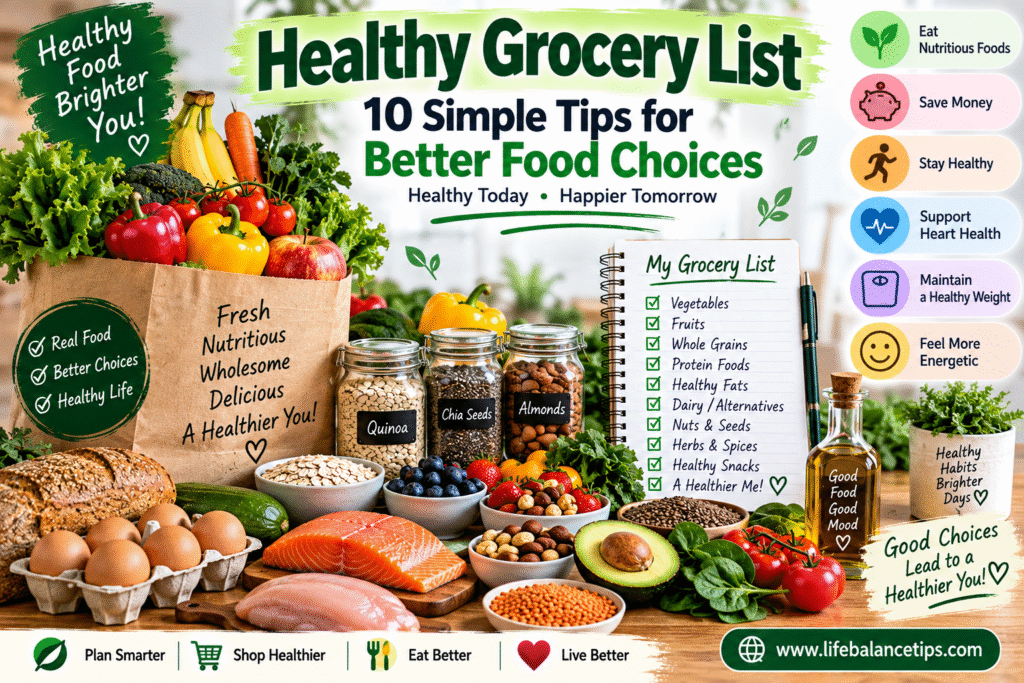
A healthy grocery list on a budget can focus on simple, nutritious staples.
Budget-friendly choices include:
- Lentils
- Chickpeas
- Beans
- Oats
- Seasonal vegetables
- Bananas
- Apples when affordable
- Potatoes and sweet potatoes
- Eggs
- Plain yogurt
- Whole-wheat flour
- Rice
- Peanuts
- Frozen vegetables
5 Ways to Save Money
1. Buy seasonal produce
Seasonal fruits and vegetables are often more affordable and can provide variety.
2. Compare prices
Check the price per unit or weight rather than only looking at package size.
3. Buy only what you can use
Buying large quantities of food that spoil before you eat them is not a real saving.
4. Use frozen foods when practical
Frozen vegetables and fruits can be convenient and help reduce waste.
5. Cook at home more often
Preparing simple meals at home can help you control ingredients and portions while potentially reducing spending on takeaway foods.
Healthy Grocery List for Weight Loss
If your goal is healthy weight management, your grocery list should focus on nutritious foods rather than extremely restrictive products.
Consider including:
- Vegetables
- Fruits
- Beans and lentils
- Eggs
- Fish
- Lean meats
- Plain yogurt
- Whole grains
- Nuts and seeds
- Water
- Lower-sugar or unsweetened foods where appropriate
High-fiber foods and protein-rich foods can be useful components of satisfying meals.
However, no single grocery list automatically causes weight loss. Overall food intake, portions, physical activity, sleep, and other lifestyle factors can all influence weight.
Avoid relying on products marketed as “fat-burning,” “detox,” or “miracle” foods.
Heart-Healthy Grocery List Ideas
For a heart-conscious eating pattern, emphasize a variety of vegetables, fruits, whole grains, beans, nuts, seeds, and other nutritious foods.
You can consider adding:
- Oats
- Barley
- Beans
- Lentils
- Leafy greens
- Berries
- Apples
- Oranges
- Tomatoes
- Nuts
- Seeds
- Fish
- Plain yogurt
- Whole grains
When buying packaged foods, checking sodium, saturated fat, added sugars, and serving size can help you make more informed choices.
How to Read Labels While Grocery Shopping
Packaged foods can be part of a healthy diet, but the nutrition label can help you compare products.
When checking a food label, look at:
Serving size
Check how much food one serving represents.
Calories
See how many calories are provided per serving.
Added sugars
Compare the amount of added sugar between similar products.
Sodium
Check sodium content, particularly if you are trying to reduce your sodium intake.
Saturated fat
Compare saturated fat levels when choosing between similar products.
Dietary fiber
Foods with more fiber can be useful components of a nutritious eating pattern.
Ingredient list
Look at the ingredients to understand what the product contains.
For a detailed explanation, you can also read our guide on how to read a nutrition label.
Healthy Grocery List for a Week
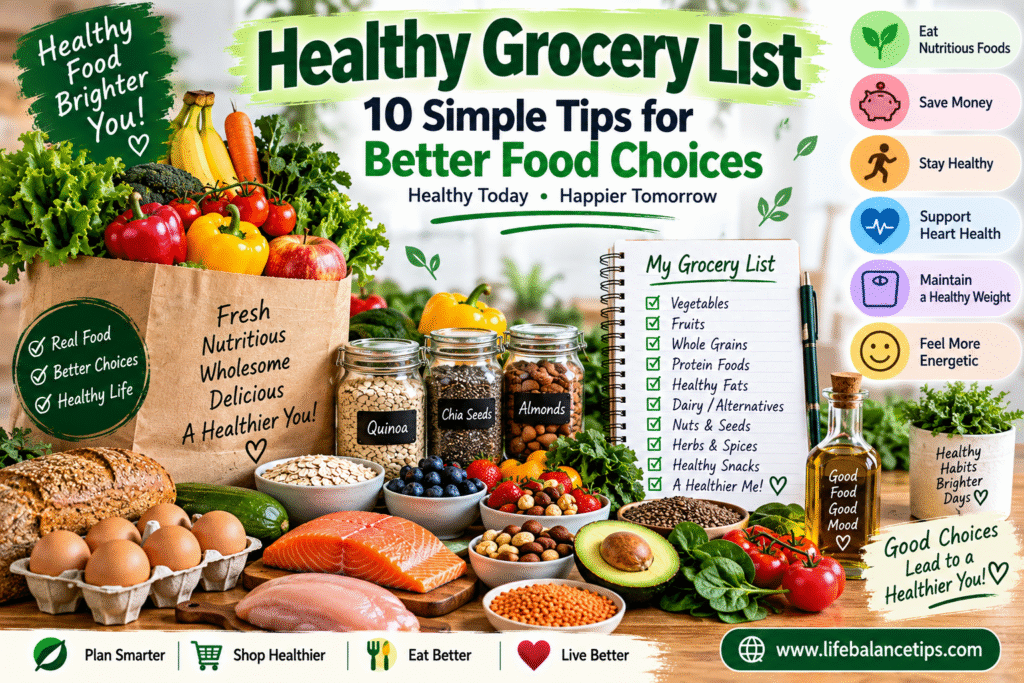
Here is a simple example of a healthy grocery list for a week.
Vegetables
- Spinach
- Carrots
- Tomatoes
- Cucumber
- Broccoli
- Cauliflower
- Cabbage
- Bell peppers
- Green beans
- Seasonal vegetables
Fruits
- Bananas
- Apples
- Oranges
- Guava
- Papaya
- Seasonal fruit
Protein Foods
- Eggs
- Lentils
- Chickpeas
- Kidney beans
- Plain yogurt
- Paneer or tofu
- Fish or chicken, depending on preference
Grains
- Oats
- Whole-wheat flour
- Rice
- Brown rice or another whole grain
- Whole-grain bread
Healthy Fats
- Almonds
- Walnuts
- Peanuts
- Chia seeds
- Flaxseeds
- Cooking oil
Other Useful Items
- Herbs
- Spices
- Garlic
- Ginger
- Lemon
- Water
You can adjust this list based on the number of people in your household and the meals you plan to prepare.
Foods to Buy Less Often
A healthy grocery list does not mean you can never buy treats.
However, it can be helpful to purchase highly processed foods less frequently, especially when they are high in added sugars, sodium, or saturated fat.
Examples include:
- Sugary drinks
- Candy
- Cookies
- Chips
- Highly processed snack foods
- Sugar-heavy breakfast cereals
- Large amounts of processed meats
- Desserts eaten frequently
The goal is not perfection. An overall balanced eating pattern matters more than avoiding every less-nutritious food.
Common Grocery Shopping Mistakes
Shopping While Extremely Hungry
Being very hungry can make impulse purchases more tempting.
Try: Eat a meal or nutritious snack before shopping.
Buying Without a Plan
A random shopping trip can lead to unnecessary purchases.
Try: Make a list before leaving home.
Buying Too Much Fresh Food
Large amounts of produce can go to waste if you cannot eat them in time.
Try: Buy realistic quantities.
Ignoring Serving Sizes
Large packages can make it easy to underestimate how much you are eating.
Try: Check the serving information on packaged foods.
Believing “Healthy” Marketing Claims
Words such as “natural,” “light,” or “healthy” do not tell you everything about a product’s nutritional value.
Try: Read the Nutrition Facts panel and ingredient list.
5 Simple Grocery Shopping Habits
To make your healthy grocery list work in real life, try these habits:
- Plan before shopping.
- Buy more vegetables and fruits.
- Include a protein source for your main meals.
- Choose whole grains more often.
- Check packaged food labels before buying.
You do not have to change everything at once. Start with one or two habits and gradually build from there.
Frequently Asked Questions
1. What should be on a healthy grocery list?
A basic list can include vegetables, fruits, protein-rich foods, whole grains, nuts, seeds, healthy cooking oils, and nutritious pantry staples.
2. How can I make a healthy grocery list on a budget?
Focus on affordable staples such as lentils, beans, oats, eggs, seasonal vegetables, fruits, rice, whole-wheat flour, peanuts, and plain yogurt.
3. Is a healthy grocery list good for weight loss?
A nutritious grocery list can support healthy eating and weight management, but weight changes depend on overall diet, portions, activity, and individual factors.
4. What are good healthy grocery staples?
Oats, lentils, beans, whole grains, vegetables, fruits, eggs, plain yogurt, nuts, seeds, herbs, and spices are useful staples for many households.
5. Should I buy fresh or frozen vegetables?
Both can be useful. Frozen vegetables can be convenient, have a long storage life, and help reduce food waste.
6. What should I look for on food labels?
Check serving size, calories, added sugars, sodium, saturated fat, dietary fiber, and the ingredient list when comparing packaged foods.
7. Can I include snacks on a healthy grocery list?
Yes. Fruit, plain yogurt, nuts, seeds, or vegetables can be nutritious snack options. Portion size and your overall eating pattern still matter.
8. How often should I make a grocery list?
Many people find weekly planning convenient, but the best schedule depends on your household, storage space, budget, and shopping habits.
For more healthy eating and nutrition tips, explore our guide to 15 Best Foods for Heart Health Naturally on Life Balance Tips.
Final Thoughts
A healthy grocery list is one of the simplest tools you can use to make nutritious eating easier.
Start with vegetables and fruits, add protein-rich foods, choose whole grains, include healthy fats in moderate amounts, and keep a few basic pantry staples at home.
You do not need expensive products or a perfect diet. Simple foods, sensible portions, variety, and consistent habits can form the foundation of a healthy eating pattern.
Before your next shopping trip, take a few minutes to check what you already have, plan a few meals, and write down only the foods you actually need. Small planning habits can make healthier food choices much easier throughout the week.
For reliable information about healthy eating and nutrition, visit the U.S. Department of Agriculture (USDA) MyPlate website.
Health Disclaimer
This article is for general educational and informational purposes only. It is not intended to provide medical advice, diagnosis, or treatment. Individual nutrition needs can vary based on age, health conditions, medications, activity level, and other factors. If you have a specific medical or dietary concern, consult a qualified healthcare professional or registered dietitian before making major changes to your diet.
By Life Balance Tips Team