
Eating too much added sugar can make it harder to maintain a balanced diet. The good news is that you do not need to completely change your eating habits overnight. Small, consistent changes—such as choosing unsweetened drinks, checking food labels, and replacing sugary snacks—can make it easier to reduce added sugar in your everyday diet.
Added sugar is different from the naturally occurring sugar found in foods such as whole fruits and plain milk. Added sugars are put into foods or drinks during processing or preparation and can include table sugar, syrups, honey, and other sweeteners. (U.S. Food and Drug Administration)
This guide explains how to reduce added sugar in your diet with simple, practical steps that can fit into a normal lifestyle.
Important: This article provides general nutrition information and is not a substitute for professional medical advice.

What Is Added Sugar?
Added sugar is sugar that is added to food or beverages during preparation or processing.
Common examples include:
- Table sugar
- Brown sugar
- Cane sugar
- Corn syrup
- Glucose
- Dextrose
- Fructose
- Honey
- Maple syrup
- Molasses
- Sweetened fruit concentrates
The sugar naturally present in whole fruits, vegetables, and plain milk is not considered added sugar. (U.S. Food and Drug Administration)
Understanding the difference between natural and added sugar makes it easier to know how to reduce added sugar without avoiding nutritious foods.
Understanding added sugar is the first step when learning how to reduce added sugar in your everyday diet.
For example, an apple contains naturally occurring sugar. But if sugar is added to a packaged apple-flavored snack, that added sugar is listed separately on the Nutrition Facts label.
Added Sugar vs. Natural Sugar
Understanding the difference can make healthy eating much easier.
| Natural Sugar | Added Sugar |
| Found naturally in whole fruit | Added during processing |
| Found naturally in milk | Added to sweetened dairy products |
| Usually comes with nutrients | Often adds sweetness and calories |
| Whole fruits provide fiber | Common in sugary drinks and desserts |
| Not listed as added sugar | Listed as “Added Sugars” on U.S. Nutrition Facts labels |
This does not mean you need to avoid fruit. Whole fruits can be part of a balanced diet and provide fiber, vitamins, and minerals. (CDC)
10 Simple Ways to Reduce Added Sugar
1. Start With Sugary Drinks
If you are wondering how to reduce added sugar, these simple steps can help you make better choices without changing everything at once.
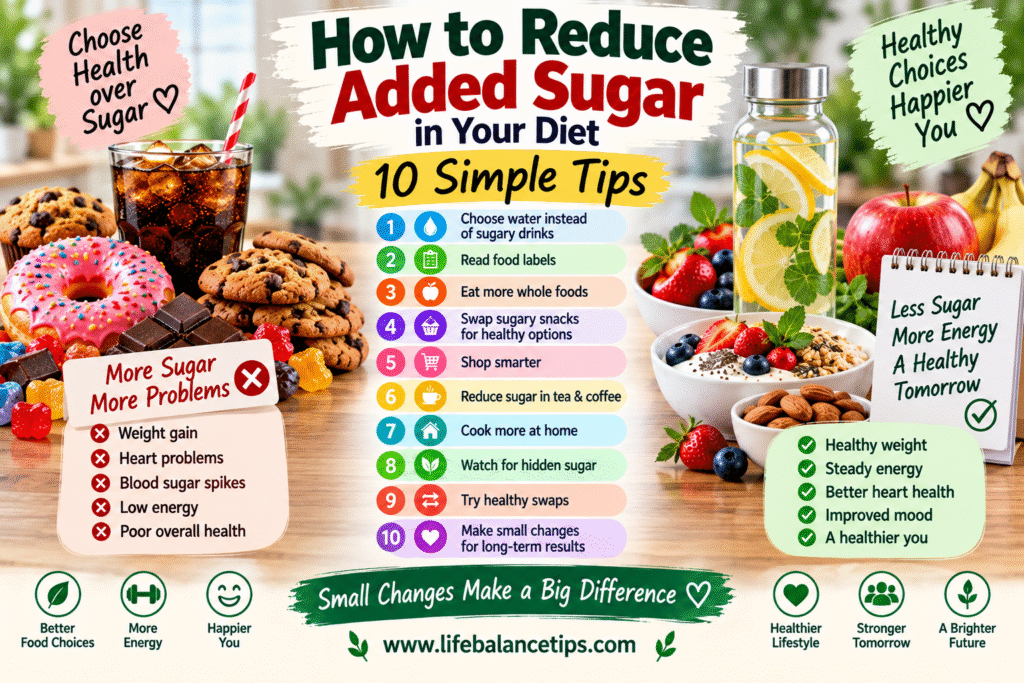
One of the easiest ways to learn how to reduce added sugar is to replace sugary drinks with water or unsweetened beverages.
One of the easiest ways to reduce added sugar is to look at what you drink.
Added sugar can come from:
- Soft drinks
- Sweetened tea
- Sweetened coffee
- Energy drinks
- Sports drinks
- Sweetened fruit drinks
- Flavored milk
- Some ready-to-drink beverages
Try replacing sugary drinks with:
- Plain water
- Sparkling water
- Unsweetened tea
- Unsweetened coffee
- Plain milk
- Water flavored with lemon, lime, cucumber, or berries
The CDC specifically recommends choosing water instead of sugary drinks as a practical way to lower added sugar intake. (CDC)
Simple habit
If you normally drink two sweetened beverages a day, start by replacing just one with water or an unsweetened option.
You can make another change later.
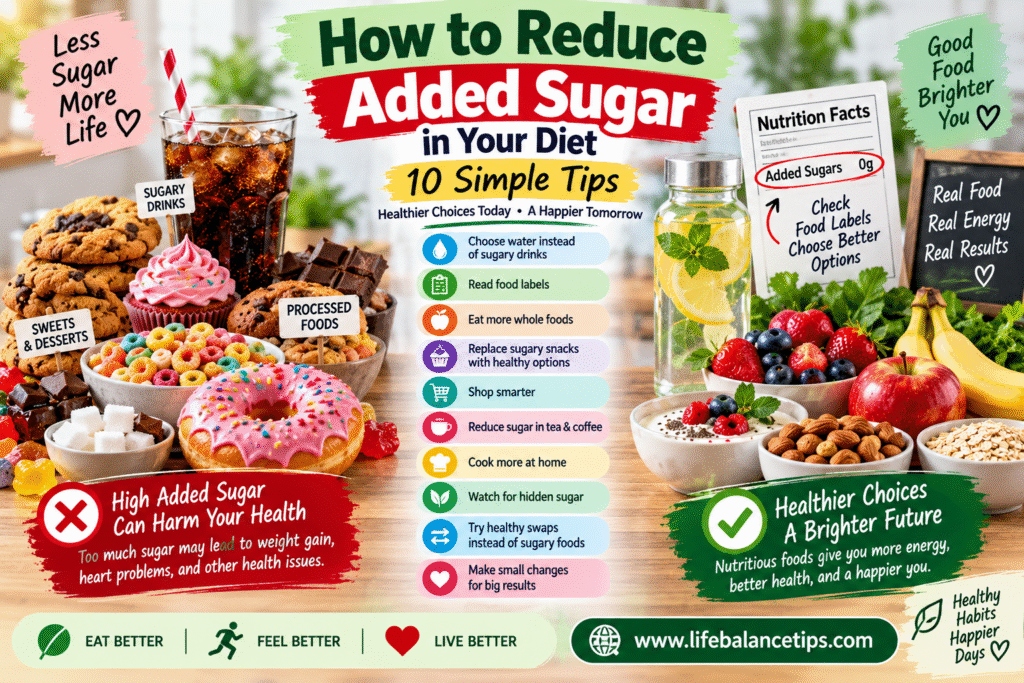
2. Check the Added Sugars on Food Labels
Learning to read food labels is one of the most useful skills for reducing sugar.
Look for the “Added Sugars” section under Total Sugars on the Nutrition Facts label.
The FDA lists 50 grams of added sugar per day as the Daily Value based on a 2,000-calorie diet. Individual needs can vary. (U.S. Food and Drug Administration)
The percentage can also help you compare products.
As a general FDA guide:
- 5% DV or less = low
- 20% DV or more = high
These values apply to individual nutrients per serving. (U.S. Food and Drug Administration)
Important
Always check the serving size before judging the amount of added sugar. A package may contain multiple servings.
3. Choose Unsweetened Breakfast Foods
Breakfast can contain more added sugar than you realize.
Common examples include:
- Sweetened breakfast cereals
- Flavored yogurt
- Sweetened instant oatmeal
- Pastries
- Sweetened spreads
- Flavored coffee drinks
Instead, try:
- Plain oats
- Plain yogurt
- Eggs
- Whole-grain toast
- Fresh fruit
- Nuts and seeds
- Unsweetened milk
For sweetness, add sliced banana, berries, apple, or another whole fruit.
The CDC recommends options such as whole-grain foods, fruit, and yogurt without added sugars as part of healthier eating patterns. (CDC)
4. Make Gradual Changes to Tea and Coffee
If you regularly add sugar to tea or coffee, stopping suddenly may feel difficult.
Instead, reduce the amount gradually.
For example:
Week 1: Use slightly less sugar than usual.
Week 2: Reduce it again.
Week 3: Try an unsweetened version or use only a small amount.
You can also experiment with flavors such as:
- Cinnamon
- Cardamom
- Unsweetened cocoa
- Vanilla
- Ginger
The goal is to gradually become comfortable with less sweetness.
5. Replace Sugary Snacks With Naturally Sweet Foods
Cookies, cakes, candies, chocolate bars, and other sweet snacks can add significant amounts of sugar to the diet.
You do not have to eliminate every sweet food. Instead, create healthier everyday options.
Try:
- Fresh fruit
- Apple with unsweetened nut butter
- Plain yogurt with berries
- Nuts and seeds
- Roasted chickpeas
- Vegetable sticks with hummus
- Homemade oatmeal snacks without added sugar
Fruit can be especially useful because it provides natural sweetness along with fiber and nutrients.
6. Watch Out for Hidden Sources of Sugar
Sugar is not found only in obvious desserts.
It can also appear in foods such as:
- Flavored yogurt
- Breakfast cereals
- Granola
- Packaged sauces
- Ketchup
- Salad dressings
- Nut butters
- Bread products
- Flavored drinks
- Ready-made desserts
- Packaged snack foods
Some ingredient names can also indicate added sugars, including sucrose, dextrose, glucose, fructose, corn syrup, honey, molasses, and other sweetening ingredients. (CDC)
A useful shopping habit
When comparing two similar products, check their Added Sugars amounts and choose the option that better fits your needs.
7. Choose Plain Yogurt Instead of Sweetened Yogurt
Yogurt can be nutritious, but flavored varieties may contain added sugar.
Try buying:
Plain yogurt + fresh fruit
instead of:
Sweetened yogurt + added flavoring
You can add:
- Banana
- Strawberries
- Blueberries
- Apple
- Chia seeds
- Walnuts
- Almonds
This gives you control over how sweet your snack or breakfast becomes.
The CDC recommends dairy foods such as yogurt without added sugars as part of a healthy eating pattern. (CDC)
8. Choose Whole Fruit More Often Than Sweetened Fruit Products
Whole fruit can satisfy a desire for something sweet without requiring added sugar.
Good choices include:
- Apples
- Oranges
- Bananas
- Guava
- Berries
- Pears
- Papaya
- Watermelon
Try to choose whole fruit more often than sugary fruit drinks.
Whole fruit also contains fiber, which is one reason it can be more filling than many fruit-based beverages. (CDC)
Simple swap
Instead of:
Sweetened fruit drink → whole fruit + water
Instead of:
Sugary dessert → fruit + plain yogurt
9. Prepare More Food at Home
Cooking at home gives you more control over how much sugar goes into your meals.
When preparing food yourself, you can decide how much sweetener to use—or whether you need it at all.
Knowing how to reduce added sugar also means learning how to check the Added Sugars section on packaged food labels.
Try making homemade versions of:
- Oatmeal
- Smoothies
- Salad dressings
- Sauces
- Yogurt bowls
- Snacks
- Breakfast foods
For example, instead of buying a heavily sweetened flavored yogurt bowl, you can combine plain yogurt, fruit, nuts, and seeds at home.
Meal planning can also make it easier to avoid highly processed convenience foods. (CDC)
10. Don’t Try to Change Everything at Once
One of the biggest mistakes people make when trying to reduce added sugar is trying to eliminate everything immediately.
That can make the change difficult to maintain.
Instead, choose two or three habits first.
For example:
Week 1
- Replace one sugary drink with water.
- Check added sugar on one packaged food each day.
Week 2
- Choose plain yogurt.
- Reduce sugar in tea or coffee.
Week 3
- Replace one sugary snack with fruit.
- Compare two products while grocery shopping.
Small changes can become long-term habits.
How to Reduce Added Sugar Without Feeling Deprived
You don’t necessarily need to avoid every food you enjoy.
A more practical approach is to focus on frequency, portions, and everyday choices.
For example, if you enjoy dessert, you can:
- Have a smaller portion.
- Enjoy it less frequently.
- Choose a lower-added-sugar alternative.
- Eat it slowly and mindfully.
- Avoid combining several sugary foods and drinks at the same time.
The goal is not perfection. The goal is a healthier overall eating pattern.
Easy Healthy Sugar Swaps
Here are some simple substitutions you can try:
| Instead of | Try |
| Soda | Water or sparkling water |
| Sweetened tea | Unsweetened tea |
| Sugary cereal | Plain oats + fruit |
| Flavored yogurt | Plain yogurt + berries |
| Candy | Fresh fruit + nuts |
| Sweetened coffee | Coffee with less or no added sugar |
| Sugary fruit drink | Whole fruit + water |
| Sweetened nut butter | Unsweetened nut butter |
| Sugary snack bars | Nuts, seeds, or fruit |
| Sweetened oatmeal | Oats + banana + cinnamon |
You don’t need to make every swap at once. Start with the easiest one.
A Simple One-Day Lower-Added-Sugar Meal Plan
Here’s an example of what a balanced day could look like.
Breakfast
- Plain oatmeal
- Banana or berries
- Nuts or seeds
- Unsweetened tea or coffee
Mid-Morning Snack
- Apple
- A small handful of nuts
Lunch
- Whole grains or another staple
- Beans, lentils, eggs, fish, chicken, or another protein
- Plenty of vegetables
- Plain yogurt if desired
Evening Snack
- Fruit
- Plain yogurt or nuts
Dinner
- Vegetables
- Protein source
- Whole grains or another carbohydrate source
- Water
This is only an example. Your ideal diet depends on your age, health, activity level, food preferences, culture, and individual nutritional needs.
Choosing better snacks is another practical way to reduce added sugar throughout the day.
Common Mistakes When Trying to Reduce Added Sugar
Mistake 1: Focusing Only on Candy
Sugar can come from drinks, cereals, sauces, yogurt, packaged snacks, and desserts too.
Mistake 2: Ignoring Serving Size
A label may look low in sugar per serving, but you might eat several servings.
Mistake 3: Assuming “Natural” Means No Added Sugar
Products containing honey, maple syrup, or other sweeteners can still contain added sugars. (U.S. Food and Drug Administration)
Mistake 4: Drinking Calories Without Thinking
Sweetened beverages can be an easy way to consume a lot of added sugar without feeling full.
Mistake 5: Making Extreme Changes
A gradual approach is often easier to maintain than trying to completely change your diet overnight.
How to Reduce Added Sugar When Grocery Shopping
Use this simple checklist:
Before buying a packaged food:
- Check the serving size.
- Look at Total Sugars.
- Look specifically at Added Sugars.
- Check the % Daily Value.
- Read the ingredient list.
- Compare similar products.
- Choose unsweetened versions when practical.
- Prefer minimally processed foods more often.
When grocery shopping, keep these tips in mind if you want to learn how to reduce added sugar from everyday foods.
These simple shopping habits can make it easier to learn how to reduce added sugar in everyday packaged foods.
This approach fits well with a healthy grocery-shopping routine and can make everyday food choices easier.
Frequently Asked Questions
1. What is the easiest way to reduce added sugar?
Replacing sugary drinks with water or unsweetened beverages is one of the simplest places to start. You can then gradually reduce added sugar in snacks, breakfast foods, and packaged products.
2. Is fruit considered added sugar?
No. The naturally occurring sugar in whole fruit is not considered added sugar. Whole fruit also provides fiber and other nutrients. (U.S. Food and Drug Administration)
3. Is honey an added sugar?
Yes. Honey is considered an added sugar when it is added to foods or beverages. (U.S. Food and Drug Administration)
4. How much added sugar should I have?
The FDA’s Daily Value for added sugars is 50 grams per day based on a 2,000-calorie diet. Individual needs can vary. (U.S. Food and Drug Administration)
5. Should I stop eating all sugar?
Not necessarily. A healthier approach is usually to focus on reducing added sugars while continuing to include nutritious foods such as whole fruits and plain dairy foods.
6. Is brown sugar healthier than white sugar?
Brown sugar is still an added sugar. Changing from white sugar to brown sugar does not eliminate the need to moderate added sugar intake.
7. Are sugary drinks a major source of added sugar?
Yes. Sugar-sweetened beverages are an important source of added sugar, which is why replacing them with water or unsweetened drinks can be a useful first step. (CDC)
8. How can I reduce sugar without giving up desserts?
Try smaller portions, enjoy desserts less frequently, and choose lower-added-sugar options more often. You can also use fruit and plain yogurt for naturally sweet alternatives.
For more healthy eating tips, check out our guide on How to Read a Nutrition Label and make smarter food choices.
For reliable information about healthy eating and reducing added sugar, visit the Centers for Disease Control and Prevention (CDC).
Final Thoughts
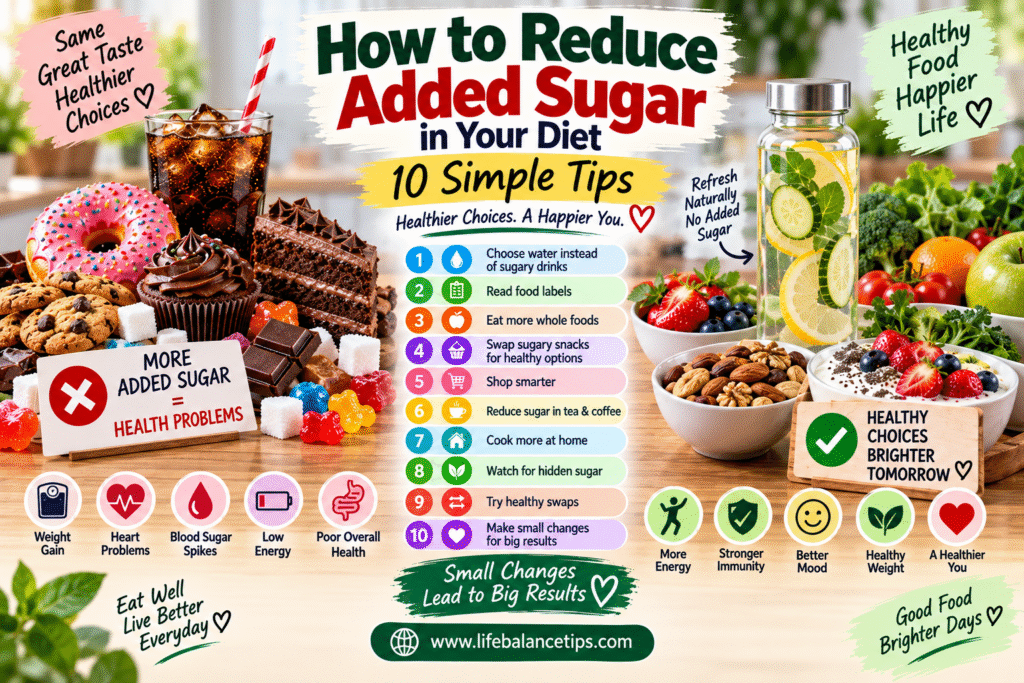
Learning how to reduce added sugar does not have to mean following a strict or complicated diet. Start with simple changes that you can maintain, such as drinking more water, choosing unsweetened foods, checking Nutrition Facts labels, eating whole fruit, and preparing more meals at home.
If you want to know how to reduce added sugar, start with one small change and gradually build healthier habits.
Learning how to reduce added sugar does not require a strict diet; small, consistent changes can make your eating habits easier to manage.
The most important step is consistency. You don’t need to make every change today. Pick one or two habits, practice them regularly, and gradually build from there.
A balanced diet can include a wide variety of nutritious foods while keeping added sugars lower. The CDC recommends emphasizing nutrient-dense foods such as vegetables, fruits, whole grains, protein foods, and healthy fats while limiting added sugars and highly processed foods. (CDC)
Health Disclaimer: This article is for general educational purposes only and should not be considered medical advice. People with diabetes, prediabetes, metabolic conditions, or other health concerns should discuss individual dietary needs with a qualified healthcare professional or registered dietitian.
By Life Balance Tips Team