
Published: September 23, 2026
A new large-scale analysis has added to the growing research on ultra-processed food and long-term health.
The study, published in Family Medicine and Community Health on September 22, 2026, combined data from 51 prospective cohort studies involving 8,819,894 adults from the Americas, Europe, Asia, and Oceania. Researchers examined whether higher consumption of ultra-processed foods was associated with several chronic health outcomes.
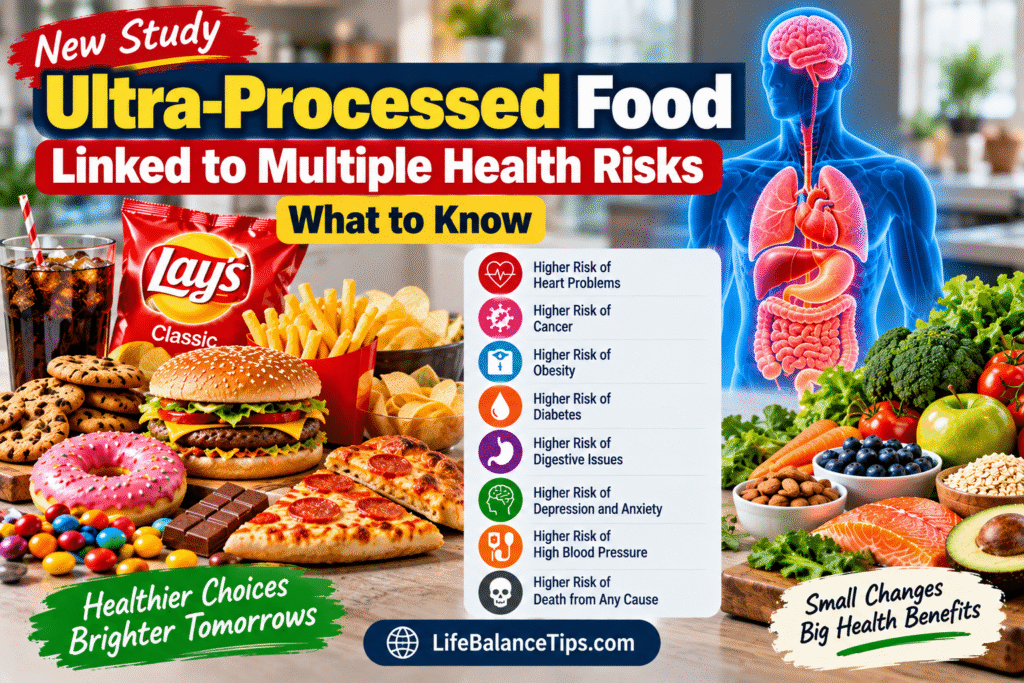
The analysis found that higher ultra-processed food consumption was associated with greater risks of several health outcomes, including cardiovascular events, cancer, obesity or overweight, metabolic syndrome or diabetes, digestive diseases, depression or anxiety, high blood pressure, and death from any cause.
However, there is an important limitation: this type of observational evidence can show an association but cannot by itself prove that ultra-processed foods directly caused these outcomes. Researchers also acknowledged limitations in the underlying studies, including dietary assessment methods and possible influence from other lifestyle factors.
For more practical healthy eating ideas, explore our guide to 10 Healthy Food Swaps for a Healthier Everyday Diet.
What Are Ultra-Processed Foods?
Ultra-processed foods, commonly called UPFs, are foods that have undergone extensive industrial processing and often contain multiple ingredients and additives.
Examples can include:
- Packaged snacks
- Sugary drinks
- Candy
- Instant meals
- Some ready-to-eat foods
- Processed meat products
- Packaged baked goods
- Some sweetened breakfast products
- Other highly formulated convenience foods
The important point is that not every processed food is automatically an ultra-processed food.
Processing can include many different things. Freezing vegetables, pasteurizing milk, cooking beans, or preparing whole-grain foods does not automatically make them ultra-processed.
The classification generally considers the overall formulation and degree of industrial processing rather than simply whether a food has been processed.
The FDA and USDA are currently working to gather information toward a more uniform definition of ultra-processed foods in the United States, showing that the topic remains an active area of discussion.
What Did the New Study Examine?
Researchers searched databases for prospective cohort studies published through the end of April 2026.
After applying their eligibility criteria, they included 51 prospective cohort studies with 8,819,894 participants.
The participants had average ages ranging from approximately 23 to 77 years, and the studies followed people for periods ranging from about 2 to 32 years.
Researchers examined several health outcomes, including:
- Cardiovascular events
- Cancer
- Obesity and overweight
- Metabolic syndrome and diabetes
- Digestive diseases
- Depression and anxiety
- High blood pressure
- Death from any cause
Food intake was assessed using methods such as food-frequency questionnaires, 24-hour dietary recalls, and dietary histories.
Because this was a pooled analysis of observational studies, the findings should be interpreted as evidence of associations, rather than proof that eating ultra-processed food directly causes a particular disease.
What Did Researchers Find?
The analysis found that higher ultra-processed food intake was associated with greater risks across several health outcomes.
According to the study report, high consumption was associated with:
- 24% higher risk of cardiovascular events
- 12% higher risk of cancer
- 23% higher risk of obesity or overweight
- 24% higher risk of metabolic syndrome or diabetes
- 27% higher risk of depression or anxiety
- 31% higher risk of digestive diseases
- 11% higher risk of high blood pressure
- 18% higher risk of death from any cause
These percentages describe associations observed in the pooled analysis; they should not be interpreted as proof that ultra-processed foods directly caused these outcomes.
What About Every Additional 100 Grams?
One of the more widely reported findings from the analysis involved the amount of ultra-processed food consumed.
The researchers found that each additional 100 grams per day of ultra-processed food intake was associated with greater risks of several outcomes.
The reported associations included:
- 14% higher risk of cardiovascular events
- 4% higher risk of cancer
- 3% higher risk of death from any cause
- 2% higher risk of metabolic syndrome or diabetes
Again, these are statistical associations, not evidence that adding exactly 100 grams of a particular food will produce those outcomes in an individual.
Different ultra-processed foods can also have very different nutritional profiles, which makes the category complicated.
Why Is the Study Important?
The study is notable mainly because of its size.
Combining information from more than 8.8 million adults allows researchers to examine patterns across a very large population.
The studies included participants from several regions of the world and followed people for different lengths of time. This gives researchers a broader picture of the relationship between ultra-processed food consumption and long-term health outcomes.
At the same time, a large sample does not automatically eliminate all research limitations.
The quality of a meta-analysis depends partly on the quality and design of the studies included in it.
Does the Study Prove Ultra-Processed Foods Cause Disease?
No.
This is one of the most important points for readers to understand.
The analysis included prospective cohort studies. These studies can follow people over time and identify relationships between exposures and later health outcomes, but they cannot always completely separate one dietary factor from all other lifestyle factors.
People who eat more ultra-processed food may also differ in other ways, such as physical activity, overall dietary pattern, socioeconomic circumstances, smoking, alcohol use, sleep, or other health behaviors.
The researchers themselves acknowledged that broader lifestyle and behavioral factors may be difficult to fully adjust for.
An independent expert reaction also emphasized that a very large meta-analysis cannot eliminate bias or confounding present in the individual studies.
Therefore, the safest interpretation is that higher ultra-processed food consumption was associated with several health risks in this analysis.
Should You Completely Avoid Ultra-Processed Foods?
The new study does not establish that every ultra-processed food needs to be completely eliminated.
Instead, it adds to a broader body of research examining dietary patterns and health.
The National Heart, Lung, and Blood Institute has previously noted that research on ultra-processed foods is complex and incomplete, and that some ultra-processed foods may carry different risks from others.
For everyday eating, it can be more practical to focus on the overall quality of your diet rather than becoming concerned about one food category alone.
A balanced eating pattern can include:
- Fruits
- Vegetables
- Whole grains
- Beans and lentils
- Nuts and seeds
- Eggs
- Fish
- Lean protein foods
- Plain or minimally processed dairy foods
- Other nutrient-rich foods
Simple Ways to Reduce Ultra-Processed Food Intake
If you want to eat fewer ultra-processed foods, you do not necessarily need to change your entire diet overnight.
Small changes can be easier to maintain.
1. Choose Whole Fruit More Often
Instead of regularly choosing sweetened fruit-flavored products, try whole fruits such as:
- Apples
- Bananas
- Oranges
- Berries
- Pears
- Melons
Whole fruit provides fiber and can be an easy snack or addition to a meal.
2. Replace Sugary Drinks
Sugary sodas, sweetened energy drinks, and other sugary beverages can contribute substantial amounts of added sugar.
Water, sparkling water without added sugar, or unsweetened beverages can be simple alternatives.
3. Choose Simple Breakfast Foods
Instead of relying heavily on highly sweetened breakfast products, consider:
- Oatmeal
- Eggs
- Plain yogurt with fruit
- Whole-grain toast
- Fruit and nuts
You can combine these foods to create a balanced breakfast.
4. Add More Vegetables
Vegetables can make meals more filling and nutritious.
Try adding:
- Spinach
- Broccoli
- Carrots
- Bell peppers
- Tomatoes
- Cabbage
- Cauliflower
Fresh, frozen, or appropriately stored vegetables can all be useful choices.
5. Cook More Meals at Home
Preparing more meals at home can give you greater control over ingredients.
Simple meals such as rice with vegetables and beans, lentil soup, grilled fish with vegetables, or eggs with whole-grain toast can be practical options.
6. Read Food Labels
When buying packaged foods, check the ingredient list and Nutrition Facts label.
Pay attention to:
- Added sugars
- Sodium
- Saturated fat
- Fiber
- Protein
- Serving size
A packaged food is not automatically unhealthy simply because it has been processed.
The overall nutritional profile matters.
What Are Minimally Processed Foods?
Minimally processed foods generally remain close to their original form while undergoing basic preparation such as washing, cutting, freezing, drying, or pasteurization.
Examples include:
- Fresh fruits
- Fresh vegetables
- Frozen vegetables
- Plain oats
- Eggs
- Plain yogurt
- Beans
- Lentils
- Nuts
- Seeds
- Fish
- Fresh or frozen meat
Choosing more foods like these can make it easier to build meals around nutrient-dense ingredients.
Is All Processed Food Bad?
No.
This distinction is important.
Processed food and ultra-processed food are not identical terms.
Some foods undergo processing for safety, convenience, preservation, or nutritional reasons.
For example, pasteurized milk, frozen vegetables, canned beans, and whole-grain bread can all be processed in some way without fitting the same category as highly formulated ultra-processed products.
The new study is specifically examining the relationship between ultra-processed food consumption, not all food processing.
What About Packaged Foods?
Packaged foods can vary greatly.
Some packaged foods can be nutritious and convenient, while others may contain substantial amounts of added sugar, sodium, saturated fat, or other ingredients.
Instead of automatically avoiding everything packaged, look at the nutrition information and ingredient list.
For example, a package of plain frozen vegetables can be a convenient addition to a healthy meal.
A highly sweetened snack product may offer a different nutritional profile.
The goal is to consider the food as a whole rather than judging it only by whether it comes in a package.
What Does the Study Mean for Weight Management?
The analysis found an association between higher ultra-processed food intake and obesity or overweight.
However, this does not mean that one particular ultra-processed food automatically causes weight gain.
Weight is influenced by many factors, including overall food intake, physical activity, sleep, genetics, medications, health conditions, and other lifestyle factors.
A practical approach is to build meals around nutritious foods and pay attention to hunger, fullness, portions, and overall eating patterns.
What About Heart Health?
The study found that higher ultra-processed food consumption was associated with a higher risk of cardiovascular events.
However, heart health is also influenced by many other factors.
A heart-conscious eating pattern can emphasize:
- Vegetables
- Fruits
- Whole grains
- Beans
- Nuts and seeds
- Fish
- Unsaturated fats
It can also involve limiting excess sodium, added sugars, and foods high in saturated fat.
These broader dietary principles are more useful than focusing on one individual food.
Why the Research Has Limitations
The researchers acknowledged several limitations.
One major issue is how food intake was measured.
The included studies relied on methods such as food-frequency questionnaires and dietary recalls. These methods depend partly on people’s ability to accurately remember and report what they eat.
The researchers also noted that ultra-processed food consumption often occurs alongside broader lifestyle and behavioral patterns that can be difficult to completely account for.
Another important limitation is that the analysis included adults and did not evaluate children under 18.
The findings therefore should not automatically be applied to children or teenagers.
What Should Readers Take Away?
The new research adds to evidence that higher consumption of ultra-processed foods is associated with several health outcomes.
But the findings should not be interpreted as proof that every ultra-processed food causes disease or that eliminating all processed foods is necessary.
A more useful approach is to focus on the overall dietary pattern.
Try to make nutrient-rich foods a regular part of meals while reducing reliance on highly formulated foods when practical.
Small changes can include choosing fruit instead of a sugary snack, water instead of a sugary drink, oatmeal instead of highly sweetened breakfast products, or a homemade meal instead of a highly processed ready-to-eat option.
Key Takeaways
The latest study provides several important points:
- Researchers analyzed 51 prospective cohort studies.
- The studies included approximately 8.82 million adults.
- Higher ultra-processed food intake was associated with multiple health outcomes.
- Higher intake was associated with cardiovascular events, cancer, obesity or overweight, metabolic syndrome or diabetes, digestive diseases, depression or anxiety, high blood pressure, and death from any cause.
- Each additional 100 grams per day was associated with higher risks for several outcomes.
- The study does not prove causation.
- Dietary assessment and other lifestyle factors are important limitations.
- Not all processed foods are ultra-processed.
- A balanced diet should focus on a variety of nutrient-rich foods rather than a single food category.
Frequently Asked Questions
What are ultra-processed foods?
Ultra-processed foods are highly formulated products that undergo extensive industrial processing and often contain multiple ingredients and additives. Examples can include some packaged snacks, sugary drinks, instant foods, and ready-to-eat products.
What did the new study find?
The study found that higher ultra-processed food consumption was associated with greater risks of several chronic health outcomes and death from any cause.
Does the study prove that ultra-processed food causes cancer?
No. The study identifies an association between higher intake and several health outcomes, but it cannot by itself establish that ultra-processed food directly caused cancer or another disease.
How many people were included?
The meta-analysis included 8,819,894 adults from 51 prospective cohort studies.
What happened with every additional 100 grams of ultra-processed food?
Each additional 100 grams per day was associated with higher risks of cardiovascular events, cancer, death from any cause, and metabolic syndrome or diabetes in the analysis.
Should I stop eating all processed foods?
Not necessarily. Processed and ultra-processed foods are not the same category. A practical approach is to emphasize nutritious foods and reduce reliance on highly formulated foods when possible.
What are some healthier alternatives?
Depending on the food, alternatives can include whole fruit, vegetables, oats, beans, lentils, nuts, eggs, plain yogurt, whole grains, fish, and simple homemade meals.
Can packaged food be healthy?
Yes. Some packaged foods can be nutritious. Check the Nutrition Facts label and ingredient list rather than assuming every packaged food is unhealthy.
For more information about ultra-processed foods and current U.S. nutrition policy, visit the U.S. Food and Drug Administration.
Final Thoughts
The latest research adds to the growing evidence surrounding ultra-processed food and long-term health.
The analysis was unusually large, involving more than 8.8 million adults across 51 prospective cohort studies. Higher consumption was associated with several chronic health outcomes, but the research cannot establish that ultra-processed food directly caused those outcomes.
For everyday eating, the practical message is not to fear every packaged food. Instead, focus on building meals around fruits, vegetables, whole grains, beans, nuts, seeds, and other nutrient-rich foods, while reducing dependence on highly formulated foods when practical.
Healthy eating is about the overall pattern, not perfection.
Source
This article is based primarily on the peer-reviewed study published in Family Medicine and Community Health:
“Ultra-processed food consumption and risk of multiple chronic diseases among 8,819,894 adults from 51 prospective cohorts: a dose-response meta-analysis.” DOI: 10.1136/fmch-2026-003925.
Health Disclaimer
This article is for general educational and informational purposes only. It is not medical advice and does not diagnose, treat, or prevent any disease. Research findings may change as new evidence becomes available. If you have a medical condition or specific nutrition concerns, speak with a qualified healthcare professional or registered dietitian.