
Low energy, constant tiredness, dizziness, or shortness of breath can sometimes be linked to low hemoglobin levels. Hemoglobin is an important protein found in red blood cells that carries oxygen from your lungs to every part of your body. When your hemoglobin level drops, your organs and muscles receive less oxygen, making you feel weak and exhausted.
The good news is that many people can improve their hemoglobin levels naturally by eating a balanced diet rich in iron, vitamins, and other essential nutrients. Choosing the right foods not only supports healthy blood production but also improves energy, immunity, and overall well-being.
In this complete guide, you’ll discover the best foods to increase hemoglobin naturally, understand why hemoglobin matters, learn the common causes of low hemoglobin, and get practical nutrition tips to support healthy blood.
Quick Note: If you have severe anemia, persistent fatigue, or very low hemoglobin levels, consult your healthcare provider. Diet can support healthy blood production, but some people may also require medical treatment or iron supplements.
What Is Hemoglobin?
Hemoglobin is a protein inside red blood cells that contains iron. Its primary job is to carry oxygen from the lungs to tissues throughout the body and transport carbon dioxide back to the lungs for removal.
Healthy hemoglobin levels help your body:
- Deliver oxygen efficiently
- Produce energy
- Support brain function
- Keep muscles working properly
- Maintain healthy organs
When hemoglobin levels become too low, your body cannot transport enough oxygen, resulting in fatigue and other health problems.
Normal Hemoglobin Levels
Although normal values may vary slightly between laboratories, general reference ranges include:
| Group | Normal Hemoglobin Level |
| Adult Men | 13.8–17.2 g/dL |
| Adult Women | 12.1–15.1 g/dL |
| Pregnant Women | Around 11 g/dL or higher |
| Children | Varies by age |
If your levels are consistently below the normal range, your healthcare provider may investigate the underlying cause.
Common Signs of Low Hemoglobin
Low hemoglobin develops gradually in many people. Common symptoms include:
- Constant tiredness
- Weakness
- Pale skin
- Shortness of breath
- Frequent headaches
- Dizziness
- Cold hands and feet
- Rapid heartbeat
- Poor concentration
- Brittle nails
If these symptoms continue for several weeks, medical evaluation is recommended.
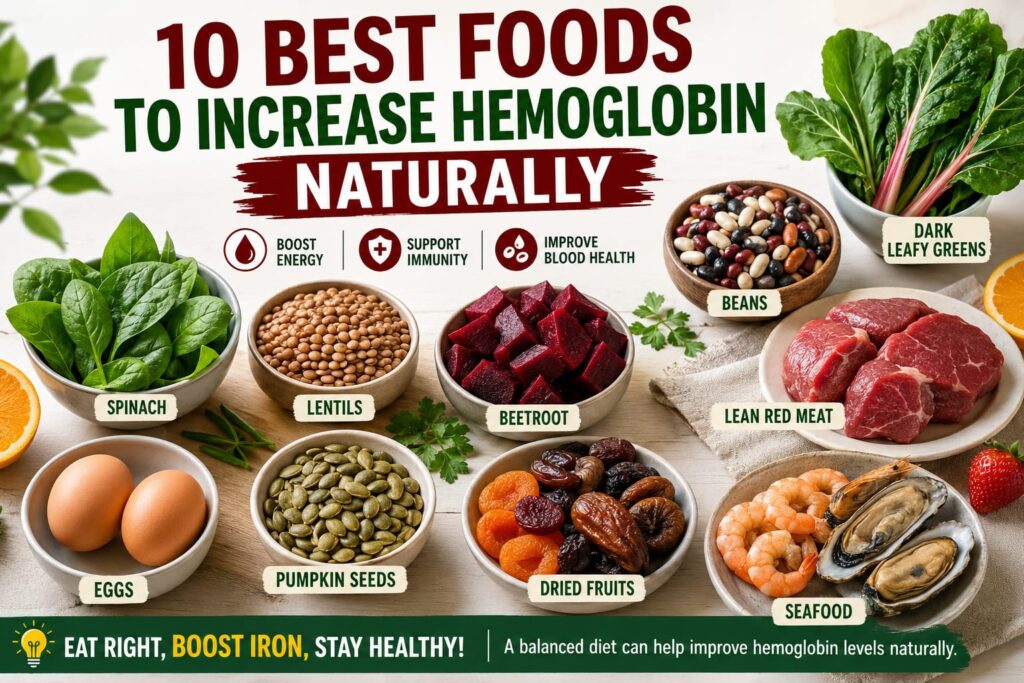
These foods to increase hemoglobin naturally can help support healthy red blood cell production when combined with a balanced diet.
What Causes Low Hemoglobin?
Several factors can reduce hemoglobin levels, including:
- Iron deficiency
- Vitamin B12 deficiency
- Folate deficiency
- Blood loss
- Heavy menstrual periods
- Pregnancy
- Chronic kidney disease
- Digestive disorders affecting nutrient absorption
- Certain medications
- Chronic illnesses
Understanding the cause is important because treatment may differ from person to person.
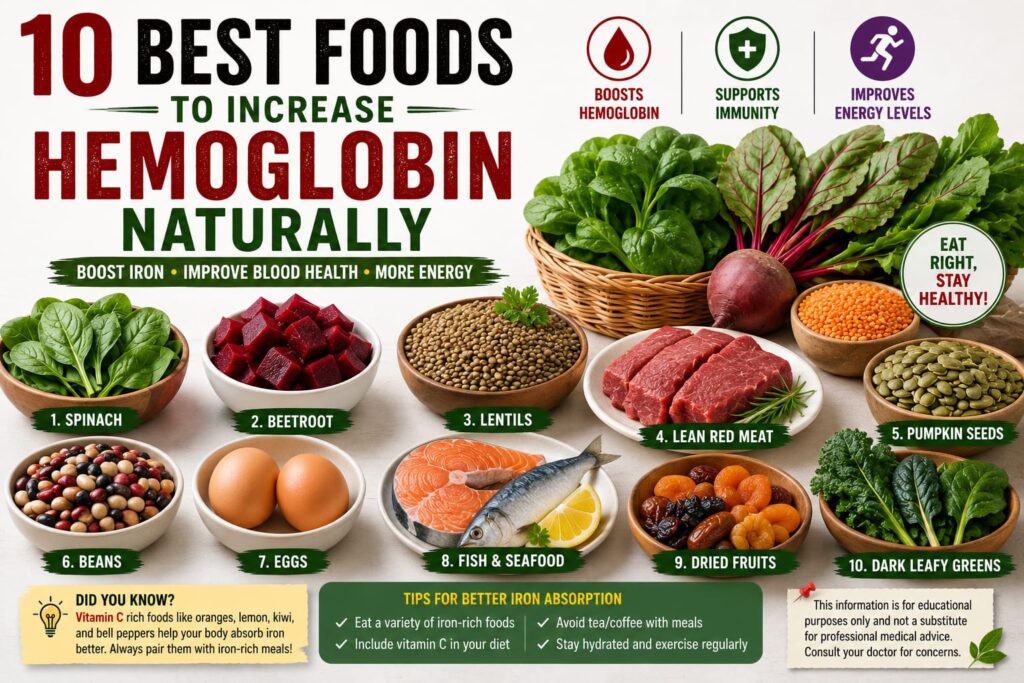
Adding foods to increase hemoglobin naturally to your daily meals may improve your iron intake over time.
How Foods Help Increase Hemoglobin Naturally
Your body needs several nutrients to produce healthy red blood cells:
- Iron – Essential for making hemoglobin.
- Vitamin C – Helps the body absorb iron more effectively.
- Vitamin B12 – Supports healthy red blood cell production.
- Folate – Needed to create new blood cells.
- Copper – Helps the body use iron properly.
- Protein – Supports blood cell formation.
A balanced diet that includes these nutrients can gradually improve hemoglobin levels over time.
1. Spinach
Spinach is one of the most popular foods to increase hemoglobin naturally because it provides iron, folate, vitamin C, and antioxidants that support healthy blood production.
Benefits
- Rich in non-heme iron
- Excellent source of folate
- Contains vitamin A and vitamin C
- Supports overall blood health
Best Ways to Eat Spinach
- Add to smoothies
- Mix into omelets
- Prepare soups
- Add to salads
- Cook lightly as a side dish
Tip: Pair spinach with oranges, lemons, strawberries, or bell peppers to improve iron absorption.
Experts recommend choosing foods to increase hemoglobin naturally before relying on supplements, unless advised by a healthcare provider.
2. Beetroot
Beetroot is often recommended for people looking to improve blood health. While beetroot is not very high in iron, it contains folate, vitamin C, nitrates, antioxidants, and other nutrients that support healthy circulation and red blood cell production. This makes it a valuable addition to a diet focused on foods to increase hemoglobin naturally.
Benefits of Beetroot
- Rich in folate for healthy red blood cells
- Contains vitamin C, which supports iron absorption
- Provides natural nitrates that improve blood flow
- High in antioxidants that protect cells from oxidative stress
- Supports overall heart and vascular health
Best Ways to Eat Beetroot
- Fresh beetroot salad with lemon juice
- Roasted beetroot as a side dish
- Homemade beetroot soup
- Add grated beetroot to sandwiches or wraps
- Blend into smoothies with carrots and oranges
Expert Tip: Pair beetroot with spinach and citrus fruits for a nutrient-rich meal that supports healthy hemoglobin production.
Explore our guide to Foods to Improve Blood Circulation Naturally.
Don’t miss our article on Foods to Boost Immunity Naturally in Summer.
Read our complete article on Zinc Rich Foods.
Explore our guide to Foods to Improve Blood Circulation Naturally.
For additional evidence-based health information, visit trusted organizations like the World Health Organization (WHO) and the National Institutes of Health (NIH).
Always rely on reputable medical sources and consult a qualified healthcare professional for personalized health advice
The best foods to increase hemoglobin naturally also provide important vitamins and minerals that support overall health.
3. Lentils (Masoor, Moong, and Other Lentils)
Lentils are among the best plant-based foods to increase hemoglobin naturally. They are packed with iron, protein, folate, fiber, and essential minerals that help your body produce healthy red blood cells.
Benefits of Lentils
- Excellent source of plant-based iron
- Rich in folate and protein
- High in dietary fiber for digestive health
- Helps maintain steady energy levels
- Budget-friendly and easy to include in daily meals
Best Ways to Eat Lentils
- Lentil soup
- Dal with brown rice
- Lentil salad
- Mixed bean and lentil bowls
- Lentil curry with vegetables
Nutrition Tip: Adding tomatoes or lemon juice to lentils increases iron absorption because of their vitamin C content.
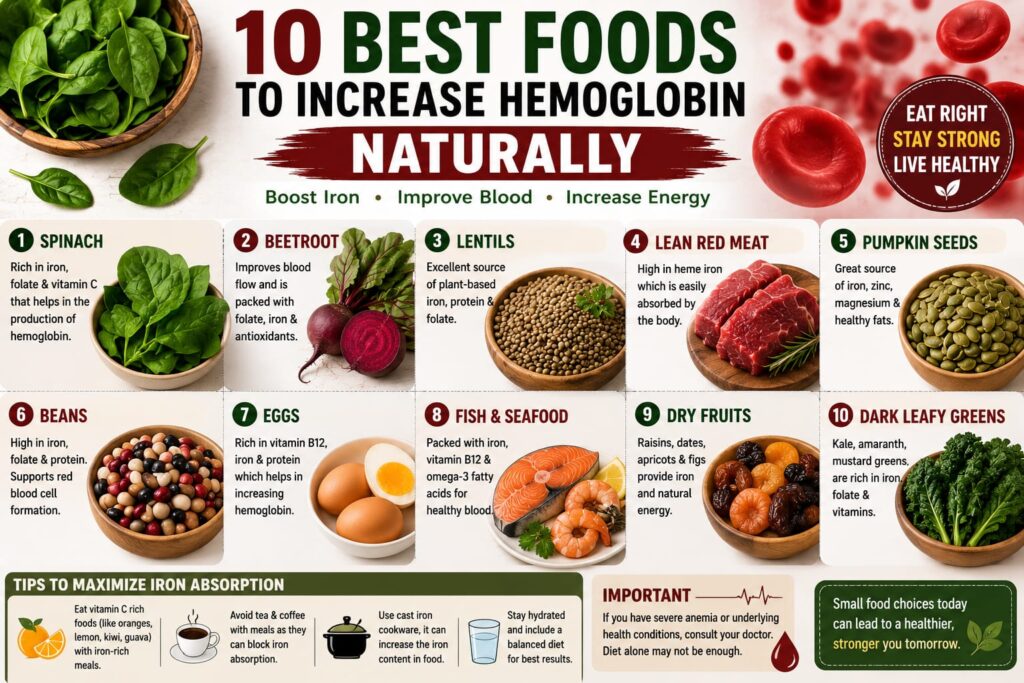
4. Lean Red Meat
Lean red meat is one of the richest sources of heme iron, the type of iron your body absorbs more easily than plant-based iron.
Benefits
- Highly absorbable heme iron
- Excellent source of vitamin B12
- Rich in zinc and protein
- Supports healthy red blood cell production
- Helps improve iron stores in people with deficiency
Healthy Serving Tips
- Choose lean cuts
- Grill or bake instead of frying
- Limit processed meats
- Eat moderate portions as part of a balanced diet
- Pair with vegetables and whole grains
Important: People with certain health conditions should follow their healthcare provider’s advice regarding red meat consumption.
5. Pumpkin Seeds
Pumpkin seeds are small but incredibly nutritious. They provide iron, magnesium, zinc, protein, and healthy fats, making them one of the easiest snacks to support healthy blood.
Benefits
- Good source of plant-based iron
- Rich in magnesium and zinc
- Provides healthy fats
- Supports immune function
- Easy to add to many meals
Easy Ways to Eat Pumpkin Seeds
- Sprinkle over oatmeal
- Add to yogurt
- Mix into smoothies
- Use in homemade trail mix
- Add to salads
A handful of pumpkin seeds makes a healthy snack while contributing important nutrients for hemoglobin production.
6. Beans
Beans—including kidney beans, black beans, chickpeas, and white beans—are excellent foods for low hemoglobin. They provide iron, protein, folate, and fiber while supporting heart and digestive health.
Benefits
- Rich in iron and folate
- High in plant protein
- Excellent source of fiber
- Helps maintain stable blood sugar
- Supports healthy digestion
Healthy Ways to Enjoy Beans
- Bean salad
- Chickpea curry
- Black bean soup
- Homemade hummus
- Mixed bean chili
Iron Absorption Tip: Eat beans with foods rich in vitamin C such as tomatoes, bell peppers, kiwi, oranges, or strawberries for better iron absorption.
A healthy eating plan that includes foods to increase hemoglobin naturally may help reduce the risk of iron deficiency.
Nutrients That Work Together to Increase Hemoglobin
Improving hemoglobin isn’t just about eating more iron. Several nutrients work together to support healthy red blood cell production.
| Nutrient | Why It Matters | Best Food Sources |
| Iron | Builds hemoglobin | Spinach, lentils, lean red meat, beans |
| Vitamin C | Helps absorb iron | Oranges, kiwi, strawberries, bell peppers |
| Folate | Supports red blood cell production | Spinach, lentils, asparagus |
| Vitamin B12 | Helps form healthy red blood cells | Eggs, fish, dairy, lean meat |
| Copper | Helps the body use iron | Nuts, seeds, whole grains |
| Protein | Supports blood cell formation | Eggs, beans, fish, poultry |
Smart Diet Tip
For the best results, include foods to increase hemoglobin naturally in a balanced meal rather than relying on a single food. Combining iron-rich foods with vitamin C sources can significantly improve iron absorption and help support healthy hemoglobin levels over time.
7. Eggs
Eggs are a nutritious food that provides high-quality protein, vitamin B12, folate, iron, and other essential nutrients needed for healthy red blood cell production. While eggs are not the richest source of iron, they play an important role in a balanced diet designed to support healthy hemoglobin levels.
Benefits of Eggs
- Rich in vitamin B12
- Good source of high-quality protein
- Contains iron and folate
- Helps support muscle health and energy
- Easy to prepare and affordable
Healthy Ways to Eat Eggs
- Boiled eggs
- Vegetable omelet
- Scrambled eggs with spinach
- Whole-grain egg sandwich
- Egg salad with leafy greens
Healthy Tip: Pair eggs with tomatoes, bell peppers, or fresh fruit to add vitamin C to your meal.
8. Shellfish and Fatty Fish
Seafood such as oysters, clams, mussels, salmon, tuna, and sardines provides iron, vitamin B12, protein, and omega-3 fatty acids. These nutrients help maintain healthy blood cells and support overall health.
Benefits
- Excellent source of heme iron
- High in vitamin B12
- Rich in omega-3 fatty acids
- Supports heart and brain health
- Provides complete protein
Best Choices
- Salmon
- Sardines
- Tuna
- Oysters
- Clams
- Mussels
Expert Tip: Choose grilled, baked, or steamed seafood instead of deep-fried options for the healthiest results.
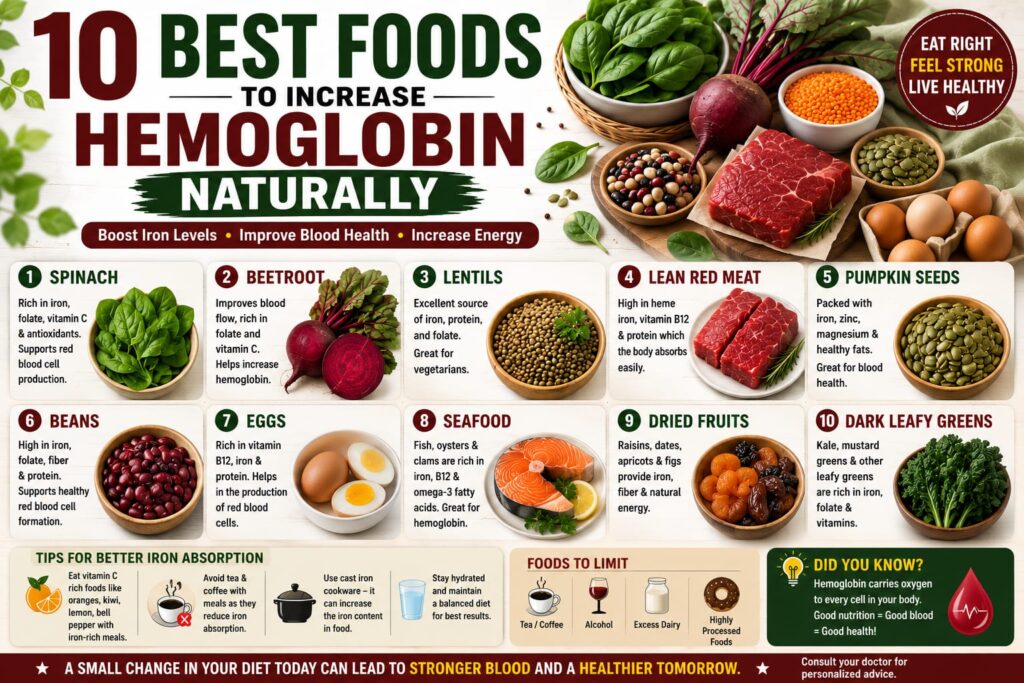
9. Dried Fruits
Dried fruits are convenient snacks that provide iron, fiber, potassium, and antioxidants. Although they should be eaten in moderation because of their natural sugar content, they can support a healthy diet.
Best Dried Fruits
- Raisins
- Dried apricots
- Dates
- Prunes
- Figs
Benefits
- Natural source of iron
- Provides quick energy
- Rich in fiber
- Supports digestive health
- Easy snack for busy days
Enjoy a small handful with nuts for a balanced snack.
10. Dark Leafy Greens
Dark leafy vegetables are among the healthiest foods to increase hemoglobin naturally. Besides spinach, vegetables like kale, Swiss chard, collard greens, and mustard greens provide iron, folate, vitamin K, and antioxidants.
Benefits
- Rich in iron and folate
- Supports healthy blood production
- High in vitamins A, C, and K
- Low in calories
- Excellent source of antioxidants
Best Ways to Include Them
- Green smoothies
- Fresh salads
- Stir-fries
- Soups
- Side dishes
Eating a variety of leafy greens throughout the week helps ensure a wide range of nutrients.
Foods That May Reduce Iron Absorption
Some foods and drinks can interfere with iron absorption if consumed at the same time as iron-rich meals.
Limit These Around Iron-Rich Meals
- Tea
- Coffee
- Excess calcium supplements
- Large amounts of dairy
- Alcohol
- Highly processed foods
You don’t need to avoid these completely—just try to consume them 1–2 hours before or after iron-rich meals.
Lifestyle Tips to Support Healthy Hemoglobin
Diet works best when combined with healthy daily habits.
1. Eat Balanced Meals
Include iron, protein, vitamin C, folate, and vitamin B12 in your daily diet.
2. Stay Hydrated
Drinking enough water supports overall health and proper blood circulation.
3. Exercise Regularly
Moderate physical activity helps improve circulation and overall wellness.
4. Avoid Smoking
Smoking can negatively affect oxygen delivery throughout the body.
5. Get Regular Health Checkups
If you continue to experience fatigue or symptoms of low hemoglobin, ask your healthcare provider for blood tests to determine the underlying cause.
Who Is More Likely to Have Low Hemoglobin?
Some people have a higher risk of developing low hemoglobin, including:
- Women with heavy menstrual periods
- Pregnant women
- Children during periods of rapid growth
- Older adults
- Vegetarians and vegans (if iron intake is low)
- People with digestive disorders
- Individuals with chronic kidney disease
- Frequent blood donors
If you belong to one of these groups, regular health checkups and a nutrient-rich diet are especially important.
Quick Summary
| Include More | Limit Around Meals |
| Spinach | Tea |
| Lentils | Coffee |
| Lean Red Meat | Large amounts of dairy |
| Pumpkin Seeds | Calcium supplements |
| Beans | Alcohol |
| Eggs | Highly processed foods |
| Fish & Seafood | |
| Dried Fruits | |
| Dark Leafy Greens |
Frequently Asked Questions (FAQs)
1. What foods increase hemoglobin the fastest?
Iron-rich foods such as lean red meat, spinach, lentils, beans, pumpkin seeds, eggs, shellfish, and dark leafy greens are among the best foods to increase hemoglobin naturally. Pair them with vitamin C-rich foods like oranges or bell peppers for better iron absorption.
2. Which fruit is best for increasing hemoglobin?
Fruits rich in vitamin C—such as oranges, kiwi, strawberries, guava, and grapefruit—help your body absorb iron more efficiently. Dried fruits like raisins, dates, and apricots also provide small amounts of iron.
3. Can I increase hemoglobin naturally without supplements?
Yes. Many people can improve their hemoglobin by eating a balanced diet rich in iron, vitamin B12, folate, protein, and vitamin C. However, if you have moderate to severe anemia, your healthcare provider may recommend iron supplements or other treatments.
4. How long does it take to increase hemoglobin?
It depends on the cause and severity of the deficiency. With proper nutrition and medical guidance, some people notice improvement within a few weeks, while full recovery may take several months.
5. Is spinach enough to increase hemoglobin?
Spinach is a healthy source of iron and folate, but it’s best to eat a variety of iron-rich foods rather than relying on spinach alone. Combining spinach with vitamin C-rich foods helps improve iron absorption.
6. Does drinking tea reduce iron absorption?
Yes. Tea and coffee contain compounds that can reduce iron absorption, especially when consumed with meals. Try drinking them at least 1–2 hours before or after iron-rich meals.
7. Which vitamin helps increase hemoglobin?
Iron is essential for making hemoglobin, while vitamin C, vitamin B12, and folate support healthy red blood cell production and improve iron absorption.
8. When should I see a doctor?
Consult a healthcare professional if you experience persistent fatigue, dizziness, shortness of breath, chest pain, fainting, unusually heavy bleeding, or if your blood test shows very low hemoglobin levels.
Final Thoughts
Maintaining healthy hemoglobin levels is essential for delivering oxygen throughout your body, supporting energy production, and keeping your organs functioning properly. Fortunately, adding the best foods to increase hemoglobin naturally to your daily diet can make a meaningful difference over time.
Focus on eating a balanced diet that includes spinach, lentils, lean red meat, beans, pumpkin seeds, eggs, seafood, dried fruits, and dark leafy greens. Pair these foods with vitamin C-rich fruits and vegetables to maximize iron absorption, and avoid drinking tea or coffee immediately after meals.
Remember, while nutrition plays a key role, persistent low hemoglobin should always be evaluated by a healthcare professional to identify and treat the underlying cause.
Small, consistent dietary changes today can help support healthy blood, improve your energy levels, and contribute to better overall health.
Medical Disclaimer
This article is for educational purposes only and should not be considered medical advice. Always consult a qualified healthcare professional before making significant dietary changes, taking supplements, or treating any medical condition.
By Life Balance Tips Team