
Choosing a healthy dinner can make it easier to maintain a balanced eating routine without following a complicated diet. Dinner is an opportunity to include vegetables, protein, whole grains, healthy fats, and other nutritious foods in one satisfying meal.
A good dinner does not have to be expensive, time-consuming, or boring. Simple combinations such as grilled fish with vegetables, lentils with whole grains, or chicken with a colorful salad can provide a variety of nutrients.
The key is to focus on the overall quality and balance of your meal rather than searching for one “perfect” food. Current CDC healthy-eating guidance emphasizes vegetables, fruits, protein foods, whole grains, healthy fats, and dairy without added sugars while limiting highly processed foods, added sugars, sodium, and saturated fat. (CDC)
This guide shares 15 healthy dinner ideas that are practical for everyday eating, along with simple tips for portions, meal planning, and better food choices.
Health Disclaimer: This article provides general nutrition information for educational purposes and is not a substitute for personalized medical or dietary advice.
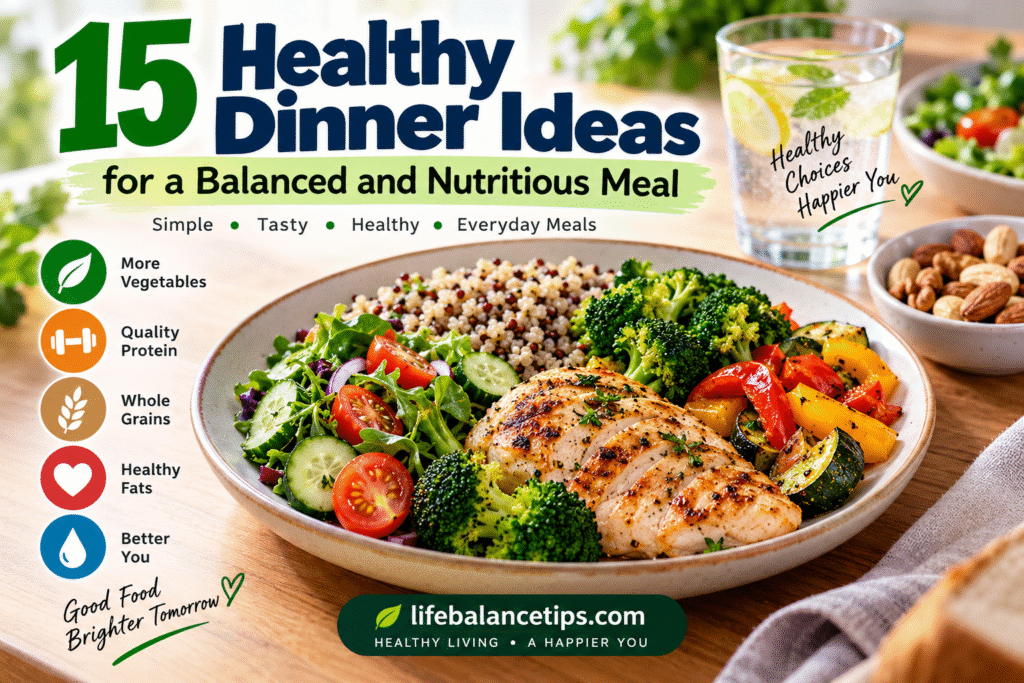
What Makes a Healthy Dinner?
A nutritious evening meal usually contains a combination of different food groups.
A simple plate can include:
- Vegetables or salad
- A protein-rich food
- Whole grains or another nutritious carbohydrate
- A small amount of healthy fat
- Water or another low-sugar beverage
Protein options can include eggs, fish, chicken, beans, lentils, tofu, paneer, nuts, and seeds. Whole grains, vegetables, fruits, and legumes can also contribute fiber and important nutrients. (CDC)
The exact amount you need depends on factors such as age, activity level, body size, food preferences, and individual health needs.
15 Healthy Dinner Ideas to Try
1. Grilled Chicken With Vegetables and Brown Rice
Grilled chicken, colorful vegetables, and brown rice make a simple and balanced combination.
You can use vegetables such as:
- Broccoli
- Carrots
- Bell peppers
- Green beans
- Cauliflower
- Zucchini
Season the chicken with herbs, garlic, lemon, black pepper, or other spices instead of relying heavily on salty sauces.
Brown rice provides a whole-grain option, while vegetables add fiber and a variety of vitamins and minerals.
This type of meal works well when you want something filling without making dinner overly complicated.
2. Lentil Dal With Vegetables and Roti
For an Indian-style meal, dal with vegetables and whole-wheat roti can be a nutritious choice.
Lentils provide plant-based protein and fiber. Add vegetables such as spinach, carrots, peas, cauliflower, or beans to increase variety.
You can also serve a small salad or plain yogurt on the side.
Simple tip
Instead of making dal extremely oily, use a moderate amount of oil and add herbs and spices for flavor.
3. Grilled Fish With Salad and Whole Grains
Fish can be a useful protein option for dinner.
Try grilled or baked:
- Salmon
- Sardines
- Trout
- Mackerel
- Other locally available fish
Pair it with a large salad and a serving of brown rice, quinoa, or another whole grain.
Avoid relying on deep frying as your everyday preparation method. Baking, grilling, steaming, or air frying can be useful alternatives.
4. Chickpea and Vegetable Bowl
A chickpea bowl is a simple vegetarian dinner idea.
Combine:
- Cooked chickpeas
- Cucumber
- Tomato
- Carrot
- Leafy greens
- Onion
- Whole grains
- A small amount of olive oil or another preferred dressing
You can season it with lemon juice, cumin, coriander, black pepper, or other herbs and spices.
Chickpeas provide plant protein and fiber, while vegetables add color and nutrients.
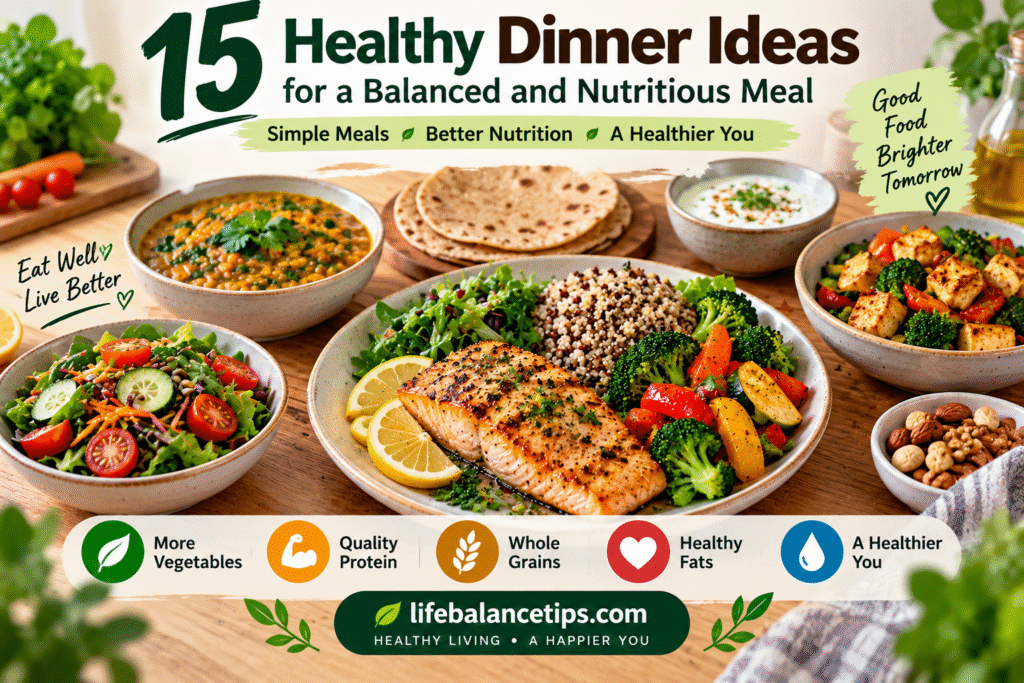
5. Vegetable and Paneer Stir-Fry
Paneer can be combined with a variety of vegetables for a satisfying dinner.
Try using:
- Paneer
- Bell peppers
- Broccoli
- Mushrooms
- Carrots
- Cabbage
- Green beans
Cook with a moderate amount of oil and use garlic, ginger, herbs, and spices for flavor.
If you want more fiber, serve the dish with brown rice or another whole-grain option.
6. Egg and Vegetable Bowl
Eggs are a convenient protein source and can be prepared quickly.
Make an omelet or scrambled eggs with:
- Spinach
- Tomatoes
- Bell peppers
- Mushrooms
- Onions
Serve with whole-grain toast or another nutritious carbohydrate.
For a more filling meal, add a side salad or some cooked vegetables.
This can be particularly useful on busy evenings when you do not have much time for cooking.
7. Bean and Vegetable Curry
Beans can be an affordable source of protein and fiber.
Prepare a simple bean curry with tomatoes, onions, spinach, carrots, or other vegetables.
Serve it with:
- Brown rice
- Whole-wheat roti
- Millet
- Barley
- Another whole grain
Using herbs and spices can add plenty of flavor without requiring large amounts of salt or heavy sauces.
8. Chicken and Vegetable Soup
A homemade chicken and vegetable soup can be a comforting dinner option.
Use chicken with vegetables such as:
- Carrots
- Celery
- Spinach
- Tomatoes
- Green beans
- Cabbage
You can add beans or whole grains to make the soup more substantial.
When preparing soup at home, you have better control over the ingredients and the amount of salt used.
This can help you avoid some of the excess sodium found in highly processed or packaged foods. (CDC)
9. Tofu and Vegetable Bowl
Tofu is another plant-based protein option.
Combine tofu with:
- Broccoli
- Bell peppers
- Mushrooms
- Cabbage
- Carrots
- Leafy greens
Add brown rice, quinoa, or another whole grain if desired.
Use a modest amount of sauce because some prepared sauces can contain considerable sodium or added sugar.
Reading nutrition labels can help you compare packaged sauces and choose lower-sodium options. (CDC)
10. Salmon With Sweet Potato and Greens
Salmon provides protein and omega-3 fatty acids.
A simple dinner can include:
- Baked salmon
- Roasted or steamed sweet potato
- Spinach or another leafy green
- A small salad
You can season salmon with lemon, garlic, herbs, and black pepper.
This combination provides protein, vegetables, and a nutritious carbohydrate source without requiring complicated preparation.
11. Vegetable Khichdi With Yogurt
Khichdi can be made with rice, lentils, vegetables, and spices.
For a more nutrient-dense version, consider adding:
- Carrots
- Peas
- Spinach
- Cauliflower
- Beans
Serve with plain yogurt without added sugar if it fits your dietary needs.
This is a practical option when you want a warm, simple meal that can be prepared in one pot.
12. Whole-Grain Wrap With Chicken and Salad
A whole-grain wrap can make dinner quick and convenient.
Fill it with:
- Grilled chicken
- Lettuce
- Cucumber
- Tomato
- Carrot
- Avocado
- Plain yogurt-based dressing
Avoid making the wrap too heavy with creamy sauces.
You can also replace chicken with beans, chickpeas, tofu, or another protein source.
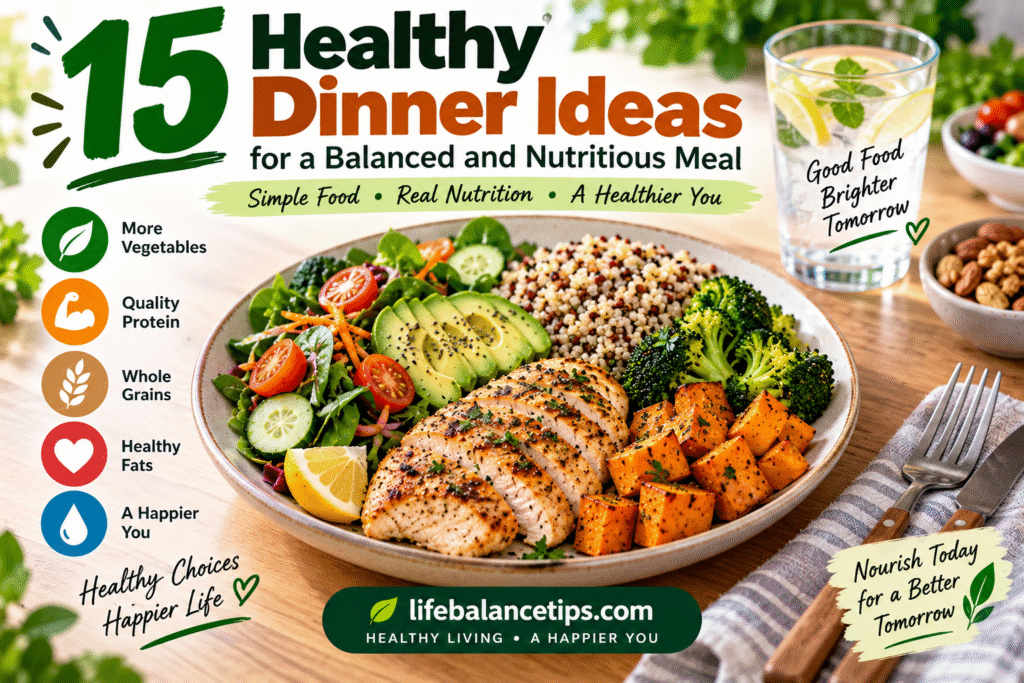
13. Vegetable and Lentil Soup
Lentil soup can be a simple vegetarian dinner that combines protein, fiber, and vegetables.
Add vegetables such as tomatoes, carrots, spinach, onions, and celery.
Season it with cumin, turmeric, garlic, black pepper, coriander, or other spices.
Serve with a small portion of whole-grain bread or roti if needed.
14. Oats and Vegetable Savory Bowl
Oats do not have to be limited to breakfast.
You can prepare savory oats with:
- Oats
- Peas
- Carrots
- Spinach
- Tomatoes
- Onions
- Herbs and spices
Add eggs, tofu, lentils, or another protein source to make the meal more balanced.
This can be an inexpensive option for people who want to experiment with different whole-grain dinner choices.
15. Simple Chicken, Bean and Vegetable Bowl
If you want a more filling meal, combine a moderate portion of chicken with beans and plenty of vegetables.
For example:
Base: Brown rice or another whole grain
Protein: Chicken + beans
Vegetables: Broccoli + cucumber + tomatoes + leafy greens
Healthy fat: Small amount of avocado or seeds
This combination gives you different food groups in one bowl and can be adjusted according to your appetite and dietary preferences.
How to Build a Balanced Dinner Plate
Instead of memorizing complicated nutrition rules, think about the overall composition of your plate.
Start With Vegetables
Try to make vegetables an important part of the meal.
Good choices include:
- Broccoli
- Spinach
- Carrots
- Cabbage
- Tomatoes
- Bell peppers
- Cauliflower
- Green beans
Fresh, frozen, or low-sodium canned vegetables can all be practical options. (CDC)
Add Protein
Include a protein source such as:
- Fish
- Chicken
- Eggs
- Lentils
- Beans
- Chickpeas
- Tofu
- Paneer
- Nuts and seeds
Protein foods can help make a meal more satisfying and provide nutrients needed for normal body functions. (CDC)
Choose a Nutritious Carbohydrate
Whole grains and other minimally processed carbohydrate sources can fit into a balanced meal.
Examples include:
- Brown rice
- Oats
- Whole-wheat roti
- Quinoa
- Barley
- Millets
- Sweet potatoes
Add Healthy Fats in Moderation
Healthy fats can come from:
- Nuts
- Seeds
- Avocado
- Olive oil
- Fatty fish
The amount still matters because fats are calorie-dense.
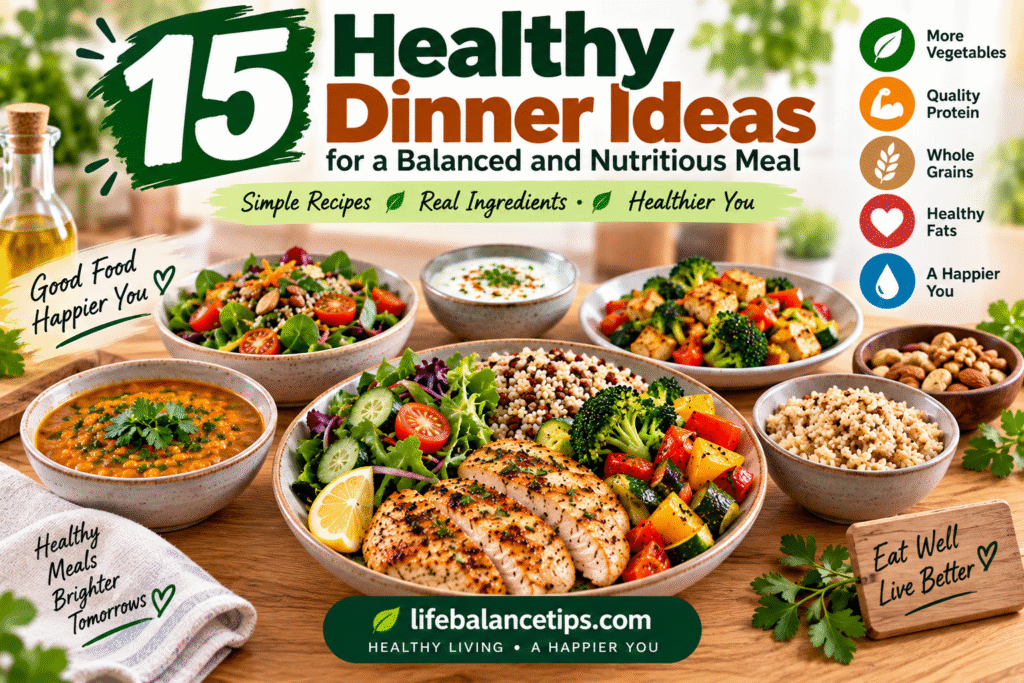
Healthy Dinner Ideas for Weight Management
If weight management is your goal, you do not necessarily need to skip dinner.
Instead, focus on meals that provide plenty of nutrients without relying heavily on highly processed foods.
Useful habits include:
- Include vegetables in your meal.
- Choose a good protein source.
- Prefer whole grains more often.
- Watch large portions.
- Limit sugary drinks.
- Be mindful of sauces and dressings.
- Eat slowly.
- Avoid automatically going back for a second serving.
A healthy eating pattern can support weight management when overall food intake and activity are appropriate for your individual needs. (CDC)
For more healthy eating tips, check out our guide on How to Build a Balanced Plate and learn simple ways to create nutritious meals.
For reliable information about healthy eating and balanced meals, visit the Centers for Disease Control and Prevention (CDC).
Healthy Dinner Ideas for Families
Family meals do not have to be completely different for each person.
You can prepare one basic meal and allow family members to adjust portions or choose from several vegetables.
For example:
Main: Grilled chicken
Carbohydrate: Brown rice or roti
Vegetables: Broccoli, carrots, cucumber and tomatoes
Optional: Plain yogurt or fruit
For children, offering different colorful foods can help them become familiar with a wider variety of nutritious choices. (CDC)
What to Drink With Dinner
Water is a simple choice for most people.
Other options can include:
- Plain sparkling water
- Unsweetened tea
- Unsweetened coffee, depending on the meal and personal preference
- Plain milk, when appropriate
Try to limit sugar-sweetened drinks. Sugary beverages are a common source of added sugar, and replacing them with water is one practical way to reduce sugar intake. (CDC)
Common Dinner Mistakes to Avoid
1. Making Fried Foods the Main Part of Dinner
Fried foods can be enjoyable occasionally, but relying on them every evening can make meals higher in calories and certain fats.
Try baking, grilling, steaming, or air frying more often.
2. Eating Very Few Vegetables
A dinner based mostly on refined carbohydrates may provide less variety than a meal that also includes vegetables and protein.
3. Using Too Much Sauce
Sauces, dressings, and packaged mixes can sometimes add significant sodium, sugar, or calories.
Check labels when using packaged products. (CDC)
4. Eating Directly From Large Packages
If you are having nuts, snacks, or another calorie-dense food, place a reasonable amount in a bowl instead of eating directly from the package.
This makes portions easier to notice.
5. Treating Dinner as a “Cheat Meal”
You do not need an extreme approach to healthy eating.
A balanced meal can include foods you enjoy while still emphasizing nutritious choices.
Easy Tips for Planning Healthy Dinners
Planning ahead can make it much easier to maintain a healthy dinner routine.
Try these simple steps:
Plan 3–4 Main Proteins
For example:
- Chicken
- Fish
- Eggs
- Lentils
Prepare Vegetables in Advance
Wash and cut vegetables so they are ready to cook.
Keep Easy Staples Available
Stock foods such as:
- Oats
- Brown rice
- Whole-wheat flour
- Lentils
- Beans
- Chickpeas
- Frozen vegetables
- Nuts and seeds
Use Leftovers Wisely
Cook a little extra and use leftovers for the next day’s lunch or dinner.
Meal planning can help people make nutritious choices more easily and avoid relying on less healthy convenience meals. (CDC)
Quick Healthy Dinner Comparison
| Dinner | Main Protein | Vegetable Source | Carb Option |
| Chicken bowl | Chicken | Broccoli, peppers | Brown rice |
| Dal and roti | Lentils | Spinach, carrots | Whole-wheat roti |
| Grilled fish | Fish | Salad | Quinoa |
| Chickpea bowl | Chickpeas | Cucumber, tomato | Whole grains |
| Paneer stir-fry | Paneer | Mixed vegetables | Brown rice |
| Egg bowl | Eggs | Spinach, tomato | Whole-grain toast |
| Lentil soup | Lentils | Mixed vegetables | Whole-grain bread |
The best choice depends on your personal preferences, nutritional needs, budget, and lifestyle.
Frequently Asked Questions
1. What is the healthiest dinner to eat?
There is no single healthiest dinner for everyone. A good meal generally includes vegetables, a protein source, a nutritious carbohydrate, and a moderate amount of healthy fat.
2. Can I eat rice for dinner?
Yes. Rice can fit into a balanced diet. You can choose whole-grain options more often and combine rice with vegetables and a protein source.
3. Is eating dinner late unhealthy?
The effect of meal timing can vary between individuals. Rather than focusing only on the clock, pay attention to your overall eating pattern, portion sizes, food quality, and personal routine.
4. What should I eat for dinner if I want to manage my weight?
Choose meals based on vegetables, protein, whole grains or other nutritious carbohydrates, and reasonable portions. Limit sugary drinks and highly processed foods.
5. Are eggs good for dinner?
Eggs can be part of a balanced dinner and provide protein and other nutrients. Combine them with vegetables and a nutritious carbohydrate for a more complete meal.
6. Is dal a good dinner option?
Dal can be an excellent part of dinner because lentils provide protein and fiber. Pairing dal with vegetables and whole grains can create a balanced meal.
7. What is a quick dinner option?
Eggs with vegetables, lentil soup, chickpea bowls, grilled chicken with frozen vegetables, or a whole-grain wrap can all be prepared relatively quickly.
8. Should I avoid carbohydrates at dinner?
Not necessarily. Carbohydrates can be part of a balanced diet. Choose nutritious sources such as whole grains, beans, lentils, vegetables, fruit, and other minimally processed options according to your needs.
Final Thoughts
A healthy dinner does not need to be complicated or expensive. The easiest approach is to build meals around nutritious ingredients that you enjoy and can realistically prepare.
Try to include vegetables, a protein source, a nutritious carbohydrate, and a small amount of healthy fat. Choose water or unsweetened beverages more often, and limit highly processed foods, excessive sodium, added sugars, and saturated fat.
Most importantly, focus on your overall eating pattern rather than trying to make every single meal perfect. Small, consistent improvements can make healthy eating easier to maintain over time.
The 15 ideas in this guide can be mixed and matched according to your preferences. You can replace chicken with beans, rice with millet, fish with tofu, or vegetables according to what is available and affordable.
A balanced, healthy dinner is ultimately one that provides useful nutrients, fits your lifestyle, and helps you maintain a varied eating pattern over time. Current CDC guidance similarly emphasizes nutrient-dense foods, variety, meal planning, and limiting highly processed foods, added sugars, sodium, and saturated fat. (CDC)
Health Disclaimer: This article is for general educational purposes only and does not provide medical advice. If you have diabetes, kidney disease, heart disease, food allergies, digestive conditions, or another medical condition requiring a specific diet, consult a qualified healthcare professional or registered dietitian for personalized guidance.
By Life Balance Tips Team