
Introduction
Magnesium is an essential mineral that plays a vital role in hundreds of processes within the body. From supporting muscle and nerve function to helping maintain healthy bones and energy production, magnesium is crucial for overall well-being. However, many people do not get enough magnesium through their daily diet.
The good news is that there are plenty of magnesium-rich foods that can help you meet your daily nutritional needs naturally. Including these foods in your meals may support heart health, improve muscle function, promote better sleep, and contribute to overall wellness.
In this guide, we’ll explore the top magnesium-rich foods, their benefits, and practical ways to include them in a healthy diet.

Why Is Magnesium Important?
Magnesium is involved in more than 300 biochemical reactions in the body. It helps:
- Support normal muscle function
- Maintain healthy nerve signals
- Promote strong bones
- Support heart health
- Help regulate blood sugar levels
- Contribute to energy production
- Support healthy sleep patterns
A balanced magnesium-rich diet can help ensure your body gets the magnesium it needs for optimal function.
The World Health Organization (WHO) also emphasizes the importance of a balanced diet rich in essential nutrients.
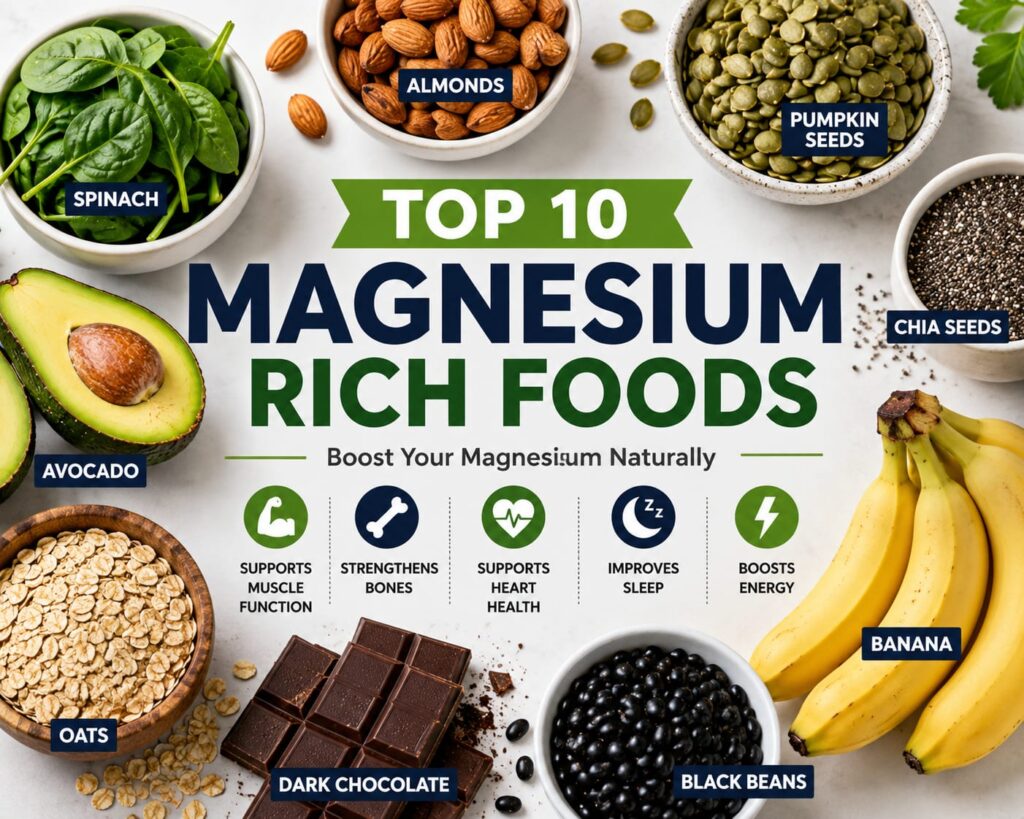
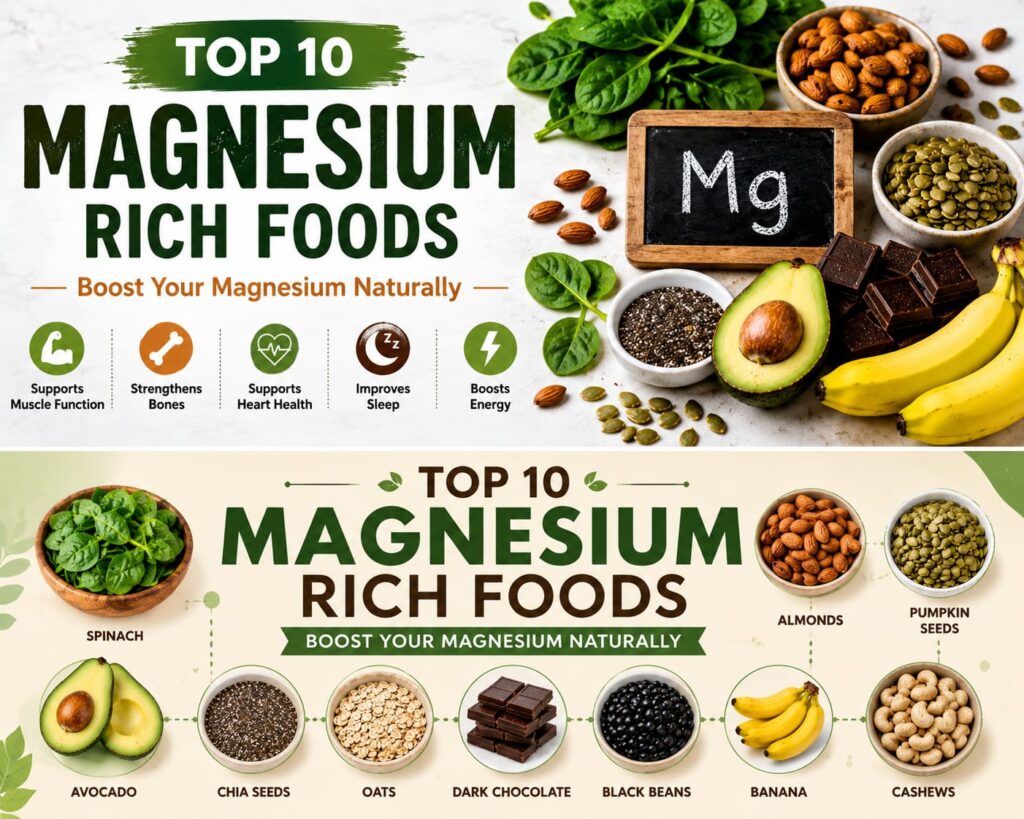
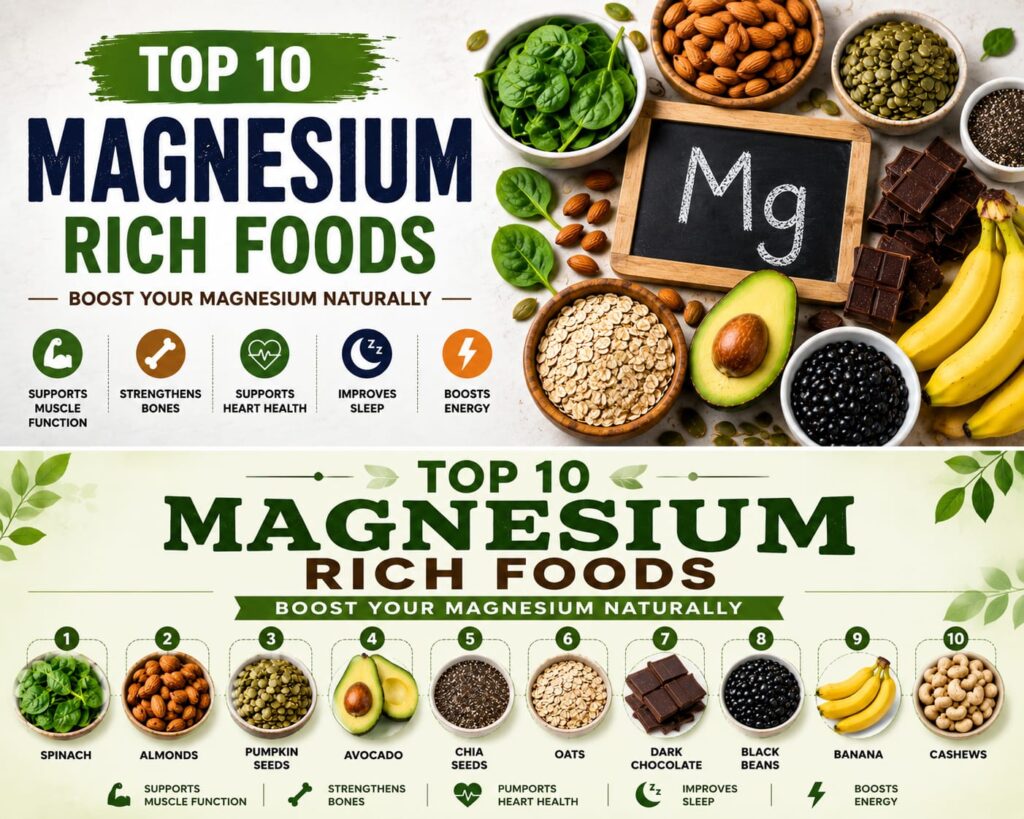
Top 10 Magnesium-Rich Foods
1. Pumpkin Seeds
Pumpkin seeds are among the best foods high in magnesium. Just a small serving provides a significant amount of this important mineral.
Benefits:
- Rich in antioxidants
- Supports heart health
- Contains healthy fats and protein
- May help support muscle recovery
How to Eat:
- Sprinkle on salads
- Add to smoothies
- Enjoy as a healthy snack
2. Spinach
Spinach is one of the most nutritious leafy greens and an excellent source of magnesium.
Benefits:
- High in vitamins A, C, and K
- Supports bone health
- Rich in antioxidants
- Low in calories
How to Eat:
- Add to curries
- Blend into smoothies
- Use in salads and sandwiches
Spinach is often included in a magnesium foods list due to its impressive nutrient profile.
3. Almonds
Almonds are one of the most popular natural sources of magnesium and offer many additional health benefits.
Benefits:
- Rich in healthy fats
- Supports heart health
- Provides protein and fiber
- Helps promote satiety
How to Eat:
- Eat as a snack
- Add to oatmeal
- Mix into yogurt
4. Black Beans
Beans are excellent foods that contain magnesium, and black beans are among the best choices.
Benefits:
- High in plant protein
- Rich in dietary fiber
- Supports digestive health
- Helps maintain steady energy levels
How to Eat:
- Add to soups
- Use in salads
- Include in rice dishes
5. Avocados
Avocados are nutrient-dense fruits that provide a good amount of magnesium.
Benefits:
- Rich in healthy monounsaturated fats
- Supports heart health
- Provides potassium and fiber
- Helps increase nutrient absorption
How to Eat:
- Spread on toast
- Add to salads
- Blend into smoothies
6. Dark Chocolate
Good-quality dark chocolate is one of the tastiest magnesium-rich foods available.
Benefits:
- Contains antioxidants
- May support heart health
- Provides iron and fiber
- Can satisfy sweet cravings
How to Eat:
- Enjoy a small piece as a treat
- Add to homemade snacks
- Use in healthy desserts
Choose dark chocolate with a high cocoa content for the best nutritional value.
7. Bananas
Bananas are well known for potassium, but they also provide magnesium.
Benefits:
- Supports muscle function
- Provides quick energy
- Easy to digest
- Convenient and portable
How to Eat:
- Eat fresh
- Add to smoothies
- Slice over cereal
Bananas can be a simple addition to a magnesium-rich diet.
8. Tofu
Tofu is a popular plant-based protein source and a valuable source of magnesium.
Benefits:
- Rich in protein
- Supports muscle health
- Low in saturated fat
- Versatile in cooking
How to Eat:
- Stir-fry with vegetables
- Add to curries
- Use in salads
9. Whole Grains
Whole grains such as brown rice, quinoa, oats, and whole wheat contain magnesium and other important nutrients.
Benefits:
- Rich in fiber
- Supports digestive health
- Provides sustained energy
- Contains B vitamins
How to Eat:
- Replace refined grains with whole grains
- Enjoy oatmeal for breakfast
- Use quinoa in salads
Whole grains are often recommended among the best magnesium-rich foods for daily consumption.
10. Yogurt
Yogurt is a nutritious dairy food that contains magnesium along with calcium and protein.
Benefits:
- Supports bone health
- Contains probiotics
- Provides high-quality protein
- Supports digestive wellness
How to Eat:
- Enjoy plain yogurt
- Add fresh fruit
- Blend into smoothies
According to the National Institutes of Health (NIH), magnesium plays an important role in muscle, nerve, and bone health.
Magnesium Content of Common Foods
| Food | Approximate Magnesium Content (per serving) |
| Pumpkin Seeds | 150 mg |
| Spinach (Cooked) | 157 mg |
| Almonds | 80 mg |
| Black Beans | 60 mg |
| Avocado | 58 mg |
| Dark Chocolate | 65 mg |
| Banana | 32 mg |
| Tofu | 53 mg |
| Quinoa (Cooked) | 64 mg |
| Yogurt | 30 mg |
Values may vary depending on serving size and preparation methods.
Signs You May Need More Magnesium
While only a healthcare professional can assess nutritional deficiencies, low magnesium intake may sometimes be associated with:
- Muscle cramps
- Fatigue
- Weakness
- Poor sleep quality
- Reduced appetite
- Occasional headaches
Eating more foods high in magnesium may help support overall nutritional balance.
Practical Tips to Increase Magnesium Intake
Adding more magnesium-rich foods to your diet doesn’t have to be difficult.
Simple Tips:
- Include leafy greens with lunch and dinner.
- Snack on almonds or pumpkin seeds.
- Replace refined grains with whole grains.
- Add beans to soups and salads.
- Enjoy yogurt with fruit.
- Choose dark chocolate occasionally instead of sugary desserts.
- Include avocados in sandwiches and salads.
These small changes can help increase your intake of natural sources of magnesium over time.
Related Reading: Check out our guide on 10 Best Foods for Kidney Health to learn more about foods that support overall wellness.
How a Magnesium-Rich Diet Supports Overall Health
A balanced magnesium-rich diet may support:
Heart Health
Magnesium plays a role in maintaining normal heart function and supporting healthy blood pressure levels.
Bone Strength
Magnesium works alongside calcium and vitamin D to support strong bones.
Muscle Function
It helps muscles contract and relax properly.
Energy Production
Magnesium is involved in converting food into energy.
Nervous System Support
Adequate magnesium intake may help support normal nerve communication and overall wellness.
Frequently Asked Questions (FAQs)
1. What are the best magnesium-rich foods?
Pumpkin seeds, spinach, almonds, black beans, avocados, dark chocolate, tofu, whole grains, bananas, and yogurt are among the best magnesium-rich foods.
2. Which fruit contains the most magnesium?
Avocados and bananas are commonly recognized as fruits that provide useful amounts of magnesium.
3. Can I get enough magnesium from food alone?
Many people can meet their magnesium needs by eating a varied diet rich in whole foods and natural sources of magnesium.
4. Are nuts high in magnesium?
Yes. Almonds, cashews, and several other nuts are considered foods high in magnesium.
5. Is dark chocolate a good source of magnesium?
Yes. Dark chocolate contains magnesium along with antioxidants and other beneficial nutrients.
6. What vegetables contain magnesium?
Spinach, kale, Swiss chard, and other leafy green vegetables contain magnesium.
7. Are whole grains a source of magnesium?
Yes. Whole grains such as oats, quinoa, and brown rice provide magnesium and fiber.
8. How can I naturally increase magnesium intake?
Focus on eating more magnesium-rich foods such as seeds, nuts, beans, leafy greens, whole grains, and nutrient-dense fruits.
Disclaimer
This article is intended for educational and informational purposes only. It does not provide medical advice, diagnosis, or treatment. Nutritional needs vary from person to person. Always consult a qualified healthcare professional before making significant changes to your diet or health routine.
Conclusion
Magnesium is an essential mineral that supports many important functions throughout the body. Including more magnesium-rich foods in your daily meals can be a simple and effective way to support overall wellness. Foods such as pumpkin seeds, spinach, almonds, beans, avocados, whole grains, and yogurt are excellent natural sources of magnesium that can easily fit into a healthy lifestyle.
By choosing a variety of foods that contain magnesium, you can build a balanced magnesium-rich diet that supports energy levels, muscle function, bone health, and overall well-being. Small dietary improvements made consistently can contribute to better long-term health.
By Life Balance Tips Team