
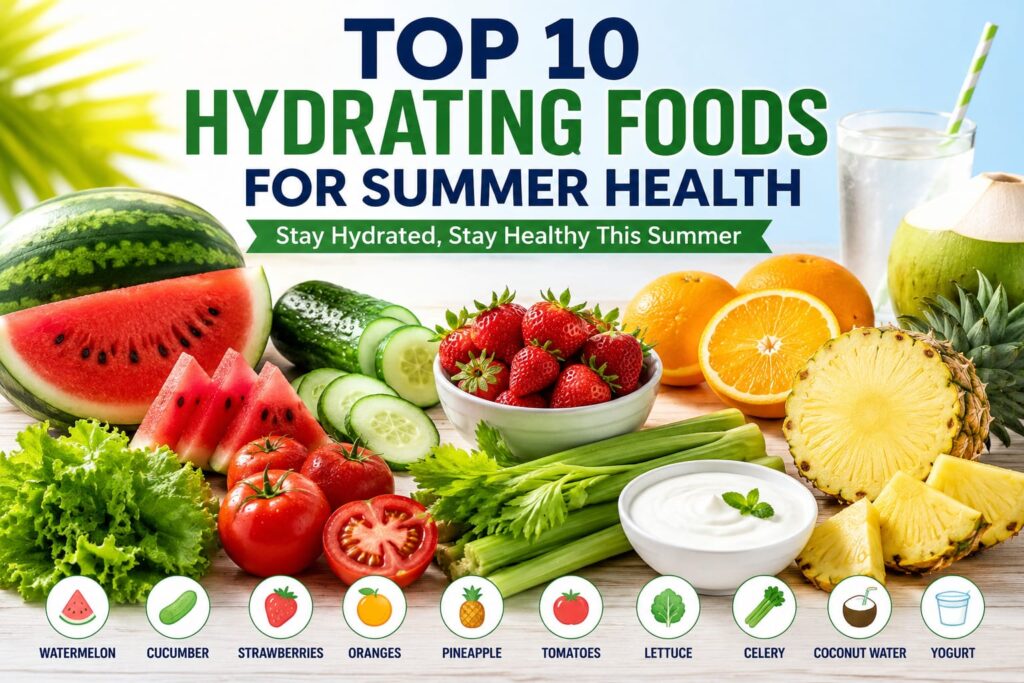
Hydrating foods can help your body stay cool, refreshed, and healthy during summer. Along with drinking water, adding water-rich foods to your diet is one of the best ways to prevent dehydration.
These foods provide water along with essential vitamins, minerals, antioxidants, and fiber. As a result, they can support overall wellness while helping you feel refreshed throughout the day.
In this guide, we will explore the top 10 water-rich foods that can support summer health, explain their benefits, and share practical ways to include them in your daily meals.
Looking for more seasonal wellness tips? Check out our guide on Summer Health Tips.
Why Hydration Matters During Summer
During summer, the body loses more fluids through sweating. If these fluids are not replaced, you may experience symptoms such as:
- Dry mouth
- Fatigue
- Headaches
- Reduced concentration
- Feeling overheated
While plain water remains essential, water-rich foods can complement your hydration efforts. Many nutrition experts recommend combining adequate water intake with summer hydration foods to help maintain fluid balance naturally.
Adding foods to stay hydrated can also make hydration more enjoyable, especially for people who struggle to drink enough water throughout the day.
Hydrating foods are one of the easiest ways to stay healthy during summer.
Water Content in Popular Hydrating Foods
| Food | Approximate Water Content |
| Cucumber | 95–96% |
| Lettuce | 95–96% |
| Celery | 95% |
| Watermelon | 92% |
| Strawberries | 91% |
| Muskmelon | 90% |
| Tomatoes | 94% |
| Oranges | 86–88% |
| Zucchini | 94% |
| Pineapple | 86% |
These foods high in water content are often considered among the best hydrating foods for warm weather.
Top 10 Water-Rich Foods for Summer Health
1. Cucumber
Cucumber is one of the most popular water-rich foods and is widely enjoyed during summer.
Why It Helps
Cucumber contains approximately 95–96% water, making it one of the most hydrating vegetables available. It is also low in calories and provides small amounts of potassium, vitamin K, and antioxidants.
Benefits
- May help support hydration
- Can contribute to daily water intake
- Provides refreshing crunch
- Supports healthy eating habits
Easy Ways to Eat It
- Add to salads
- Blend into smoothies
- Prepare cucumber raita
- Infuse drinking water with cucumber slices
When people think of hydrating foods for summer, cucumber is often one of the first choices.
Building healthy habits is easier with a good routine. Read our Best Morning Routine guide.
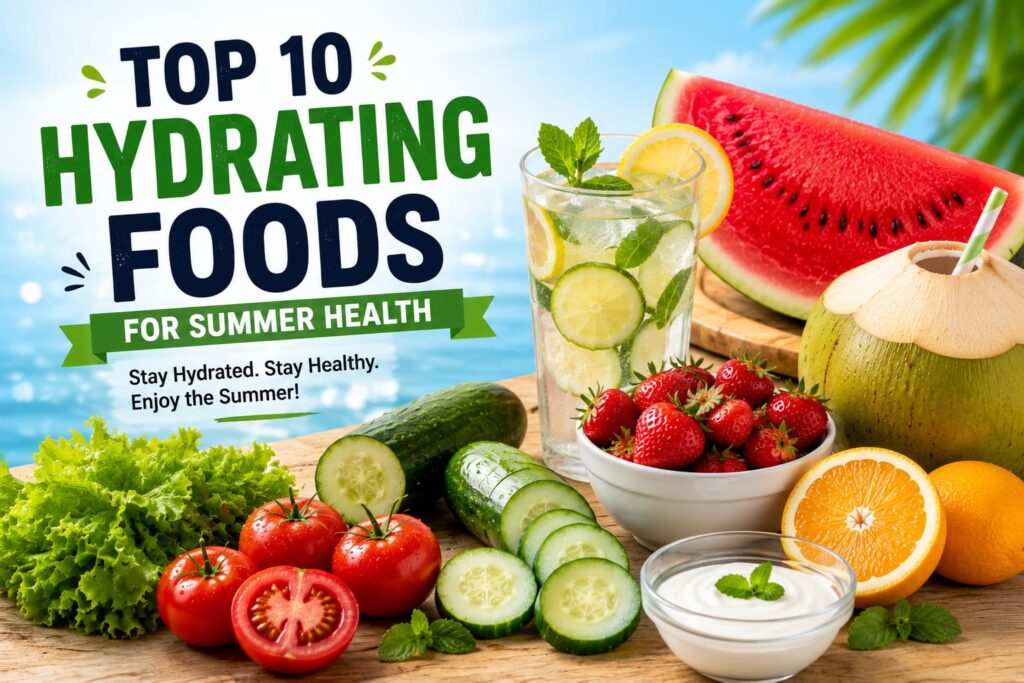
2. Watermelon
Watermelon is practically synonymous with summer.
Why It Helps
Containing around 92% water, watermelon is among the most enjoyable water-rich foods for hot days.
It also provides:
- Vitamin C
- Vitamin A
- Lycopene
- Antioxidants
Benefits
- Supports natural hydration
- May help you feel refreshed
- Offers natural sweetness
- Can be a healthier dessert option
Easy Ways to Eat It
- Fresh slices
- Fruit salads
- Watermelon smoothies
- Chilled watermelon cubes
Because of its water content and refreshing taste, watermelon is considered one of the best hydrating foods available.
Adding more hydrating foods to your daily diet can help prevent dehydration.
3. Tomatoes
Tomatoes are versatile and nutritious water-rich foods that fit into many meals.
Why They Help
Tomatoes contain approximately 94% water and provide beneficial nutrients including:
- Vitamin C
- Potassium
- Lycopene
Benefits
- Supports hydration
- Contributes to nutrient intake
- Easy to include in daily meals
Easy Ways to Eat Them
- Salads
- Sandwiches
- Soups
- Homemade salsa
Tomatoes are among the most convenient foods high in water content that can be enjoyed year-round.
4. Muskmelon (Cantaloupe)
Muskmelon is another excellent summer fruit.
Why It Helps
With around 90% water content, muskmelon provides both hydration and nutrition.
Benefits
- Supports fluid intake
- Contains vitamin A
- Provides vitamin C
- Naturally sweet and satisfying
Easy Ways to Eat It
- Fresh fruit bowls
- Smoothies
- Breakfast platters
- Chilled melon cubes
Muskmelon remains one of the most recommended summer hydration foods due to its refreshing nature.
5. Strawberries
Strawberries are delicious berries that can support hydration naturally.
Why They Help
Strawberries contain approximately 91% water and are rich in antioxidants.
Benefits
- May help maintain hydration
- Supports a balanced diet
- Provides vitamin C
- Offers natural sweetness
Easy Ways to Eat Them
- Yogurt toppings
- Smoothies
- Fruit salads
- Healthy snacks
Including strawberries among your regular water-rich foods can make hydration more enjoyable.
6. Lettuce
Lettuce is often overlooked, but it is one of the most hydrating vegetables available.
Why It Helps
Many lettuce varieties contain up to 95–96% water.
Benefits
- Supports hydration goals
- Adds volume to meals
- Low in calories
- Easy to combine with other vegetables
Easy Ways to Eat It
- Salads
- Wraps
- Sandwiches
- Burger toppings
For people looking for simple foods to stay hydrated, lettuce is an excellent option.
7. Celery
Celery has a naturally high water content and a satisfying crunch.
Why It Helps
Celery contains about 95% water and also provides fiber and small amounts of important nutrients.
Benefits
- Supports hydration
- May help promote fullness
- Easy to snack on
- Pairs well with healthy dips
Easy Ways to Eat It
- Raw sticks
- Salads
- Soups
- Vegetable platters
Celery is frequently included in lists of the best hydrating foods because of its exceptional water content.
According to the World Health Organization (WHO), staying hydrated is essential for maintaining health during hot weather.
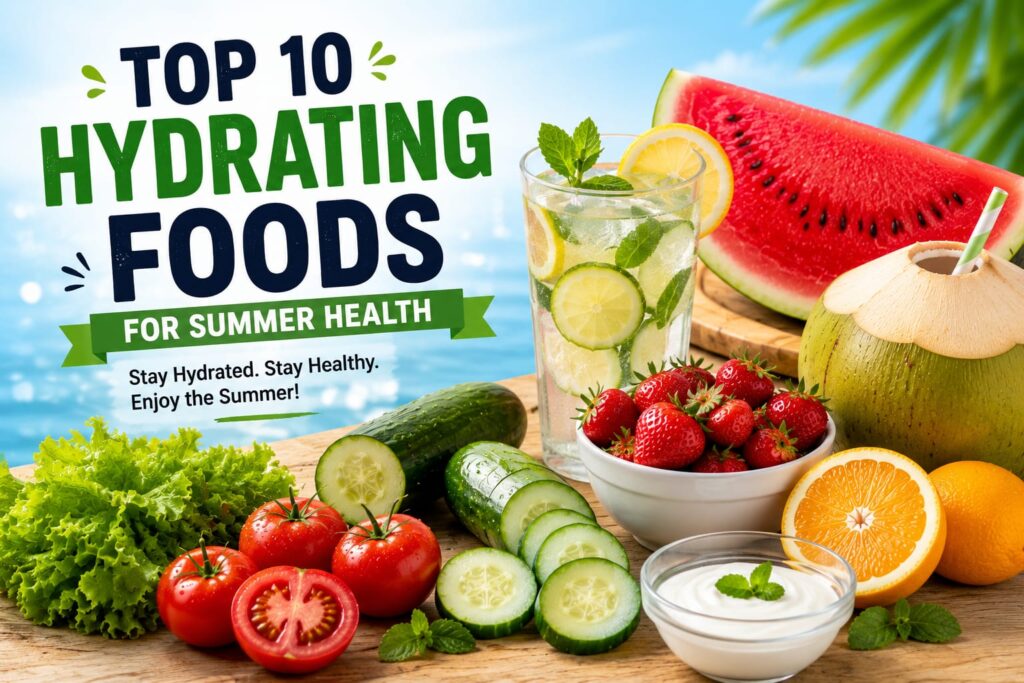
8. Oranges
Oranges provide hydration along with important nutrients.
Why They Help
Although oranges contain slightly less water than some vegetables, they still provide approximately 86–88% water.
Benefits
- Supports daily fluid intake
- Rich in vitamin C
- Convenient and portable
- Naturally refreshing
Easy Ways to Eat Them
- Whole fruit
- Fruit salads
- Fresh orange segments
- Healthy snacks
Oranges are among the most practical water-rich foods for people with busy lifestyles.
Many fruits and vegetables are considered excellent hydrating foods because of their high water content.
The best hydrating foods provide both hydration and essential nutrients.
9. Zucchini
Zucchini is a versatile vegetable often used in healthy meals.
Why It Helps
Zucchini contains around 94% water and can contribute to overall hydration.
Benefits
- Supports fluid intake
- Low in calories
- Easy to cook
- Works in many recipes
Easy Ways to Eat It
- Stir-fries
- Grilled dishes
- Soups
- Salads
Zucchini is one of the lesser-known foods high in water content, but it deserves a place in a summer diet.
10. Pineapple
Pineapple offers a tropical flavor and valuable hydration benefits.
Why It Helps
Pineapple contains approximately 86% water and provides vitamins and antioxidants.
Benefits
- Supports natural hydration
- Adds variety to meals
- Contains vitamin C
- Refreshing during hot weather
Easy Ways to Eat It
- Fresh slices
- Smoothies
- Fruit bowls
- Chilled snacks
Pineapple rounds out our list of top water-rich foods that can support summer wellness.
Including hydrating foods in summer meals can support overall wellness.
These hydrating foods are easy to find and simple to add to your diet.
Additional Benefits of Water-Rich Foods
Adding more water-rich foods to your diet can provide benefits beyond hydration.
1. Supports Healthy Digestion
Many fruits and vegetables contain fiber along with water. This combination may help support normal digestive function.
2. Helps Maintain Energy Levels
Proper hydration plays an important role in overall body function. Eating foods to stay hydrated may help support energy levels during hot weather.
3. Encourages Healthy Eating
Most hydrating foods for summer are naturally nutrient-dense and lower in calories compared to heavily processed snacks.
4. Supports Daily Nutrient Intake
Many water-rich foods contain:
- Vitamin C
- Vitamin A
- Potassium
- Antioxidants
- Fiber
These nutrients support overall health and wellness.
Practical Tips to Increase Natural Hydration
If you want to improve natural hydration, consider these simple habits:
Start Your Day with Hydrating Fruits
Choose fruits such as:
- Watermelon
- Orange
- Muskmelon
- Strawberries
Build Colorful Salads
Combine:
- Cucumber
- Lettuce
- Tomatoes
- Celery
This creates a meal rich in foods high in water content.
Keep Fresh Produce Visible
Store washed fruits and vegetables where they are easy to grab.
Add Hydrating Foods to Snacks
Instead of highly processed snacks, choose:
- Orange slices
- Watermelon cubes
- Cucumber sticks
- Pineapple chunks
Drink Water Alongside Meals
Even though water-rich foods contribute to hydration, they should complement—not replace—regular water intake.
Sample One-Day Summer Hydration Meal Plan
Breakfast
- Muskmelon bowl
- Strawberries
- Whole-grain toast
Mid-Morning Snack
- Orange slices
Lunch
- Cucumber, lettuce, and tomato salad
- Balanced main meal
Evening Snack
- Watermelon cubes
Dinner
- Grilled zucchini
- Fresh vegetable salad
Dessert
- Pineapple chunks
This meal plan includes several summer hydration foods that can help support daily fluid intake.
Common Mistakes People Make During Summer
Relying Only on Cold Drinks
Many beverages may contain added sugar. Choosing water-rich foods can be a healthier way to support hydration.
Ignoring Fruits and Vegetables
Fresh produce often provides both fluids and nutrients.
Waiting Until You Feel Very Thirsty
Hydration is generally easier to maintain when fluids and foods to stay hydrated are consumed consistently throughout the day.
Choosing Processed Snacks Frequently
Whole fruits and vegetables are often better options for natural hydration and overall nutrition.
Frequently Asked Questions (FAQ)
1. What are the best water-rich foods for summer?
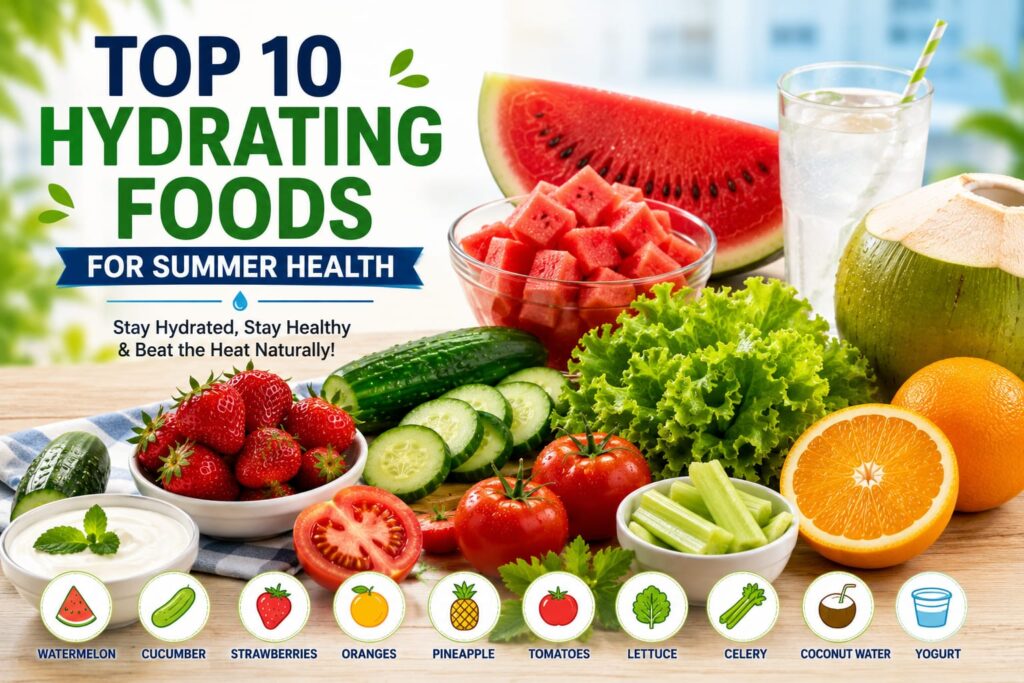
Some of the best hydrating foods include cucumber, watermelon, tomatoes, lettuce, celery, strawberries, oranges, muskmelon, zucchini, and pineapple.
2. Can water-rich foods replace drinking water?
No. Water-rich foods can contribute to hydration, but regular water intake remains important for overall health.
3. Which fruit has the highest water content?
Watermelon is among the fruits with the highest water content, containing around 92% water.
4. Are hydrating foods good for daily consumption?
Most fruits and vegetables classified as hydrating foods for summer can be enjoyed regularly as part of a balanced diet.
5. What vegetables contain the most water?
Cucumber, lettuce, celery, tomatoes, and zucchini are examples of foods high in water content.
6. How do water-rich foods support hydration?
These foods provide water along with nutrients, helping increase overall fluid intake throughout the day.
7. Are summer hydration foods suitable for children?
In general, fruits and vegetables with high water content can be healthy options for children when included in a balanced diet.
8. What is the easiest way to increase natural hydration?
Combine adequate water intake with water-rich foods, including fruits, vegetables, salads, and healthy snacks.
Disclaimer
This article is intended for educational and informational purposes only. It does not provide medical advice, diagnosis, or treatment. Nutritional needs can vary from person to person. Always consult a qualified healthcare professional or registered dietitian for personalized guidance regarding your diet, hydration needs, or health concerns.
Conclusion
Staying hydrated during summer is essential for overall well-being, and hydration can come from more than just drinking water. Including water-rich foods in your daily diet is a simple, delicious, and effective way to support fluid intake naturally. Foods such as cucumber, watermelon, tomatoes, muskmelon, strawberries, lettuce, celery, oranges, zucchini, and pineapple are among the most popular summer hydration foods because they combine high water content with valuable nutrients.
By choosing these foods to stay hydrated, building colorful meals, and maintaining healthy hydration habits, you can support your body’s needs throughout the warmer months. Whether you’re looking for the best hydrating foods, exploring foods high in water content, or simply aiming for better natural hydration, these nutritious options can be a smart addition to your summer diet.
By Life Balance Tips Team