
Eating healthy becomes much easier when nutritious food is already prepared and ready to enjoy. This is where meal prep ideas can make a big difference. Instead of deciding what to cook every day, you can prepare a few basic ingredients ahead of time and create balanced meals throughout the week.
Meal preparation can also make busy mornings, work lunches, and quick dinners easier. The Centers for Disease Control and Prevention recommends planning meals at home and choosing a variety of protein foods, vegetables, fruits, whole grains, and healthy fats while limiting highly processed foods, added sugars, and excess sodium. (CDC)
You do not need to spend your entire weekend cooking. Even preparing a few ingredients can save time and make healthy choices more convenient.
In this guide, you will discover 15 meal prep ideas for beginners, along with simple planning tips, storage advice, a weekly example plan, and common mistakes to avoid.
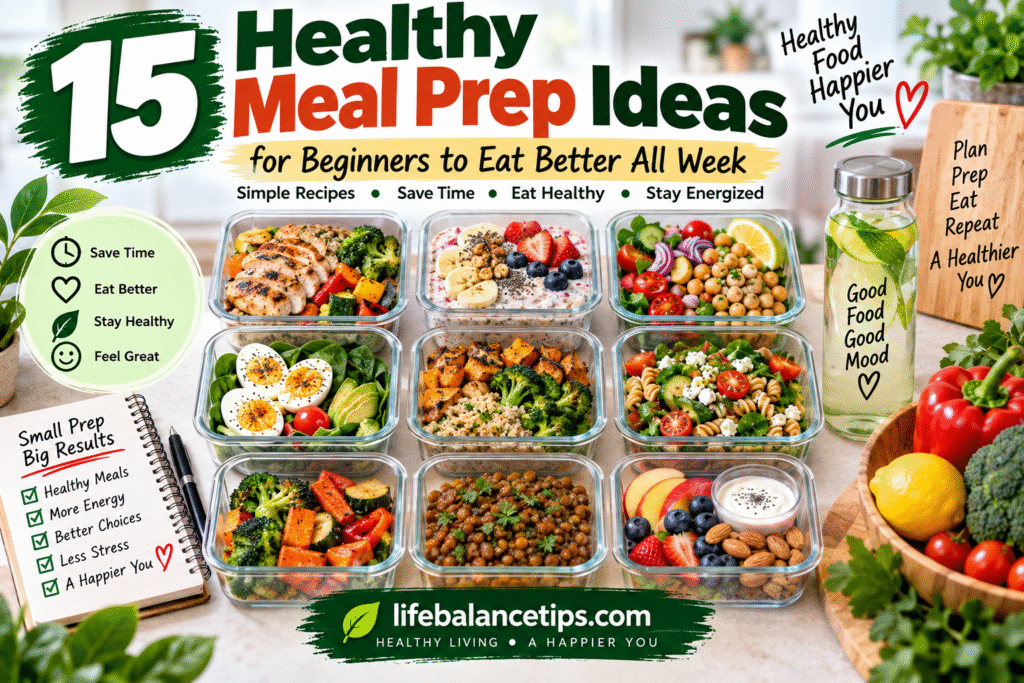
What Is Meal Prep?
Meal prep means preparing some or all of your meals or ingredients ahead of time so they are ready when you need them.
For example, you could cook brown rice, wash vegetables, prepare grilled chicken, boil eggs, and portion everything into containers. During the week, you can combine these ingredients into different meals.
Meal prep does not have to mean eating exactly the same meal every day. You can prepare basic ingredients and use them in different combinations.
For example:
- Cooked chicken can become a salad, wrap, or rice bowl.
- Cooked lentils can be used with rice, roti, or vegetables.
- Chopped vegetables can be used in salads, wraps, soups, or stir-fries.
- Cooked oats can become breakfast bowls with different toppings.
This flexible approach makes meal prep ideas easier to follow for beginners.
Why Try Meal Prep?
A little planning can make healthy eating more convenient.
1. It saves time
Preparing ingredients in advance means you may spend less time cooking during busy weekdays.
2. It makes healthy choices easier
When nutritious food is already available, you may be less tempted to rely on fast food or highly processed convenience foods.
3. It can reduce food waste
Planning meals before shopping can help you purchase ingredients you are more likely to use.
4. It makes portions easier to manage
Dividing food into individual containers can help you become more aware of how much you are serving yourself.
5. It supports variety
You can prepare several basic ingredients and combine them differently throughout the week.
15 Healthy Meal Prep Ideas for Beginners
Here are simple options that can work for breakfast, lunch, dinner, or snacks.
1. Chicken, Brown Rice, and Vegetable Bowls
This is one of the easiest meal prep ideas for beginners.
Prepare:
- Grilled or baked chicken
- Brown rice
- Broccoli
- Carrots
- Bell peppers
- A small amount of olive oil or a simple dressing
Divide the ingredients into containers and refrigerate them.
You can change the flavor during the week by adding different herbs, spices, lemon juice, or a yogurt-based sauce.
2. Overnight Oats With Fruit
Overnight oats are useful when you need a quick breakfast.
Combine:
- Oats
- Plain yogurt or milk
- Chia seeds
- Berries or banana
- Nuts or seeds
Prepare several individual jars and keep them refrigerated.
Choose plain yogurt without added sugars when possible. The CDC recommends nutrient-dense foods and dairy products without added sugars as part of healthy eating patterns. (CDC)
3. Lentil and Vegetable Bowls
Lentils are a convenient plant-based protein and fiber source.
Prepare a batch of cooked lentils and combine them with:
- Brown rice or another whole grain
- Spinach
- Carrots
- Cucumber
- Tomatoes
- A simple lemon-based dressing
You can also serve the lentils with roti and vegetables for a simple Indian-style meal.
4. Egg and Vegetable Breakfast Boxes
Hard-boiled eggs can be prepared ahead of time and paired with vegetables and whole-grain foods.
A simple breakfast box could include:
- 1–2 hard-boiled eggs
- Cucumber
- Tomato
- Carrot
- Whole-grain toast
- Fresh fruit
This can be especially useful on busy mornings.
5. Chickpea Salad Bowls
Chickpeas are inexpensive, versatile, and easy to prepare.
Combine chickpeas with:
- Cucumber
- Tomato
- Onion
- Bell pepper
- Leafy greens
- Lemon juice
- Herbs and spices
Keep dressing separate if you want the vegetables to stay crisp.
You can serve the mixture alone or with a small portion of whole grains.
6. High-Protein Yogurt Bowls
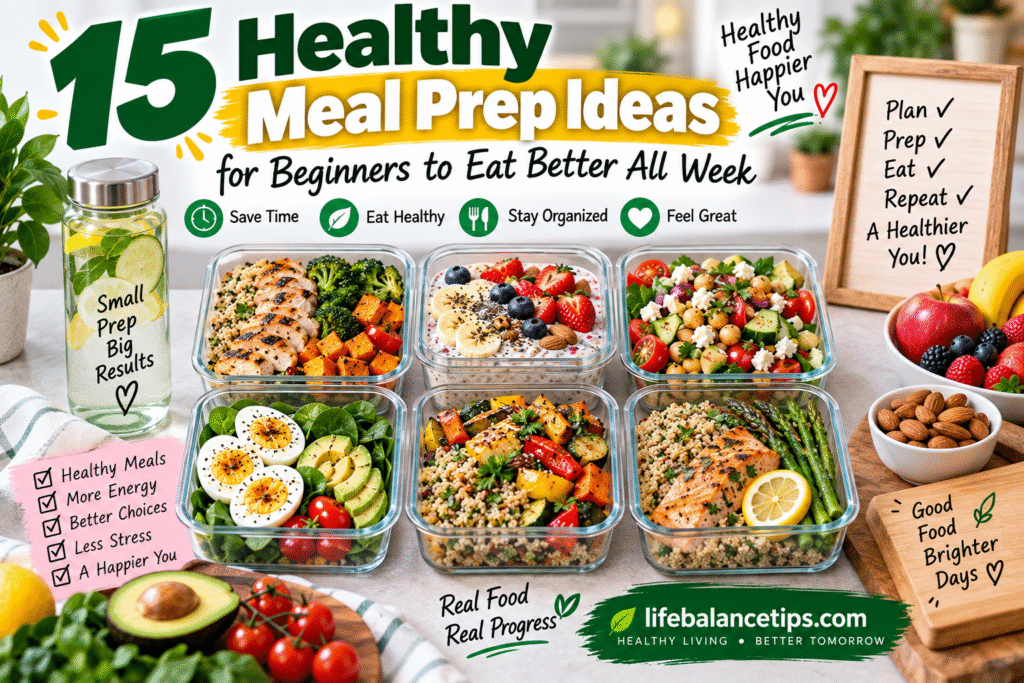
For a quick breakfast or snack, prepare plain Greek-style yogurt with nutritious toppings.
Try:
- Plain yogurt
- Berries
- Banana
- Chia seeds
- Walnuts
- Pumpkin seeds
Avoid adding large amounts of sugar. Fresh fruit can provide natural sweetness.
7. Roasted Vegetables for Multiple Meals
Instead of preparing vegetables separately every day, roast a large batch at once.
Try:
- Broccoli
- Cauliflower
- Carrots
- Bell peppers
- Zucchini
- Sweet potatoes
Use the roasted vegetables with chicken, fish, lentils, eggs, tofu, or beans.
This is one of the simplest healthy meal prep methods because one batch can be used in several meals.
8. Chicken or Bean Whole-Grain Wraps
Prepare the filling ahead of time and assemble wraps when needed.
Possible ingredients include:
- Grilled chicken or beans
- Lettuce
- Tomato
- Cucumber
- Bell pepper
- Plain yogurt sauce
- Whole-grain wrap
For better texture, keep wet ingredients separate until you are ready to eat.
9. Vegetable and Paneer Boxes
For a vegetarian option, prepare paneer with mixed vegetables.
You can combine:
- Paneer
- Bell peppers
- Broccoli
- Carrots
- Green beans
- Brown rice or whole-grain roti
Use moderate amounts of oil and season with herbs and spices.
10. Salmon, Sweet Potato, and Greens
If you eat seafood, salmon can be prepared with roasted sweet potatoes and leafy greens.
A simple container can include:
- Baked salmon
- Sweet potato
- Spinach or another leafy green
- Broccoli
- Lemon
Fish provides protein and can add variety to your weekly menu.
11. Vegetable Khichdi
Vegetable khichdi can be a practical make-ahead meal.
Prepare it using:
- Rice
- Lentils
- Carrots
- Peas
- Spinach
- Other vegetables
- Herbs and spices
Serve it with plain yogurt if desired.
For variety, change the vegetables or spices instead of making the same combination every time.
12. Homemade Soup
Soup can be prepared in a larger batch and portioned for several meals.
Good ingredients include:
- Lentils
- Beans
- Chicken
- Carrots
- Tomatoes
- Spinach
- Celery
- Other vegetables
A vegetable-and-lentil soup can provide protein, fiber, and vegetables in one meal.
Store portions safely in the refrigerator or freezer.
13. Tofu and Vegetable Stir-Fry
Tofu is another useful option for vegetarian meal prep recipes.
Cook tofu with:
- Broccoli
- Bell peppers
- Mushrooms
- Carrots
- Green beans
Serve with brown rice or another whole grain.
Keep sauces moderate, particularly if they are high in sodium or added sugar.
14. Homemade Snack Boxes
Meal prep is not only about main meals.
Create small snack boxes containing combinations such as:
- Apple + peanut butter
- Carrots + hummus
- Plain yogurt + berries
- Boiled egg + cucumber
- Nuts + fresh fruit
Portioning snacks in advance can make healthier choices more convenient during busy days.
15. Mix-and-Match Grain Bowls
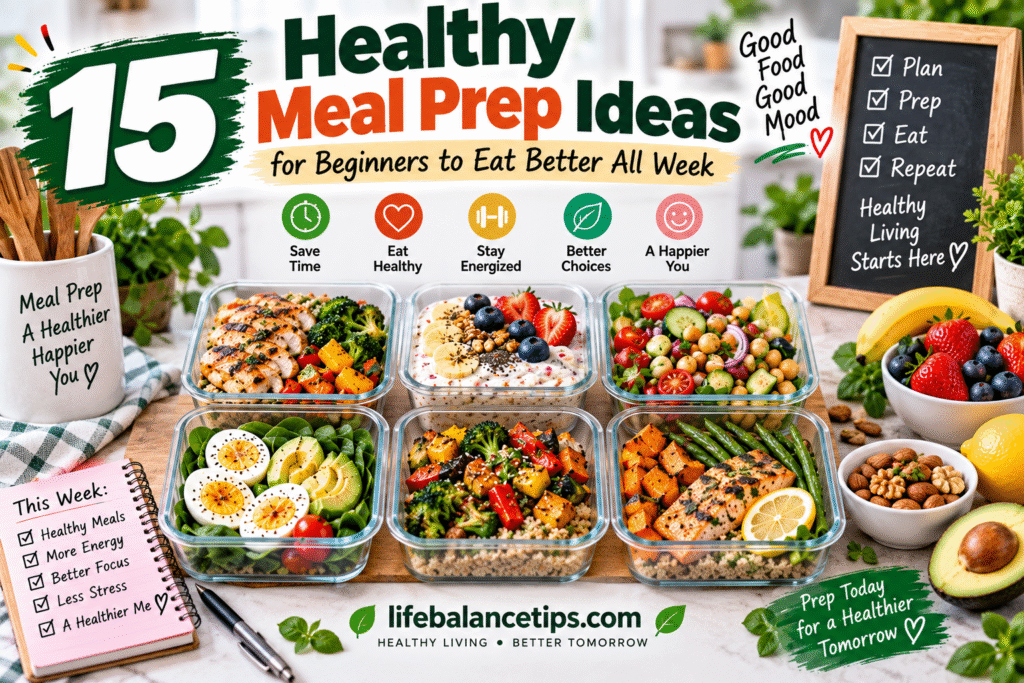
This is one of the most flexible meal prep ideas because you can change the ingredients every day.
Prepare:
Protein:
Chicken, eggs, fish, tofu, beans, lentils, or chickpeas
Grain:
Brown rice, quinoa, oats, or another whole grain
Vegetables:
Broccoli, carrots, spinach, cucumber, tomatoes, peppers
Healthy fat:
Nuts, seeds, avocado, or a small amount of olive oil
Then create different combinations throughout the week.
How to Build a Balanced Meal Prep Container
A simple way to organize your meals is to include several food groups rather than relying on just one ingredient.
A balanced container can include:
| Food group | Examples |
| Protein | Eggs, chicken, fish, lentils, beans, tofu |
| Whole grains | Brown rice, oats, quinoa, whole-grain bread |
| Vegetables | Broccoli, spinach, carrots, peppers |
| Fruits | Apples, berries, oranges, bananas |
| Healthy fats | Nuts, seeds, avocado, olive oil |
| Dairy | Plain yogurt, milk, unsweetened dairy alternatives |
The exact amount you need depends on your individual energy needs, age, activity level, preferences, and health circumstances.
The CDC recommends a variety of vegetables, fruits, protein foods, whole grains, healthy fats, and dairy without added sugars as part of a healthy eating pattern. (CDC)
Simple Weekly Meal Prep Plan
You do not have to prepare seven completely different meals.
Instead, prepare a few basic ingredients and mix them throughout the week.
| Day | Breakfast | Lunch | Dinner |
| Monday | Overnight oats | Chicken rice bowl | Lentil soup |
| Tuesday | Eggs + fruit | Chickpea salad | Fish + vegetables |
| Wednesday | Yogurt + berries | Chicken wrap | Vegetable khichdi |
| Thursday | Oatmeal + banana | Lentil bowl | Tofu stir-fry |
| Friday | Eggs + toast | Bean bowl | Chicken + vegetables |
| Saturday | Yogurt + fruit | Fish salad | Lentils + roti |
| Sunday | Oats + fruit | Vegetable bowl | Homemade soup |
This type of plan gives you flexibility while reducing daily cooking decisions.
How to Do Meal Prep for Beginners
If you are completely new to meal preparation, start small.
Step 1: Choose 3–4 meals
Do not try to prepare everything at once.
Choose a few simple meals you already enjoy.
Step 2: Make a shopping list
Write down exactly what you need before going shopping.
Include:
- Protein foods
- Vegetables
- Fruits
- Whole grains
- Healthy fats
- Dairy or suitable alternatives
Step 3: Cook basic ingredients together
For example, while rice is cooking, you can wash vegetables and prepare chicken.
This saves time.
Step 4: Portion the food
Place prepared food into clean containers according to your planned meals.
Step 5: Label your containers
Write the date and contents on containers, especially if you are preparing several meals.
USDA MyPlate resources also recommend planning, using ingredients across multiple meals, and preparing items such as vegetables, grains, and proteins in advance. (MyPlate)
Meal Prep Ideas for Weight Management
If your goal is weight management, meal preparation can make nutritious choices more convenient.
Focus on foods that provide protein, fiber, vegetables, fruits, and whole grains.
For example:
Instead of:
A large portion of refined carbohydrates with little protein or vegetables.
Try:
A balanced bowl with vegetables, protein, and a moderate portion of whole grains.
Vegetables and fruits provide fiber and water and may help increase fullness as part of a balanced eating pattern. (CDC)
However, meal prep itself does not guarantee weight loss. Overall eating patterns, portions, physical activity, sleep, and individual health factors all matter.
Meal Prep for Work
If you take lunch to work, choose foods that travel and store well.
Good options include:
- Chicken and rice bowls
- Lentil bowls
- Chickpea salads
- Whole-grain wraps
- Yogurt and fruit
- Boiled eggs
- Vegetable soups
- Homemade snack boxes
Keep dressings and sauces separate when possible to maintain texture.
Use an insulated lunch bag with appropriate cold storage when refrigeration is not immediately available.
Common Meal Prep Mistakes to Avoid
Even good meal prep ideas can become difficult if your system is too complicated.
1. Preparing too much food
Start with a few days rather than preparing an entire week of food.
2. Making every meal identical
Use the same basic ingredients in different combinations.
3. Forgetting vegetables
Try to include vegetables in most lunch and dinner containers.
4. Using too much sauce
Some sauces can add significant amounts of sodium, sugar, or calories.
5. Ignoring food safety
Do not leave perishable foods at room temperature for long periods.
FoodSafety.gov recommends refrigerating leftovers within two hours and generally using refrigerated leftovers within 3–4 days. (FoodSafety.gov)
6. Making the process too complicated
Your meal prep routine should make life easier, not harder.
Start with simple recipes.
Food Storage Tips for Meal Prep
Food safety is especially important when preparing several meals in advance.
Keep your refrigerator at 40°F (4°C) or below, according to FoodSafety.gov guidance. (FoodSafety.gov)
Follow these basic habits:
- Refrigerate perishable food promptly.
- Use clean containers.
- Divide large amounts of food into smaller portions.
- Label containers with dates.
- Keep foods properly refrigerated.
- Freeze meals that you will not eat within the recommended refrigerator storage period.
- Reheat leftovers thoroughly before eating.
For many cooked leftovers, including cooked meat or poultry and soups or stews, FoodSafety.gov lists about 3–4 days of refrigerator storage. (FoodSafety.gov)
When in doubt about whether food has been stored safely, it is better to discard it.
Simple Meal Prep Shopping List
Here is a basic shopping list you can customize.
Protein
- Eggs
- Chicken
- Fish
- Lentils
- Chickpeas
- Beans
- Tofu
- Paneer
- Plain yogurt
Vegetables
- Broccoli
- Carrots
- Spinach
- Bell peppers
- Cucumbers
- Tomatoes
- Cauliflower
- Green beans
Whole Grains
- Oats
- Brown rice
- Whole-grain bread
- Whole-grain wraps
- Quinoa
Fruits
- Apples
- Bananas
- Oranges
- Berries
- Seasonal fruits
Healthy Fats
- Almonds
- Walnuts
- Chia seeds
- Pumpkin seeds
- Peanut butter
- Avocado
- Olive oil
Buying seasonal produce and using frozen vegetables when appropriate can also make meal preparation more practical and budget-friendly.
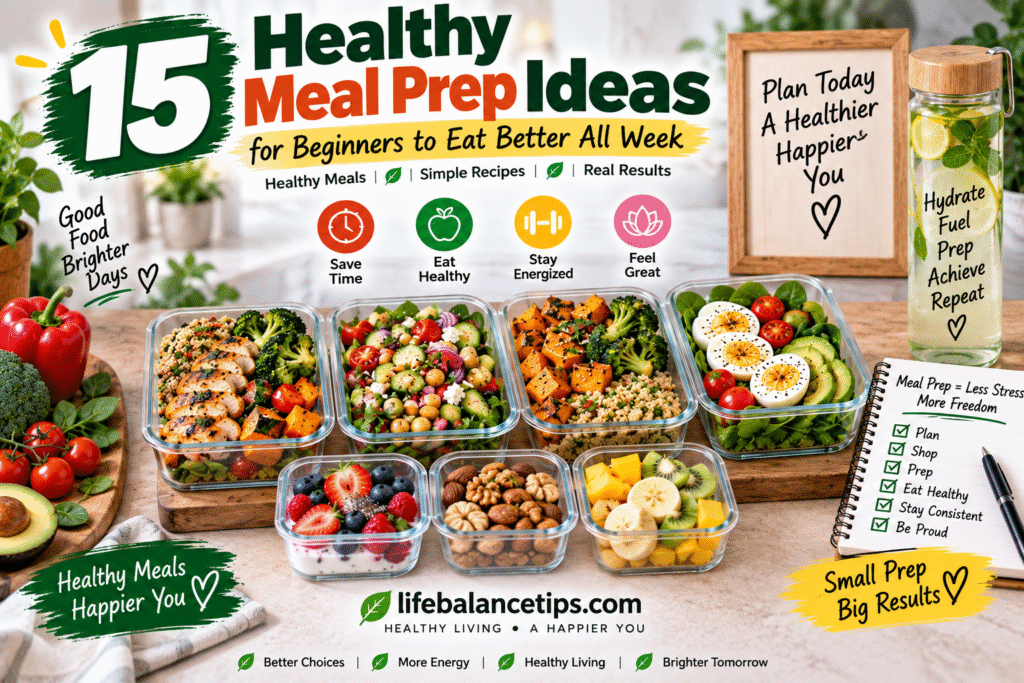
How Often Should You Meal Prep?
There is no single schedule that works for everyone.
Some people prefer preparing food once a week, while others prefer doing smaller preparation sessions two or three times a week.
A beginner-friendly approach is:
Sunday: Prepare major ingredients.
Wednesday: Prepare a smaller fresh batch.
This can help maintain variety and reduce the amount of food stored for several days.
Frequently Asked Questions
1. What are the best meal prep ideas for beginners?
Simple rice bowls, overnight oats, lentil bowls, chicken and vegetable meals, chickpea salads, yogurt bowls, and homemade soups are good starting points.
2. Is meal prep healthy?
Meal preparation can support healthy eating by making nutritious foods more convenient. The quality of the meals still matters, so include vegetables, fruits, protein foods, whole grains, and healthy fats.
3. How long does meal prep take?
It depends on the number of meals and recipes. Beginners can start with 30–60 minutes of preparation and gradually develop a routine that works for them.
4. Can meal prep help with weight loss?
Meal preparation may make it easier to plan balanced meals and manage portions, but it does not automatically cause weight loss. Weight changes depend on overall energy intake, activity, health, and other factors.
5. How long can meal prep food stay in the refrigerator?
Many cooked leftovers should generally be used within 3–4 days when stored properly in a refrigerator at 40°F (4°C) or below. (FoodSafety.gov)
6. Can I freeze meal prep food?
Yes. Many cooked meals can be frozen. Freezing can be useful when you prepare more food than you expect to eat within the recommended refrigerator storage period.
7. What should I prepare first when starting meal prep?
Start with foods that take the longest to cook, such as grains and proteins. While they cook, wash and chop vegetables and prepare snacks.
8. Can vegetarians do meal prep?
Absolutely. Lentils, beans, chickpeas, tofu, paneer, eggs, yogurt, nuts, seeds, vegetables, and whole grains can all be included in vegetarian meal plans.
For more healthy eating ideas, explore our guide on 15 Healthy Snack Ideas for Weight Loss and Better Energy.
For reliable information about healthy eating and meal planning, visit the Centers for Disease Control and Prevention (CDC).
Final Thoughts
The best meal prep ideas are not necessarily complicated recipes. They are simple meals and ingredients that fit your schedule, budget, preferences, and nutritional needs.
Start with just a few basics such as cooked grains, protein, vegetables, fruit, and healthy snacks. Once you become comfortable, you can experiment with different recipes and flavors.
Planning can make healthy eating more convenient during busy days. With a simple routine, meal preparation can help you spend less time deciding what to eat and more time enjoying nutritious homemade meals.
Disclaimer: This article is for general educational and informational purposes only and is not a substitute for professional medical or dietary advice. If you have a medical condition, food allergy, special dietary requirement, or specific weight-management goal, speak with a qualified healthcare professional or registered dietitian for personalized guidance.
Trusted source
For reliable information about healthy eating and meal planning, visit the Centers for Disease Control and Prevention (CDC). (CDC)
CDC: Healthy Eating Tips
By Life Balance Tips Team