
Small changes in your everyday diet can make healthy eating easier without completely changing the foods you enjoy. Instead of following a strict diet, you can start by replacing some highly processed or less nutritious choices with simple alternatives.
These changes are often called healthy food swaps. The idea is simple: choose a more nutritious option that is similar to the food you already eat.
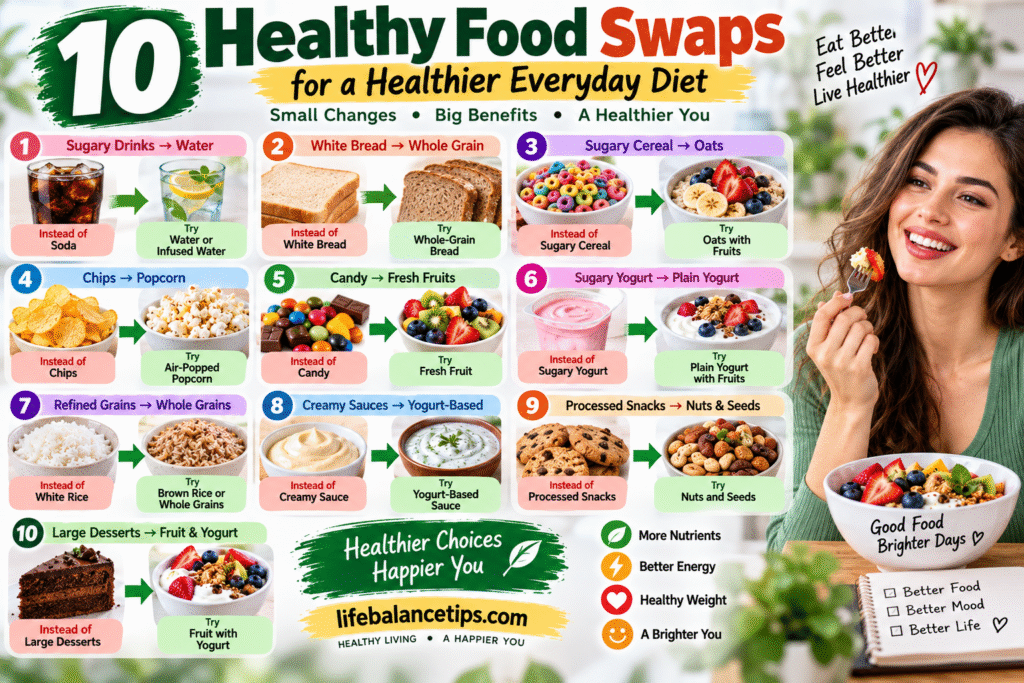
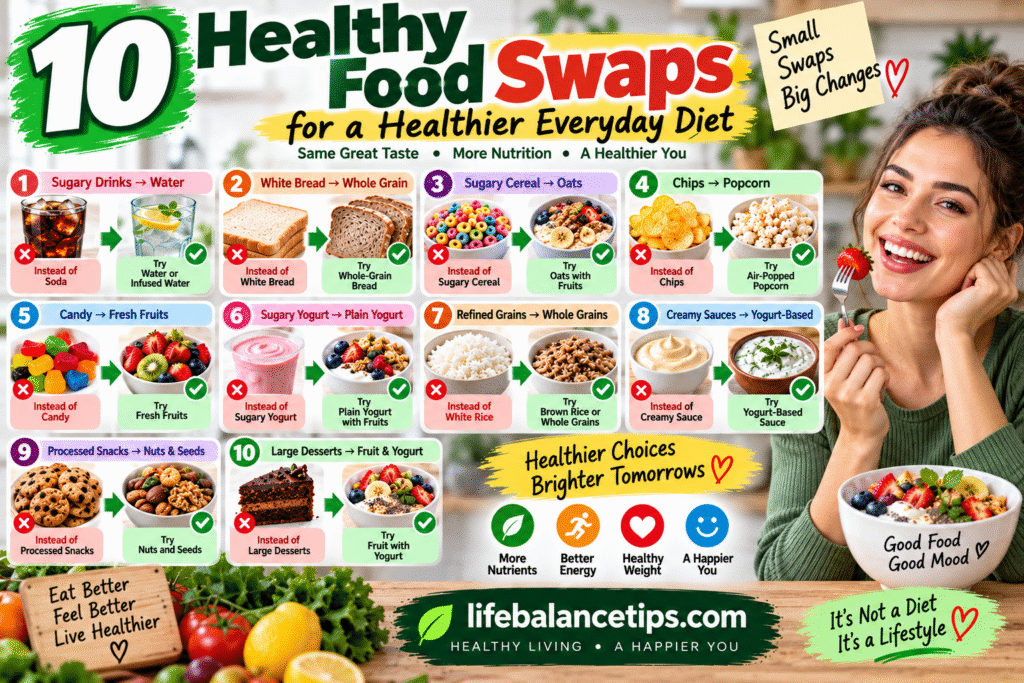
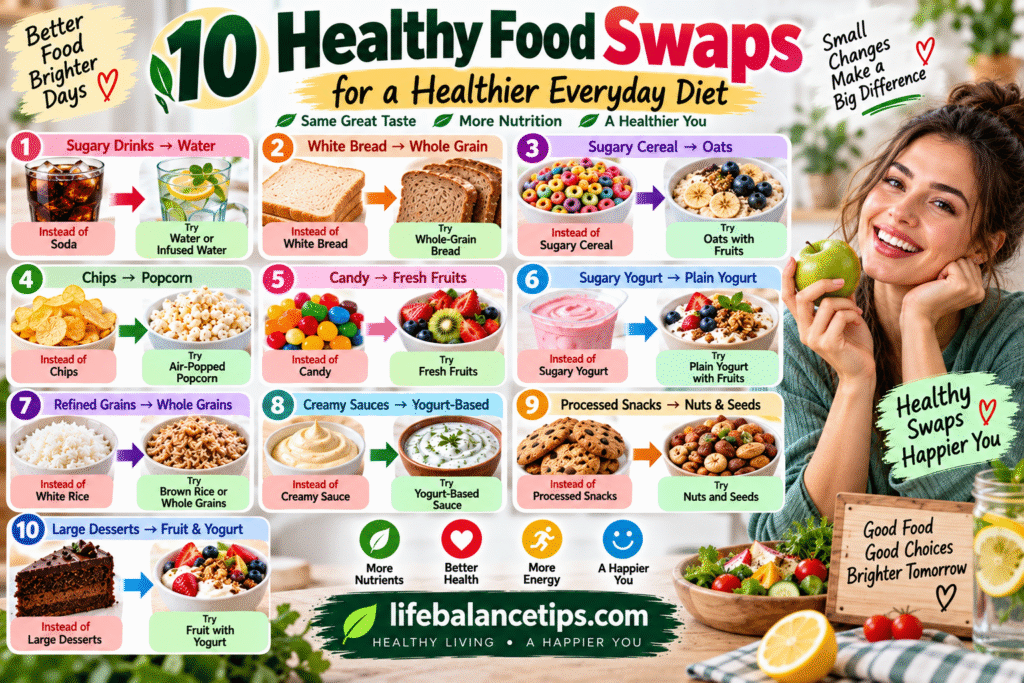
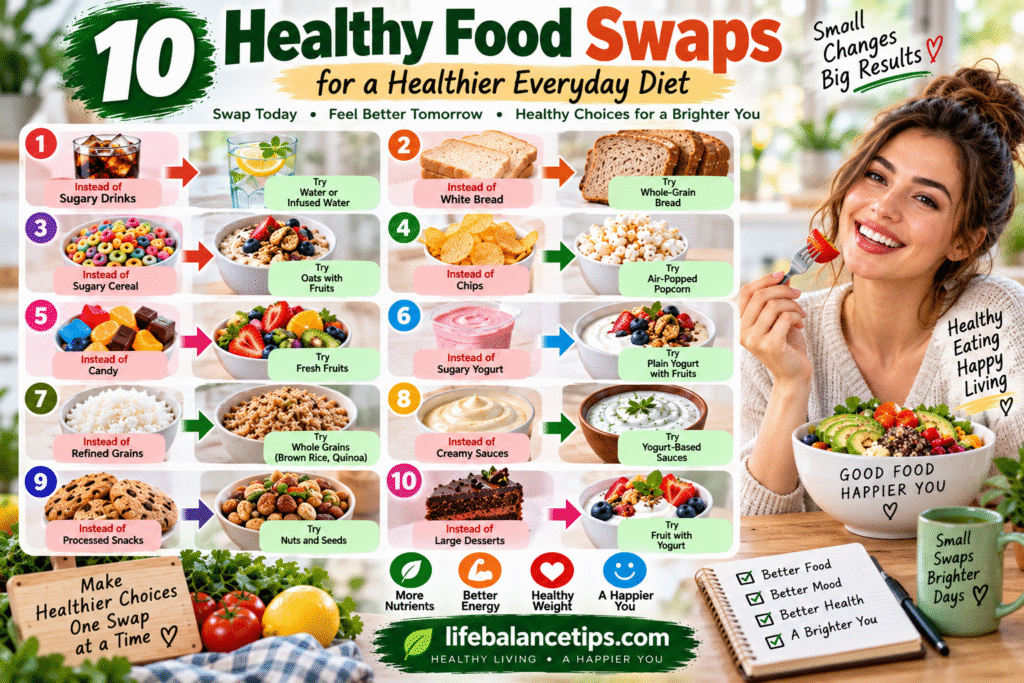
For example, you can replace sugary drinks with water, choose whole-grain bread instead of refined bread, or enjoy fresh fruit instead of a sugary dessert. These small choices can gradually improve the overall quality of your diet.
The goal is not to make every meal perfect. A balanced eating pattern can include a variety of foods while leaving room for flexibility and enjoyment.
In this article, we will discuss 10 healthy food swaps that are simple, affordable, and easy to include in everyday meals.
What Are Healthy Food Swaps?
Healthy food swaps are simple substitutions that help you choose more nutritious foods while keeping your usual meals familiar.
For example:
- White bread → Whole-grain bread
- Sugary soda → Water or unsweetened beverages
- Candy → Fresh fruit
- Sugary cereal → Plain oats with fruit
- Chips → Air-popped popcorn
- Sugary yogurt → Plain yogurt with berries
- Refined grains → Whole grains
- Heavy creamy sauces → Yogurt-based sauces
- Sweetened snacks → Nuts and seeds
- Large desserts → Fruit with plain yogurt
These swaps do not mean you have to completely eliminate your favorite foods. Instead, they give you practical alternatives for everyday eating.
Why Healthy Food Swaps Can Be Useful
Making major dietary changes can sometimes feel overwhelming. Small substitutions may be easier to maintain because they do not require you to completely change your normal eating habits.
For example, if you regularly drink a sugary beverage with lunch, switching to water is a relatively simple change.
Similarly, replacing refined grains with whole grains can increase fiber in your diet.
The most useful changes are those that fit your personal preferences, budget, culture, and lifestyle.
10 Healthy Food Swaps to Try
1. Swap Sugary Drinks for Water or Unsweetened Drinks
One of the simplest healthy food swaps is to reconsider what you drink.
Soft drinks, sweetened juices, energy drinks, and other sugary beverages can add a significant amount of added sugar to your daily diet.
Instead, consider:
- Plain water
- Sparkling water without added sugar
- Unsweetened tea
- Unsweetened coffee
- Water with lemon or cucumber for flavor
Water is especially useful because it provides hydration without added sugar.
If you currently drink several sweetened beverages each day, you do not necessarily have to stop suddenly. You can gradually reduce them and increase water or unsweetened options.
2. Swap White Bread for Whole-Grain Bread
White bread is made from refined grains, while whole-grain bread contains more of the grain components that provide fiber and nutrients.
When choosing bread, look for products that list a whole grain as one of the main ingredients.
You can use whole-grain bread for:
- Breakfast toast
- Sandwiches
- Avocado toast
- Egg sandwiches
- Vegetable sandwiches
This is an easy healthy eating swap because you can keep almost the same meal while changing the type of bread.
Check the nutrition label when comparing products because not every dark-colored or multigrain bread is necessarily a whole-grain product.
3. Swap Sugary Breakfast Cereals for Oatmeal
Some breakfast cereals can contain substantial amounts of added sugar.
A simple alternative is plain oatmeal topped with nutritious ingredients.
You can add:
- Banana
- Apples
- Berries
- Nuts
- Seeds
- Cinnamon
- Plain yogurt
Oats provide carbohydrates and fiber and can be prepared in several ways.
You can make oatmeal with milk or water depending on your preference.
Instead of adding several spoonfuls of sugar, let fruit provide some natural sweetness.
4. Swap Potato Chips for Air-Popped Popcorn
Potato chips can be easy to overeat because they are crunchy, salty, and convenient.
Plain air-popped popcorn can be a useful alternative when you want something crunchy.
Popcorn is a whole-grain food and can provide fiber. However, the nutritional value can change when large amounts of butter, oil, sugar, or salt are added.
For a simple snack, try seasoning air-popped popcorn with:
- Black pepper
- Paprika
- Garlic powder
- Dried herbs
- A small amount of salt
Portion your snack into a bowl instead of eating directly from a large packet or container.
5. Swap Candy for Fresh Fruit
Candy and other sugary treats can provide a lot of added sugar with relatively little nutritional value.
Fresh fruit can satisfy a desire for something naturally sweet while providing fiber, vitamins, minerals, and other beneficial plant compounds.
Try:
- Apple
- Orange
- Banana
- Berries
- Papaya
- Pear
- Kiwi
- Melon
You can also combine fruit with plain yogurt or a small portion of nuts for a more satisfying snack.
This does not mean candy can never be eaten. Instead, making fruit your more frequent everyday choice can improve the overall quality of your diet.
6. Swap Sugary Yogurt for Plain Yogurt With Fruit
Flavored yogurts can contain added sugars, depending on the product.
Plain yogurt can give you more control over what goes into your snack or breakfast.
Instead of buying heavily sweetened yogurt, try plain yogurt with:
- Fresh berries
- Banana
- Apple
- Chia seeds
- Walnuts
- Almonds
You can adjust the sweetness according to your taste.
For people who find plain yogurt too sour at first, adding fresh fruit can make the transition easier.
7. Swap Refined Grains for Whole Grains
Another practical swap is choosing whole grains more often.
Examples include:
Instead of:
- White rice → Brown rice or other whole grains
- Refined pasta → Whole-grain pasta
- Refined bread → Whole-grain bread
Whole grains generally contain more fiber than refined grains.
Other whole-grain choices include:
- Oats
- Barley
- Whole-grain bread
- Brown rice
- Whole-grain pasta
- Quinoa
You do not have to replace every refined grain immediately. Start with one meal a day and gradually experiment with different whole-grain options.
8. Swap Heavy Creamy Sauces for Yogurt-Based Sauces
Creamy sauces can sometimes add considerable calories, saturated fat, and sodium to meals, depending on the ingredients and portion size.
A simple homemade yogurt-based sauce can be a lighter alternative for many meals.
For example, combine plain yogurt with:
- Lemon juice
- Garlic
- Coriander
- Black pepper
- Cucumber
- Fresh herbs
This can work well with grilled vegetables, wraps, salads, roasted foods, or grain bowls.
The key is not to assume every yogurt sauce is automatically healthier. Check the ingredients and choose a simple homemade version when practical.
9. Swap Highly Processed Snacks for Nuts and Seeds
Cookies, packaged snack cakes, and other highly processed foods can be convenient but may contain added sugar, refined carbohydrates, or excess sodium.
A small portion of nuts or seeds can be a nutrient-dense alternative.
Try:
- Almonds
- Walnuts
- Pistachios
- Pumpkin seeds
- Sunflower seeds
Nuts and seeds provide healthy fats, protein, fiber, vitamins, and minerals.
However, portion size matters because nuts and seeds are energy-dense. A small handful is usually more appropriate than eating directly from a large container.
Choose unsalted or lightly salted varieties when possible.
10. Swap Large Desserts for Fruit and Yogurt
Dessert can be enjoyable, but very large portions of cakes, pastries, ice cream, or other sugary foods can add substantial amounts of added sugar and calories.
For an everyday option, try combining:
Fresh fruit + plain yogurt + a few nuts
Some combinations include:
- Berries + yogurt
- Banana + yogurt + walnuts
- Apple + yogurt + cinnamon
- Papaya + yogurt
- Strawberries + yogurt + almonds
This gives you a naturally sweet option with protein, fiber, and other nutrients.
Again, there is no need to completely eliminate desserts. The goal is simply to create more nutritious everyday choices.
Healthy Food Swaps for Weight Management
If you are trying to manage your weight, healthy food swaps can be useful because they can improve food quality without requiring a completely restrictive diet.
For example, choosing fruit instead of candy or water instead of a sugary beverage may reduce added sugar intake.
However, no individual food swap guarantees weight loss.
Weight management is influenced by your overall calorie intake, food choices, physical activity, sleep, genetics, medications, and other individual factors.
Instead of looking for one “magic” food, focus on consistent habits that you can maintain over time.
Healthy Food Swaps for Breakfast
Breakfast can be an easy place to start.
Try these alternatives:
| Instead of | Try |
| Sugary cereal | Plain oats with fruit |
| Sweetened yogurt | Plain yogurt + berries |
| Pastry | Whole-grain toast + egg |
| Sugary drink | Water or unsweetened tea |
| Sweet spread | Avocado or nut butter |
You do not have to make all these changes at once. Choose one that feels realistic.
Healthy Food Swaps for Lunch
For lunch, focus on building a balanced plate.
Try:
- White bread sandwich → Whole-grain sandwich
- Fried side dish → Fresh vegetable salad
- Sugary drink → Water
- Refined grains → Whole grains
- Heavy sauce → Homemade yogurt-based dressing
Include a source of protein, vegetables, and a suitable carbohydrate source to make your meal more balanced.
Healthy Food Swaps for Dinner
Dinner can also include simple substitutions.
For example:
- Large portion of refined grains → Moderate portion of whole grains
- Fried vegetables → Roasted or steamed vegetables
- Heavy creamy sauce → Yogurt-based sauce
- Sugary beverage → Water
- Processed dessert → Fresh fruit
The goal is to create a meal that is satisfying without relying heavily on highly processed ingredients.
How to Make Healthy Swaps Easier
Changing eating habits becomes easier when healthier choices are convenient.
Keep Healthy Foods Visible
Place fruits on the kitchen counter or somewhere you can easily see them.
Prepare Food in Advance
Wash vegetables, prepare oatmeal ingredients, or portion nuts ahead of time.
Shop With a List
A shopping list can help you focus on foods you actually plan to use.
Read Food Labels
When buying packaged foods, compare serving sizes, added sugars, sodium, fiber, and ingredients.
Make One Change at a Time
You do not need to change your entire diet overnight.
Start with one swap, make it a routine, and then add another.
Common Mistakes When Making Food Swaps
Choosing “Healthy” Foods Without Checking Portions
A nutritious food can still contribute a lot of calories when eaten in very large quantities.
Relying Too Much on Health Claims
Words such as “natural,” “light,” or “healthy” on packaging do not tell you everything about a product.
Look at the nutrition facts and ingredient list.
Removing Foods Too Strictly
Very restrictive eating can make healthy habits difficult to maintain.
A balanced diet can include occasional treats.
Forgetting Protein and Fiber
Simply replacing one food with another is not always enough. Consider whether your meals contain protein, fiber, vegetables, fruits, and other nutrient-rich foods.
A Simple 7-Day Healthy Food Swap Challenge
You can try one small change each day:
Day 1: Replace one sugary drink with water.
Day 2: Choose whole-grain bread instead of refined bread.
Day 3: Replace a sugary snack with fresh fruit.
Day 4: Try plain yogurt with fruit instead of sweetened yogurt.
Day 5: Replace chips with a small serving of air-popped popcorn.
Day 6: Add a serving of vegetables to lunch or dinner.
Day 7: Replace a highly processed dessert with fruit and plain yogurt.
After seven days, keep the swaps that fit naturally into your routine.
Frequently Asked Questions
1. What are healthy food swaps?
Healthy food swaps are simple substitutions that replace a less nutritious option with a more nutritious alternative while keeping the meal familiar.
2. What is the easiest food swap to start with?
Replacing sugary beverages with water or unsweetened drinks is one simple place to start.
3. Can healthy food swaps help with weight loss?
They may support a healthy eating pattern and weight management, but weight loss depends on your overall diet, activity, and individual circumstances.
4. Is whole-grain bread better than white bread?
Whole-grain bread generally provides more fiber than refined white bread. Check the ingredient list and nutrition label when choosing a product.
5. What can I eat instead of chips?
Air-popped popcorn, vegetables with hummus, or a small portion of nuts can provide alternatives depending on your preferences.
6. What can I replace sugary drinks with?
Water, sparkling water without added sugar, unsweetened tea, and other unsweetened beverages are simple options.
7. Are nuts a healthy snack?
Nuts provide protein, fiber, healthy fats, vitamins, and minerals. Because they are energy-dense, keeping portions moderate is important.
8. Do I need to stop eating sweets completely?
No. A balanced eating pattern can include occasional treats. The goal is to make nutritious choices more often rather than aiming for perfection.
For more practical healthy eating ideas, explore our guide on 15 Healthy Snack Ideas for Weight Loss and Better Energy.
For reliable information about healthy eating and nutrition, visit the Centers for Disease Control and Prevention (CDC).
Final Thoughts
You do not need to completely change your diet to start eating better. Simple healthy food swaps can help you gradually improve the nutritional quality of your everyday meals.
Start with changes that feel realistic. Drink more water instead of sugary beverages, choose whole grains more often, add fresh fruit, include vegetables, and select minimally processed snacks when possible.
Remember that healthy eating is about your overall pattern rather than one specific food. Small, consistent changes can be easier to maintain than strict diets and may help you build better long-term eating habits.
Disclaimer: This article is for general educational and informational purposes only and is not medical or individualized dietary advice. Nutrition needs vary from person to person. If you have a medical condition, food allergy, or specific dietary requirement, consult a qualified healthcare professional or registered dietitian before making significant changes to your diet.
By Life Balance Tips Team