
Selenium is an essential mineral that your body needs in small amounts but uses for several important functions. It supports normal thyroid function, helps protect cells from oxidative damage, contributes to immune function, and plays a role in DNA production and reproduction. (ODs.nih)
The good news is that selenium can be obtained from a variety of everyday foods, including seafood, eggs, poultry, meat, dairy products, grains, beans, lentils, and nuts.
However, more selenium is not necessarily better. Some foods—especially Brazil nuts—contain exceptionally high amounts, and regularly consuming too much selenium can cause adverse effects. (ODs.nih)
In this guide, we’ll look at 15 selenium-rich foods, how to include them in a balanced diet, and what to know about selenium intake and safety.
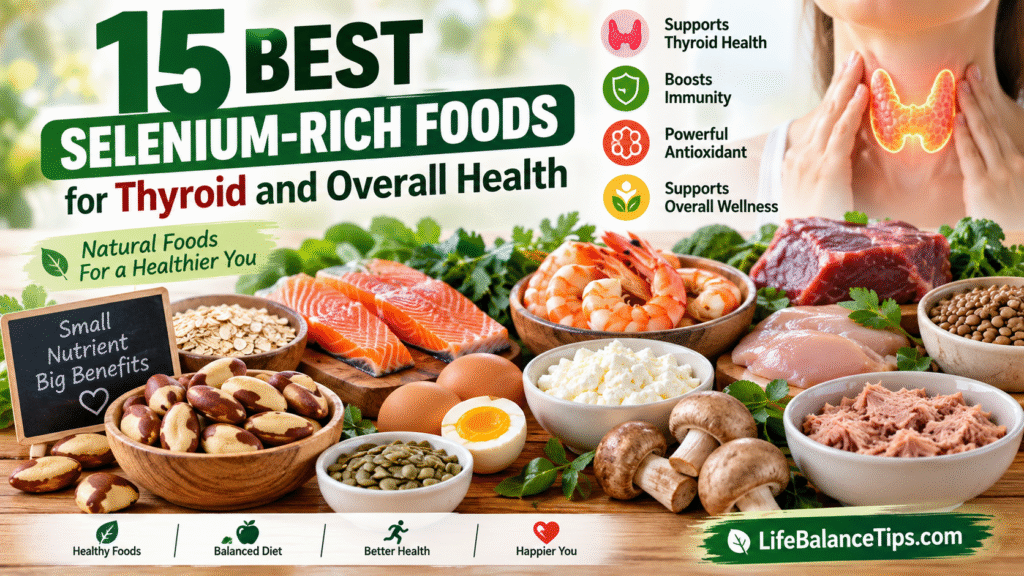
What Is Selenium?
Selenium is a trace mineral, meaning the body requires relatively small amounts of it.
It is involved in several biological processes, including:
- Normal thyroid hormone metabolism
- Protection of cells from oxidative damage
- DNA production
- Reproductive health
- Normal immune function
The thyroid contains a particularly high concentration of selenium, which reflects its importance to normal thyroid function. However, selenium supplements have not been established as a treatment for thyroid disease, and more research is needed regarding supplementation for thyroid conditions. (ODs.nih)
For most adults, the recommended dietary allowance is 55 micrograms (mcg) of selenium per day. The recommendation is 60 mcg during pregnancy and 70 mcg during breastfeeding. (ODs.nih)
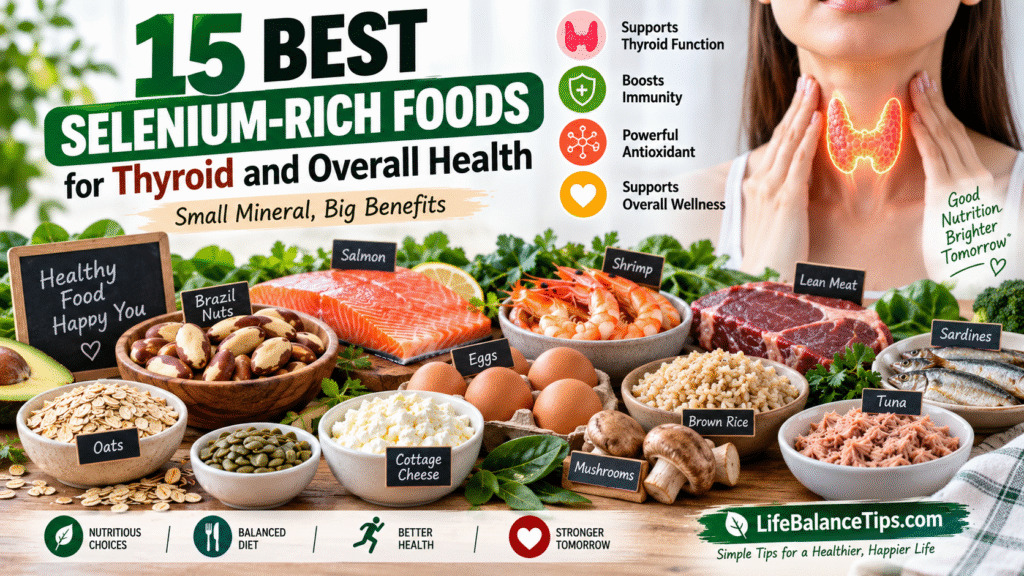
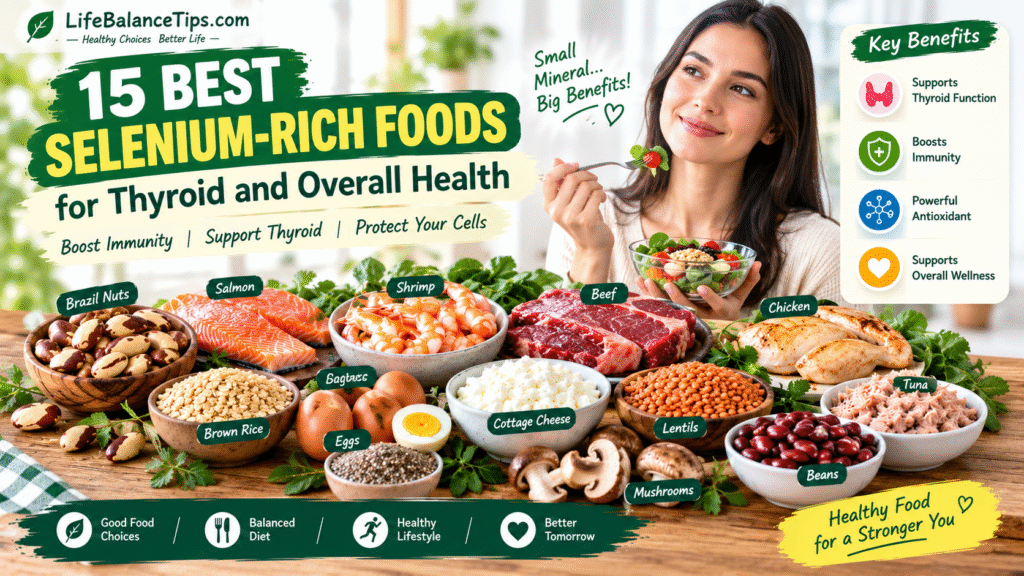
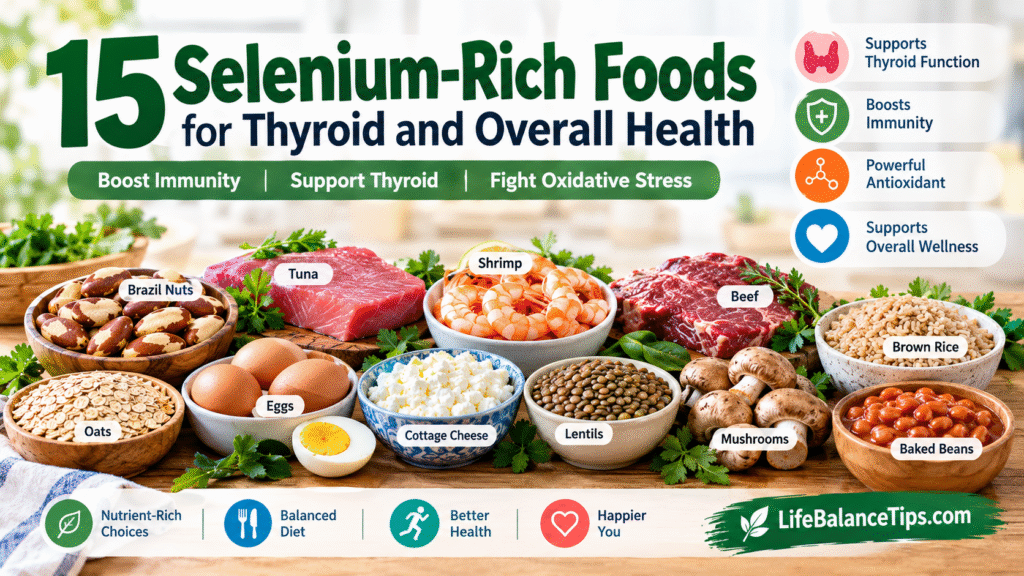
15 Best Selenium-Rich Foods
1. Brazil Nuts
Brazil nuts are among the richest dietary sources of selenium.
According to the NIH Office of Dietary Supplements, 1 ounce—about 6–8 Brazil nuts—can contain approximately 544 mcg of selenium, although the amount can vary considerably. (ODs.nih)
Because their selenium content is so high, you don’t need a large serving.
Simple idea: Have a small amount occasionally rather than eating a large handful every day.
Important: One Brazil nut may already contain a substantial amount of selenium, and consuming too many regularly can push intake above the recommended upper limit. (ODs.nih)
2. Tuna
Tuna is a protein-rich seafood that provides a substantial amount of selenium.
Three ounces of cooked yellowfin tuna provide approximately 92 mcg of selenium, according to NIH data. (ODs.nih)
Tuna can be added to:
- Salads
- Whole-grain sandwiches
- Rice bowls
- Vegetable wraps
- Homemade pasta dishes
Choose preparations that fit your overall dietary needs, and vary your seafood choices rather than relying on one type of fish.
3. Sardines
Sardines are another seafood option that provides selenium along with protein and other nutrients.
A 3-ounce serving of canned sardines provides approximately 45 mcg of selenium. (ODs.nih)
You can enjoy sardines with:
- Whole-grain toast
- Salads
- Brown rice
- Vegetables
- Homemade sandwiches
They can be particularly convenient because canned sardines require little preparation.
4. Shrimp
Shrimp is a popular seafood choice and a good source of selenium.
Three ounces of cooked shrimp provide approximately 42 mcg of selenium. (ODs.nih)
For a balanced meal, combine shrimp with vegetables and a whole grain such as brown rice or quinoa.
5. Pork
Pork is another selenium-containing protein source.
Three ounces of roasted pork chop provide approximately 37 mcg of selenium. (ODs.nih)
For a healthier meal, consider pairing lean pork with:
- Steamed vegetables
- Beans
- Brown rice
- A large salad
The overall quality of the meal matters—not just one nutrient.
6. Beef
Beef can also contribute selenium to your diet.
Three ounces of roasted bottom-round beef contain approximately 37 mcg of selenium. (ODs.nih)
If you eat beef, choosing leaner cuts and keeping portions moderate can help you build a balanced eating pattern.
Try combining beef with plenty of vegetables and a high-fiber carbohydrate source.
7. Spaghetti
Whole meals can contribute selenium too.
According to NIH data, one cup of cooked spaghetti provides approximately 33 mcg of selenium. (ODs.nih)
You can make a more nutrient-dense pasta meal by adding:
- Tomato sauce
- Mushrooms
- Spinach
- Beans
- Lean chicken or seafood
- Other colorful vegetables
8. Turkey
Turkey is a protein-rich food that can provide selenium.
Three ounces of roasted turkey contain approximately 26 mcg of selenium. (ODs.nih)
Turkey can be used in:
- Grain bowls
- Salads
- Wraps
- Sandwiches
- Vegetable-based meals
Pairing turkey with vegetables and whole grains creates a more balanced meal than relying on meat alone.
9. Chicken
Chicken is another practical source of selenium.
Three ounces of roasted chicken light meat provide approximately 22 mcg of selenium. (ODs.nih)
Chicken works well in everyday meals because it can be combined with many different foods.
Try grilled chicken with:
Chicken + brown rice + vegetables + yogurt-based dressing
This combination provides protein, carbohydrates, vegetables, and additional nutrients.
10. Cottage Cheese
Cottage cheese can provide selenium while also supplying protein.
One cup of 1% milkfat cottage cheese contains approximately 20 mcg of selenium. (ODs.nih)
You can eat cottage cheese with:
- Fresh fruit
- Whole-grain toast
- Vegetables
- Oats
- Seeds
Choose a variety that fits your overall nutritional needs, particularly if you are watching sodium intake.
11. Eggs
Eggs are an affordable and versatile source of selenium.
One large hard-boiled egg provides approximately 15 mcg of selenium. (ODs.nih)
Eggs can easily fit into breakfast, lunch, or dinner.
Try:
- Boiled eggs with whole-grain toast
- Vegetable omelets
- Egg and avocado toast
- Eggs with spinach and mushrooms
12. Baked Beans
Beans can contribute selenium to a plant-based diet.
One cup of plain or vegetarian canned baked beans provides approximately 13 mcg of selenium. (ODs.nih)
Beans also provide protein and fiber, making them useful in balanced meals.
For a simple meal, combine beans with:
- Brown rice
- Vegetables
- Whole-grain bread
- A fresh salad
13. Oatmeal
Oatmeal is another food that can contribute selenium.
One cup of cooked oatmeal provides approximately 13 mcg of selenium. (ODs.nih)
For a nutrient-rich breakfast, add:
- Berries
- Banana
- Yogurt
- Chia seeds
- Walnuts
- Cinnamon
Remember that the selenium content of plant foods can vary depending on growing conditions and soil selenium levels. (ODs.nih)
14. Mushrooms
Mushrooms can provide selenium and are easy to add to many meals.
A half-cup serving of grilled portobello mushrooms contains approximately 13 mcg of selenium according to NIH data. (ODs.nih)
Try adding mushrooms to:
- Omelets
- Stir-fries
- Soups
- Pasta
- Grain bowls
- Vegetable sandwiches
15. Brown Rice
Brown rice provides selenium along with whole-grain carbohydrates.
One cup of cooked long-grain brown rice contains approximately 12 mcg of selenium. (ODs.nih)
Use brown rice as a base for balanced meals with vegetables and a protein source such as beans, eggs, chicken, tofu, fish, or shrimp.
Selenium-Rich Foods at a Glance
| Food | Approx. Selenium |
| Brazil nuts, 1 oz | 544 mcg |
| Yellowfin tuna, 3 oz | 92 mcg |
| Sardines, 3 oz | 45 mcg |
| Shrimp, 3 oz | 42 mcg |
| Pork chop, 3 oz | 37 mcg |
| Beef steak, 3 oz | 37 mcg |
| Spaghetti, cooked, 1 cup | 33 mcg |
| Turkey, 3 oz | 26 mcg |
| Chicken, 3 oz | 22 mcg |
| Cottage cheese, 1 cup | 20 mcg |
| Egg, 1 large | 15 mcg |
| Baked beans, 1 cup | 13 mcg |
| Oatmeal, 1 cup | 13 mcg |
| Portabella mushrooms, ½ cup | 13 mcg |
| Brown rice, 1 cup | 12 mcg |
Values are approximate and can vary based on food variety, preparation, growing conditions, and other factors. Values above are based on NIH Office of Dietary Supplements data. (ODs.nih)
How Much Selenium Do You Need Every Day?
For most adults, the recommended amount is:
- Adults: 55 mcg/day
- Pregnancy: 60 mcg/day
- Breastfeeding: 70 mcg/day
These are dietary reference values for healthy people. (ODs.nih)
The amount needed by children and teenagers differs according to age.
It’s usually better to obtain nutrients from a varied diet rather than taking high-dose supplements without a specific reason.
Can Selenium Support Thyroid Health?
Yes, selenium is important for normal thyroid function.
The thyroid contains high levels of selenium, and selenium-dependent proteins participate in processes involved in thyroid hormone metabolism and antioxidant protection. (ODs.nih)
However, this does not mean that eating extra selenium will treat a thyroid condition.
The NIH notes that whether selenium supplements can help treat or reduce the risk of thyroid disease remains unclear and requires more research. (ODs.nih)
If you have a diagnosed thyroid condition, discuss supplements with your healthcare professional rather than taking high-dose selenium on your own.
Selenium and Immune Health
Selenium is also involved in normal immune function.
The body uses selenium in proteins involved in cellular protection and other biological processes. (ODs.nih)
A varied diet containing seafood, eggs, poultry, dairy, whole grains, legumes, and nuts can help provide selenium alongside other essential nutrients.
No single food can replace an overall balanced diet.
Can You Get Too Much Selenium?
Yes.
Although selenium is essential, excessive intake over time can cause selenium toxicity, also called selenosis.
Possible symptoms include:
- Garlic-like breath odor
- Nausea
- Diarrhea
- Metallic taste
- Skin rashes
- Hair loss
- Brittle or lost nails
- Nervous-system problems
Extremely high intake can cause more serious health problems. (ODs.nih)
For adults, the tolerable upper intake level is 400 mcg per day from food and supplements combined. (ODs.nih)
Why Brazil Nuts Need Special Attention
Brazil nuts are unusual because their selenium content can be extremely high and varies substantially.
The NIH reports that one Brazil nut may contain around 68–91 mcg of selenium, although the amount varies. (ODs.nih)
Therefore, eating a large handful of Brazil nuts every day isn’t a good strategy for increasing selenium.
More isn’t always better when it comes to selenium.
Are Selenium Supplements Necessary?
Many people can obtain selenium through food.
The best approach for most healthy adults is to focus on a varied diet rather than automatically taking a selenium supplement. The NIH notes that selenium is naturally present in many foods, particularly seafood, meat, poultry, eggs, dairy products, grains, beans, lentils, and nuts. (ODs.nih)
A healthcare professional may recommend supplementation in certain situations, but the appropriate amount depends on the individual.
Avoid taking high-dose selenium supplements simply because selenium is associated with thyroid or immune health.
Plant-Based Selenium Sources
People following vegetarian or plant-focused diets can obtain selenium from foods such as:
- Lentils
- Beans
- Whole grains
- Oatmeal
- Brown rice
- Mushrooms
- Nuts
For more practical nutrition tips, read our guide on How to Build a Balanced Plate: 7 Simple Steps for
One important point is that selenium levels in plant foods can vary considerably depending on the selenium content of the soil where the plants were grown. (ODs.nih)
This means that the exact selenium content of a plant food isn’t always predictable.
Simple Ways to Add Selenium-Rich Foods to Your Diet
You don’t need to completely change your diet.
Try these simple combinations:
Breakfast
Oatmeal + yogurt + fruit
Lunch
Brown rice + beans + vegetables
Dinner
Chicken or fish + vegetables + whole grains
Snack
A small amount of nuts or yogurt
Quick meal
Eggs + whole-grain toast + mushrooms + vegetables
The goal is variety rather than focusing on one “superfood.”
Selenium-Rich Foods vs. Supplements
| Selenium from Food | Selenium Supplements |
| Comes with other nutrients | Usually provides concentrated selenium |
| Easy to include in balanced meals | Can make excessive intake easier |
| Amount varies by food | Dose is listed on the label |
| Usually preferred as part of a varied diet | May be useful in specific situations |
| Less likely to cause excessive intake when eating a varied diet | High doses can increase toxicity risk |
If you’re considering selenium supplements, especially because of a thyroid concern, discuss your situation with a healthcare professional.
Frequently Asked Questions
1. What is the best selenium-rich food?
Brazil nuts are exceptionally high in selenium, but because their selenium content can be very high and variable, they should not be consumed in large quantities. Seafood, eggs, poultry, meat, dairy products, and whole grains are also useful sources. (ODs.nih)
2. How much selenium do adults need?
Most adults need about 55 mcg of selenium per day. Pregnant adults need 60 mcg and breastfeeding adults need 70 mcg. (ODs.nih)
3. Can selenium improve thyroid health?
Selenium is important for normal thyroid function, but selenium supplements have not been established as a treatment for thyroid disease. More research is needed. (ODs.nih)
4. Can I get selenium from vegetarian foods?
Yes. Beans, lentils, oatmeal, brown rice, mushrooms, grains, and nuts can provide selenium. However, selenium levels in plant foods can vary depending on soil conditions. (ODs.nih)
5. Can you have too much selenium?
Yes. Excessive selenium intake can cause symptoms such as nausea, metallic taste, hair or nail problems, and nervous-system effects. The adult upper limit is 400 mcg per day. (ODs.nih)
6. Should I take selenium supplements every day?
Not necessarily. Many people can obtain adequate selenium through food. High-dose supplements should not be taken routinely without appropriate medical guidance.
7. Are Brazil nuts safe?
Brazil nuts can be part of a diet, but they contain exceptionally high and variable amounts of selenium. Eating too many regularly can lead to excessive selenium intake. (ODs.nih)
NIH Office of Dietary Supplements Selenium Fact Sheet
Final Thoughts
Adding selenium-rich foods to a varied diet can help you meet your body’s selenium needs. Seafood, eggs, poultry, meat, dairy products, whole grains, beans, lentils, mushrooms, and nuts all provide useful options.
Selenium is particularly important for normal thyroid function, cellular protection, and immune processes. However, it is a nutrient where more is not necessarily better. Brazil nuts deserve special caution because their selenium content can be exceptionally high.
Instead of relying on one food or a high-dose supplement, focus on a balanced diet that includes a variety of nutrient-rich foods.
Medical Disclaimer: This article is for general educational purposes only and is not a substitute for professional medical advice, diagnosis, or treatment. If you have a thyroid condition, kidney disease, take medications, or are considering selenium supplements, consult a qualified healthcare professional.
By Life Balance Tips Team