
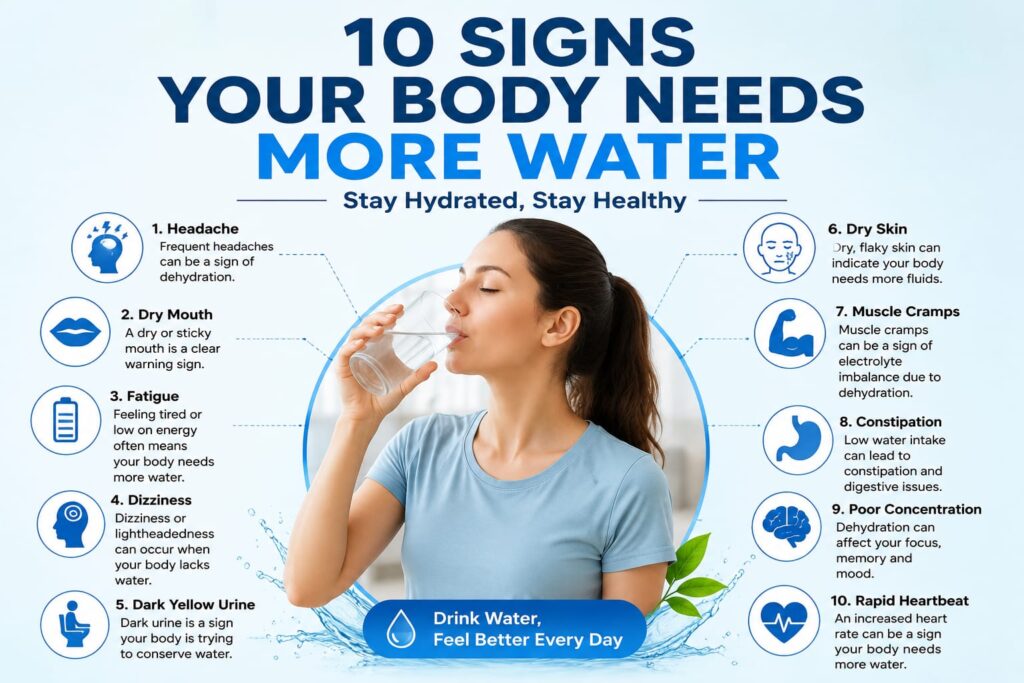
Water is one of the most important things your body needs every day. It supports digestion, circulation, body temperature, skin health, and energy levels. Yet many people ignore the early Signs Your Body Needs More Water until they start feeling tired, dizzy, or unwell.
Your body loses water through sweat, urine, breathing, and daily activities. During hot weather, exercise, or illness, water loss may increase quickly. Understanding the Signs Your Body Needs More Water can help you stay healthy and avoid common dehydration problems.
In this article, you will learn about common signs of dehydration, practical hydration habits, and simple lifestyle tips that can support your body naturally.
You may also like to read our guide on lifebalancetips.com for more natural health tips.
Why Water Is So Important for Your Body
The human body is made up of nearly 60% water. Every organ depends on proper hydration to function well. Water helps:
- Carry nutrients and oxygen
- Support digestion
- Regulate body temperature
- Keep joints lubricated
- Remove waste from the body
- Support healthy skin
- Maintain energy levels
When your body does not get enough water, it may show several warning signs. Recognizing these body needs water signs early may help prevent discomfort and dehydration.
These signs your body needs more water should never be ignored because dehydration can affect your energy and health.
Common Signs Your Body Needs More Water
Here are some of the most common Signs Your Body Needs More Water that people often overlook.
1. Constant Thirst
Thirst is the most obvious sign that your body may need more fluids. If you feel thirsty often, your body is already asking for hydration.
Many people ignore mild thirst during work or travel. Over time, this may lead to dehydration symptoms such as headaches or fatigue.
Helpful Tip
Carry a reusable water bottle and sip water regularly throughout the day instead of waiting until you feel extremely thirsty.
2. Dark Yellow Urine
Urine color can reveal a lot about your hydration level.
- Light yellow urine usually indicates good hydration
- Dark yellow or amber-colored urine may suggest low water intake
One of the easiest ways to recognize Signs Your Body Needs More Water is by checking your urine color daily.
When to Be Careful
If dark urine continues even after drinking enough water, consider consulting a healthcare professional.
3. Dry Mouth and Bad Breath
Saliva helps keep your mouth clean and fresh. When you do not drink enough water, saliva production may reduce.
This can lead to:
- Dry mouth
- Sticky feeling in the mouth
- Bad breath
- Cracked lips
Dry mouth is one of the early symptoms of low water intake that many people ignore.
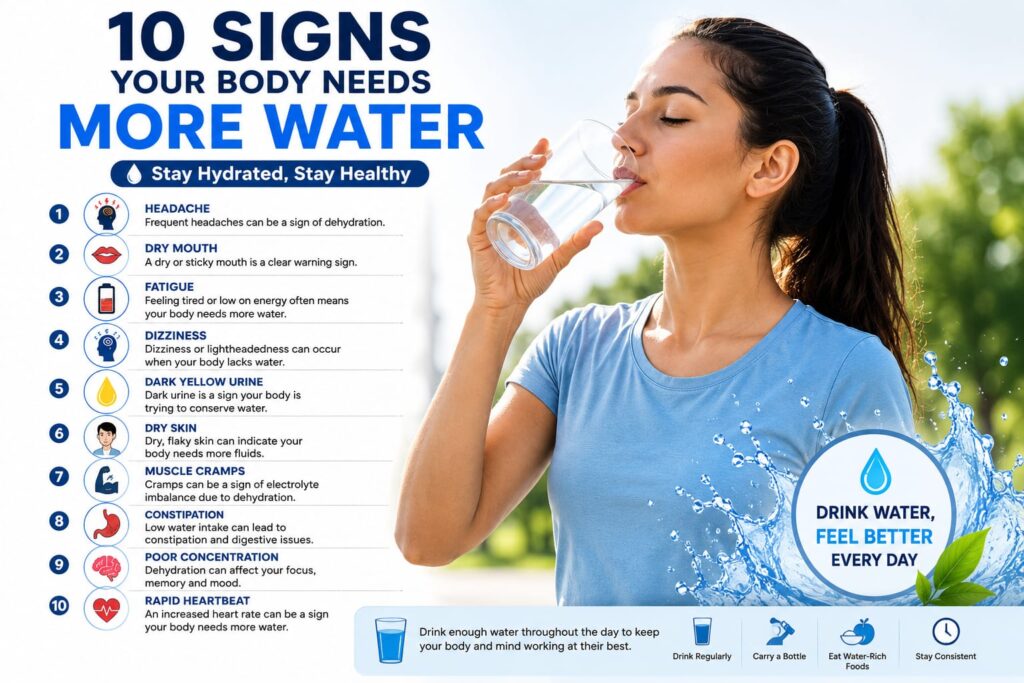
Dehydration may affect blood flow and oxygen supply to the brain, which can sometimes trigger headaches.
Learning the signs your body needs more water can help you stay healthy and hydrated every day.
4. Frequent Headaches
People who spend long hours in the sun or skip water during busy schedules may notice dehydration-related headaches more often.
If you experience headaches regularly, increasing water intake may help support better hydration.
5. Feeling Tired All the Time
One of the most common Signs Your Body Needs More Water is unexplained fatigue.
When the body lacks fluids:
- Blood circulation may slow down
- Oxygen delivery may become less efficient
- Energy levels may drop
Even mild dehydration can make you feel tired, sleepy, or less productive.
Practical Tip
Start your morning with one or two glasses of water before tea or coffee.
6. Dry Skin
Your skin also reflects your hydration level. Dry, flaky, or dull-looking skin may sometimes indicate poor hydration.
Water supports skin elasticity and moisture balance. Proper hydration, along with healthy foods, may help maintain healthier-looking skin naturally.
Skin Hydration Tips
- Drink water consistently
- Eat fruits with high water content
- Avoid excessive sugary drinks
- Use gentle skincare products
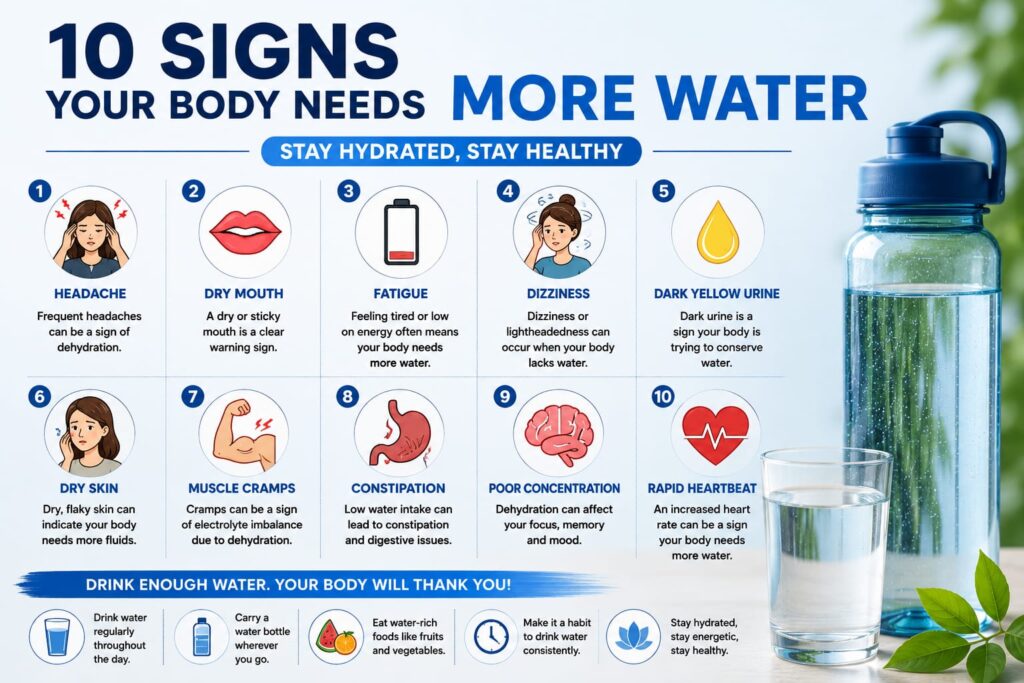
7. Dizziness or Lightheadedness
Feeling dizzy after standing up quickly or spending time outdoors may be related to dehydration.
Low fluid levels may affect blood pressure and circulation, causing lightheadedness.
This is especially common during summer months or after heavy sweating.
8. Muscle Cramps
Muscles need fluids and electrolytes to function properly. Low hydration levels may contribute to muscle cramps or stiffness, especially during exercise or hot weather.
Athletes and outdoor workers should pay extra attention to summer hydration tips to reduce the risk of dehydration.
9. Constipation and Poor Digestion
Water supports healthy digestion and bowel movement. Insufficient water intake may slow digestion and lead to constipation.
One of the lesser-known Signs Your Body Needs More Water is digestive discomfort.
Foods That May Help
- Cucumber
- Watermelon
- Oranges
- Coconut water
- Soups
- Leafy vegetables
These foods contain high amounts of water and can support hydration naturally.
Read more: lifebalancetips.com
10. Increased Sugar Cravings
Sometimes the body may confuse thirst with hunger or sugar cravings.
If you suddenly crave sweets, try drinking a glass of water first. Hydration may help reduce unnecessary snacking in some cases.
Many people ignore the early signs your body needs more water until dehydration symptoms become serious.
Helpful Table: Signs and Possible Hydration Solutions
| Symptom | Possible Cause | Hydration Tip |
| Dark urine | Low fluid intake | Drink water regularly |
| Dry mouth | Reduced saliva | Sip water throughout the day |
| Headache | Mild dehydration | Increase fluid intake |
| Fatigue | Poor hydration | Start day with water |
| Constipation | Lack of fluids | Eat fiber-rich foods and drink water |
| Muscle cramps | Fluid loss through sweat | Stay hydrated during exercise |
| Dizziness | Low circulation | Drink water slowly and rest |
| Dry skin | Poor hydration balance | Include water-rich foods |
How Much Water Does Your Body Need?
There is no single rule for everyone because hydration needs depend on:
- Weather
- Activity level
- Age
- Body size
- Diet
- Health conditions
However, many health experts generally recommend:
- Around 2–3 liters of fluids daily for adults
- More fluids during summer or exercise
Listening to your body is important. The best approach is to recognize the Signs Your Body Needs More Water before dehydration becomes severe.
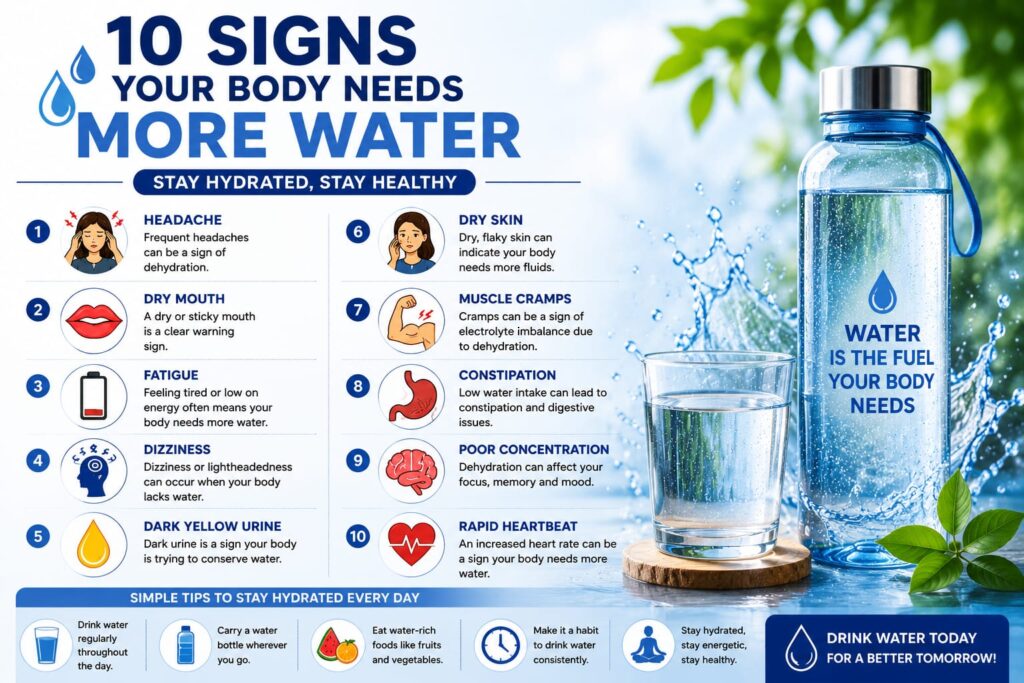
Best Ways to Stay Hydrated Naturally
If you want to improve hydration without relying on sugary beverages, these natural methods may help.
Drink Water Regularly
Do not wait until you feel very thirsty. Small amounts throughout the day are often more effective.
Eat Water-Rich Foods
Many fruits and vegetables contain high water content.
Great Hydrating Foods
- Watermelon
- Cucumber
- Strawberries
- Tomatoes
- Lettuce
- Oranges
These foods can support hydration while also providing vitamins and minerals.
Limit Excessive Sugary Drinks
Soft drinks and high-sugar beverages may not hydrate the body effectively when consumed in large amounts.
Plain water, coconut water, lemon water, and herbal drinks are often considered better hydration choices.
Use Summer Hydration Tips
Hot weather increases sweat loss, making hydration even more important.
Useful Summer Hydration Tips
- Carry water outdoors
- Avoid excessive sun exposure
- Drink water before exercise
- Wear breathable clothing
- Eat cooling fruits
Following these summer hydration tips may help maintain healthy fluid levels.
Set Water Reminders
Busy schedules often make people forget to drink enough water.
Simple ideas include:
- Mobile reminders
- Marked water bottles
- Drinking water before meals
- Keeping water near your workspace
These habits may help improve consistency.
Signs of Severe Dehydration
Mild dehydration is common, but severe dehydration may require medical attention.
Warning Signs Include
- Extreme dizziness
- Rapid heartbeat
- Very dry skin
- Confusion
- Fainting
- Very little urination
If severe symptoms occur, professional medical care is important.
Hydration Tips for Different Age Groups
Children
Children may become dehydrated quickly during outdoor play.
Encourage:
- Frequent water breaks
- Fruits instead of sugary snacks
- Hydration during sports
Adults
Working adults often ignore hydration during long office hours.
Helpful habits:
- Keep a bottle at your desk
- Drink water after tea or coffee
- Avoid skipping fluids during travel
Older Adult
Older adults may feel less thirsty even when dehydrated.
Regular fluid intake is especially important for maintaining overall wellness.
Morning Habits That Can Support Better Hydration
Healthy morning habits may improve hydration throughout the day.
Simple Morning Routine
- Drink 1–2 glasses of water after waking up
- Eat fruit at breakfast
- Avoid too much caffeine on an empty stomach
- Carry a water bottle before leaving home
These habits may help reduce common dehydration symptoms.
Can Coffee and Tea Cause Dehydration?
Moderate tea and coffee intake is generally fine for most people. However, relying only on caffeinated drinks instead of water may not support ideal hydration.
Balancing caffeine with adequate water intake is often recommended.
How to Stay Hydrated Naturally While Traveling
Travel can disrupt normal hydration habits.
Travel Hydration Tips
- Carry a reusable bottle
- Drink water before long journeys
- Avoid excessive salty snacks
- Eat fruits during travel
- Limit sugary soft drinks
These habits can support hydration naturally during busy travel schedules.
FAQs About Signs Your Body Needs More Water
1. What are the earliest Signs Your Body Needs More Water?
Common early signs include thirst, dry mouth, dark urine, tiredness, and headaches.
2. How can I tell if I am dehydrated?
Dark urine, dizziness, dry skin, fatigue, and constipation are common signs of dehydration.
3. Can dehydration affect energy levels?
Yes, low fluid intake may reduce energy and make you feel tired or weak.
4. Which foods help with hydration naturally?
Watermelon, cucumber, oranges, strawberries, soups, and coconut water may help support hydration.
5. Are dehydration symptoms worse in summer?
Yes, hot weather increases sweating and fluid loss, making dehydration more common during summer.
6. How much water should I drink daily?
Needs vary by person, but many adults generally require around 2–3 liters of fluids daily.
7. Can dry skin be caused by low water intake?
Dry skin may sometimes be linked to dehydration and insufficient fluid intake.
8. What are the symptoms of low water intake?
Common symptoms of low water intake include dark urine, headaches, fatigue, dry mouth, and dizziness.
According to the who.int, staying properly hydrated is essential for overall health and body function.
Conclusion
Understanding the Signs Your Body Needs More Water is essential for maintaining good health and daily energy. Your body often gives early warning signs such as thirst, dark urine, headaches, fatigue, and dry skin when hydration levels drop.
Simple habits like drinking water regularly, eating hydrating foods, and following healthy routines may help support better hydration naturally. Paying attention to these small signals can make a big difference in your overall wellness.
Staying hydrated is one of the easiest and most effective ways to support your body every day.
Disclaimer
This article is for informational and educational purposes only and is not intended as medical advice. Hydration needs vary from person to person. If you experience severe dehydration symptoms or ongoing health concerns, consult a qualified healthcare professional for proper evaluation and guidance.
By Life Balance Tips Team