
Introduction
Your digestive system does much more than process food. It plays an important role in nutrient absorption, immune function, energy levels, skin health, and overall well-being. When Gut Health Is Unhealthy, your body often sends warning signals that should not be ignored.
Many people experience digestive discomfort, fatigue, skin issues, or mood changes without realizing that poor gut health may be a contributing factor. Understanding the early signs can help you make positive lifestyle changes before the problem worsens.
In this article, we will discuss the top signs of poor gut health, common causes of an unhealthy gut, and practical strategies that may help restore balance naturally.

What Does Gut Health Mean?
Gut health refers to the balance of microorganisms living in your digestive tract. These bacteria, fungi, and other microbes collectively form the gut microbiome.
A healthy gut microbiome helps:
- Digest food efficiently
- Absorb nutrients
- Support immune function
- Maintain regular bowel movements
- Produce certain vitamins
- Support mental well-being
When Gut Health Is Unhealthy, harmful bacteria may outnumber beneficial bacteria, leading to various physical and emotional symptoms.
Why Gut Health Matters
Research suggests that the gut is connected to many systems throughout the body. In fact, experts often refer to the gut as the body’s “second brain” because of its close relationship with the nervous system.
Poor gut health may influence:
- Digestion
- Energy levels
- Sleep quality
- Immune response
- Skin appearance
- Weight management
- Mood and stress levels
Recognizing gut health warning signs early may help support long-term wellness.
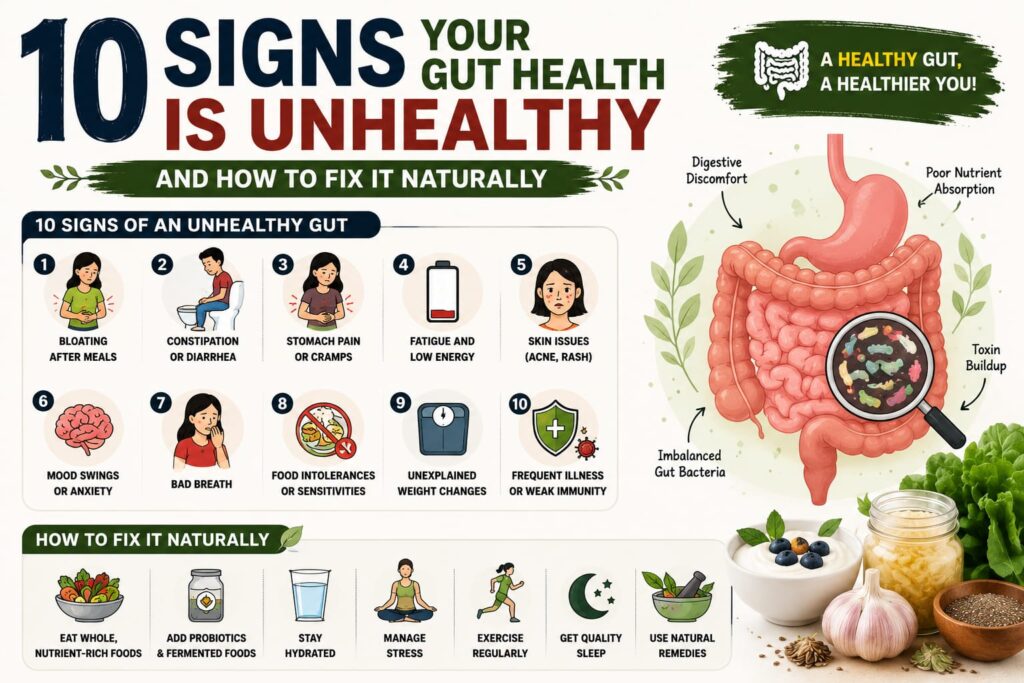
10 Signs Your Gut Health Is Unhealthy
1. Frequent Bloating and Gas
One of the most common unhealthy gut symptoms is persistent bloating.
While occasional bloating is normal, frequent bloating after meals may indicate an imbalance in gut bacteria.
Possible Causes
- Poor digestion
- Food intolerances
- Excessive processed foods
- Imbalance of gut microbes
What May Help
- Eat slowly
- Reduce ultra-processed foods
- Increase fiber gradually
- Drink enough water
If Gut Health Is Unhealthy, bloating often becomes a recurring problem rather than an occasional inconvenience.
You may also like our guide on Morning Drinks for Gut Health.
2. Irregular Bowel Movements
Changes in bowel habits can be important indicators of poor digestive health.
These changes may include:
- Constipation
- Diarrhea
- Frequent urgency
- Incomplete bowel movements
Healthy digestion generally supports regular and comfortable bowel movements.
Natural Tips
- Stay hydrated
- Eat fiber-rich foods
- Maintain physical activity
- Follow consistent meal timings
Persistent irregularity may be one of the major signs your gut is unhealthy.
3. Constant Fatigue
Do you feel tired even after getting enough sleep?
An unhealthy gut may affect nutrient absorption and influence energy production within the body.
Why It Happens
Poor digestion can sometimes reduce the body’s ability to absorb essential nutrients effectively.
Ways to Support Energy
- Improve sleep quality
- Eat balanced meals
- Include fruits and vegetables
- Support digestive health naturally
Many people discover that improving gut function may help support better energy levels over time.
4. Food Intolerances
Food intolerances can sometimes develop when Gut Health Is Unhealthy.
Common triggers include:
- Dairy products
- Gluten-containing foods
- Highly processed foods
- Artificial sweeteners
Common Symptoms
- Bloating
- Gas
- Stomach discomfort
- Digestive upset
Keeping a food diary may help identify patterns and potential triggers.
5. Frequent Sugar Cravings
Strong cravings for sugary foods may sometimes indicate an imbalance in gut bacteria.
Certain microbes thrive on sugar and may influence cravings.
Healthier Alternatives
- Fresh fruits
- Nuts
- Seeds
- Yogurt
- Homemade healthy snacks
Reducing added sugar can support a healthier digestive environment.
6. Skin Problems
Your skin and gut are closely connected.
Some individuals notice skin issues when Gut Health Is Unhealthy.
Common Skin Concerns
- Dry skin
- Acne breakouts
- Irritation
- Dull complexion
While skin conditions have multiple causes, improving overall digestive wellness may support healthier-looking skin.
Helpful Habits
- Eat antioxidant-rich foods
- Stay hydrated
- Get adequate sleep
- Manage stress
7. Weakened Immune Function
A large portion of the immune system is associated with the digestive tract.
When gut balance is disrupted, immune function may also be affected.
Possible Signs
- Frequent minor illnesses
- Slow recovery
- Feeling run down often
Natural Support
- Eat diverse plant foods
- Maintain healthy sleep habits
- Exercise regularly
- Reduce chronic stress
Supporting gut health is often recommended as part of a healthy immune-supporting lifestyle.
You may also like our guide on Foods That Reduce Water Retention and Bloating Naturally

8. Mood Changes and Brain Fog
The gut and brain communicate through what is commonly called the gut-brain axis.
Because of this connection, Gut Health Is Unhealthy may sometimes be associated with:
- Brain fog
- Difficulty concentrating
- Irritability
- Mood fluctuations
Lifestyle Strategies
- Regular physical activity
- Quality sleep
- Stress management
- Nutritious meals
Improving digestive health may support overall mental wellness.
9. Unexplained Weight Changes
Unexpected weight gain or difficulty maintaining a healthy weight may sometimes be linked to digestive health.
A balanced gut microbiome may help support:
- Appetite regulation
- Nutrient utilization
- Metabolic processes
Healthy Habits
- Eat whole foods
- Stay active
- Avoid excessive sugary drinks
- Focus on long-term habits
Weight changes alone do not confirm poor gut health, but they may occur alongside other symptoms.
10. Poor Sleep Quality
Sleep and gut health influence each other.
People experiencing signs of poor gut health may also notice:
- Difficulty falling asleep
- Interrupted sleep
- Feeling tired upon waking
Ways to Improve Sleep
- Follow a consistent bedtime routine
- Limit late-night heavy meals
- Reduce screen exposure before bed
- Manage stress levels
Better digestive health may contribute to improved sleep quality over time.
Common Causes of Poor Gut Health
Several lifestyle factors may contribute when Gut Health Is Unhealthy.
Common Causes Include
- Highly processed diets
- Excess sugar intake
- Low fiber consumption
- Chronic stress
- Poor sleep habits
- Lack of exercise
- Dehydration
- Smoking
- Excessive alcohol consumption
Understanding these causes can help guide healthier choices.
If your Gut Health Is Unhealthy, you may experience symptoms such as bloating, fatigue, digestive discomfort, and frequent illness.
Understanding the signs that your Gut Health Is Unhealthy is the first step toward improving digestion and overall well-being naturally.
Best Foods That May Support Gut Health
| Food | Potential Benefits |
| Yogurt | Contains beneficial bacteria |
| Kefir | Supports microbial diversity |
| Oats | Rich in fiber |
| Bananas | Provide prebiotic compounds |
| Apples | Contains beneficial fiber |
| Garlic | Supports healthy gut bacteria |
| Onions | Rich in prebiotics |
| Lentils | High in fiber |
| Beans | Support digestion |
| Leafy Greens | Provide important nutrients |
Including a variety of these foods may help improve digestive balance naturally.

How to Improve Gut Health Naturally
If Gut Health Is Unhealthy, simple lifestyle changes may help support recovery over time.
Eat More Fiber
Fiber feeds beneficial gut bacteria.
Good sources include:
- Fruits
- Vegetables
- Whole grains
- Legumes
- Seeds
Stay Hydrated
Water supports digestion and healthy bowel movements.
Aim to drink water consistently throughout the day.
Reduce Ultra-Processed Foods
Highly processed foods often contain excess sugar, unhealthy fats, and additives.
Replacing them with whole foods may support gut health.
Exercise Regularly
Physical activity can support digestion and promote microbial diversity.
Examples include:
- Walking
- Cycling
- Yoga
- Swimming
Manage Stress
Chronic stress may negatively affect digestive function.
Helpful practices include:
- Meditation
- Deep breathing
- Nature walks
- Mindfulness exercises
Prioritize Sleep
Quality sleep supports both digestive and overall health.
Aim for a consistent sleep schedule whenever possible.
Natural Daily Habits for Better Gut Health
Here are some simple, natural ways to improve gut health:
- Eat slowly and chew thoroughly
- Include vegetables with every meal
- Limit added sugars
- Drink enough water
- Stay physically active
- Manage stress effectively
- Get 7–9 hours of sleep
- Choose whole foods more often
Consistency is often more important than perfection.
When Should You Seek Medical Advice?
Although lifestyle improvements can support digestive wellness, persistent symptoms should not be ignored.
Consider speaking with a qualified healthcare professional if you experience:
- Severe abdominal pain
- Blood in stool
- Unexplained weight loss
- Persistent diarrhea
- Ongoing digestive discomfort
These symptoms may require professional evaluation.
According to the World Health Organization, maintaining good digestive health is important for overall well-being.
Frequently Asked Questions (FAQs)
1. What are the first signs your gut is unhealthy?
Common early signs include bloating, gas, constipation, diarrhea, fatigue, and food sensitivities.
2. Can poor gut health affect the skin?
Yes. Some people notice acne, dryness, or irritation when digestive health is not optimal.
3. How long does it take to improve gut health naturally?
Results vary depending on lifestyle, diet, and individual factors. Consistent healthy habits may help over time.
4. Does stress affect gut health?
Yes. Chronic stress can influence digestion and gut bacteria balance.
5. What foods help support gut health?
Fiber-rich foods, fruits, vegetables, legumes, yogurt, and fermented foods are often recommended.
6. Can poor sleep impact gut health?
Yes. Sleep and digestive health are closely connected and influence each other.
7. Are sugar cravings linked to gut health?
Sometimes. Certain gut bacteria may influence food cravings and eating behaviors.
8. What is the best natural way to improve gut health?
A combination of healthy eating, regular exercise, hydration, stress management, and good sleep habits is generally considered effective.
Health Disclaimer
This article is for informational and educational purposes only and should not be considered medical advice. Health conditions vary from person to person. Always consult a qualified healthcare professional for personalized guidance regarding any health concerns, symptoms, or dietary changes.
Conclusion
Your body often provides clues when Gut Health Is Unhealthy. Symptoms such as bloating, irregular digestion, fatigue, skin problems, mood changes, and poor sleep may all serve as important warning signs.
The good news is that many of these issues can often be addressed through simple lifestyle habits. Eating more fiber-rich foods, staying hydrated, managing stress, exercising regularly, and prioritizing sleep are among the most effective natural ways to improve gut health.
By recognizing the early signs of poor gut health and taking proactive steps, you can support better digestion, improved well-being, and a healthier lifestyle overall.
By Life Balance Tips Team