
Have you ever finished lunch or dinner and immediately sat down on the couch? It is a common habit, especially after a long day at work. But adding a short, comfortable walk after a meal may be a simple way to include more movement in your daily routine.
Walking after eating has attracted attention because research suggests that moving after a meal may help reduce the rise in blood sugar that naturally occurs during digestion. It may also help you break up long periods of sitting and build a more active lifestyle.
Still, there is no need to turn every meal into a workout. A gentle walk is different from intense exercise, and the best routine depends on your comfort, fitness level, and health needs.
In this article, we will explore the benefits of walking after eating, what scientific research actually tells us, how long to walk, and how to make this habit part of everyday life.
Understanding the benefits of walking after eating can help you decide whether a short post-meal walk fits your daily routine.
What Is Walking After Eating?
Walking after eating simply means taking a walk after finishing a meal or snack. Some people walk around their neighborhood, while others stroll indoors, walk through an office, or move around their home.
You do not need special equipment or a gym membership. The aim is to add gentle physical activity during a time when many people remain seated for long periods.
A post-meal walk can be short and relaxed. You should be able to talk comfortably without feeling out of breath. If you are new to exercise, even a few minutes may be a reasonable place to begin.
What Does Research Say About Walking After Eating?
One of the most useful pieces of evidence is a systematic review and meta-analysis published in Sports Medicine in 2023.
Researchers examined eight randomized crossover trials involving 116 participants, including people with and without type 2 diabetes. The review found that exercise after eating reduced post-meal blood glucose excursions compared with inactivity. Post-meal exercise also showed a greater immediate benefit than exercise performed before eating in the included studies.
The researchers noted important limitations. The trials were relatively small, and the individual studies had a high risk of bias. The findings describe short-term changes in blood glucose; they do not prove that walking after meals prevents or cures diabetes.
Read the original study: Post-Meal Exercise and Blood Glucose — Sports Medicine.
What does this mean in everyday life?
A short walk after a meal is a reasonable habit for many people. It may help moderate the immediate rise in blood sugar, but the effect varies by person, meal, activity, and health status.
7 Benefits of Walking After Eating
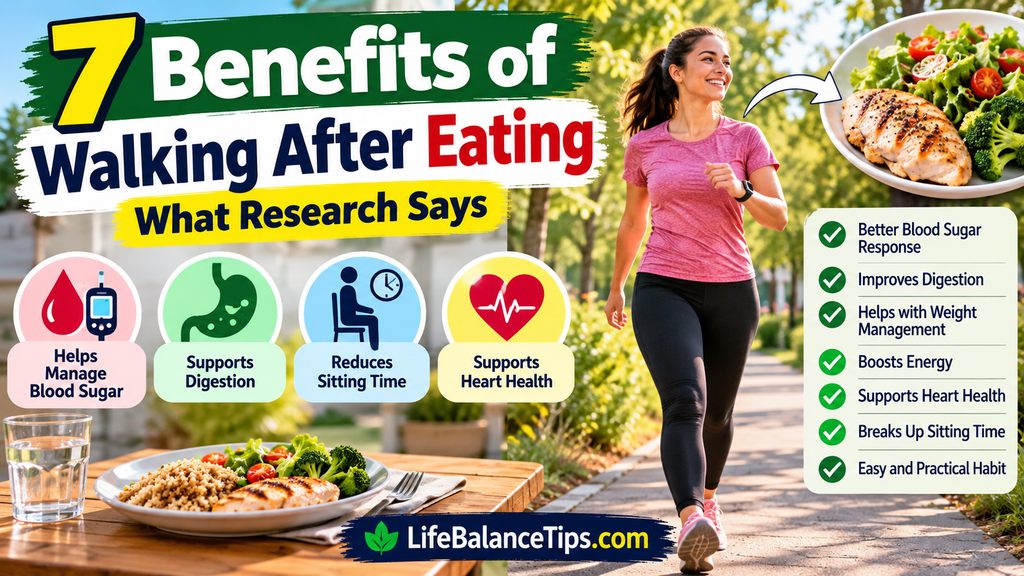
1. It May Help Moderate Post-Meal Blood Sugar
One of the most studied potential benefits of walking after eating is its effect on post-meal blood glucose.
When you eat, your digestive system breaks down carbohydrates into glucose, which enters your bloodstream. Your body then uses insulin and other processes to move and regulate that glucose.
During physical activity, working muscles use energy, including glucose. This can help change the way your body handles the glucose that appears after a meal.
Research suggests that post-meal activity can reduce short-term blood glucose excursions compared with sitting still. However, this does not mean that every walk will produce the same result.
If you have diabetes, do not change prescribed medication or your meal plan based on this article. Ask your healthcare professional how activity fits into your individual blood sugar management plan.
Among the potential benefits of walking after eating, supporting a healthier post-meal blood sugar response is one of the most researched.
2. It Helps Break Up Long Periods of Sitting
Many adults spend hours sitting at a desk, driving, watching television, or using a phone. Even people who exercise occasionally may have long periods of inactivity during the rest of the day.
Walking after a meal offers a practical opportunity to get up and move.
You might walk around your home after breakfast, take a short office walk after lunch, or stroll outside after dinner. These small sessions can help you interrupt sedentary time without reorganizing your entire schedule.
If you cannot take a walk after every meal, choose the opportunity that fits your day. Regular movement throughout the day is more realistic than expecting yourself to follow a perfect routine.
3. It Can Help You Build a Consistent Exercise Habit
Starting an exercise program can feel difficult when the plan is too demanding. You may think you need special clothing, a long workout, or a gym membership before you can begin.
A post-meal walk removes many of these barriers.
Because meals already happen at predictable times, they can serve as a reminder to move. For example, you could take a short walk after dinner on weekdays or walk around the building after lunch.
Linking an existing habit with a new one may make it easier to remember. Over time, you can gradually increase your walking duration if you feel comfortable.
4. It May Support Digestion-Related Comfort
Some people find a gentle walk after eating more comfortable than sitting still. Light movement may also help with feelings of fullness for certain individuals.
However, it is important not to overstate the evidence. Walking is not a guaranteed treatment for indigestion, acid reflux, constipation, or bloating.
If you feel overly full, start slowly or wait until you are comfortable. Avoid vigorous exercise immediately after a large meal if it causes discomfort.
People who regularly experience abdominal pain, persistent reflux, vomiting, difficulty swallowing, or unexplained digestive symptoms should seek medical advice rather than relying only on walking.
5. It May Support General Cardiometabolic Health
Regular physical activity is associated with important health benefits, including better cardiovascular fitness and improved management of several risk factors.
Walking after eating can contribute to your overall activity level. It may also provide a convenient way to make movement part of your daily schedule.
However, a single short walk should not be presented as a way to prevent heart disease or reverse an existing condition. Long-term health depends on many factors, including overall activity, diet, sleep, genetics, and medical care.
Think of post-meal walking as one useful habit within a broader healthy lifestyle.
6. It Can Offer a Break From Screen Time
Lunch and dinner sometimes become screen-based activities. People may finish a meal and continue scrolling through social media, watching videos, or returning immediately to work.
A short walk gives you a chance to step away from those screens.
You might notice your surroundings, talk with a family member, or simply enjoy a few quiet minutes outdoors. If you work from home, a walk can also create a natural transition between eating and returning to your tasks.
Walking does not automatically reduce stress for everyone, but some people find gentle outdoor movement refreshing.
7. It May Help You Work Toward Weekly Activity Goals
The U.S. Centers for Disease Control and Prevention recommends that adults aim for at least 150 minutes of moderate-intensity aerobic activity per week, along with muscle-strengthening activities on at least two days each week.
Short walks after meals can contribute toward that aerobic activity target when their intensity is appropriate.
For example, a 10-minute walk after one meal on most days adds useful movement to your week. If you gradually build up to longer walks, you may find it easier to work toward the recommended amount.
You can review the official guidance here: CDC Physical Activity Guidelines for Adults.
Remember that the goal is to build a routine that fits your abilities, not to force yourself to reach a target overnight.
How Long Should You Walk After Eating?
There is no single duration that is best for everyone. Research has used different exercise durations, intensities, and timings.
A comfortable starting point might be a five- to ten-minute walk. If you feel well and can do so safely, you may gradually walk longer.
| Walking duration | A practical way to use it |
| 5 minutes | A gentle starting point for beginners |
| 10 minutes | A manageable short walk after a meal |
| 15 minutes | An option for people who are comfortable walking longer |
| 20 minutes or more | May help build weekly activity when appropriate |
These are practical examples, not guaranteed treatment doses. The right duration depends on your fitness, mobility, medical needs, and how you feel after eating.
You do not have to walk after every meal to benefit from being more active.
When Should You Walk After Eating?
Some research suggests that moving relatively soon after a meal may have a greater immediate effect on post-meal blood glucose than waiting longer.
In the 2023 meta-analysis, the benefits of post-meal exercise were generally more apparent when activity began during the earlier post-meal period. However, the evidence came from a small number of trials and does not establish one perfect timing rule for everyone.
For everyday use, consider these options:
After breakfast: A short walk may fit naturally before you begin work or other daily activities.
After lunch: An indoor or outdoor walk can help break up a long sitting period, especially if you work at a desk.
After dinner: A gentle walk can provide an opportunity to move before beginning your evening routine.
You do not need to rush outside the moment you finish eating. If you feel uncomfortably full, have reflux, or have another condition that affects exercise tolerance, adjust the timing and intensity to suit your needs.
What Is the Best Pace for Walking After a Meal?
For most beginners, a comfortable pace is a sensible starting point.
You should generally be able to speak in full sentences without gasping for breath. There is no need to jog, race against a timer, or turn a gentle walk into a strenuous workout.
Try these simple steps:
- Begin with a slow pace.
- Continue walking comfortably for several minutes.
- Keep your shoulders relaxed and breathe normally.
- Slow down if you feel uncomfortable.
- Stop if you develop concerning symptoms.
As your fitness improves, you can increase your pace or duration if appropriate. If you have balance problems or mobility limitations, choose a safe route and use support when necessary.
A Simple Post-Meal Walking Routine for Beginners
If you want to make walking after eating part of your day, start with a realistic plan.
Step 1: Choose One Meal
Begin after the meal that best fits your schedule. For many people, lunch or dinner is convenient.
Step 2: Start With Five Minutes
Walk slowly in a safe location. You can walk indoors if the weather is poor or outdoor access is difficult.
Step 3: Check How You Feel
Pay attention to your breathing, comfort, energy, and any digestive symptoms. Slow down or stop if needed.
Step 4: Build Gradually
If five minutes feels comfortable over several days, try extending the walk to ten minutes. There is no need to increase the duration if it does not suit your needs.
Step 5: Make It Easy to Repeat
Keep comfortable walking shoes accessible, choose a familiar route, or set a gentle reminder after lunch.
Step 6: Add Movement Elsewhere
You can also take short breaks from sitting during work, use stairs when appropriate, or enjoy another walk at a convenient time.
The best routine is one you can maintain without pain, excessive fatigue, or unnecessary pressure.
Common Mistakes to Avoid
Walking after eating is simple, but a few common mistakes can make it less comfortable.
Walking too fast too soon: A brisk pace may not feel good immediately after a large meal. Start gently and increase the intensity only if comfortable.
Expecting weight loss from one habit alone: Walking contributes to physical activity, but weight change depends on many factors. A short walk does not guarantee weight loss.
Assuming it cures high blood sugar: Post-meal walking may help moderate short-term glucose changes, but it does not replace diabetes treatment or medical advice.
Ignoring pain or dizziness: Stop if you experience chest pain, faintness, severe shortness of breath, or other concerning symptoms. Seek urgent medical care when appropriate.
Following the same routine regardless of health needs: A person recovering from surgery may need a different plan from someone who walks regularly. Adapt the activity to your situation.
Forgetting the rest of your day: A short post-meal walk is useful, but overall movement, strength training when suitable, balanced nutrition, and adequate sleep also matter.
Who Should Be Careful About Walking After Meals?
Gentle walking is appropriate for many people, but not every routine suits everyone.
If you have a medical condition, recent surgery, significant balance difficulties, mobility limitations, or symptoms that worsen with activity, ask your healthcare professional what type of movement is safe.
People taking insulin or certain glucose-lowering medicines should follow their clinician’s guidance about exercise, glucose monitoring, and the risk of low blood sugar. Individual advice is especially important if you have previously experienced hypoglycemia during or after activity.
If you have chest pain, fainting, severe breathlessness, or sudden weakness, stop exercising and seek appropriate medical attention.
Walking can support a healthy routine, but it should not replace prescribed medication, individualized nutrition advice, or treatment for an existing condition.
Frequently Asked Questions
1. Is walking after eating good for you?
For many people, a gentle walk after eating is a practical way to add movement to the day. Research suggests that post-meal activity may help reduce short-term blood glucose excursions. Individual results vary.
2. Does walking after eating lower blood sugar?
Studies suggest that exercise after a meal can reduce the immediate rise in blood glucose compared with inactivity. The effect depends on the person, meal, activity, and timing. Walking is not a replacement for diabetes treatment.
3. How many minutes should I walk after eating?
Five to ten minutes can be a practical starting point for beginners. People who are comfortable may walk longer. Research does not establish one ideal duration for every person or meal.
4. Is walking after dinner better than walking after breakfast?
Both can be useful. The best time is the one that fits your schedule and health needs. Some research supports activity soon after eating for moderating post-meal glucose, but there is no universally perfect meal to choose.
5. Can walking after eating help with digestion?
Some people find gentle movement comfortable after a meal, but walking is not a guaranteed treatment for digestive conditions. If symptoms persist or are severe, seek medical advice.
6. Does walking after eating help with weight loss?
Walking contributes to overall physical activity, which can be part of a weight-management plan. However, a short post-meal walk alone does not guarantee weight loss. Nutrition, total activity, sleep, and other factors also matter.
7. Should I walk immediately after a meal?
Research suggests that post-meal movement may be useful when performed relatively soon after eating. You can begin with a gentle pace and adjust the timing if you feel too full or uncomfortable.
Building a healthier routine starts with small, consistent habits. Read our guide to short sleep and physical activity to explore another connection between everyday habits and health.
Conclusion
The benefits of walking after eating make this a practical habit worth considering for many adults. Research suggests that post-meal activity can help moderate short-term blood glucose changes, while regular walking can also help people break up long periods of sitting and build a more active lifestyle.
Start with five to ten comfortable minutes after a meal that fits your schedule. Walk at a pace that feels manageable, increase your activity gradually, and pay attention to your body’s response.
Remember that walking after eating is one part of a healthy lifestyle, not a cure for diabetes, digestive problems, or other medical conditions. If you have persistent symptoms or a condition that affects exercise safety, seek individualized professional guidance.
The benefits of walking after eating may make this simple habit a practical addition to a balanced, active lifestyle.
Small, consistent habits can be a useful place to start.
Medical Disclaimer
This article is for educational and informational purposes only and is not a substitute for professional medical advice, diagnosis, or treatment. Consult a qualified healthcare professional about exercise recommendations if you have a medical condition, take glucose-lowering medication, or experience symptoms during physical activity.