
Aging is a natural part of life, but the way we age can be influenced by everyday choices. Regular physical activity, good sleep, stress management, social connection, preventive healthcare, and a balanced diet all play important roles in maintaining health and independence as we grow older. Among these habits, choosing the right foods for healthy aging is one of the simplest ways to give your body the nutrients it needs.
The best foods for healthy aging are not exotic or complicated. Many are affordable, familiar foods such as vegetables, fruits, beans, whole grains, nuts, seeds, fish, yogurt, and healthy cooking oils. Together, these foods provide fibre, protein, vitamins, minerals, unsaturated fats, and other beneficial plant compounds.
Research from the National Institute on Aging supports eating patterns rich in vegetables, fruits, whole grains, healthy fats, and lean protein. Mediterranean-style and MIND-style eating patterns are also commonly studied for their potential benefits for heart and brain health. However, no single food can prevent aging or guarantee a longer life.
Choosing a variety of foods for healthy aging can help provide important vitamins, minerals, fiber, protein, and healthy fats.
Protein-Rich Foods
Adding enough protein to your diet can also support healthy aging. Learn more about the best protein-rich foods for a balanced diet.”
Magnesium-Rich Foods
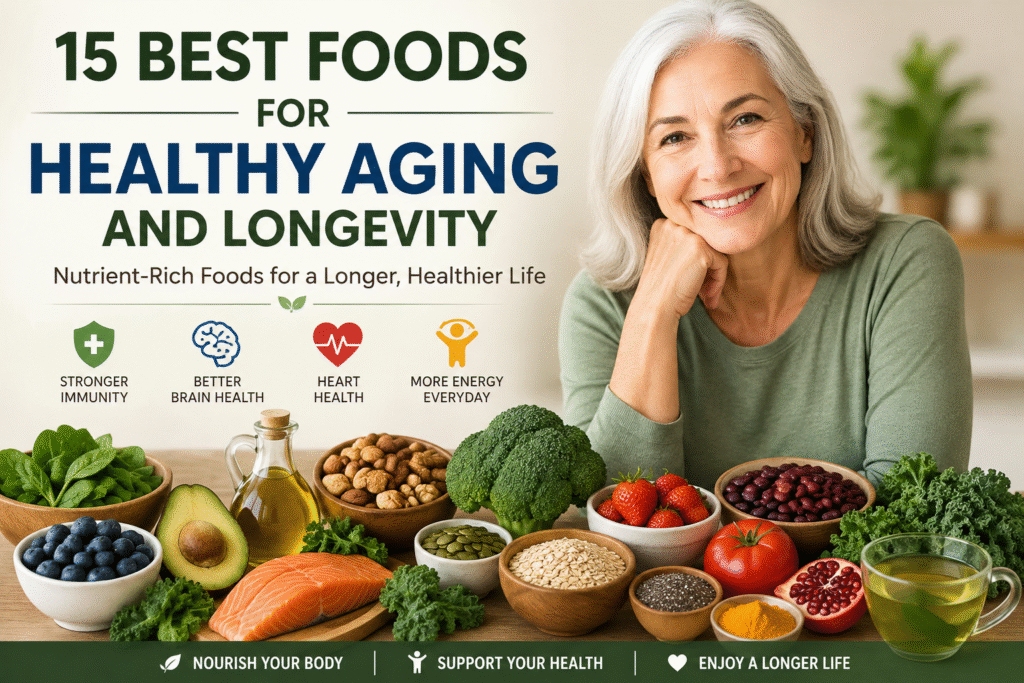
These foods for healthy aging can be included in a balanced eating pattern along with regular physical activity and good sleep.
Why Foods for Healthy Aging Matter
As we get older, nutritional needs can change. Appetite may decrease, muscle mass can become harder to maintain, and some people may eat less variety. At the same time, getting enough protein, fibre, vitamins, minerals, and healthy fats remains important.
A nutrient-rich diet may help support:
- Healthy muscles and physical strength
- Heart and blood-vessel health
- Normal digestion
- Bone health
- Brain and cognitive health
- A healthy immune system
- Healthy body weight
- Energy and day-to-day functioning
Rather than looking for a single “superfood,” it is generally better to build a varied eating pattern around minimally processed foods. The National Institute on Aging recommends choosing a variety of nutrient-dense foods across vegetables, fruits, grains, protein foods, dairy or suitable alternatives, and healthy oils.
15 Best Foods for Healthy Aging
Here are 15 practical choices that can fit into both Indian and global diets.
1. Leafy Green Vegetables
Spinach, fenugreek leaves (methi), mustard greens, kale, amaranth leaves, and other dark green vegetables are excellent healthy aging foods.
They provide fibre along with nutrients such as folate, vitamin K, vitamin C, and carotenoids. Green leafy vegetables are also a regular feature of Mediterranean- and MIND-style dietary patterns.
Some research has linked higher consumption of green leafy vegetables with slower cognitive decline, although this does not mean they can prevent dementia.
Easy ways to eat them:
- Add spinach to dal or vegetable dishes.
- Use methi in roti or paratha dough.
- Add leafy greens to soups, salads, or omelettes.
- Mix cooked greens with beans or lentils.
2. Berries and Other Colourful Fruits
Blueberries, strawberries, blackberries, raspberries, cherries, and locally available colourful fruits can provide fibre and naturally occurring plant compounds.
For people in India, there is no need to rely only on imported berries. Guava, amla, papaya, oranges, pomegranate, watermelon, mango, and other whole fruits can also contribute valuable nutrients.
Whole fruits are generally preferable to fruit drinks because they retain their fibre. Choosing a variety of colours throughout the week is a simple way to increase dietary diversity.
3. Fatty Fish
Salmon, sardines, trout, mackerel, and other oily fish provide high-quality protein and omega-3 fatty acids. These are among the foods that support healthy aging because they can form part of a heart-friendly eating pattern.
For Indian households, locally available fish such as sardines and mackerel can be useful options. Preparation matters: grilling, steaming, baking, or lightly cooking fish is generally preferable to frequent deep-frying.
If you do not eat fish, beans, lentils, nuts, seeds, and other plant foods can still provide valuable protein and healthy fats.
4. Nuts
Almonds, walnuts, pistachios, peanuts, cashews, and other nuts are nutrient-dense foods containing protein, fibre, minerals, and mostly unsaturated fats.
Walnuts are particularly well known for their plant-based omega-3 fatty acid content, while almonds provide nutrients such as vitamin E and magnesium.
Because nuts are calorie-dense, a small handful is usually enough. Choose plain or lightly roasted varieties more often than heavily salted or sugar-coated versions.
Adding nuts to breakfast, yogurt, salads, or a bowl of fruit is an easy way to include foods for longevity in everyday meals.
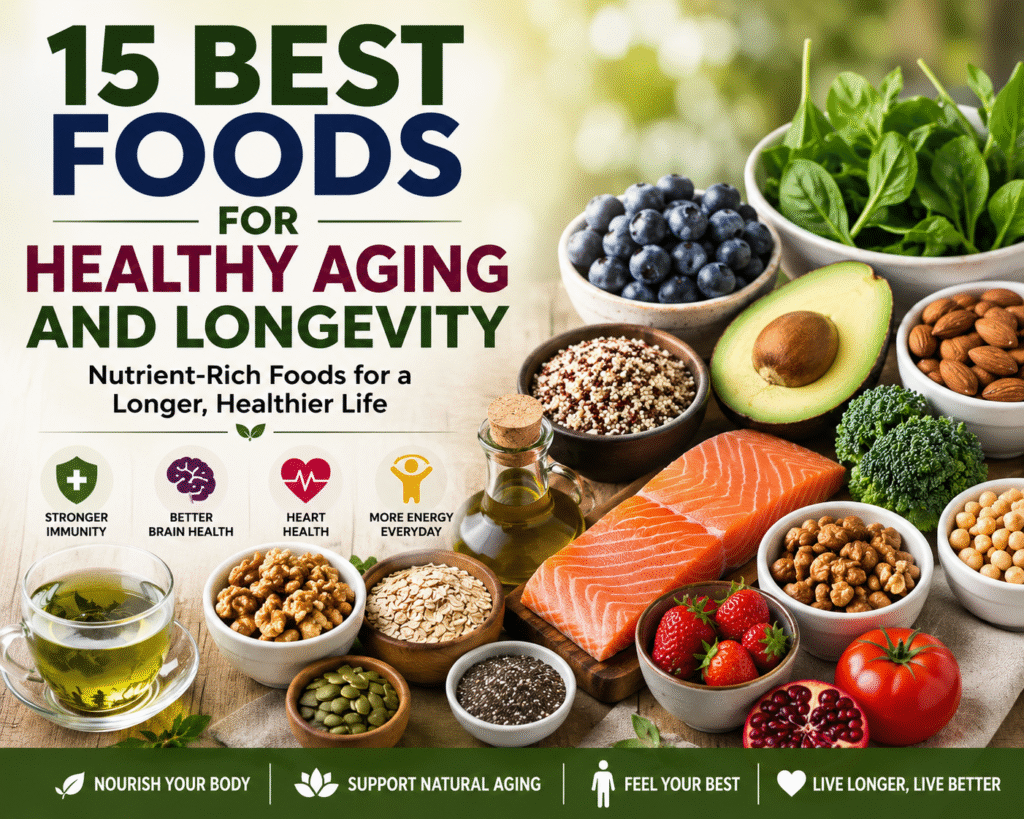
5. Beans and Lentils
Dal, chickpeas, rajma, black beans, peas, and other legumes are among the most useful foods in a healthy diet.
They provide plant protein, fibre, folate, iron, potassium, and other nutrients. They can also be affordable, filling, and easy to combine with vegetables and whole grains.
Legumes are a major part of Mediterranean-style dietary patterns and are frequently recommended as alternatives to some higher-saturated-fat protein choices.
Try: dal with vegetables, chana salad, rajma with brown rice, hummus with whole-grain roti, or mixed-bean soup.
6. Whole Grains
Oats, barley, brown rice, whole wheat, millet, quinoa, buckwheat, and whole-grain breads can provide more fibre and nutrients than many refined grain choices.
For Indian diets, whole grains can include whole wheat, oats, barley, ragi, jowar, bajra, and other millets.
Fibre supports digestive health and can contribute to healthier cholesterol and blood-sugar patterns. The National Institute on Aging notes that at least half of grain choices should generally come from whole grains.
Replacing some refined grains with whole grains is one of the easiest ways to improve the overall quality of a meal.
7. Extra-Virgin Olive Oil
Olive oil is a staple of Mediterranean-style eating and is rich in monounsaturated fat. Using it in place of some sources of saturated fat can be part of a heart-friendly dietary pattern.
You do not need to completely replace traditional Indian cooking oils if your overall diet is balanced. The bigger goal is to use fats thoughtfully and limit foods high in trans fats and excessive saturated fat.
Olive oil works well for salad dressings, light cooking, sautéed vegetables, and drizzling over cooked foods.
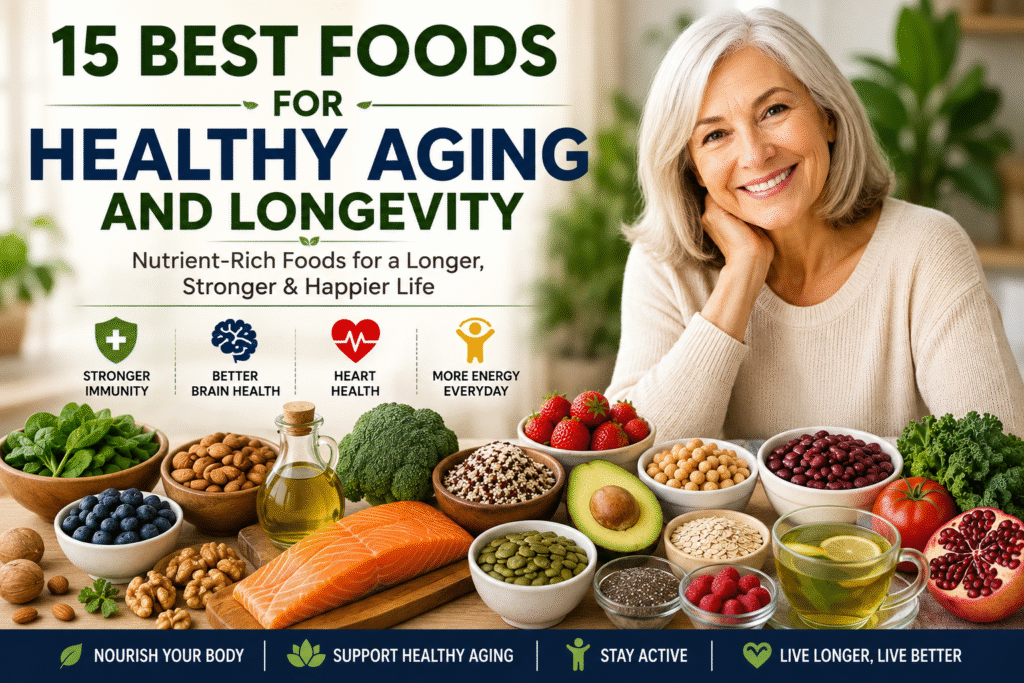
8. Tomatoes
Tomatoes are rich in vitamin C and contain carotenoids such as lycopene. They are inexpensive, versatile, and easy to include in meals.
Cooking tomatoes can increase the availability of some compounds, while pairing vegetables with a small amount of healthy fat may also help the body absorb certain fat-soluble plant compounds.
Add tomatoes to dal, vegetable curries, soups, salads, sandwiches, or homemade sauces.
9. Cruciferous Vegetables
Broccoli, cauliflower, cabbage, Brussels sprouts, radish, turnip, and similar vegetables deserve a regular place on the plate.
These vegetables provide fibre, vitamins, minerals, and naturally occurring phytochemicals. Eating a variety of vegetables is generally more beneficial than focusing on one particular vegetable.
A simple approach is to include at least two different types of vegetables in your main meal whenever practical.
10. Avocado
Avocado contains fibre, potassium, and predominantly unsaturated fats. It can be a useful addition to a balanced diet, particularly when used in place of foods higher in saturated fat.
It is not essential, however. If avocados are expensive or difficult to find, nuts, seeds, peanuts, and appropriate cooking oils can provide other sources of beneficial unsaturated fats.
The goal is dietary variety rather than dependence on a single food.
11. Plain Yogurt and Other Fermented Dairy Foods
Plain yogurt provides protein and calcium, and wide varieties contain live cultures. Calcium and protein are particularly relevant as people age because maintaining strong bones and muscle becomes increasingly important.
Choose unsweetened or lower-added-sugar options more often. Traditional curd (dahi) can be a convenient choice for Indian meals.
If you avoid dairy, calcium-fortified alternatives may be suitable depending on individual dietary needs. The National Institute on Aging notes that dairy foods and certain fortified alternatives can provide important nutrients such as calcium and vitamin D.
12. Seeds
Flaxseeds, chia seeds, pumpkin seeds, sunflower seeds, and sesame seeds provide combinations of fibre, healthy fats, protein, and minerals.
Seeds can be particularly convenient because a small amount can add nutritional value to a meal.
Try sprinkling ground flaxseed or chia seeds over yogurt or oats, adding sesame to vegetables, or using pumpkin and sunflower seeds in salads.
13. Eggs
Eggs are a convenient source of high-quality protein and provide several vitamins and minerals.
Protein becomes particularly important with advancing age because maintaining muscle can help support mobility, balance, and independence. Eggs can therefore be one of the practical foods for healthy aging when included as part of an individual’s overall dietary pattern.
Boiled, poached, or lightly cooked eggs can be easier choices than preparations loaded with excess butter, salt, or processed meats.
14. Garlic and Onions
Garlic and onions add flavour without requiring large amounts of salt, sugar, or heavy sauces. They also contain naturally occurring sulphur-containing compounds and other plant compounds.
Using herbs, spices, garlic, ginger, onion, turmeric, coriander, cumin, and similar ingredients can make healthy meals more enjoyable.
This is especially useful when trying to reduce excess sodium while keeping traditional food flavours.
15. Green Tea
Unsweetened green tea contains polyphenols and can be a refreshing alternative to sugary beverages.
Tea should not be viewed as a magic longevity drink. Instead, its value may come from being part of an overall healthy lifestyle, especially when it replaces sugar-sweetened drinks.
Water should remain the main source of hydration for most people, while tea and other unsweetened beverages can add variety.
Foods to Lower Cholesterol Naturally
“A heart-healthy eating pattern can be an important part of healthy aging. Read our guide to foods that may help support healthy cholesterol levels.”
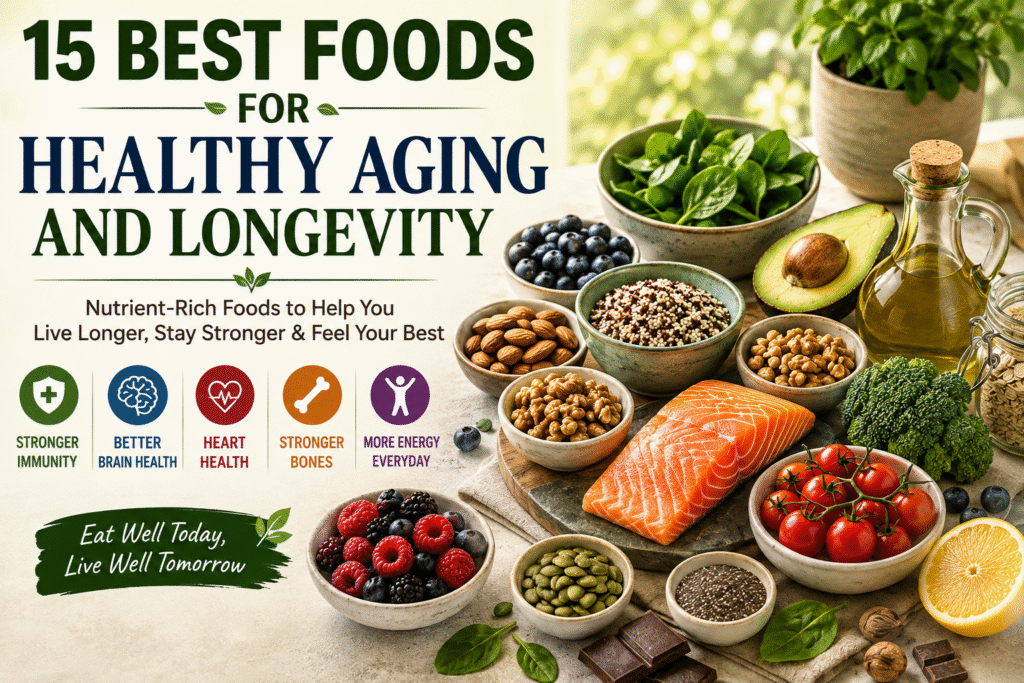
Quick Guide to Healthy Aging Foods
| Food | Key nutrients or compounds | Simple way to include it |
| Leafy greens | Fibre, folate, vitamin K, carotenoids | Dal, sabzi, salad |
| Berries/colourful fruit | Fibre, vitamin C, plant compounds | Breakfast or snack |
| Fatty fish | Protein, omega-3 fats | Grilled or steamed |
| Nuts | Healthy fats, protein, minerals | Small handful |
| Beans and lentils | Protein, fibre, folate | Dal, curry, soup |
| Whole grains | Fibre, B vitamins, minerals | Oats, millet, brown rice |
| Olive oil | Unsaturated fat | Dressing or cooking |
| Tomatoes | Vitamin C, lycopene | Curry, salad, soup |
| Cruciferous vegetables | Fibre, vitamins, phytochemicals | Stir-fry or sabzi |
| Yogurt/curd | Protein, calcium | Breakfast or side |
| Seeds | Fibre, healthy fats, minerals | Oats, yogurt, salads |
How to Build a Longevity-Friendly Plate
The best foods for healthy aging work together rather than separately.
A practical plate can contain:
- Half the plate: vegetables and/or whole fruits
- One-quarter: protein such as dal, beans, fish, eggs, yogurt, tofu, or lean poultry
- One-quarter: whole grains or other minimally processed carbohydrate sources
- A small amount: nuts, seeds, or healthy cooking oil
The exact proportions can vary according to appetite, activity level, culture, health needs, and personal preferences.
The National Institute on Aging recommends variety across food groups and notes that vegetables and fruits can make up about half of the plate.
Practical Tips for Eating Better as You Age
Choosing nutrient-rich foods for aging does not mean completely changing your diet overnight. Small, consistent improvements are often easier to maintain.
1. Add before you subtract
Instead of immediately banning favourite foods, add a vegetable, fruit, beans, or whole grain to your meals.
2. Make protein part of each main meal
Include dal, beans, eggs, fish, yogurt, tofu, nuts, seeds, or another suitable protein source regularly.
3. Choose whole fruit more often
Whole fruit generally provides more fibre than juice and can be a convenient replacement for sweets or highly processed snacks.
4. Reduce excess salt and added sugar
NIA guidance recommends choosing foods that do not contain excessive amounts of sugar, saturated fat, and sodium.
5. Keep healthy snacks visible
Place fruit, unsalted nuts, roasted chickpeas, or plain yogurt where they are easy to reach.
6. Stay physically active
Nutrition works best alongside regular movement. Walking, strength exercises, balance activities, cycling, yoga, gardening, and other suitable activities can contribute to healthy aging.
7. Eat for overall dietary quality
No single item belongs on a pedestal. The strongest approach is usually a consistent pattern that includes plenty of plant foods, adequate protein, whole grains, healthy fats, and limited highly processed foods.
Are These Really the Best Foods for Healthy Aging?
There is no universally perfect list. Nutritional needs differ according to age, activity, culture, food availability, allergies, dental health, digestive tolerance, and existing medical conditions.
What matters most is the overall pattern. Mediterranean-style eating, for example, emphasizes vegetables, fruits, whole grains, legumes, fish, nuts, and unsaturated fats. Research has associated this pattern with several favourable health outcomes, although observational research cannot prove that diet alone causes longer life.
For this reason, think of these foods as building blocks rather than miracle foods.
For more evidence-based information about healthy eating and nutrition as you age, visit the National Institute on Aging (NIA).
FAQ About Foods for Healthy Aging
1. What are the best foods for healthy aging?
The best choices are generally nutrient-dense foods such as vegetables, fruits, beans, lentils, whole grains, nuts, seeds, fish, eggs, yogurt, and healthy unsaturated fats. Variety is more important than relying on one particular food.
2. Can food really help you live longer?
A healthy diet may support heart health, brain health, metabolic health, muscle function, and overall well-being, which are all relevant to healthy aging. However, food cannot guarantee a longer lifespan. Genetics, physical activity, sleep, healthcare, environment, and other lifestyle factors also matter.
3. Which foods are considered foods for longevity?
Common examples include vegetables, fruits, legumes, whole grains, nuts, seeds, fish, and unsaturated plant oils. These foods are commonly included in dietary patterns associated with healthy aging and cardiovascular health.
4. Are Indian foods good for healthy aging?
Absolutely. Traditional Indian diets can provide many excellent choices, including dal, rajma, chana, vegetables, leafy greens, curd, millets, whole wheat, nuts, seeds, fruits, and spices. The key is to emphasise minimally processed foods while moderating excessive salt, sugar, and deep-fried foods.
5. Are nuts good for older adults?
Nuts can be a nutritious choice because they provide healthy fats, protein, fibre, and minerals. A small portion can be enough because nuts are energy-dense. Unsalted varieties are generally a better everyday choice.
6. Is fish necessary for healthy aging?
No. Fish is a useful source of protein and omega-3 fats, but it is not essential for everyone. Vegetarian and vegan diets can include legumes, soy foods, nuts, seeds, whole grains, and other plant foods to provide important nutrients.
7. Should older adults avoid carbohydrates?
Not necessarily. Whole grains, fruits, vegetables, and legumes provide carbohydrates along with fibre and other nutrients. Choosing minimally processed carbohydrate sources and appropriate portions is generally more useful than eliminating carbohydrates.
8. How can I start eating better for healthy aging?
Start with one or two realistic changes. For example, add one extra serving of vegetables each day, replace a refined grain with a whole grain, eat fruit instead of a sugary snack, or include beans or another protein source at lunch. Gradual changes can be easier to maintain over time.
Health Disclaimer
This article is intended for general educational and informational purposes only. It is not a substitute for personalised medical or nutritional advice, diagnosis, or treatment. Individual dietary needs can vary, particularly for older adults or people with allergies, food intolerances, kidney disease, diabetes, digestive conditions, or other health concerns. Speak with a qualified healthcare professional or registered dietitian before making major dietary changes if you have a medical condition or specific nutritional needs.
Conclusion
Aging well is not about finding one miracle ingredient. It is about creating everyday habits that support your health over the long term. A diet built around vegetables, fruits, legumes, whole grains, nuts, seeds, fish or other quality protein sources, and healthy fats can provide a strong nutritional foundation.
The most useful foods for healthy aging are often simple foods that can be enjoyed regularly and prepared in ways that suit your culture and lifestyle. Whether your meals are based on Indian, Mediterranean, vegetarian, or another dietary tradition, prioritising variety and nutrient density can make healthy eating both practical and enjoyable.
Making foods for healthy aging a regular part of your diet is one practical way to support overall wellness as you get older.
Ultimately, the goal is not simply to add years to life, but to support energy, strength, independence, and quality of life as those years pass. Combining healthy eating with regular movement, adequate sleep, stress management, social connection, and preventive healthcare offers a more complete approach to healthy aging.
By Life Balance Tips Team