
Published: September 21, 2026
Fruit and vegetable consumption is getting a closer look in new CDC data that provides an updated snapshot of eating habits among Americans.
The findings come from the National Center for Health Statistics (NCHS) and are based on data collected during August 2021 through August 2023. The report looked at adults aged 20 and older and examined whether they consumed fruits or vegetables on a given day.
The results offer a useful snapshot of everyday eating habits in the United States. They also highlight why including a variety of fruits and vegetables can be an important part of a balanced eating pattern.
The latest fruit and vegetable consumption data provides a useful snapshot of eating habits among Americans.
What Does the New CDC Data Show?
According to the CDC, 69.9% of U.S. adults age 20 and older consumed some fruit on a given day during the study period.
Vegetable consumption was more common. About 93.3% of adults consumed some vegetables on a given day.
The report also found differences in fruit consumption between men and women. About 73.5% of women consumed fruit on a given day compared with 66.1% of men.
The data also showed that consumption of some types of fruits and vegetables increased with family income.
These numbers should not be interpreted as showing how many servings people ate. Instead, the report measures whether people consumed any fruit or vegetables on a particular day.
That distinction matters when interpreting the findings.
The CDC’s fruit and vegetable consumption findings provide important population-level information.
Why Is This Data Important?
Fruits and vegetables provide many nutrients, including vitamins, minerals, and dietary fiber. They can be part of healthy eating patterns that support overall health.
The CDC recommends focusing on a variety of nutrient-dense foods, including vegetables, fruits, protein foods, whole grains, and healthy fats. It also recommends limiting highly processed foods, added sugars, added sodium, and refined carbohydrates.
The new data does not mean that everyone who eats a fruit or vegetable on a given day has an ideal diet. Instead, it provides information about how common fruit and vegetable consumption is among Americans.
How Many Adults Eat Fruit?
The CDC found that 69.9% of adults consumed some fruit on a given day.
Fruit consumption included categories such as citrus, melons, berries, and other whole fruits. Women were more likely than men to report consuming fruit on the selected day.
Whole fruits can be an easy addition to meals and snacks.
For example, people can add:
- Apples
- Oranges
- Bananas
- Berries
- Melons
- Pears
- Peaches
- Other seasonal fruits
Choosing a variety of fruits can also make meals more enjoyable and provide different nutrients.
These fruit and vegetable consumption findings show that fruit intake is not the same across all groups.
How Many Adults Eat Vegetables?
Vegetable consumption was even more common in the CDC data.
About 93.3% of adults consumed some vegetables on a given day during August 2021–August 2023. The report did not find a significant difference between men and women in consuming any vegetables.
The report included different vegetable categories, including dark green vegetables, red and orange vegetables, starchy vegetables, and other vegetables.
Examples of nutritious vegetable choices include:
- Spinach
- Broccoli
- Carrots
- Bell peppers
- Tomatoes
- Green beans
- Cauliflower
- Cabbage
- Peas
- Other seasonal vegetables
Fresh vegetables are not the only option. Frozen and canned vegetables can also be useful choices, particularly when fresh produce is unavailable.
The CDC recommends choosing canned vegetables without added salt or with lower sodium when possible.
The latest fruit and vegetable consumption data provides a useful snapshot of eating habits among Americans.
What About Children and Teenagers?
The CDC also released separate data about children and adolescents.
The report found that 77% of children and teenagers ages 2–19 consumed some fruit on a given day.
Among preschool-age children, fruit consumption was higher, at about 91.8%, and fruit consumption decreased as children became older.
About 9 in 10 children and adolescents consumed some vegetables on a given day.
These findings provide another reason for families to make fruits and vegetables a regular part of meals and snacks.
However, parents should focus on offering a variety of nutritious foods rather than making children feel pressured to eat a particular food.
Does Eating Fruit Mean Someone Has a Healthy Diet?
Not necessarily.
This is one of the most important points to understand about the CDC report.
The data measures whether someone consumed fruit or vegetables on a particular day. It does not provide a complete assessment of that person’s overall diet.
For example, someone may eat an apple during the day while also eating many foods high in added sugar or sodium.
Similarly, eating vegetables once during the day does not necessarily mean a person is meeting all nutritional needs.
Healthy eating is about the overall pattern of food choices, not one individual food.
The CDC recommends a dietary pattern that includes vegetables, fruits, protein foods, dairy without added sugars, healthy fats, and whole grains while limiting highly processed foods, added sugars, and excess sodium.
The CDC’s fruit and vegetable consumption findings provide important population-level information.
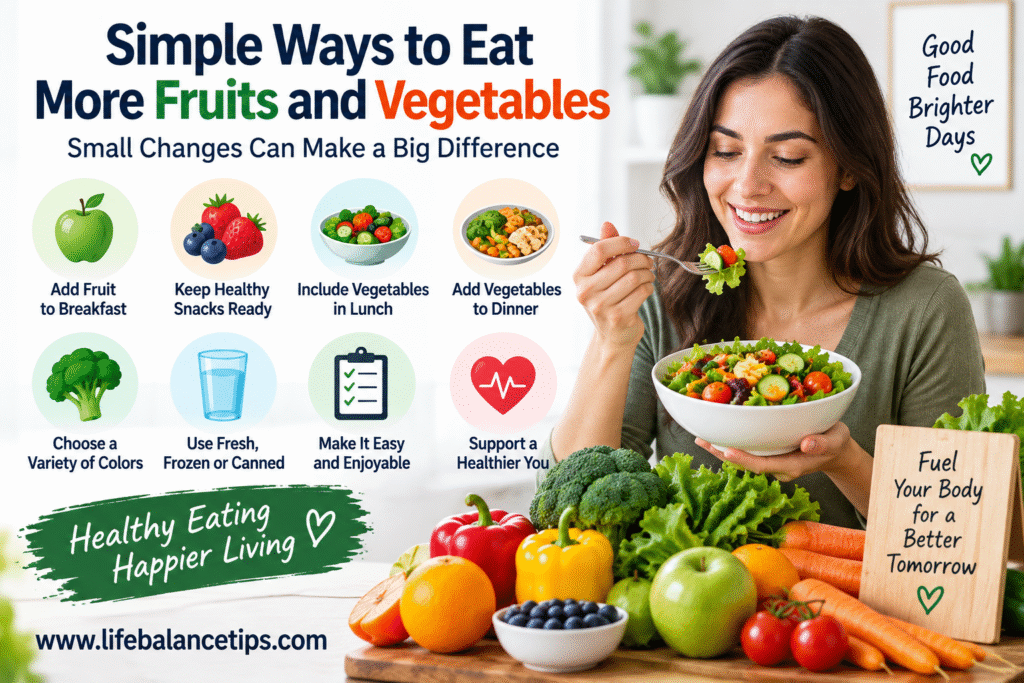
Simple Ways to Eat More Fruits and Vegetables
For people who want to increase their intake, small changes can be easier to maintain than completely changing their diet.
1. Add Fruit to Breakfast
Try adding berries, bananas, apples, or another favorite fruit to breakfast.
Fruit can be combined with oatmeal, plain yogurt, or whole-grain cereal.
2. Keep Fruit Ready to Eat
Wash and prepare fruits when you bring them home.
Keeping fruit visible and easy to grab can make it a convenient snack.
3. Add Vegetables to Lunch
Include vegetables in sandwiches, wraps, salads, rice bowls, or soups.
Even adding one extra vegetable to lunch can make the meal more varied.
4. Add Vegetables to Dinner
Try adding broccoli, spinach, carrots, peppers, beans, or other vegetables to your regular dinner.
Vegetables can be roasted, steamed, sautéed, or added to soups and other dishes.
5. Choose Whole Fruit More Often
The CDC recommends choosing whole fruits over fruit juice because whole fruits provide fiber and can help you feel fuller.
This does not mean fruit juice can never be consumed. It simply means whole fruit is generally a more nutritious everyday choice.
6. Use Frozen Produce
Frozen fruits and vegetables can be convenient and nutritious.
They can be especially useful when certain fresh foods are unavailable.
For frozen or canned fruit, check the label for added sugars or syrup. For canned vegetables, look for options with little or no added sodium.
7. Add Vegetables to Snacks
Instead of making snacks entirely from processed foods, try options such as:
- Carrots with hummus
- Cucumber slices
- Bell peppers
- Fresh fruit with plain yogurt
- Apple with a small amount of nut butter
The CDC also provides examples of vegetables paired with hummus and other nutrient-rich snack options.
What Does the CDC Data Tell Us About Healthy Eating?
The data provides a current snapshot of fruit and vegetable consumption among U.S. adults and children.
It shows that consuming at least some vegetables on a given day was very common among adults, while fruit consumption was less common.
However, the findings do not tell us whether people consumed enough fruits and vegetables to meet individual dietary recommendations.
The study also found differences related to family income. Adults in higher-income families were more likely to consume fruit and vegetables on the selected day.
This is an important finding because access, affordability, availability, and food preferences can all influence what people eat.
Healthy Eating Does Not Have to Be Complicated
A healthy eating pattern does not require expensive or unusual foods.
Simple foods can be useful building blocks for balanced meals.
For example, a simple lunch could include:
Whole grains + protein + vegetables + fruit
One example might be brown rice with beans and mixed vegetables, followed by a piece of fruit.
Another option could be a whole-grain sandwich with eggs or chicken, vegetables, and fresh fruit.
The CDC recommends including a variety of nutrient-dense foods and choosing foods that fit personal preferences and budget.
What the New Report Does Not Tell Us
It is also important to understand the limitations of the data.
The CDC report measures consumption on a given day. It does not measure someone’s complete eating pattern over weeks or months.
It also does not establish that eating a particular fruit or vegetable directly prevents a specific disease.
The report is descriptive. It tells us what percentage of people reported consuming certain foods during the measured period.
Therefore, the findings should be viewed as population-level information rather than individual medical advice.
Key Takeaways From the New CDC Data
Here are the main points:
- About 69.9% of U.S. adults consumed some fruit on a given day.
- About 93.3% of U.S. adults consumed some vegetables on a given day.
- Women were more likely than men to consume fruit on the selected day.
- Fruit and vegetable consumption varied by family income.
- About 77% of children and teenagers consumed some fruit on a given day.
- About 9 in 10 children and adolescents consumed some vegetables.
- The data is based on August 2021–August 2023 NHANES information.
- The report describes consumption on a given day and does not measure a person’s entire diet.
Overall, the fruit and vegetable consumption data offers a useful look at everyday dietary habits in the United States.
Frequently Asked Questions
Is the CDC saying Americans eat enough fruits and vegetables?
No. The report describes whether people consumed any fruit or vegetables on a given day. It does not determine whether their total intake met individual dietary recommendations.
What percentage of adults ate fruit?
The CDC reported that 69.9% of adults age 20 and older consumed some fruit on a given day during August 2021–August 2023.
What percentage of adults ate vegetables?
The CDC reported that 93.3% of adults consumed some vegetables on a given day.
Are frozen vegetables healthy?
Yes. The CDC notes that frozen vegetables can be a good option. When choosing canned vegetables, look for options without added salt or with lower sodium.
Is whole fruit better than fruit juice?
For everyday eating, the CDC recommends choosing whole fruit because it contains fiber and can help with fullness.
How can I eat more vegetables?
Try adding vegetables to breakfast, lunch, dinner, and snacks. You can add spinach to eggs, vegetables to soups, salad to lunch, or roasted vegetables to dinner.
Are fruits and vegetables good sources of fiber?
Yes. Fruits and vegetables are among the foods that can provide dietary fiber. Whole grains, legumes, nuts, and seeds are also useful sources.
Should everyone follow the same diet?
No. Nutritional needs can vary depending on age, health conditions, activity level, food preferences, and other factors. A healthcare professional or registered dietitian can provide individualized advice when needed.
For more practical healthy eating ideas, read our guide to 10 Healthy Food Swaps for a Healthier Everyday Diet.
Final Thoughts
The latest CDC data provides a useful look at fruit and vegetable consumption among Americans.
While most adults in the study consumed some vegetables on a given day, fruit consumption was less common. The findings also show differences in consumption by sex and family income.
The bigger lesson is that healthy eating is about the overall pattern of food choices. Adding more fruits and vegetables, choosing whole grains and nutritious protein sources, and limiting highly processed foods, added sugars, and excess sodium can help create a more balanced diet.
The latest fruit and vegetable consumption findings highlight the importance of building a varied and balanced eating pattern.
Small, realistic changes can make healthy eating easier to maint
Source
This article is based on data and information published by the U.S. Centers for Disease Control and Prevention (CDC).
For the original CDC report and detailed data, visit:
CDC — Fruit and Vegetable Consumption Among Adults
Health Disclaimer
This article is for general educational and informational purposes only. It is not medical advice and does not diagnose, treat, or prevent any disease. Dietary needs vary from person to person. If you have a medical condition or specific nutrition concerns, speak with a qualified healthcare professional or registered dietitian.