
Published: October 1, 2026
Heart healthy eating is not simply about avoiding one particular food or getting the perfect amount of one nutrient. New guidance from the American College of Cardiology (ACC) emphasizes that overall diet quality, food sources, and the degree of food processing matter more than focusing on a single nutrient or food. American College of Cardiology
The new ACC Scientific Statement, published in the Journal of the American College of Cardiology on September 30, 2026, reviews current evidence on nutrition and cardiovascular health. It covers dietary patterns, macronutrients, micronutrients, ultra-processed foods, healthy fats, fiber, beverages, and nutrition-based interventions. American College of Cardiology
For everyday life, the message is relatively simple: build a consistent eating pattern around nutritious, minimally processed foods instead of chasing individual nutrition trends.
What Did the New ACC Statement Find?
The ACC statement explains that cardiovascular health is influenced more by overall nutrition quality, food sources, and degree of processing than simply by the percentage of carbohydrates, fats, or protein in someone’s diet. American College of Cardiology
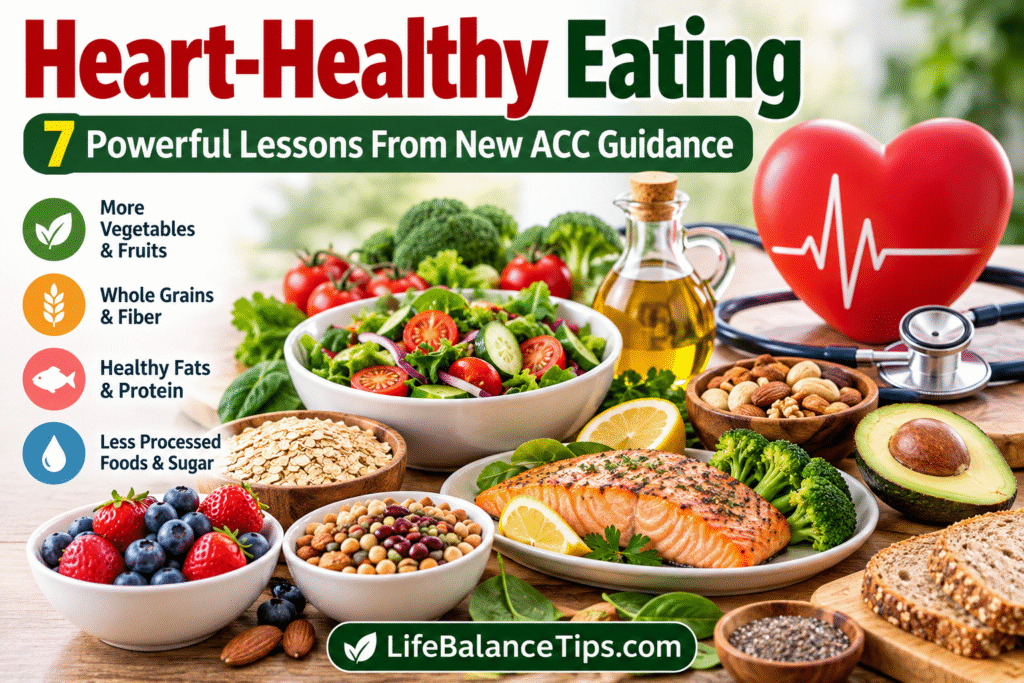
The statement supports eating patterns that emphasize:
- Vegetables
- Fruits
- Whole grains
- Beans and legumes
- Nuts and seeds
- Fish
- Healthy unsaturated fats
- Other nutrient-rich foods
It also recommends limiting foods high in refined starches, added sugars, sodium, unhealthy fats, and highly processed foods with poor nutritional quality. American College of Cardiology
This means heart healthy eating is better understood as a long-term pattern rather than a short-term diet.
7 Powerful Lessons About Heart-Healthy Eating
1. Focus on Your Overall Diet, Not One Food
One of the biggest messages from the new ACC statement is that no single food determines whether a person’s diet is healthy.
For example, eating vegetables regularly does not automatically make an otherwise poor diet healthy. Likewise, eating one food labeled as a “superfood” cannot compensate for a diet dominated by highly processed foods, added sugars, excess sodium, and unhealthy fats.
Instead, look at what you eat throughout the entire day and week.
A healthy pattern might include:
- Vegetables at lunch and dinner
- Fruit as a snack
- Whole grains instead of many refined grains
- Beans or lentils regularly
- Nuts and seeds in appropriate portions
- Fish or other nutritious protein sources
- Water instead of sugary beverages
This overall approach makes heart healthy eating more practical and sustainable.
2. Choose More Minimally Processed Foods
Food processing is not automatically bad.
Many useful foods are processed in some way. Frozen vegetables, canned beans, plain yogurt, rolled oats, and whole-grain foods can all fit into a nutritious diet.
The ACC statement specifically distinguishes between minimally processed foods and highly processed foods of poor nutritional quality. American College of Cardiology
A practical grocery basket might include:
| Choose More Often | Limit More Often |
|---|---|
| Fresh vegetables | Highly processed snacks |
| Fresh or frozen fruit | Sugary desserts |
| Oats | Refined sugary cereals |
| Brown rice | Refined grain products |
| Beans and lentils | Processed meats |
| Nuts and seeds | Foods high in unhealthy fats |
| Plain yogurt | Highly sweetened dairy desserts |
| Water | Sugar-sweetened beverages |
The goal isn’t to completely eliminate processed foods. Instead, heart healthy eating can involve making minimally processed, nutrient-rich foods the foundation of most meals.
3. Make Vegetables and Fruits a Regular Part of Meals
Vegetables and fruits provide fiber, vitamins, minerals, and many other beneficial plant compounds.
The ACC’s recommendations emphasize plant-forward dietary patterns that include vegetables and fruits. American College of Cardiology
Simple ways to increase them include:
At breakfast
Add berries, banana, or another fruit to oatmeal or plain yogurt.
At lunch
Add tomatoes, cucumber, leafy greens, carrots, or other vegetables to sandwiches and salads.
At dinner
Fill a substantial part of your plate with cooked or raw vegetables.
For snacks
Choose fruit, vegetables with a healthy dip, or a small portion of nuts.
You don’t need expensive ingredients to improve your diet.
Frozen vegetables and canned beans can also be useful options, especially when fresh produce is expensive or unavailable.
4. Don’t Forget Whole Grains and Fiber
Whole grains are another important part of the dietary pattern recommended by the ACC.
Examples include:
- Oats
- Brown rice
- Barley
- Whole-wheat bread
- Whole-grain pasta
- Quinoa
- Bulgur
Whole grains can provide dietary fiber and other nutrients.
Fiber is important because higher-fiber dietary patterns can support several aspects of cardiometabolic health.
A simple swap could be:
White bread → whole-wheat bread
White rice → brown rice
Sugary cereal → oatmeal
Refined crackers → whole-grain alternatives
This type of gradual replacement is one practical way to make heart healthy eating part of your normal routine.
5. Choose Healthy Fats More Often
Not all fats have the same nutritional profile.
The ACC statement recommends replacing saturated fats with unsaturated fats, particularly from foods such as liquid plant oils, nuts, seeds, and fish. American College of Cardiology
Examples of foods containing unsaturated fats include:
- Olive oil
- Avocado
- Almonds
- Walnuts
- Seeds
- Fatty fish
This doesn’t mean that every food containing saturated fat must be eliminated.
Instead, consider what you can use in place of foods high in saturated fat.
For example:
Butter → olive oil
Chips → unsalted nuts
Processed meat → beans, fish, or other nutritious protein
These small changes can make heart healthy eating easier without requiring an extremely restrictive diet.
6. Pay Attention to Added Sugar and Sugary Drinks
The ACC statement recommends limiting foods high in added sugars and prioritizing water and other unsweetened beverages. Sugar-sweetened beverages should be limited. American College of Cardiology
Common sources include:
- Soft drinks
- Sweetened tea
- Sugary coffee drinks
- Energy drinks
- Sweetened fruit beverages
- Some desserts
- Candy
One simple strategy is to make water your default drink.
You can also try:
- Sparkling water
- Unsweetened tea
- Plain coffee
- Water with lemon or fresh fruit
Reducing sugary beverages can be easier than trying to completely change your entire diet at once.
7. Reduce Excess Sodium and Highly Processed Foods
Sodium is another important consideration for cardiovascular health.
A large amount of sodium in many people’s diets can come from packaged, prepared, and processed foods.
Instead of only looking for the salt shaker, check Nutrition Facts labels on packaged foods.
Compare similar products and look for options with less sodium.
Foods that may contain substantial sodium include:
- Processed meats
- Packaged soups
- Salty snacks
- Some sauces
- Certain frozen meals
- Packaged convenience foods
You can also flavor meals with herbs, spices, garlic, lemon, ginger, and other ingredients instead of relying heavily on salt.
This is another useful part of heart healthy eating because it focuses on practical food choices rather than complicated calculations.
What About Ultra-Processed Foods?
Ultra-processed foods received considerable attention in the ACC statement.
The statement recommends limiting highly processed foods of poor nutritional quality, particularly foods that are high in sodium, added sugars, saturated fats, or refined starches. American College of Cardiology
However, it is important not to assume that all food processing is unhealthy.
For example, the ACC notes that foods such as:
- Rolled oats
- Frozen vegetables
- No-salt-added canned beans
- Tofu
- Low-fat yogurt
can fit into a healthy dietary pattern. American College of Cardiology
The practical question is therefore not simply:
“Is this food processed?”
Instead ask:
“What nutrients does this food provide, and how often am I eating it?”
That approach can make heart healthy eating much less confusing.
Mediterranean and DASH-Style Diets
The ACC statement highlights several established dietary patterns, including the Mediterranean diet and DASH diet.
These patterns generally emphasize:
- Vegetables
- Fruits
- Whole grains
- Nuts
- Legumes
- Healthy protein sources
- Unsaturated fats
They also generally limit foods high in saturated fat, added sugars, sodium, and refined carbohydrates. American College of Cardiology
You don’t necessarily need to follow a strict named diet.
You can simply borrow useful principles from these patterns.
For example:
Breakfast: oatmeal + fruit + nuts
Lunch: bean and vegetable salad + whole-grain bread
Snack: fruit + unsalted nuts
Dinner: fish + brown rice + vegetables
This gives you a practical example of heart healthy eating without requiring complicated recipes.
What About Protein?
Protein is important, but the ACC statement emphasizes that protein source and quality can matter, rather than focusing only on the total amount. American College of Cardiology
Nutritious protein sources can include:
- Beans
- Lentils
- Chickpeas
- Soy foods
- Nuts
- Seeds
- Fish
- Lean poultry
- Lower-fat dairy products
Plant-based proteins can also add fiber and other nutrients to the diet.
A useful approach is to vary your protein sources throughout the week rather than relying heavily on one type.
What Should You Drink?
For everyday heart healthy eating, beverages deserve attention too.
The ACC statement recommends prioritizing water and other unsweetened beverages while limiting sugar-sweetened drinks. American College of Cardiology
Good everyday choices can include:
- Water
- Sparkling water
- Unsweetened tea
- Unsweetened coffee
The ACC statement also notes that moderate coffee or tea consumption can fit within a healthy dietary pattern, while alcohol consumption should generally be limited or avoided. American College of Cardiology
You don’t need a special “detox drink” to support a healthy eating pattern.
A Simple One-Day Heart-Healthy Meal Plan
Here’s an example of how these principles can work together.
Breakfast
Oatmeal with berries and walnuts
Add plain yogurt if desired.
Mid-Morning Snack
Apple + a small portion of unsalted almonds
Lunch
Chickpea and vegetable salad
Add whole-grain bread and an olive-oil-based dressing.
Afternoon Snack
Plain yogurt with fruit
Dinner
Grilled fish + brown rice + mixed vegetables
Drink
Water or another unsweetened beverage
7 Easy Food Swaps to Try
You don’t have to change everything at once.
Try one or two swaps first.
1. Soda → Water
This can reduce added sugar intake.
2. White Bread → Whole-Wheat Bread
This can increase whole-grain intake.
3. Butter → Liquid Plant Oil
Choose an unsaturated fat source more often.
4. Processed Meat → Beans or Fish
This can diversify protein sources.
5. Sugary Snack → Fruit and Nuts
This provides a more nutrient-dense option.
6. Salty Packaged Snack → Unsalted Nuts
This can help reduce reliance on heavily salted snack foods.
7. Refined Cereal → Oatmeal
A simple breakfast change can add whole grains and fiber.
These swaps show that heart healthy eating does not have to mean following a complicated diet.
What About Food Affordability?
Healthy eating should also be realistic.
The ACC statement emphasizes that food access, affordability, availability, and other social factors influence diet quality. American College of Cardiology
You don’t need to buy expensive “health foods.”
Budget-friendly options can include:
- Oats
- Beans
- Lentils
- Chickpeas
- Seasonal vegetables
- Frozen vegetables
- Bananas
- Apples
- Brown rice
- Plain yogurt
- Canned no-salt-added beans
Buying seasonal produce and preparing meals at home can also help control costs.
Common Mistakes to Avoid
Mistake 1: Focusing on One Superfood
No single food can replace an overall nutritious diet.
Mistake 2: Eliminating All Carbohydrates
Whole grains, fruits, vegetables, and legumes can provide useful carbohydrates and fiber.
Mistake 3: Ignoring Portion Sizes
Even nutritious foods contribute calories, so overall portions still matter.
Mistake 4: Drinking Too Many Sugary Beverages
Liquid calories and added sugars can accumulate quickly.
Mistake 5: Thinking All Processed Foods Are Bad
Processing exists on a spectrum. Minimally processed foods can fit comfortably into a healthy diet.
Mistake 6: Making Too Many Changes at Once
Small, sustainable changes are often easier to maintain.
How to Start Heart-Healthy Eating This Week
You don’t need to wait for Monday.
Try this simple seven-day approach.
Day 1
Replace one sugary drink with water.
Day 2
Add one extra serving of vegetables.
Day 3
Choose oatmeal or another whole grain for breakfast.
Day 4
Add beans or lentils to one meal.
Day 5
Use nuts or seeds as a snack.
Day 6
Replace one refined grain with a whole-grain option.
Day 7
Prepare one meal at home using vegetables, whole grains, and a nutritious protein.
After seven days, keep the changes that feel realistic.
The goal of heart healthy eating is consistency rather than perfection.
Can You Still Eat Your Favorite Foods?
Yes.
A healthy eating pattern does not have to mean that every meal is perfect.
You can still enjoy favorite foods while making nutrient-rich foods the foundation of your diet.
For example, instead of completely banning pizza, you could:
- Add vegetables
- Choose a reasonable portion
- Pair it with a salad
- Avoid making highly processed foods the majority of your diet
The same principle applies to desserts and other treats.
A sustainable diet is usually easier to maintain than an extremely restrictive one.
What Does the ACC Guidance Mean for Everyday People?
The biggest takeaway is that nutrition doesn’t have to be unnecessarily complicated.
Instead of asking:
“Which single food is best for my heart?”
A better question may be:
“What does my overall eating pattern look like?”
Look at your meals over several days.
Are you eating enough vegetables?
Are whole grains and legumes included regularly?
Are you choosing healthy fats?
Are sugary drinks common?
Are highly processed foods making up a large part of your diet?
These questions provide a more useful picture of overall diet quality.
Frequently Asked Questions
What is heart-healthy eating?
Heart healthy eating means following an overall dietary pattern that emphasizes nutrient-rich foods such as vegetables, fruits, whole grains, legumes, nuts, seeds, fish, and healthy unsaturated fats while limiting excess sodium, added sugars, unhealthy fats, refined starches, and highly processed foods of poor nutritional quality. American College of Cardiology
Is the Mediterranean diet heart healthy?
The ACC statement identifies the Mediterranean diet as one of the dietary patterns supported by evidence for cardiovascular health. It emphasizes vegetables, fruits, whole grains, legumes, nuts, and unsaturated fats. American College of Cardiology
Is the DASH diet good for heart health?
DASH is another established dietary pattern highlighted by the ACC. It generally emphasizes vegetables, fruits, whole grains, legumes, and other nutrient-rich foods while paying attention to sodium and overall diet quality. American College of Cardiology
Should I completely avoid processed foods?
No. Processing is not automatically unhealthy. Foods such as frozen vegetables, rolled oats, canned beans, tofu, and plain yogurt can fit into a healthy diet. American College of Cardiology
Are whole grains important?
Yes. Whole grains are among the foods emphasized in the ACC’s heart-healthy dietary recommendations and can provide fiber and other nutrients. American College of Cardiology
What should I drink for heart health?
Water and other unsweetened beverages are recommended as everyday choices. Sugar-sweetened beverages should be limited. American College of Cardiology
Can I eat fats on a heart-healthy diet?
Yes. The ACC recommends replacing saturated fats with unsaturated fats from sources such as liquid plant oils, nuts, seeds, and fish. American College of Cardiology
Is one healthy food enough to improve my diet?
No. The new ACC statement emphasizes the overall dietary pattern rather than relying on a single food or nutrient. American College of Cardiology
Does healthy eating mean I can never eat sweets?
Not necessarily. A sustainable eating pattern can include occasional favorite foods while keeping nutrient-rich foods as the foundation of the diet.
How quickly should I change my diet?
Start gradually. One or two realistic changes at a time can be easier to maintain than a complete overnight diet transformation.
Key Takeaways
The new ACC Scientific Statement provides a broader view of nutrition and cardiovascular health.
The most important points are:
- Overall diet quality matters.
- Focus on dietary patterns rather than one nutrient.
- Eat more vegetables and fruits.
- Choose whole grains and fiber-rich foods.
- Include healthy unsaturated fats.
- Choose nutritious protein sources.
- Limit foods high in added sugars, sodium, unhealthy fats, and refined starches.
- Limit sugar-sweetened beverages.
- Don’t assume every processed food is unhealthy.
- Make changes that are affordable and sustainable.
Ultimately, heart healthy eating is not about following every nutrition trend or creating a perfect diet. It is about building a consistent pattern of nutritious food choices that you can realistically maintain.
For more practical nutrition ideas, explore our guide to 10 Healthy Food Swaps for a Healthier Everyday Diet.
For the original 2026 nutrition guidance, visit the American College of Cardiology’s official resource on overall diet quality and heart health.
Final Thoughts
The new ACC Scientific Statement reinforces an important message: heart health is influenced by the overall quality of the diet, not simply by whether one food or nutrient is considered good or bad. American College of Cardiology
A practical approach is to build meals around vegetables, fruits, whole grains, legumes, nuts, seeds, healthy fats, and nutritious protein sources while reducing highly processed foods that are high in sodium, added sugars, saturated fats, or refined starches.
You don’t have to completely redesign your diet overnight.
Start with one simple change—drink more water, add vegetables to a meal, replace refined grains with whole grains, or choose beans instead of processed meat.
Over time, these small choices can become part of a consistent heart healthy eating pattern.
Source
This article is based primarily on the 2026 American College of Cardiology Scientific Statement: “Food and Health: Nutrition for Prevention and Management of Cardiovascular Disease.” The statement was published online in JACC on September 30, 2026. DOI: 10.1016/j.jacc.2026.08.025. American College of Cardiology
The ACC’s official summary and recommendations are available from the American College of Cardiology. American College of Cardiology
Health Disclaimer
This article is for general educational and informational purposes only. It is not medical advice and does not diagnose, treat, or prevent heart disease. If you have heart disease, high blood pressure, diabetes, high cholesterol, kidney disease, or another medical condition, consult your doctor or a qualified registered dietitian before making major dietary changes.