
Introduction
Choline is an essential nutrient that plays an important role in normal brain function, liver health, cell structure, and many other processes in the body. Although the body can produce small amounts of choline, it cannot make enough to meet all its needs, so getting it from food is important.
Fortunately, many everyday foods provide this nutrient. Eggs, fish, chicken, dairy products, soybeans, beans, and certain vegetables can all contribute to your daily intake. Choosing a variety of these foods can help you build a balanced and nutritious eating pattern.
In this guide, you will discover 15 choline-rich foods, learn about their approximate choline content, and find practical ways to include them in everyday meals. We will also discuss daily requirements, vegetarian options, and common questions about this essential nutrient.
Including a variety of choline-rich foods, such as eggs, fish, soybeans, and chicken, can help you meet your daily nutritional needs as part of a balanced diet.
What Is Choline and Why Does the Body Need It?
Choline is an essential nutrient involved in several important bodily functions. It helps the body produce acetylcholine, a chemical messenger involved in memory, mood, muscle control, and other nervous system functions.
Choline is also needed to build cell membranes and support normal fat transport and metabolism in the liver. During pregnancy, adequate choline intake is particularly important for normal fetal growth and development.
Although choline is sometimes grouped with B vitamins, it is not officially classified as a B vitamin. It works alongside other nutrients to support normal body functions.
A varied diet that includes choline-rich foods can help people meet their nutritional needs without relying on supplements. However, the amount of choline in food varies according to the serving size, preparation method, and specific food.
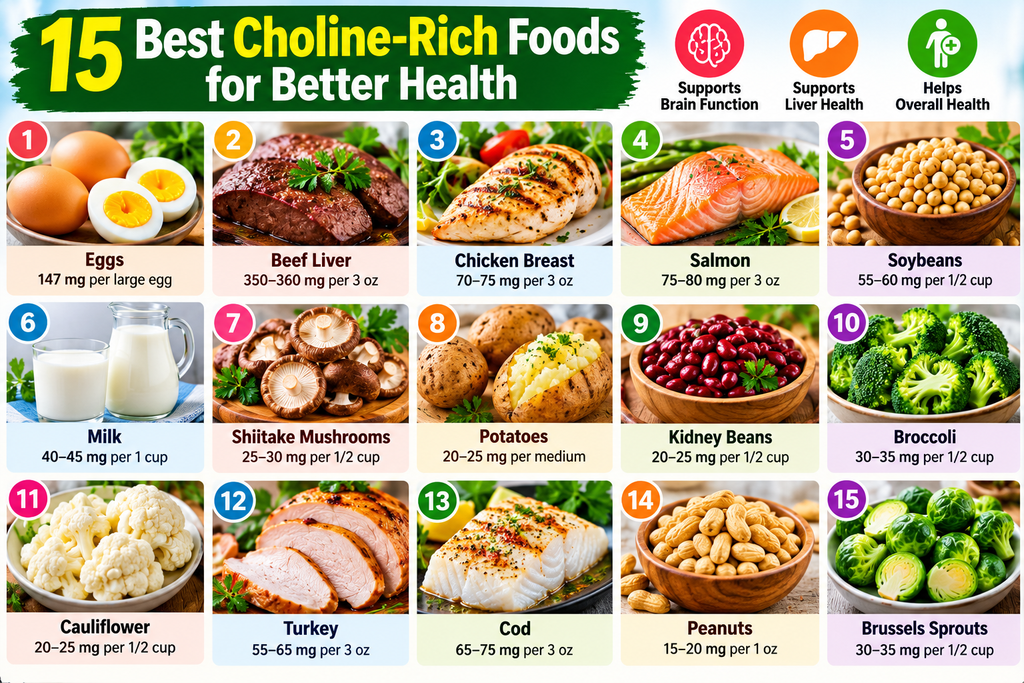
15 Best Choline-Rich Foods for Better Health
1. Eggs
Eggs are among the most practical dietary sources of choline. The nutrient is concentrated mainly in the yolk, so eating only egg whites provides considerably less choline than eating the whole egg.
One large hard-boiled egg provides approximately 147 milligrams of choline, although values can vary.
Eggs also provide high-quality protein, vitamin B12, and other nutrients that contribute to a balanced diet.
How to include eggs in your diet:
- Enjoy boiled eggs at breakfast.
- Prepare a vegetable omelet.
- Add sliced eggs to a salad.
- Serve eggs with whole-grain toast and vegetables.
People who are advised to monitor their cholesterol intake should discuss suitable dietary choices with their healthcare professional.
2. Beef Liver
Beef liver is a concentrated source of choline and also provides vitamin B12, iron, and vitamin A.
A cooked serving can supply several hundred milligrams of choline, depending on the portion and preparation. Because liver is nutrient-dense, a small serving can contribute substantially to daily intake.
However, liver is also very high in preformed vitamin A. Pregnant people are generally advised to avoid liver and liver products because excessive preformed vitamin A can harm fetal development.
How to include it: People who eat liver can use modest portions as part of a varied diet, provided it is suitable for their health circumstances.
3. Chicken Breast
Chicken breast provides protein and a useful amount of choline. It is a convenient option for people who want to include lean poultry in their meals.
A cooked serving of approximately 3 ounces (85 grams) provides roughly 70–75 milligrams of choline, depending on preparation.
Chicken also supplies niacin, vitamin B6, and other nutrients involved in normal energy metabolism.
Meal ideas:
- Grilled chicken with vegetables.
- Chicken and brown rice bowls.
- Baked chicken in whole-grain wraps.
- Chicken salad with beans and leafy greens.
Choose grilled, baked, or roasted chicken more often than deep-fried versions.
4. Salmon
Salmon provides choline, protein, and omega-3 fatty acids. It also supplies nutrients such as vitamin B12 and selenium.
A cooked 3-ounce (85-gram) serving provides approximately 75–80 milligrams of choline, depending on the type of salmon and cooking method.
Fish can be a useful part of a varied diet, particularly when it replaces some foods high in saturated fat.
Ways to enjoy salmon:
- Bake it with lemon and herbs.
- Serve it with vegetables and quinoa.
- Add cooked salmon to a salad.
- Grill it with a small amount of olive oil.
Follow current seafood safety guidance when choosing fish, especially during pregnancy.
5. Soybeans
Soybeans are a useful plant-based source of choline, protein, and other nutrients. They can be especially helpful for people who follow vegetarian or vegan eating patterns.
Cooked soybeans provide a meaningful amount of choline, although the exact amount depends on the form and serving size.
Soy foods also contain protein and, in some products, beneficial unsaturated fats.
How to eat soybeans:
- Add cooked soybeans to vegetable bowls.
- Use them in soups and stews.
- Enjoy edamame as a snack.
- Include tofu or tempeh in balanced meals.
People with soy allergies should avoid soy products and choose suitable alternatives.
6. Milk
Milk supplies choline along with protein, calcium, and vitamin B12. Fortified varieties may also provide vitamin D.
One cup of cow’s milk contains approximately 40–45 milligrams of choline, depending on the product.
Milk can contribute to daily nutrition, but it does not need to be consumed by everyone. People who avoid dairy can choose other nutrient-rich foods that fit their preferences and needs.
Easy ways to use milk:
- Add it to oatmeal.
- Blend it with fruit.
- Use it in soups.
- Drink it alongside a balanced meal.
Fortified plant-based beverages vary in their nutrient content. Soy milk often provides more protein than many other plant-based alternatives, but choline amounts differ between products.
7. Shiitake Mushrooms
Shiitake mushrooms contain choline and provide other nutrients, including some B vitamins and minerals. They are a useful option for people who want to add variety to plant-based meals.
Their choline content is lower than that of concentrated sources such as liver and eggs, but they can still contribute to an overall varied diet.
Ways to eat shiitake mushrooms:
- Add them to vegetable stir-fries.
- Include them in soups.
- Cook them with brown rice.
- Use them in omelets or tofu dishes.
Cook mushrooms thoroughly and store them safely.
8. Potatoes
Potatoes provide carbohydrates, potassium, and a modest amount of choline. They can fit into a balanced diet when prepared with suitable amounts of added fat and salt.
A medium baked potato with skin provides a small amount of choline, with the exact quantity depending on its size.
Potatoes are not a concentrated source, but they can contribute to overall nutrient intake.
Healthy preparation ideas:
- Bake potatoes instead of deep-frying them.
- Serve them with beans and vegetables.
- Add herbs rather than excessive salt.
- Pair them with fish, eggs, or tofu.
9. Kidney Beans
Kidney beans contain plant-based protein, fiber, folate, and some choline. They are affordable, versatile, and easy to use in many meals.
Their choline content is lower than that of eggs or liver, but beans contribute a variety of important nutrients.
How to include kidney beans:
- Add them to vegetable chili.
- Prepare bean salads.
- Combine them with brown rice.
- Use them in soups and stews.
Dried kidney beans must be soaked and boiled properly according to food-safety guidance. Never cook dried kidney beans in a slow cooker without first boiling them adequately, because improperly cooked kidney beans can contain harmful levels of natural toxins.
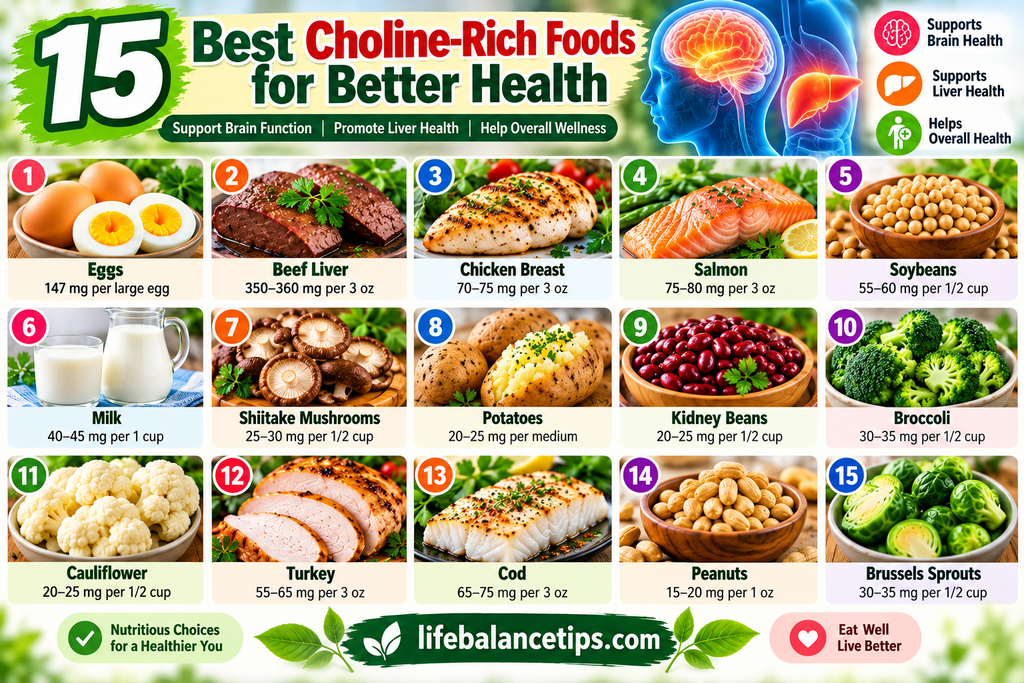
10. Broccoli
Broccoli is a nutritious vegetable that provides fiber, vitamin C, vitamin K, folate, and a small amount of choline.
Although it is not one of the most concentrated sources, broccoli can contribute to daily intake while adding variety to meals.
Simple ways to enjoy broccoli:
- Steam it as a side dish.
- Roast it with olive oil and herbs.
- Add it to soups.
- Combine it with chicken, tofu, or beans.
Try not to overcook broccoli if you want to preserve its texture and make meals more appealing.
11. Cauliflower
Cauliflower provides fiber, vitamin C, and small amounts of choline. It is versatile and can be used in many different recipes.
Its choline contribution is modest, but it can be part of a varied eating pattern that includes more concentrated sources.
Meal ideas:
- Roast cauliflower with spices.
- Add it to vegetable curries.
- Use it in soups.
- Serve it alongside eggs, fish, or legumes.
Combining vegetables with protein-rich foods can help make meals more balanced.
12. Turkey
Turkey supplies protein, B vitamins, and choline. It can be used in meals as an alternative to chicken or other protein sources.
A cooked serving of turkey generally provides a useful amount of choline, although the exact value depends on the cut and preparation.
How to include turkey:
- Roast turkey breast.
- Add cooked turkey to whole-grain sandwiches.
- Serve it with vegetables.
- Use leftover turkey in soups.
Choose fresh, minimally processed turkey more often than processed deli meats, which can contain substantial sodium.
13. Cod
Cod is a relatively lean fish that provides protein, choline, vitamin B12, and other nutrients.
It can be a useful choice for people who want variety beyond salmon. Its choline content is generally lower than that of some concentrated sources, but it contributes to overall intake.
Ways to prepare cod:
- Bake it with lemon.
- Grill it with herbs.
- Serve it with potatoes and vegetables.
- Add it to fish stews.
Cook fish thoroughly and follow local food-safety recommendations.
14. Peanuts
Peanuts provide plant-based protein, unsaturated fats, fiber, and some choline. They are also a convenient snack and can be used in different recipes.
Their choline content is modest, so peanuts are best viewed as one part of a varied diet rather than the main source of this nutrient.
Ways to enjoy peanuts:
- Eat a small handful as a snack.
- Add crushed peanuts to oatmeal.
- Use peanut butter in moderation.
- Add peanuts to vegetable stir-fries.
Peanuts are a common allergen. Anyone with a peanut allergy should avoid them and follow their healthcare professional’s advice.
15. Brussels Sprouts
Brussels sprouts contain fiber, vitamin C, vitamin K, and small amounts of choline. They can help add variety to vegetable-rich meals.
They are not a highly concentrated source, but they can contribute to a balanced eating pattern that includes eggs, fish, poultry, legumes, and other choline-containing foods.
How to eat Brussels sprouts:
- Roast them with olive oil.
- Steam them as a side dish.
- Add them to grain bowls.
- Mix them with other roasted vegetables.
Choose preparation methods that fit your taste and overall dietary needs.
Choline Content Comparison Table
The amounts below are approximate and may vary with serving size, cooking method, and food composition. Values are intended as general estimates, not exact measurements for every product.
| Food | Typical serving | Approximate choline |
| Beef liver, cooked | 3 oz (85 g) | 350–360 mg |
| Egg, large | 1 egg | 147 mg |
| Chicken breast, cooked | 3 oz (85 g) | 70–75 mg |
| Salmon, cooked | 3 oz (85 g) | 75–80 mg |
| Soybeans, cooked | 1/2 cup | 55–60 mg |
| Milk | 1 cup | 40–45 mg |
| Shiitake mushrooms, cooked | 1/2 cup | 25–30 mg |
| Potato, baked | 1 medium | 20–25 mg |
| Kidney beans, cooked | 1/2 cup | 20–25 mg |
| Broccoli, cooked | 1/2 cup | 30–35 mg |
| Cauliflower, cooked | 1/2 cup | 20–25 mg |
| Turkey, cooked | 3 oz (85 g) | 55–65 mg |
| Cod, cooked | 3 oz (85 g) | 65–75 mg |
| Peanuts | 1 oz (28 g) | 15–20 mg |
| Brussels sprouts, cooked | 1/2 cup | 30–35 mg |
For the most accurate values, check a reliable food-composition database or the product information where available.
How Much Choline Do You Need Each Day?
Choline needs vary by age, sex, pregnancy, and breastfeeding status. The US National Institutes of Health lists the following adequate intake levels:
| Life stage | Adequate intake per day |
| Adult men | 550 mg |
| Adult women | 425 mg |
| Pregnancy | 450 mg |
| Breastfeeding | 550 mg |
These values are adequate intake levels, not recommended targets that must be met precisely every day by every individual. Requirements for children and teenagers differ according to age.
Many people obtain choline from a combination of foods rather than relying on one source. Eggs, fish, poultry, dairy products, soy foods, and vegetables can all contribute.
People with specific medical conditions or dietary restrictions may benefit from personalized guidance from a qualified healthcare professional or registered dietitian.
Benefits of Including Choline in a Balanced Diet
Supports Normal Brain Function
Choline is needed to produce acetylcholine, a neurotransmitter involved in memory, muscle control, and other nervous system functions.
Getting enough choline supports normal physiological processes, but there is not enough evidence to claim that eating extra choline automatically improves memory or prevents dementia.
Helps Maintain Cell Structure
The body uses choline to produce phospholipids, which are important components of cell membranes. These membranes help maintain the structure and function of cells throughout the body.
Supports Normal Liver Function
Choline is involved in fat transport and metabolism in the liver. Inadequate intake can contribute to liver problems in some circumstances.
However, choline-rich foods should not be promoted as a detox treatment or a cure for liver disease.
Important During Pregnancy
Choline is required for normal fetal development and helps support the development of the brain and nervous system.
Pregnant people should discuss their nutritional needs with their healthcare professional. They should not begin high-dose supplements or use liver as a nutritional strategy without appropriate advice.
Tips for Adding More Choline to Your Diet
You can improve dietary variety by using different protein sources throughout the week.
- Include eggs when suitable for your dietary needs.
- Eat fish as part of a balanced meal plan.
- Use chicken or turkey as protein options.
- Add soybeans, tofu, and beans to vegetarian meals.
- Combine vegetables with eggs, legumes, or other protein sources.
- Choose portions that fit your energy and nutritional needs.
Choline-rich foods can fit into many eating patterns, including omnivorous and vegetarian diets. Vegan diets may require more attention to food choices because some concentrated sources, such as eggs and dairy, are excluded.
A varied diet is generally preferable to depending on a single food or supplement.
Frequently Asked Questions
1. Which food contains the most choline?
Beef liver is a particularly concentrated food source of choline, while eggs are a practical everyday option. Liver is not appropriate for everyone, especially during pregnancy, because of its high preformed vitamin A content.
2. Are eggs a good source of choline?
Yes. One large egg provides approximately 147 milligrams of choline, much of it in the yolk. Eggs also provide protein and other nutrients.
3. Can vegetarians get enough choline?
Vegetarians can obtain choline from eggs and dairy products if they consume them, as well as soybeans, beans, mushrooms, potatoes, and vegetables. People following vegan diets can focus on plant-based sources and seek professional advice if they are concerned about adequacy.
4. Does choline improve memory?
Choline is necessary for the production of acetylcholine, which is involved in memory and other nervous system functions. However, taking extra choline has not been shown to reliably improve memory in healthy people.
5. Do I need a choline supplement?
Not everyone needs a supplement. Many people can obtain choline through a varied diet. If you have dietary restrictions, are pregnant or breastfeeding, or have concerns about your nutrient intake, consult a qualified healthcare professional before using supplements.
6. Can you consume too much choline?
Yes. Excessive choline intake, particularly from supplements, can cause side effects such as a fishy body odor, vomiting, excessive sweating, low blood pressure, and liver toxicity. The US adult tolerable upper intake level is 3,500 milligrams per day from all sources, but this is not a recommended target.
Learn more about nutrition and cognitive wellness in our guide to foods for brain health and better memory.
Conclusion
Choline is an essential nutrient that contributes to normal brain function, cell structure, and liver health. Eggs, fish, poultry, soybeans, milk, and several vegetables can help provide it as part of a varied diet.
You do not need to depend on one food or automatically take supplements to support your nutritional needs. Instead, choose a variety of foods that suit your preferences, budget, and health requirements.
Including different choline-rich foods in balanced meals can help you work toward adequate nutrient intake while enjoying a diverse and nutritious diet.
Medical Disclaimer
This article is for educational purposes only and does not replace medical advice, diagnosis, or treatment. Individual nutritional needs vary. Consult a qualified healthcare professional or registered dietitian if you have a medical condition, are pregnant or breastfeeding, or are considering choline supplements.
Trusted References
- National Institutes of Health, Office of Dietary Supplements — Choline: Fact Sheet for Health Professionals
https://ods.od.nih.gov/factsheets/Choline-HealthProfessional/ - USDA FoodData Central — Food Nutrient Database
https://fdc.nal.usda.gov/ - Harvard T.H. Chan School of Public Health — The Nutrition Source
https://nutritionsource.hsph.harvard.edu/ - National Institutes of Health — Dietary Reference Intakes
https://www.nationalacademies.org/our-work/dietary-reference-intakes